









HERE IS A fact: most Irish people over a certain age, say 50 for sure, remember where they were on a bright summer’s afternoon, 26 June 1996, when they heard that journalist Veronica Guerin had been murdered.
Some more facts: She was cut down by six bullets, fired by the pillion passenger on a motorbike, through the window of her car as she waited at traffic lights near Newlands Cross on her way back from Naas district court just before 1 pm.
Veronica’s mood was as sunny as the day, right up to the moment she had been executed.
Is this a fact? Yes, it is. She had driven to the courthouse that morning in fear that the fistful of speeding fines would come home to roost and put her and her cherry-red Opel Calibra – which doubled up as transport and mobile office – off the road.
Instead, she had escaped with a fine and spent her triumphant return to the city on one of her two phones, spreading the good news, including to the news desk of the Sunday Independent, and then to me, her colleague and her friend.
We had a laugh – as we always did – but the chat was brief. She was en route to the office, and we arranged to have a proper gossip over a coffee.
Within minutes of that call, she was dead.
‘Follow the money’
Thirty years ago, Ireland was a different place. We were still shockable back then, not so desensitised to violence and brutality. The cold-blooded, meticulously planned daytime public execution of a journalist – a well-known, greatly-trusted female journalist – by criminals who really believed they were untouchable, shook the country to its very core.
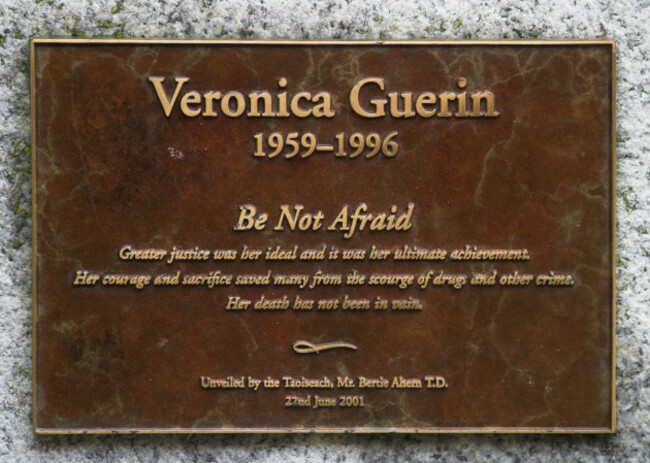
Journalism, too, was a different world in 1996. No internet, and not everyone had a mobile phone. People got their news via TV, radio and newspapers, and reporters got their news stories by working the phones (a jealously-guarded contacts-book filled with important phone-numbers was a mark of greatness) and by being out and about, endlessly meeting people and turning up in places where you were, and were not, welcome.
It was a job tailor-made for Veronica. She was immensely sociable, a crackling, sweary ball of energy, dogged and determined. She had a strong sense of social justice, and hated how a handful of drug lords had wreaked havoc in poor inner-city streets and how they were growing rich and powerful on the proceeds from selling large quantities of E, coke and hash to increasingly affluent punters.
She watched the ‘crims’ swanking about in expensive cars and splashing out on big houses with complete impunity. “Follow the money,” was her favourite mantra. That’s how to nail them – that, and hauling them out of the shadows and into the spotlight by describing who they are, what they look like, their identities covered only by a gossamer-thin disguise of a nickname: the Warehouseman, the Coach, the Penguin, the Boxer.
Ordinary people admired her and feared for her; even more so when, over 11 months between October 1995 and September 1995 shots were fired into her home, she was shot in the leg on her doorstep, and she was viciously beaten by gangster John Gilligan when she called to his £4 million (€4.64 million) equestrian centre in County Meath to ask him how he paid for it.

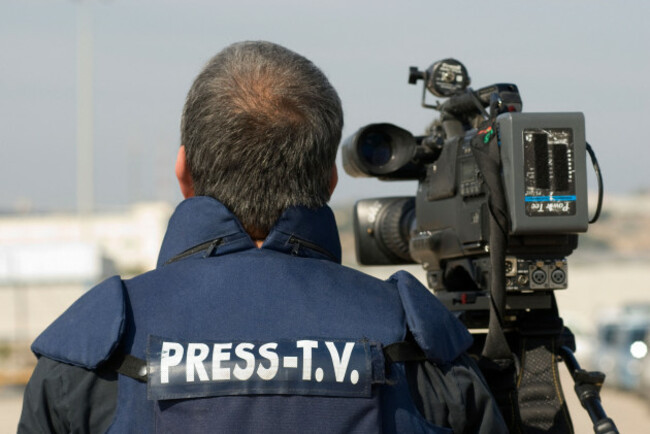
Veronica was a frontline warrior in a one-sided war. Thirty years on, we are all too aware that being a journalist offers no guaranteed protection when working dangerous news beats, reporting from war zones or living in authoritarian regimes.
A dark time for journalism
Since 1996, well over 2,500 journalists and media workers have been killed globally; 2024 and 2025 were the deadliest years for journalists worldwide, according to the Committee to Protect Journalists (CPJ), since its records began in 1992. The precise number of journalists killed in the Gaza war – overwhelmingly Palestinians killed by Israeli forces – is estimated at between 260 and 280.
In truth, though, journalism is embattled on many different, less-lethal fronts, including fending off disinformation, fake news, deepfakes, AI slop; struggling to find relevance and resonance in a media landscape transformed by tech platforms; falling under the axes of publishers who regard humans in the new business loop as an expensive and cumbersome inconvenience.
A couple of recent reports on journalism make for grim reading, particularly the decimation of local news in the US. The Local Journalist Index 2026 compiled by Muck Rack and Rebuild Local News, found a shocking 81% decline in numbers since 2002, when there were about 40 journalists per 100,000 population.
Last year, there were 8.2 per 100,000. “Most Americans live in communities that are, by any reasonable measure, severely under-covered,” it concluded, adding that in many regions there was zero local coverage of civic issues such as health and education.
Similarly, the Reuters annual Digital Trust Report released this week shows that 42% of Irish people say they can trust most news most of the time – a sizeable drop from 51% last year. Trust in news is lowest (33%) among the 18-24 year-old age group. Yet this figure looks healthy in comparison to similar digital reports released in the US and UK, where trust in news stands – or totters – at a hair-raising 26% and 31% respectively.
While these figures all add up to a complex conundrum with no easy fix, there is one inescapable fact: there is a direct, tangible link between the decline in boots-on-the-ground journalism and the decline in public trust in the news industry. When local journalism shrinks, communities lose the only institution that covers the people in power, which in turn helps to empower that community.
A changed information ecosystem
Undeniably, citizen journalists have an important societal role to play, but trained journalists are vital.
They know how to build a sturdy story fact-by-fact, how to debunk disinformation, find and protect a source, follow a money trail, verify information, eschew propaganda, avoid libel and understand that when posting breaking news online, being first is often irresponsible and inaccurate clickbait, but being right is reportage.
AI is, of course, a game-changer, but even the most sophisticated LLM has yet to develop a nose for a cracking yarn or spot someone looking shifty in a town council chamber.
In a post-truth world, we need to reforge the broken links in the news chain between news consumers and news reporters. We need each other, perhaps more than we realise.
Shortly after hearing the news about Veronica, I was sitting at my desk, crying, when I was aware of someone standing in front of me. It was a reporter from the Irish Independent newsroom, sporting a biro, a notebook and an expression which showed that she would rather be anywhere else at that moment.
She was, of course, looking for some quotes. There were many pages to fill for the next day’s paper, after all, and they don’t write themselves.
So I dried my eyes and spoke about my friend and my sorrow. I realised that for the first time I was at the pointy end of the pen, telling stories to a reporter of someone who was loved and was now lost.
And to my surprise, I found it oddly comforting. So this, I thought, this right here is journalism.
Lise Hand is a journalist and writer, and a columnist for TheJournal.ie.