


EBOLA, HANTAVIRUS, COVID: viruses have repeatedly hit the headlines since the pandemic despite, according to some adherents of alternative medicine, not existing at all — that is, if you ignore a wealth of evidence.
Recent coverage of a small hantavirus outbreak on a cruise ship and warnings that an ongoing Ebola crisis that has resulted in more than 140 deaths in the Democratic Republic of Congo have both prompted a push of alternative, often conspiratorial, and scientifically lacking theories to explain what is happening.
In particular, Covid-era conspiracies about killer vaccines and disease simulations have seen a revival during the hantavirus outbreak.
However, the denial of germ theory — the idea that tiny pathogens like bacteria and viruses can make you sick — has a much longer history.
And despite being repeatedly debunked, such denialism is supported by some of the most influential figures within and outside the field of medicine, notably Robert F. Kennedy Jr, the United States secretary of health and human services.
Germ theory denialism has variations, such as believing that viruses don’t exist at all (which Kennedy does not seem to ascribe to), believing that viruses don’t cause disease, or even believing that viruses are helpful reactions to diseases caused by something else.
While the first of these is the most extreme, and the quickest to disprove, it is still actively spread online.
So what is the history of germ theory denialism? It goes back at least to the dawn of germ theory itself.
Before the mid-19th century, the idea that germs caused disease was just one explanation among many. Miasma theory, the idea that “bad air” caused diseases, was a leading contender in scientific circles. Both germ and miasma theories appeared to explain the spread of diseases and how outbreaks often occurred in dirty, crowded areas.
Rather than being instantly proven, the germ theory of disease became dominant over years of successful experiments, convincing explanations, and the development of effective treatments in line with the theory’s principles, such as antibiotics
Nevertheless, the idea of a particular type of tiny, inanimate germs called viruses was slower to catch on. While bacteria are rather intuitive — small, single-celled creatures that you can see with a microscope — viruses are weirder.
They’re much smaller than bacteria, can’t replicate or survive alone, and even when they are thriving, they aren’t considered to be alive.
How viruses were proven to exist involved a series of debates and experiments, many of which were (and sometimes still are) dismissed by denialists as invalid.
But rather than a history lesson, we can fast-forward to the present day and the availability of electron microscopes.
Visible light travels in waves (at least, kind of. It’s a whole thing). In effect, this means when we want to look really closely at things like viruses, light stops working the way we’re used to. Images become blurry and then, when you’re looking at something nearly as small as the actual wiggle of the light, visual information doesn’t really work at all.
Versions of the electron microscope have been available since the 1930s, though the technology has developed considerably since then. These use electrons instead of light to build images of things. Electrons have a lower wavelength, meaning they still wiggle, but in tighter paths, allowing even smaller objects to be mapped — objects like viruses.
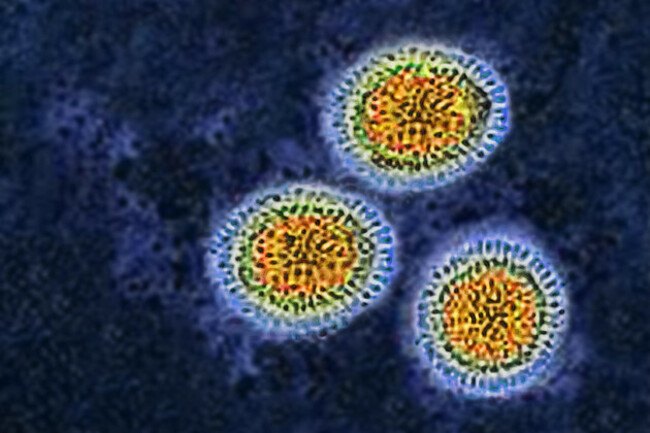
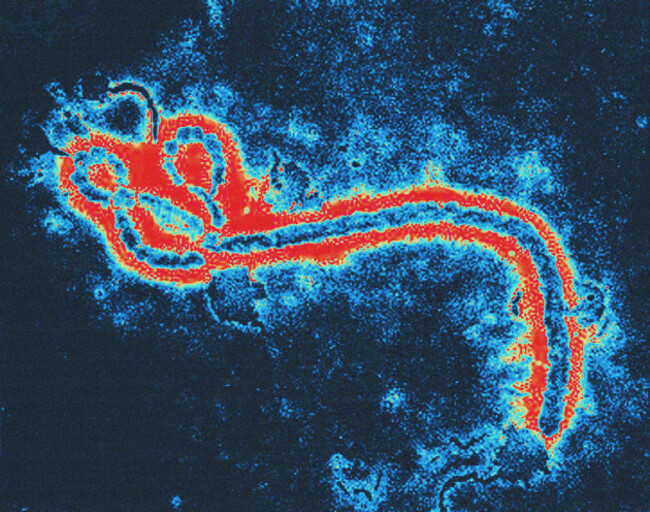
Numerous images of viruses as captured by electron microscope are freely available online.
Here’s the flu:
And the Ebola virus:
And the virus that causes Covid:
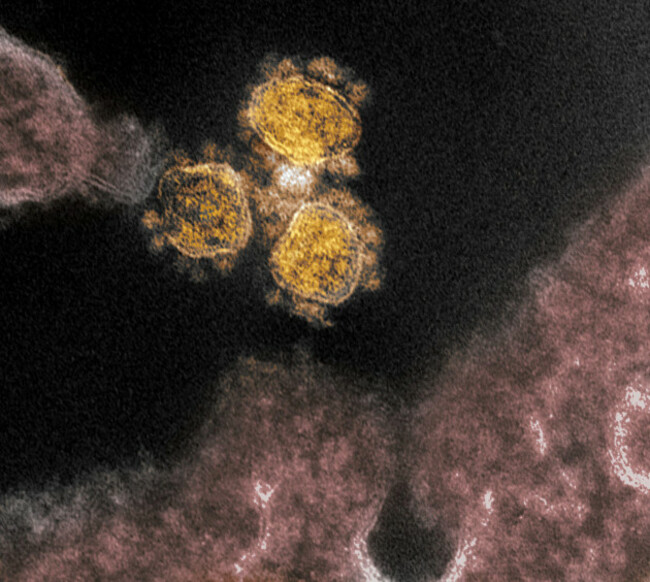
Aside from giving researchers an indication about the form of a virus and how it infects people, these images also give us a sense of how small viruses are, appearing as blips on the landscape of the cell.
Seeing is believing, right?
A giant rat in a filthy captain’s costume shouts to camera. “They said the hantavirus came from rats. But the rats were already dead before the ship left the port.”
The AI-generated video continues. In quick cuts, the rat claims that the hantavirus outbreak on a cruise ship was an experiment and that there is a conspiracy to bring in lockdowns and vaccines.
The AI-generated rat is not very articulate about his views. A clearer impression is given in the post by an Irish Facebook user that accompanies the video.
“Viruses do NOT Exist,” it says.
“So called ‘diseases’ are the result of toxicity, NOT caused by ‘Viruses’.
This post has been viewed more than 21,000 times since being posted on 15 May.
“Viruses are NOT alive, they are NOT transmittable NOR transmutable.
“Contagion is another myth, if it wasn’t, none of us would be alive to tell the tale.”
Comments under the video echo the claim that there is “no such thing as viruses.”
Generally speaking, germ theory denialists have more subtle theories than simply denying the existence of viruses.
Nevertheless, a consistent backlash against germ theory prevails, perhaps most famously in AIDS denialism, which sought to blame the disease on poor diet, drug use, or even the medicines used to treat the disease.
Often, instead of polluted “miasma” clouds, germ theory denialists try to explain diseases in terms of “terrain theory”. In effect, this theory states that pathogen-caused diseases are actually caused by environmental or lifestyle factors.
Internet search statistics show that such theories had a major resurgence of interest during and after the Covid pandemic.
However, these theories do not tally with how contagious diseases actually work in the world. Adherents need to find ways to dismiss cases of rare diseases spreading through infected medical products, or from one person in an airport to another who lives a different lifestyle in a different country.
Similarly, they need explanations of why viruses introduced to lab animals cause disease, and why vaccines help to prevent them.
As the AI-animated rat shows, the explanation they often rely on is conspiracy.
The Journal’s FactCheck is a signatory to the International Fact-Checking Network’s Code of Principles. You can read it here. For information on how FactCheck works, what the verdicts mean, and how you can take part, check out our Reader’s Guide here. You can read about the team of editors and reporters who work on the factchecks here.
此内容由惯性聚合(RSS阅读器)自动聚合整理,仅供阅读参考。 原文来自 — 版权归原作者所有。
