








IT’S A DAY of rest, and you may be in the mood for a quiet corner and a comfy chair.
We’ve hand-picked some of the week’s best reads for you to savour.
1. 3D-printing homes

In 2024 a company pledged to build and donate a 3D-printed home to a small Illinois town dealing with a long housing crisis. The company said ‘God sent them’ to Cairo to do this work. One $1.1 million (€946,000) investment later, they began building the house, but it quickly cracked. Currently, Cairo still has no new housing, and now the FBI is investigating the company. This investigation from ProPublica breaks down the peculiar story.
(ProPublica, 25 mins reading time)
“Miller, the Prestige employee who hyped the 3D printing project to Cairo residents, was one of the employees who quit. When we first met up late last summer, he told me he had become an FBI whistleblower. Miller told me he’d been taken advantage of, sent to Cairo to sell a false promise the company had no intentions of standing behind. He also told me about a flurry of anonymous emails sent via Proton, an encrypted email service, that accused Prestige of fraud not long after Cairo’s block party. The emails went out to various businesses and schools that had contracted with Prestige.”
2. Paying for a pardon

The New York Times Magazine breaks down the role of ‘pardon broker’, an unusual hustle that has sprung up due to US president Donald Trump’s approach to presidential pardons. These brokers are lawyers and lobbyists helping people in the US receive pardons (for huge fees).
(The New York Times Magazine, 25 mins reading time)
‘In past presidencies, the Justice Department generally selected pardon applicants who had completed their sentences and acknowledged wrongdoing, and it typically sought the views of the prosecutors who brought the cases. But Trump has remade the clemency process, just as he has transformed so many other norms and customs of the presidency. Sometimes he grants pardons to people who never applied through the Justice Department; at other times, he decides on a pardon without first getting a recommendation from his committee of White House advisers. Trump has dispensed pardons in an ad hoc bazaar, where those seeking his favor struggle — and spend millions — to get their cases before him with a winning argument.’
3. The only female yakuza
Yakuza are usually male members of organised crime syndicates in Japan. Mako Nishimura is thought to be the only woman to enter their ranks, but 40 years in a world of crime and addiction took an extreme toll on Nishimura. Now she has written a book to tell her story.
(The Guardian, 20 mins reading time)
“Nishimura has no desire to become a feminist icon. “I was a man,” she told me. “I had to behave like a man.” Nonetheless, she speaks of feeling ashamed of her decades of crime – much of it targeted at women – and she is attempting to add redemption to her repertoire. She has written a memoir about the highs and lows of life in the mob, and works for a charity to help ex-yakuza ditch the gangs for good. As the fortune of Japan’s historic underworld fades, Nishimura hopes her life’s latest chapter may just pull her own family back together, too.”
4. Britain’s beavers

The UK is introducing beavers to areas frequently affected by flooding in an attempt to prevent the issue. The furry flood engineers dammed up a creek in London within weeks, and are also helping local biodiversity thrive. But the increase of beavers in the UK is concerning farmers.
(NPR, approx ten mins reading time)
‘The beavers have also allowed the city to scrap expensive plans to dig a reservoir and levee. “We said the beavers can do it for a fraction of the cost, certainly more sustainably,” McCormack says.’
5. Labour-trafficking victims
How can a slave be hidden in plain sight? Across the world victims of human trafficking are forced into domestic labour, which can be one of the hardest forms of trafficking to catch. This article looks at the story of Djena, who was forced into domestic labour at the age of eight in her home country Guinea. She was then sent to the US where she, and the US government, were told she would live with family members. She got a visa and moved there legally – then spent 16 years as a slave.
(The New Yorker, approx 30 mins reading time)
“Denise and Mohamed told friends that Djena was their niece—rescued, they said, from poverty in Guinea—and they were gentle with her in front of visitors. In private, they were cruel. Once, Denise took Djena into the back yard and hosed her down with cold water, as one might a dog, saying that she smelled bad. There were subtler humiliations, too. When Djena first got her period, Denise scolded her for using a sanitary pad that she’d found in the house without first asking permission.”
6. Epstein’s assistant
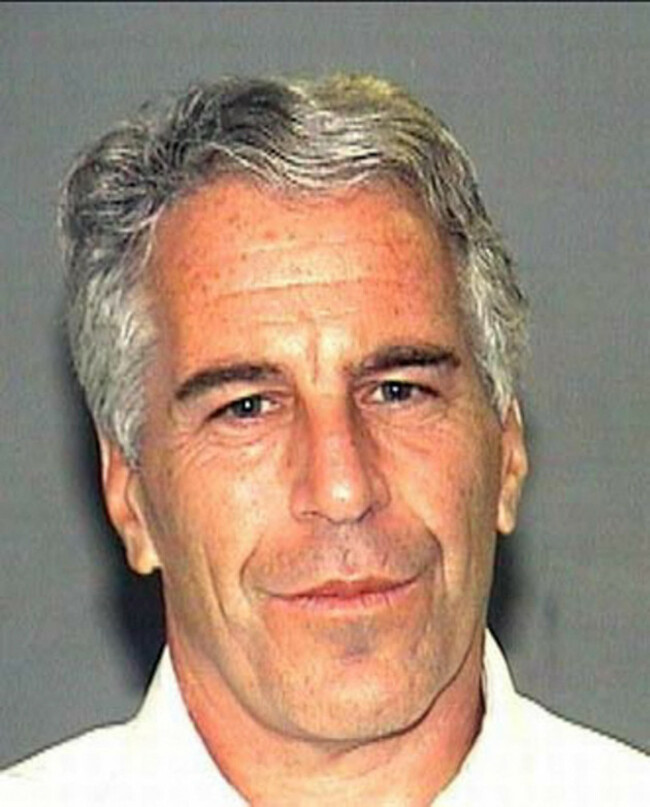
This article from The Guardian considers how much convicted sex offender Jeffrey Epstein’s assistant Lesley Groff knew about her boss’s actions.
(The Guardian, approx 30 mins reading time)
‘Groff was in charge of Epstein’s calendar, making his appointments and setting up his calls. When she started the job, Maxwell had told her that Epstein had a massage every day. Epstein would call Groff in the morning, order her to ‘Call X and see if she can do a massage at ‘ and then continue to call her every 15 minutes until it was fixed. If Groff was unable to get X, he’d tell her to call Y. (In response to questions about these appointments, her lawyer, Michael Bachner wrote: ‘During her employment, Lesley never witnessed or was told of anything illegal related to these massages.’)’
…AND A CLASSIC FROM THE ARCHIVES…
7. Life in the Taiga

This interesting article from 2013 shares the story of a Russian family of five who lived alone in the Taiga, the wilds of Siberia, for 40 years. They ran from society to escape religious persecution, moving over 240 km from the nearest village, and missing the moon landing, World War II, and many more major world events. Then a group of geologists found them.
(Smithsonian Magazine, approx 15 mins reading time)
“As the Soviet geologists got to know the Lykov family, they realized that they had underestimated their abilities and intelligence. Old Karp was usually delighted by the latest innovations that the scientists brought up from their camp, and though he steadfastly refused to believe that man had set foot on the moon, he adapted swiftly to the idea of satellites. The Lykovs had noticed them as early as the 1950s, when ‘the stars began to go quickly across the sky,’ and Karp himself conceived a theory to explain this: ‘People have thought up something and are sending out fires that are very like stars.’”