


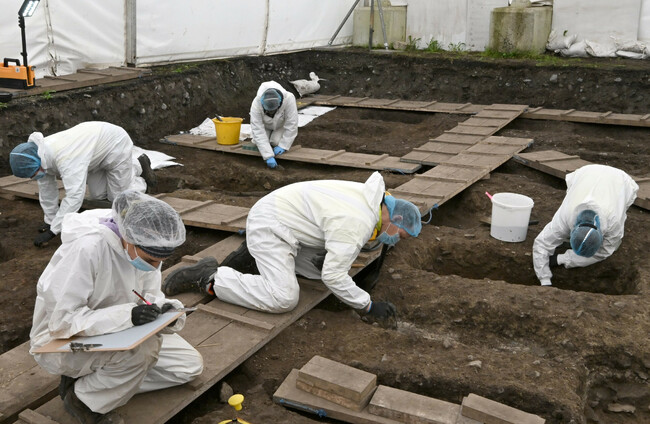
A FURTHER 36 sets of infant remains have been found as part of the ongoing excavation of the site of the former Mother and Baby Institution in Tuam.
The latest update from the Office of the Director of Authorised Intervention (ODAIT) brings the total number of infant remains recovered from the site to 69.
Evidence from the excavation suggests that in a small number of cases, two or three infants were buried in the same coffin.
The infants were buried in coffins which have since decayed. The majority of coffins were single shouldered with mounts and had been painted white.
The excavation is being carried out manually under the cover of a tented enclosure in an area of the site which was identified in historical documents as a “burial ground”.
ODAIT said that although there are no surface markers indicating the presence of burials at this location, evidence recovered during the excavation is consistent with it being a burial ground from the time of the operation of the Mother and Baby Institution.
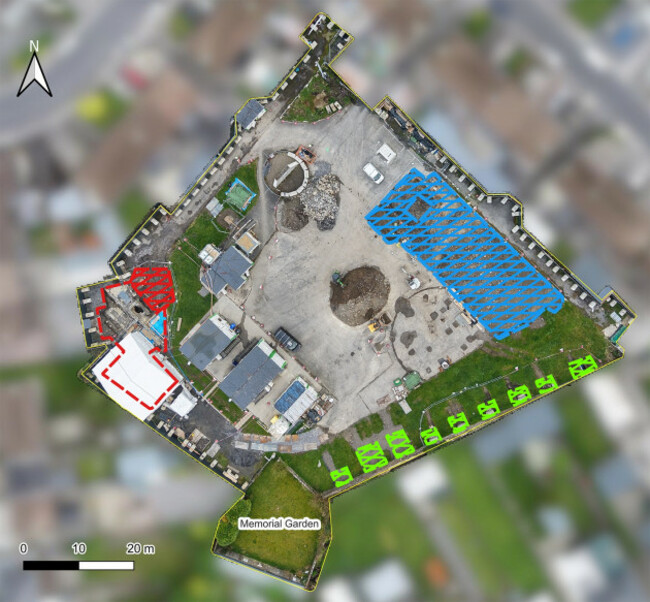
Evidence suggests that in the site currently being excavated, burials were previously disturbed when a digger was used in an area of over three metres in width.
This disturbance took place sometime after 1977, but further excavation will assist in establishing a more accurate timeframe.
In an attempt to identify the remains recovered, ODAIT is engaging with people who have come forward to enquire about providing a DNA sample.
33 family DNA samples have been taken and delivered to Forensic Science Ireland to date. The team will be taking more samples in Ireland, the UK and the US.
ODAIT is encouraging anyone who believes they may have a family member buried at the site of the former Tuam Mother and Baby Institution to contact their office.
Forensic excavation of the site began on 14 July 2025 and involves a team of experts, including forensic archaeologists, osteoarchaeologists and forensic anthropologists.
The excavation has also recovered artefacts from various historic periods, including a post-medieval cast copper-alloy keyhole escutcheon.