






DROMARD TERRACE IN the Southside suburb of Sandymount is an unassuming stretch of red-bricked houses.
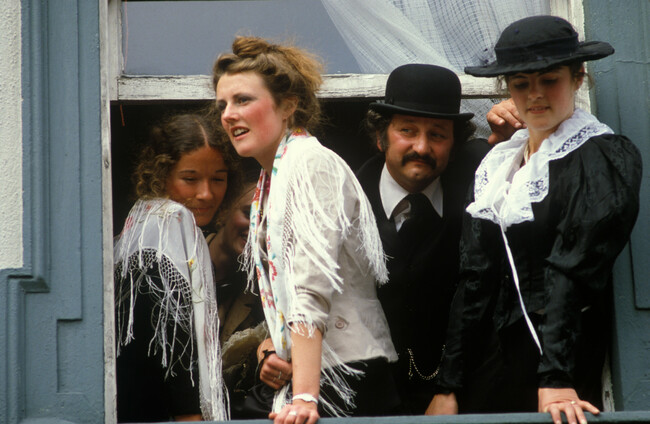
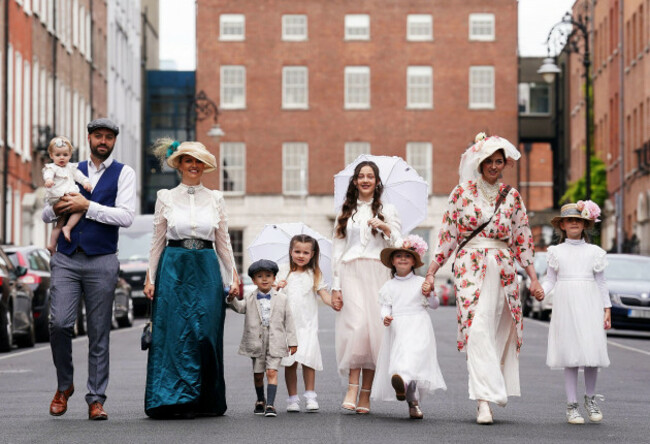
The short road runs parallel to the sweeping strand, and it’s just around the corner from the neat, railing-ringed village green, both of which on Tuesday were a-bustle with all the accoutrements of Bloomsday – straw boaters, jaunty bonnets, dog-eared copies of Ulysses, readings, music and the enthusiastic quaffing of gargle long before the sun had approached any yardarm in polite society.
Sandymount is an obvious hot-spot for Joyceans – after all, the strand is the location for two episodes in the book, Proteus and Nausicaa, with its infamous fireworks passage.
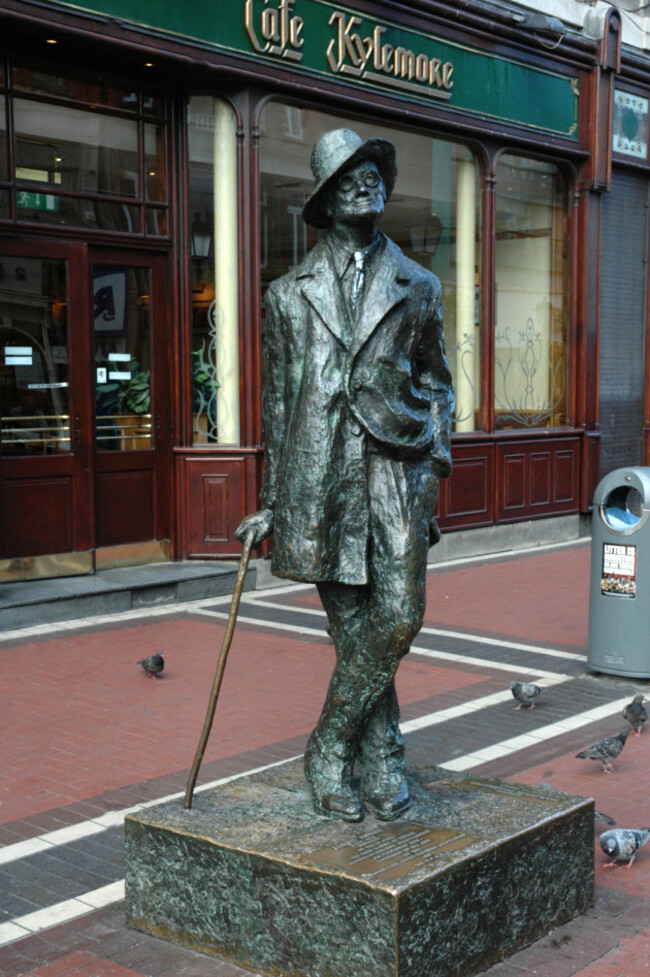
Yet perhaps the most interesting Sandymount spot is also its most under-celebrated – the sturdy cream-coloured Edwardian house on Dromard Terrace, unremarkable save for a modest round plaque affixed at squinting-level to its front facade.
It simply reads, “James Joyce stayed here on 16th June 1904, the day on which he set his novel, Ulysses”.
Quite the understatement.
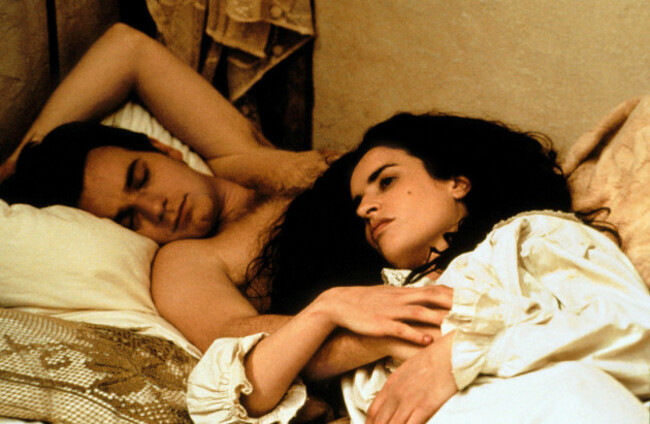
The house probably looks a little different now than it did when James Joyce, jobbing writer, walked through the door on that summer evening for his first date with Nora Barnacle. He had probably spiffed himself up a bit in his room before he left, wanting to make an impression on the 20-year-old Galway chambermaid whom he had first spotted “sauntering” along Nassau Street a few days earlier and, thunderstruck, had asked out on a date.
But she stood him up.
Nonetheless, he persisted, sending her an imploring note. “I may be blind. I looked for a long time at a head of reddish-brown hair and decided it was not yours. I went home quite dejected. I would like to make an appointment, but it might not suit you. I hope you will be kind enough to make one with me—if you have not forgotten me!”.
Nora’s first impression? “I mistook him for a Swedish sailor – his electric blue eyes, yachting cap and plimsolls. But when he spoke, well then, I knew him at once for just another Dublin jackeen chatting up a country girl.”
Unconventional
However, on 16 June, they did meet. They walked to a park in Ringsend where she slid her hands inside his trousers, and the rest is literary history.
For the next 37 years, until his death, they remained an extraordinarily unconventional couple; Nora Barnacle was James Joyce’s muse, his accomplice, his mentor and tormentor. And two months after that first encounter, he told her that what happened was “a kind of sacrament, and the recollection of it fills me with amazed joy”.
So much so, that Ulysses, the work which ripped up and rewrote modern literature’s rulebook, was set on the date of the first time they, y’know, stepped out together.
It could be argued that Leopold Bloom’s celebrated daylong Dublin peregrination really began when his creator emerged from his digs on Dromard Terrace on June 16th, 1904, to meet his mot.
Yet how many people passing the house on the way to the strand for a stroll, have paused to read the plaque, or even clocked it at all?
And here’s the thing – the capital is festooned with such plaques affixed to walls, each a mini-drama with a sprawling stellar cast of colourful characters who were born, lived, died, thrived, suffered or were inspired in the city and its suburbs.
And still way too many denizens of Dublin haven’t a baldy notion that they’re there.
For instance, change one letter, and it’s Broomsday, 16 October, when boffins raise a protractor to William Rowan Hamilton, Dublin-born mathematician, physicist, polyglot and astronomer.
On that date in 1843, he and his wife were walking along the towpath of the Royal Canal in Cabra, and just as he passed beneath the low arch of Brougham (Broom) Bridge, something astonishing happened. “An electric current seemed to close, and a spark flashed forth,” he wrote. “Nor could I resist the impulse-unphilosophical as it may have been – to cut with a knife on a stone of the Brougham Bridge, as we passed it, the fundamental formula”.
This “fundamental formula” was the discovery of a number system he called ‘Quaternions’, a groundbreaking mathematical calculation which would span time and space, would be used in the Apollo 11 mission and the Voyager probes, and would put Ireland on the global mathematical map.
Ireland’s genius
There is a plaque marking the spot, unveiled by then-Taoiseach and quaternions fan Éamon de Valera in 1958 – but again, how many passersby know that’s where lightning struck a brilliant Dublin mind?
Once you start looking, they’re everywhere. But who visits the plaque at the steps of the Botanic Gardens where Ludwig Wittgenstein, the Viennese philosopher and great mind of the 20th century, liked to sit and write during a highly productive two-year stay in Dublin in 1948-49?
Or how about the one on a house in Harold’s Cross where Robert Emmet was arrested on 25 August 1803 while hiding as a lodger under the assumed name of Hewitt after the aborted uprising?
Or the plaque on the Merrion Square family home of posho antifascist, the Honourable Violet Gibson, Anglo-Irish society girl and also the woman who shot Mussolini on 7 April 1926? (Alas for the world, her gun jammed after she fired one bullet).
And then there’s Dublin’s most beautiful and heartbreaking plaque. It’s high on the wall of a grubby alley off Moore Street called O’Rahilly Lane in honour of The O’Rahilly, a founding member of the Irish Volunteers who died in the laneway of gunshot wounds during the 1916 Rising.
As he lay slowly bleeding to death, he took a letter written to him by his son and scrawled a last message to his wife. It is these final words which are reproduced as they were written, on a limestone and bronze sculpture hung on the wall opposite the spot where he died.
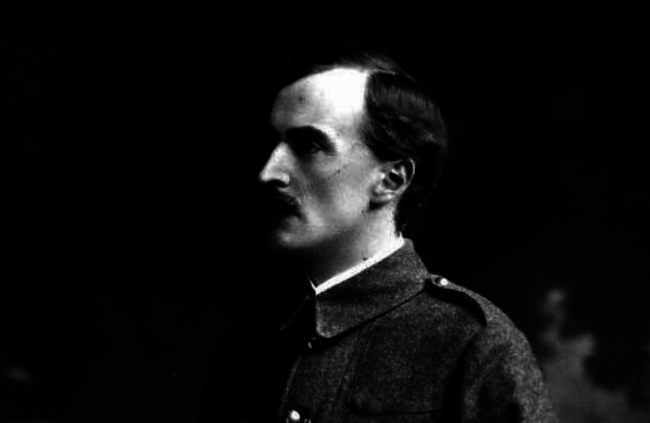
It reads: “Written after I was shot. Darling Nancy, I was shot leading a rush up Moore Street and took refuge in a doorway. While I was there I heard the men pointing out where I was and made a bolt for the laneway I am in now. I got more [than] one bullet I think. Tons and tons of love dearie to you and the boys and to Nell and Anna. It was a good fight anyhow. Please deliver this to Nannie O’ Rahilly, 40 Herbert Park, Dublin. Goodbye, Darling.”
It’s truly a thing of beauty, yet lamentably few people ever get misty-eyed in front of it, simply because they don’t realise it’s there.
In fairness to Dublin City Council, it is adding plaques and their stories to an excellent website, but a multitude still languish largely unheralded.
Surely there’s a better way to promote them – not just for tourists, but as a reminder to citizens of the sheer number of incredible people who once walked among us.
“The dead of Dublin arise and appear to many,” wrote Joyce in Ulysses. Dublin’s walls are talking – we just need to find a better way of listening to their stories.
See more of Lise Hand’s columns for The Journal here.