




Politics by Numbers is a new series for The Journal where broadcaster, author and spreadsheet stan Gavan Reilly takes a data deep dive into a political point of the week.
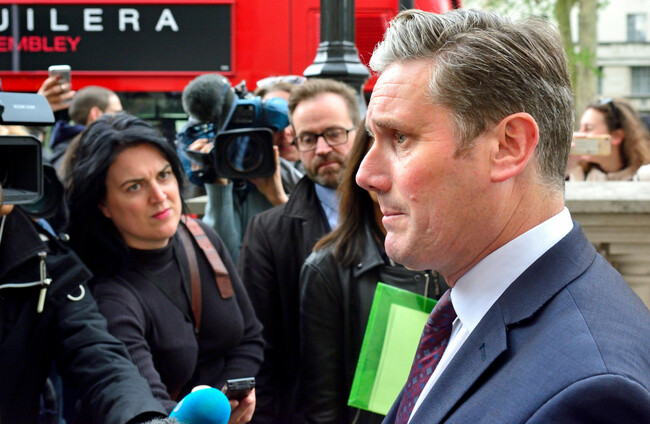
THE PREMISE of this column is that I take a data point and use it to tell a story, or raise a question about the way we’re all going. When it comes to the departure of Keir Starmer as Britain’s Prime Minister there are a few stats you could throw out – some of which any reader of The Journal will be familiar with.
There’s the slightly bonkers headline figure that the UK is about to have its seventh prime minister in a little over a decade. There are a few ancillary stats to this too: the fact that those seven PMs will have a combined tenure of 16 years; the previous seven PMs had a combined tenure of 40. And how about Charles III’s prodigious rate of appointments? His mother reigned for 70 years and saw the tenure of 15 British PMs.
Charles has been on the throne for less than four years and is about to see his fourth.
Perhaps the UK is approaching some sort of Prime Ministerial Singularity, where appointments become so many and short-lived that eventually literally everyone will have held the job. Or perhaps they should rename the job: given how quickly every holder seems to become unpopular, surely the Past-Their-Prime Minister would be a more appropriate title.
There could be other stats, like the innumerable policy U-turns engineered by Starmer – a man who knew he was destined for power two years before the 2024 election, so long as he stood still and didn’t screw up. Stasis, it seems, is contagious: the same do-no-harm stance does not work when you’ve actually been elected to do stuff.
Then there’s the fact that no fewer than 411 Labour MPs were elected to Westminster less than two years ago, yet none are now considered worthy of leading their parliamentary ranks. Only a magical 412th MP, it seems, is worthy of corralling the other 411. This change is made in fear of the electoral prowess of a man who leads a party of eight, and who himself ran unsuccessfully for the Commons seven times.
But for me, a more telling statistic is this: 38.4%. That’s how much of the current parliamentary term has lapsed. That’s 23 months of a 61-month term.
And yet, the guy indirectly chosen to lead the country the last time is already being deposed because his party is preparing for the next election.
The power of an opinion poll
Parliaments exist in a funny psychological place. Everyone is always looking over their shoulder at opinion polls, wondering whether their own job would be secure in the event of an abrupt election – and the same polls illustrate when someone is losing the dressing room. It’s a sort of Schrödinger’s Job Security, where members simultaneously have fixed tenure for a certain period, yet no real fixed tenure at all.
As someone who tweets/skeets every new Irish opinion poll I see, I now have a readymade response whenever anyone queries their relevance: Britain is three years away from an election and turfed out its Prime Minister over his dismal approval ratings.
And yet, parliamentary systems of government were never designed with opinion polls in mind.
They’re almost supposed to be closer to a conclave, where people are sent off with delegated power to debate and decide on crucial national issues. Our Irish idea of TDs being messengers of the people, and giving voice to the shifting positions they hear from their constituents, is relatively novel. In design, elected representatives are given the moral authority to make laws and decisions on our behalf, and that’s that.
The reason this is important is that governments are then formed on the basis of their standing in parliaments: in the UK, the King appoints a PM who can demonstrate their command of a Commons majority; in Ireland, the Dáil itself elects a Taoiseach who gets officially appointed by the President. Both then choose the fellow members of their cabinet.
These rulers only have the credence to rule because of the makeup of their parliaments, and the results of the election that created them. Whether they remain as popular or not, they’re locked in for their four or five years. That’s the system everywhere: whether it’s Ireland, where Sinn Féin have been the most popular party for five of the last five-and-a-half years but never held power, or the US or UK where incumbent leaders remain astoundingly unpopular but still have ironclad majorities in both their legislatures.
An argument for a shorter term
Swaying with opinion polls or giving voice to public sentiment is one thing – and given how quickly new problems or phenomena can emerge, there’s an argument that parliamentary terms should be shorter so that majorities are not baked in for too long. But the idea of materially changing the structure and composition of governments themselves, seems to move into a strange and slightly unsettling world.
True, parliaments can identify whichever leaders they like – the last Dáil here elected three taoisigh, and if Micheál Martin is as politically mortal as reports suggest, the current Dáil may do likewise. (And each country’s prime minister can only ever run in one constituency: only 18,884 people elected Starmer as an MP; only 14,526 chose Micheál Martin.)
But if a parliament is supposed to have a five-year term, are we comfortable with the idea of governments so nakedly acting with the next election in mind?
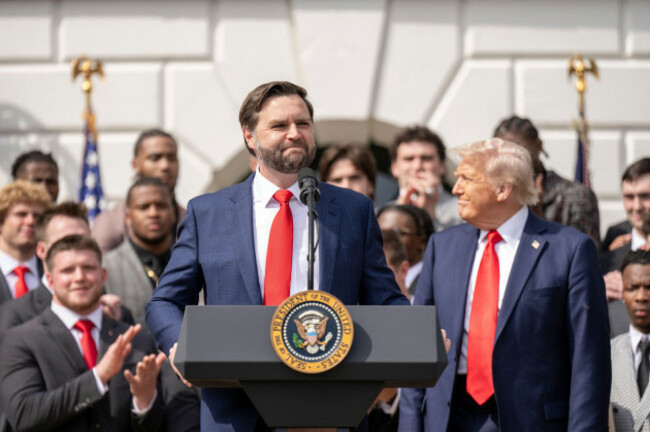
One of the most toxic traits in America’s politico-media complex is the constant speculation about the next election. Who will run for the Republicans in 2028, JD Vance or Marco Rubio? Should we care about that as early as 2026, when the existing president has only served 17 months of his 48-month tenure? The scrutiny of future hypothetical presidents can occupy so much time that it lets the incumbent off the hook.
We ought to worry about a similar phenomenon emerging in this part of the world. For better or worse, we elect our lawmakers for fixed terms, based on transparent and democratic programmes that they’re supposed to have a fixed term to pursue. A culture where those leaders then reorganise themselves because they’re worried about the next time – and not the work they were elected to do in the first place – is not one we should embrace.
Gavan Reilly is the Political Correspondent for Virgin Media News and the host of Monday with Gavan Reilly, which airs every Monday at 10pm on Virgin Media Play and Virgin Media One.