
惯性聚合 高效追踪和阅读你感兴趣的博客、新闻、科技资讯
阅读原文 在惯性聚合中打开

推荐订阅源

F
Full Disclosure
Recorded Future
Recorded Future
T
Tenable Blog
S
Securelist
C
CERT Recently Published Vulnerability Notes
T
Threatpost
S
Schneier on Security
A
Arctic Wolf
The Hacker News
The Hacker News
C
CXSECURITY Database RSS Feed - CXSecurity.com
Know Your Adversary
Know Your Adversary
P
Privacy International News Feed
Threat Intelligence Blog | Flashpoint
The Register - Security
Cisco Talos Blog
Cisco Talos Blog
AWS News Blog
AWS News Blog
K
Kaspersky official blog
T
True Tiger Recordings
T
Threat Research - Cisco Blogs
V
Vulnerabilities – Threatpost
P
Palo Alto Networks Blog
T
The Exploit Database - CXSecurity.com
小众软件
小众软件
B
Blog
Cyber Security Advisories - MS-ISAC
Microsoft Azure Blog
Cyberwarzone
Cyberwarzone
C
Cybersecurity and Infrastructure Security Agency CISA
T
Tor Project blog
Spread Privacy
Spread Privacy
Malwarebytes
Malwarebytes
P
Proofpoint News Feed
F
Fox-IT International blog
F
Fortinet All Blogs
P
Privacy & Cybersecurity Law Blog
G
GRAHAM CLULEY
量子位
Latest news
Latest news
OSCHINA 社区最新新闻
OSCHINA 社区最新新闻
博客园 - 叶小钗
Project Zero
Project Zero
T
Tailwind CSS Blog
N
Netflix TechBlog - Medium
Martin Fowler
Martin Fowler
IntelliJ IDEA : IntelliJ IDEA – the Leading IDE for Professional Development in Java and Kotlin | The JetBrains Blog
I
Intezer
博客园_首页
腾讯CDC
H
Hackread – Cybersecurity News, Data Breaches, AI and More
D
Darknet – Hacking Tools, Hacker News & Cyber Security

TheJournal.ie

Diver says 'racing against time' to rescue seven trapped in Laos cave Woman (80s) dies following two-car collision in Co Clare Fianna Fáil members approve bill to lift ban on nuclear power A group of doctors and cancer charities is calling for sunbeds to be banned in Ireland Temperatures could hit 31C in parts today as heat warning remains in place for eight counties The 8 at 8: Wednesday Israeli strikes kill new chief of Hamas armed wing in Gaza and another 31 people in south Lebanon Around 160 Irish peacekeepers arrive home from Lebanon Builders tell minister that widespread skills shortage is delaying projects Ireland on track to deliver only half the reductions of greenhouse gas emissions needed by 2030 Trump is getting a big stage built at the White House to host a birthday cage fight Labour leader backs calls from thalidomide survivors for a formal State apology PSNI extradite man from Belfast to Denmark to stand trial for murder Here's What Happened Today: Tuesday Several strikes hit south Lebanon as Israel expands ground operations Bill passed to allow Irish court testimony be used in UK Omagh bombing inquiry Kelly Earley: Militarism might be Ireland’s next economic disaster Government to oppose Social Democrats bill restricting ads for zero alcohol drinks Woman arrested in connection with murder of Kyran Durnin released without charge Cathaoirleach roghnaithe do Choiste na Gaeilge, na Gaeltachta agus Phobal Labhartha na Gaeilge Cyclists criticise push by Clare councillors to make high-vis jackets mandatory Green light for 463-bed tourist hostel for Camden Street despite local opposition Ireland captain says team won't 'hold back' players who want to 'take a stand' over Israel game Dart delays in Dublin this afternoon as Irish Rail promises more services for busy weekend Just three washing machines between 89 residents at IPAS centre in Co Kerry Trump undergoes annual medical exam days before he turns 80 Government has appointed a new deputy garda commissioner Mango founder's son says murder accusation is "serious, unjust and unfounded" The 5 at 5: Tuesday Funeral details announced for Alex Coughlan, who died in Blanchardstown assault Boy in critical condition in hospital after getting into difficulty in Monaghan lake Catherine Connolly's Dáil group don't have enough Irish, so FF will chair committee instead What is the 'heat dome' over Ireland that's causing temperatures to keep rising? Garda gathering evidence before interviewing people who restrained Yves Sakila before his death Free state accommodation for Ukrainians will be withdrawn by March 2027 Man pleads guilty to attacking teenage twin sisters with glass bottle on Dublin's Dame Street Government urged to follow France and ban Israeli ministers entering Ireland BP ousts Irish chairman Albert Manifold amid 'serious concerns' about his conduct Frances Black says TDs will push for amendments when services excluded from OT Bill County council spent more than €640,000 in legal fees pursuing case of illegal Meath mansion Jim McGuinness and David Clifford to avoid suspensions for Donegal-Kerry on-field bust-up Everyone should have a home but the evidence suggests Ireland doesn't believe it Irish army bomb disposal experts called to deal with explosive device at Kilkenny garda station Slushies not safe for children under ten, new guidelines say Daniel Ennis says Ireland should boycott Israel matches as he arrives at the Dáil Arson investigation into fire at Co Wexford garda station Galway footballer Seán Fitzgerald unveiled as Love Island contestant At least four killed after train collides with school minibus in Belgium Are you sunburnt? Dog owners urged to rethink walks and keep pets cool as weather heats up It could reach 30 degrees in parts of the country today First search to get under way for Disappeared victim Seamus Maguire The 8 at 8: Tuesday Helen McEntee aims to have Occupied Territories Bill enacted before Dáil summer recess US attacks missile sites in Iran as deal to end war could 'take days' New suicide reduction strategy to place ‘stronger focus’ on those bereaved by suicide Jury in trial of former DUP leader Jeffrey Donaldson sworn in Sinn Féin leadership say all is well, but some in party believe it is time to 'refine' message Calls to extend lifeguarding season to May as temperatures soar to high 20s Detector dog Kobe helps with seizure of 8 million cigarettes worth around €7.7m at Dublin Port GTA V, €70 bread bin and €1.7k Beatles pen among items bought with embezzled money by ex-SNP chief Teenager seriously injured following assault in Finglas Quarantined Spanish national evacuated from hantavirus cruise ship tests positive Who will fill the SocDems council seat, and what happens Sean Kyne's vacant seat in the Seanad? Here's What Happened Today: Monday Raising them right: Nothing tests your patience like rolling a buggy through dog poo Ireland ends deployment as UN Security Council fails to renew mandate on Mediterranean mission Record temperature for month of May provisionally equalled and could be broken tomorrow Teenage girl who drowned in Howth tragedy named locally as Abbie Carmody-Pepper Beatings, humiliation and sexual violence: The abuse allegations made by flotilla activists WHO chief warns Ebola epidemic is ‘outpacing us’ and will ‘get worse before it gets better’ The 5 at 5: Monday FactCheck: Are there stricter limits on genetically modified foods for animals than for humans? Gardaí contact Channel 4 News over online post saying Yves Sakila died 'at the hands of police' Tiny, blue, golf ball-sized octopus confirmed as new deep-sea species Irish Rail defends Dart services as crowds flock to Howth and videos show long queues Pope Leo apologises for Church's delayed condemnation of slavery, issues warning about AI 'We'll go again': Hutch hints at another future campaign after Dublin Central byelection defeat Man in critical condition after being found unresponsive after alleged assault in Coolock Vigil held for 'wholesome' man who died after assault in Blanchardstown Three clean athletes win and only one 'broken record' at controversial Enhanced Games Woman arrested in connection with murder of Kyran Durnin Carlingford Lough ferry suspends services for all of 2026 'without explanation' Nigel Farage says Elon Musk is 'splitting the right' and could cost Reform UK a byelection win Have you put on sun cream today? Dublin lottery player wins €3.7 million jackpot from Saturday night draw Harris hails Seán Kyne’s rare byelection success as 'a win for centrist politics' The 8 at 8: Monday Warmest weather of the year on the way, with temperatures set to hit 27 degrees today Tipperary manager hits out at 'nameless' online critics after defending champions lose again Body of teenage girl retrieved from water off Burrow Beach in Dublin US insists makings of a deal with Iran on the table but Trump tempers expectations Pope to launch encyclical on AI and 'protection of the person' alongside Anthropic co-founder Diesel has been leaking into the River Liffey from Irish Rail fuel storage for over a year How much do you know about Jeff Goldblum? Rezoning plan for west Dublin could intensify area's 'parking wars' Here's What Happened Today: Sunday What you need to know about the new Nicolas Cage series Spider-Noir Over 30 Polish and Lithuanian nationals deported on charter flight Money Diaries: A recently graduated digital journalist on €35K living in Dublin
Alberta’s separation bid: How Canada’s next political crisis could come from within
2026-05-27 · via TheJournal.ie

CANADA HAS RECENTLY projected strength and unity in response to pressure from the US. International observers may therefore be surprised to learn that the country is now facing a looming unity crisis.

Alberta premier Danielle Smith has announced that voters will go to the polls in October on whether the province should begin the legal process toward a future referendum on leaving Canada. Smith says she wants to resolve the issue democratically.

In response, Canadian prime minister Mark Carney called the vote a ‘dangerous bluff‘ and said that the federal government would review the question to see if it triggers the Clarity Act, under which parliament can decide if a provincial referendum question is clear before it goes to voters.

CBC News: The National / YouTube

Albertans will be asked to vote on 10 questions, including on immigration and access to public services. The most contentious ballot will ask whether Alberta, in western Canada, should remain a province of Canada or whether its provincial government should begin the legal process required to hold a binding referendum on separation. Another proposal being put to voters will ask if Alberta should take greater control over borders to reduce immigration levels and prioritise economic migration.

Smith herself says she would vote for Alberta to remain in Canada, but said Albertans should decide the issues directly.

But that raises a broader question increasingly facing democracies worldwide: when divisive constitutional questions arise, is asking the public directly always the democratic thing to do? The answer is more complicated than we might assume.

The background

Tensions have long simmered between Alberta, an oil-rich and politically conservative province, and Ottawa, mainly over energy and environmental policy.

An Albertan separatist movement argues that successive federal governments have constrained Alberta’s economic interests and that the province contributes more to the rest of Canada than it receives.

Support for outright separation remains a minority position, but it has become politically significant enough that Smith has now proposed an unusual “referendum on a referendum”: voters will not decide on independence itself in the autumn vote, but on whether to begin a constitutional process that could eventually lead there. The proposal has provoked alarm from

First Nations communities, whose Treaty rights could be adversely affected by the province’s separation from Canada.

Referendums: Pro or anti-democratic?

The use of referendums is hotly debated. Some see them as the purest form of democratic participation, directly engaging the voices of citizens on major questions of law and policy.

Others are much more sceptical, pointing to the risks of disinformation, polarisation and possible negative impacts on minority rights. As we grapple with the rise of generative AI and deepfake technologies, these concerns seem more acute than ever.

But comparative experience suggests that referendums are not inherently democratic or undemocratic. A great deal depends on the conditions surrounding them: the clarity of the question, the quality of public information, the role of institutions and whether citizens have meaningful opportunities to deliberate rather than simply give a “top of the head” response. The deeper question is not simply whether referendums are democratic per se, but under what conditions they can meaningfully express democratic will.

One important distinction is between voting and deliberation. A referendum should ideally form part of a broader process of citizen consultation, participation and public reasoning, rather than being treated as a single isolated moment of decision-making. Citizens can decide difficult questions, but democratic legitimacy is strengthened when they have opportunities to engage with complexity before being asked to vote.

This is one reason that citizens’ assemblies have attracted so much international attention. They create structured environments where ordinary citizens can engage with difficult questions in a slower, more informed and less adversarial way. Citizens hear from experts, advocacy groups and people with lived experience; they have space to learn, discuss, weigh competing arguments and sometimes revise their views.
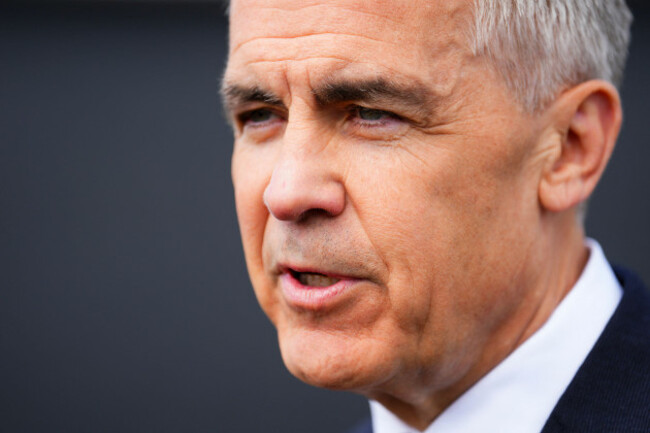
orleans-canada-25th-may-2026-prime-minister-mark-carney-talks-to-reporters-as-he-takes-part-in-an-event-at-a-new-housing-development-in-orleans-ont-on-monday-may-25-2026-credit-the-canadian Mark Carney called the vote a 'dangerous bluff'. Alamy Stock Photo Alamy Stock Photo

The involvement of experts matters here, not because experts replace democratic decision-making, but because they help citizens understand the legal, constitutional and practical realities surrounding difficult choices. The goal is not to eliminate disagreement – reasonable people can have reasonable disagreements. Rather, it is to create conditions in which citizens can engage reflectively with complexity and choose between reasonable alternatives, rather than react immediately within highly polarised environments.

This matters particularly in cases such as Alberta, where constitutional questions do not exist in a vacuum. Any question of provincial separation will impact upon Indigenous Treaty rights and constitutional obligations, which cannot be simply voted away. Legitimacy here requires not only asking citizens what they want, but equipping citizens with knowledge of the constitutional context in which the choices sit.

Clarity around the available choices also matters. The Brexit referendum highlighted the difficulties that arise when a vote authorises a course of action (to “leave”) but leaves fundamental questions open as to what that action actually means. Similar questions arise in Alberta.

What would a binding vote to separate actually mean in practice? An independent Albertan state; integration with the US; a renegotiated relationship with the rest of Canada; or something else entirely? Democratic legitimacy requires not only that citizens have a voice, but that they have clarity on the choices available to them.

A deliberative approach

Ireland offers an instructive example, in particular the abortion referendum. The referendum in that case did not occur in isolation but took place at the conclusion of a broader reform process that combined deliberative and participatory mechanisms, including a citizens’ assembly and a referendum.

Of course, simply attaching a citizens’ assembly to a referendum process does not automatically make it democratically legitimate. Questions of design, agenda-setting and process matter too.

Ultimately, the lesson is not that citizens should be excluded from deciding difficult constitutional questions. If anything, deliberative democracy research suggests the opposite: ordinary citizens are remarkably capable of engaging seriously with complexity, provided our institutions are designed to support informed participation.

In the end, in Alberta and elsewhere, democratic legitimacy requires more than placing a question on a ballot. It requires institutions and processes that help citizens deliberate together and form reasoned judgments before asking them to decide.

Dr Seána Glennon is an Irish lawyer and a Postdoctoral Fellow at the University of Ottawa Public Law Centre.

Readers like you are keeping these stories free for everyone...

A mix of advertising and supporting contributions helps keep paywalls away from valuable information like this article. Over 5,000 readers like you have already stepped up and support us with a monthly payment or a once-off donation.