


GOVERNMENT IS PRESSING ahead with substantial curtailments to Ukrainian supports, with state accommodation for Ukrainians set to be withdrawn by March 2027.
Making the announcement today, Justice Minister Jim O’Callaghan said the government believes “it’s only fair” that people who are working and who are being provided for through free state accommodation over four years should now provide for their own accommodation.
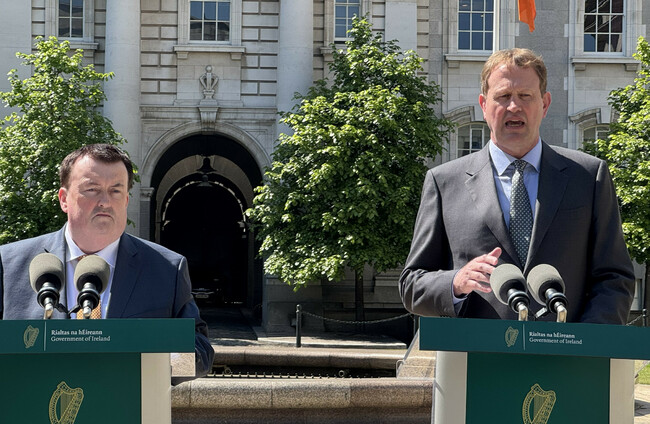
O’Callaghan and junior minister Colm Brophy announced on Tuesday that cabinet had approved a number of measures affecting Ukrainian refugees in Ireland.
They include the phase-out of state-contracted commercial accommodation, a reduction in the payments made to households hosting Ukrainians and the development of a voluntary return programme.
A scheme that would allow those with temporary protection to apply for permission to remain in Ireland is also being planned.
Refugees from the war in Ukraine, who arrived in Ireland before March 2024, have been entitled to rent-free state accommodation, mostly in hotels, the minister said.
Phased out
Starting in August, such free accommodation is to be removed, with the total phase out of such supports to be completed by 4 March.
There are around 16,000 people in state-provided accommodation and a further 40,000 in subsidised accommodation in private homes.
O’Callaghan said he is “very conscious” that the government of Ukraine is very anxious for people from Ukraine to return home “in order to rebuild it, notwithstanding the ongoing wars that are ongoing at present”.
He said people with vulnerabilities or particular family circumstances living in state accommodation will be able to apply to continue living there. This accounts for about 5,000 people, the minister clarified.
Of the other 11,000, he said many of them are working and will be able to seek accommodation, either through friends or on the market.
State payments
Speaking about the accommodation recognition payment, which is made to people who have opened up their homes to Ukrainians, O’Callaghan said this will also be reduced to €400 a month.
Previously, those housing Ukrainians in their home received €800, before it was reduced to €600 in September 2025. The amount will fall to €400 from October.
The minister said that the reduction last year did not reduce the numbers continuing to offer accommodation. He said he did not believe there would be “significant changes” to the number being housed by those receiving the payment.
“I believe the 42,000 who are within that accommodation will continue there,” he said.
Speaking about the voluntary return scheme, O’Callaghan said it will be similar to the one available to those going through the international protection process.
Those who cannot afford to return to Ukraine would have their travel reimbursed after they return home.
The details of the scheme would be “subject to developments at an EU level”, he said.
“The important part of voluntary return is that it is voluntary,” he added, “we will not be forcing anyone to accept payment to go back to Ukraine.”
“There’s going to be a significant majority who want to go back to Ukraine, I think that is clear, people will want to go back to their homeland and help to rebuild their country,” said the justice minister.
Brian Killoran, National Coordinator of the Ukraine Forum, said the government’s actions will disproportionately affect children and the most vulnerable – stating that one in three beneficiaries of Temporary Protection is under the age of 20.
Concerning the Accommodation Recognition Payment paid to hosts, Nick Henderson, CEO of the Irish Refugee Council, said it defies logic that the government sees fit to cut state-provided accommodation while simultaneously undermining the very scheme absorbing the majority of transfers from accommodation in hotels, at a quarter of the cost to the state.
“This will result in much worse conditions for Ukrainians and risks homelessness, destitution,” he said.