








Gavan Reilly
Politics by Numbers is a brand-new series for The Journal where broadcaster, author and spreadsheet stan Gavan Reilly takes a data deep dive into a political point of the week.
THE PROBLEM WAS easy enough to identify. Since 2019, properties being let out for short-term letting on sites like Airbnb, for more than 21 nights a year, were considered to have changed their use – and thus needed planning permission to operate. What officials had found was that enforcement of that law was proving tricky.
The issue they’d found is that when you browsed listings on Airbnb, pinpointing the exact property wasn’t easy. The exact address or Eircode of a property wasn’t visible until a booking was made and paid; nor was it always apparent how many days per year a property was actually being filled – the greyed-out areas on a calendar might mean it was already booked, but also might simply mean the property’s owners were present instead.
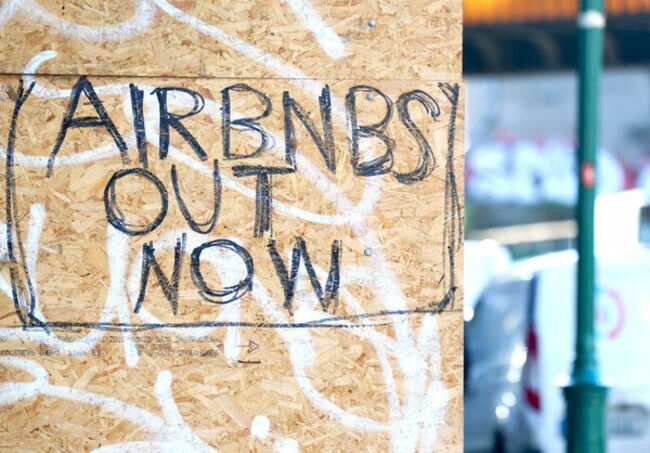
The fix they arrived at was a relatively simple patch. The websites like Airbnb could not be forced to act as policemen, making sure each and every property had the correct planning permission – so instead Fáilte Ireland would vet the properties, ensuring that they could only be advertised when they were legally compliant. Advertising the property online would only be possible, therefore, when the ad also included the Fáilte Ireland registration number.
Few will need convincing that the use of residential property for short-term letting is a major contributor to Ireland’s chronic shortage of long-term housing. Yet the time between announcing this plan and bringing laws to Cabinet plugging that hole is 1,854 days.
The question of why hints at something not-quite-right about how Ireland is run.
Unclogging the internal pipeline
The internal politicking about the effects of a clampdown on the economy of rural Ireland probably doesn’t need much explaining. The senior and then-junior ministers from Kerry were pretty vocal about the impact in rural communities – areas where ‘brain drain’ is real and the biggest industry, tourism, is dependent on short-term letting.
The eventual decision was to grant different treatment for smaller communities with populations of under 20,000, meaning the immediate clampdown would apply only to 25 towns and cities instead of 55.
As a result, property owners in those towns will effectively be given two years to fall into line with the planning rules. A register that takes effect in December of this year, and which therefore will only really make its presence felt in summer 2027, won’t make a meaningful difference to housing in those areas until 2029.
If you’re wondering: yes, Killarney is one of the ones slipping out of the net – the same town where 82 homeless people and families presented to the County Council in the last 12 months.
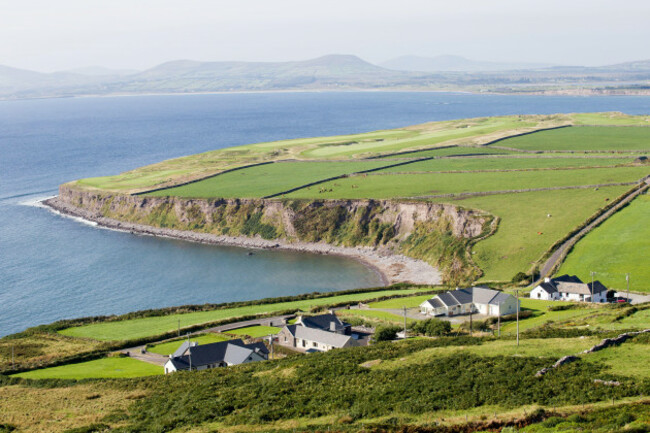
This speaks to the conflict between actually addressing a problem, and wanting to cause as little disruption as possible to the status quo. One TD from a rural constituency, speaking to journalists on Tuesday morning, began their address saying it was vital to defend the practice of letting out houses as holiday homes… and ended it complaining that there were not enough houses available to rent in their area.
But there is a broader point, about the relative lack of urgency in getting any legislation through the Oireachtas in the modern era. Only 21 bills completed their passage through the Dáil and Seanad last year – the joint-lowest total in the history of the State. The only year with fewer bills passed was 1922, where the Irish Free State only existed for three weeks before Christmas and still managed to get five Acts passed.
Some in government take issue with this as a bare statistic, pointing out that the throughput of legislation was disrupted by the formation of the government in the early months of the year. That’s a reasonable contribution, as is the row over speaking rights which delayed the formation of technical groups and therefore of Oireachtas Committees.
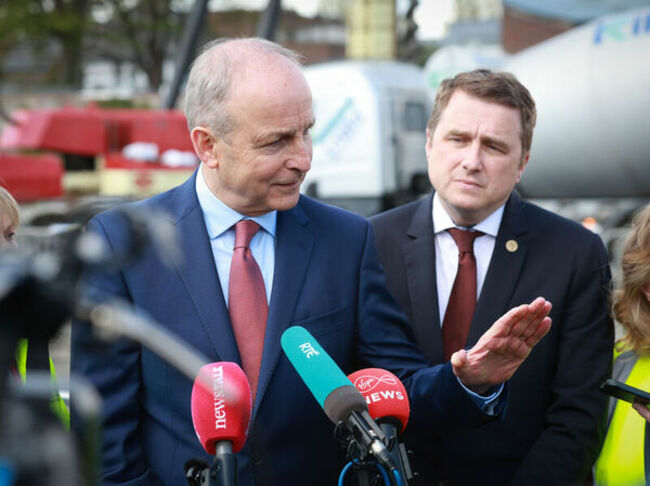
But unlike in an election year, the Dáil itself was not dissolved, and there was virtually no change of government: the two biggest parties had been returned to pick up the pieces of their own previous work programme.
Of course, that only bridges half of the gap between the admission of shortcomings – made by Darragh O’Brien in a relay of parliamentary party meetings in May 2021 – and finalising the plan to address it. This journey also takes a detour via Brussels.
The long-term to short-term solutions
The delay is not fully the Irish government’s fault. A little-known clause of EU law about the harmonised single market is that a proposed change to digital services needs to be notified to the ‘Technical Regulation Information System’ (TRIS) so that other member states, or the Commission itself, can make any observations about it.
This act actually necessitates a three-month standstill. In this case, the Commission put a twelve-month hold on the plans before eventually decreeing that the plans were a warranted intervention in the market.
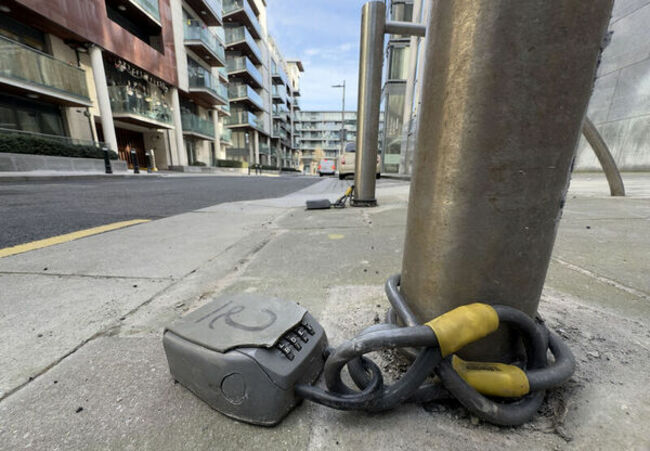
The reason for the 12-month pause was because Brussels were in the middle of its own plans, bringing in a Short-Term Rental Regulation which was adopted in 2024 – conveniently, taking any complexities out of Ireland’s hands!
Now there would be a Europe-wide legal basis requiring properties to exist on national registers, for Airbnb to display those numbers on adverts, and for all ads to exist in a common format for data-sharing.
The system wasn’t necessarily designed as a clampdown, but would remove some of the hurdles in Ireland doing so – and, crucially, remove any prospect of Ireland being an outlier and demanding features on websites that didn’t exist elsewhere. Countries had until May 2026 to get in line.

And yet… relative tumbleweed. The disruption of the general election, the tardy approach to picking up the pieces when the government was formed, and internal stasis means it’ll now be the summer of 2027 – eight years after the rules on planning permission were first used – before there can be any noticeable impact on the housing situation.
A country that acknowledged its problem (and a workable solution) five years ago has somehow contrived to introduce its system seven months after the deadline of a subsequent European scheme.
The system owes it to itself to consider why a plan with broad across-the-house support – save for the quibbling about the size of towns – took so long to introduce in the midst of such an acute national housing crisis.
It can’t just be the disruption of internal dispute, nor can it be the bedding-in period for a government that was re-elected with comfort.
So why the delay then? Someone somewhere must have an answer – one which might be revealing about the state (and the State) in which we find ourselves.
Gavan Reilly is the Political Correspondent for Virgin Media News and the host of Monday with Gavan Reilly, which airs every Monday at 10pm on Virgin Media Play and Virgin Media One.