








FOLLOWING THE RECENT floating of SpaceX as a publicly traded company, Elon Musk is being touted as the world’s first trillionaire. Even if there may be an element of smoke and mirrors about the precise calculation of his wealth, the world’s wealthiest man has just become richer.
However, in the very same week that Musk further enriched his personal coffers, he demonstrated yet again the other side of his persona, namely his mindless support for far-right forces, including on this island.
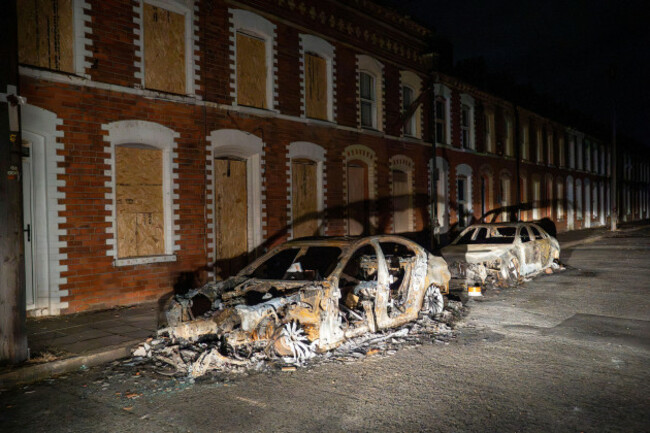
As the ultra-right Tommy Robinson was seeking to stoke up the anti-migrant riots in Northern Ireland after a knife attack, that led to many people being injured and homes being burned out, riots that police described as “racist thuggery”, the world’s first trillionaire was deploying his vast social media influence to retweet a Robinson post, adding the comment that “only by protesting REPEATEDLY and LOUDLY will there be any change”.
Elon Musk / X (Formerly Twitter)
What are we to make of Musk, this perfect modern embodiment of Dr Jekyll and Mr Hyde? A uniquely successful businessman who is politically illiterate. An entrepreneur who aims to enable human beings to live on other planets, but whose contribution to the politics of this planet involves making it a less attractive place for human beings to live.
The arrival of the world’s first trillionaire represents a timely moment to examine how we talk about what human worth truly is, to remind ourselves that morality rather than money should be the yardstick.
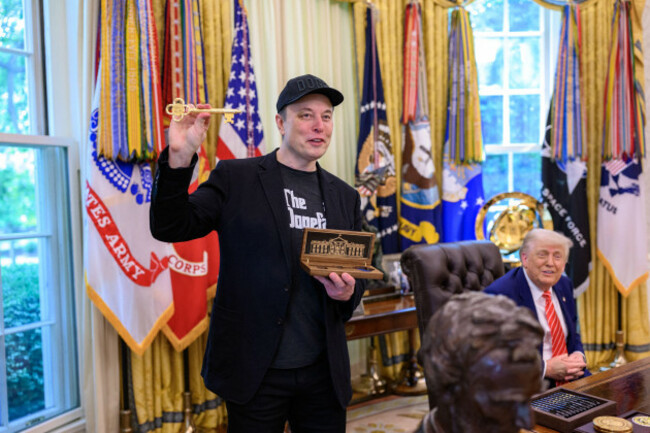
Hardly a day passes that we don’t see references to so-called “net worth individuals”, a phrase that has become standard usage. It implies that the value of a human being has some connection to their wealth, that the worth of an individual can be measured by the size of their bank balance.
It’s not just the specific phrase “net worth individuals” that is so inappropriate. There is a whole vocabulary based on an equation between wealth and worth.
“How much is he worth?”, we hear people ask about someone, when what they really mean to ask is how affluent he is. We are regularly informed that such-and-such a mogul is worth so many billions, or that the net worth of another tycoon has gone down.
Unintentionally or otherwise, whenever we talk breathlessly about rich lists or buy into the vocabulary surrounding them, we contribute to the misrepresentation of human worth.
Wealth and power
In the US in particular, some religious leaders even claim or imply an explicit link between the gospel message and prosperity. Wealth is absurdly presented as a reward for righteousness, in blatant contradiction of the gospel.
Many rich people are, needless to say, admirable. Even if some of those who have acquired great wealth have been single-minded in their pursuit of personal advantage, others contribute greatly to society, including by creating vital jobs. Some are generous in helping those in need.
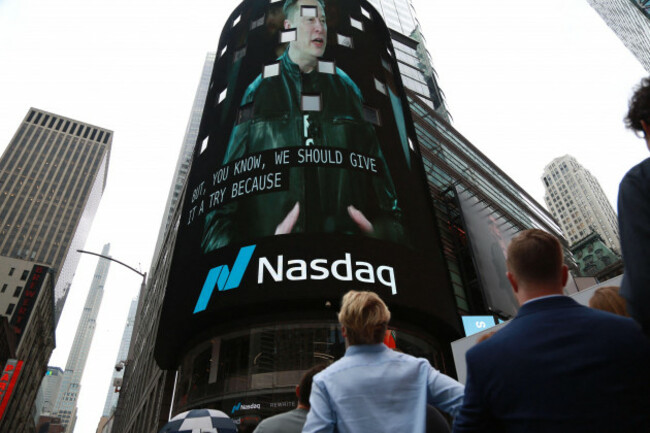
The simple truth, however, is that nobody’s human worth can be judged by how much money they have accumulated. It is beyond time that we stopped using language that gives credence to that myth. It is dangerous because the language we use can colour our own thinking and that of our societies.
There are admirable people in every walk of life. However, experience suggests that, on average, we are more likely to find true human worth in professions and walks of life in which success does not necessarily have to be spelt with a capital S and two lines through it.
One thinks, to cite just one example, of nurses. After the recent racist violence in Northern Ireland, many people were hospitalised. It is worth reflecting that some of those who tended to the injured, including one assumes some of the rioters, will have been migrants themselves.
We may never speak of the “net worth” of nurses and other healthcare professionals, who some years ago risked their lives for all of us during Covid, but they are a reminder that we must never confuse private treasuries with what is truly worth treasuring.
Schoolteachers are amongst the numerous others whose worth so often bears favourable comparison with the Musks of this world. They work without fanfare to equip the next generation to be able to discern the truth rather than propagating falsehoods or utter drivel through social media. They seek quietly to pass on the values of decency and tolerance rather than encouraging people to be consumed with self-importance and bigotry.
The American comedian Dick Gregory once said that love is more important than money, but that he was in the fortunate position that he loved money. There is an important truth behind that joke. The famous difficulty for rich men who want to get through the eye of a needle is not their wealth but their belief that money is important.
Many years ago in New York, I spotted an ironic slogan on a T-shirt: “Whoever has the most when he dies wins”. Musk looks like he’s well on course to win that fatuous race.
However, there are many unsung heroes in our societies who remind us that there is wisdom in the old saying that the real measure of a person’s wealth is how much they would be worth if they lost all their money. A trillionaire with the moral sensitivity of a chatbot would not score highly.
Bobby McDonagh is a former Irish Ambassador to the EU, UK and Italy. He is an executive coach and commentator on subjects around the EU and Brexit.