








SLIGO HAS HELD onto its title of being the cleanest town in Ireland, according to survey on littering by Irish Business Against Litter (IBAL).
For the first time, only one of the 40 areas surveyed – Limerick city centre – was deemed littered.
No town or city was deemed “seriously littered” or a “litter black spot” by IBAL’s survey.
Overall litter levels were on a par with last year, with 27 towns deemed clean.
An Taisce, which conducts the surveys on behalf of IBAL, praised Sligo for its clean approach roads, “exceptionally freshly presented” retail park and the “complete absence of litter” throughout the Great War Memorial Garden.
Monaghan, Leixlip, with Waterford follow Sligo in the cleanest towns rankings.
While Limerick city centre was the only area found to be substantially littered, a number of areas were considered to have a moderate litter problem.
These were Portlaoise, Dublin’s north inner city, Limerick’s south city, Tallaght, Dublin city centre, Ballymun, Dundalk, Galway’s inner city, Cork’s northside, Kilkenny, Fermoy and Clonmel.
Still, Dublin’s north inner city and Cork’s northside achieved their best results ever in the survey.
“The job’s not done, but across the country, local authorities appear to have upped their game when it comes to tackling persistently littered sites and dumping in our towns and cities,” said Conor Horgan of IBAL.
There were significant improvements in Navan, Carlow and Athlone scores. They have risen in the rankings and are now considered “clean to European norms”.
Bottles and cans still appearing on streets
IBAL said plastic bottle and can litter was found in 19% and 22% respectively of sites surveyed – the highest levels since the Deposit Return Scheme was introduced.
“If we had hoped that the DRS would see this litter disappear from our streets, it’s not happening,” Horgan said.
“15c or 25c does not appear enough to incentivise some people to return a bottle or can. That said, by reducing this litter by 50%-plus, the scheme’s impact on overall cleanliness levels is beyond dispute.”
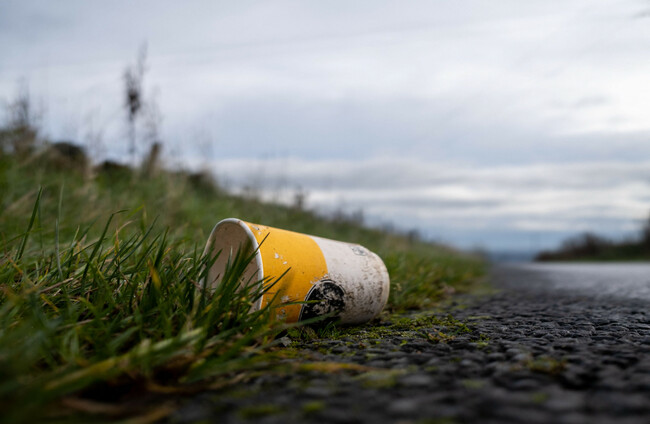
Meanwhile, the prevalence of coffee cups was at its highest level since 2023. This made it one of the main sources of litter on our streets, behind sweet papers, fast food wrappers, plastic bags and cigarette butts.”
Talk of a ‘latte levy’ has all but vanished, yet coffee cup litter clearly has not. The government inaction on this persistent problem is baffling,” Horgan said.
The study also found a significant increase in cigarette butt litter compared to 2025, with IBAL warning that butts are a toxic single-use plastic that contaminate the marine and land environment.