
惯性聚合 高效追踪和阅读你感兴趣的博客、新闻、科技资讯
阅读原文 在惯性聚合中打开

推荐订阅源

The Register - Security
云风的 BLOG
云风的 BLOG
U
Unit 42
F
Fortinet All Blogs
The GitHub Blog
The GitHub Blog
cs.CV updates on arXiv.org
D
Docker
Cyber Security Advisories - MS-ISAC
S
Secure Thoughts
Hacker News: Ask HN
Hacker News: Ask HN
Vercel News
Vercel News
S
Security @ Cisco Blogs
GbyAI
GbyAI
Stack Overflow Blog
Stack Overflow Blog
Exploit-DB.com RSS Feed
I
Intezer
MongoDB | Blog
MongoDB | Blog
AI
AI
MyScale Blog
MyScale Blog
Engineering at Meta
Engineering at Meta
Y
Y Combinator Blog
Threat Intelligence Blog | Flashpoint
P
Proofpoint News Feed
钛媒体:引领未来商业与生活新知
钛媒体:引领未来商业与生活新知
W
WeLiveSecurity
博客园 - 叶小钗
S
SegmentFault 最新的问题
N
News | PayPal Newsroom
WordPress大学
WordPress大学
freeCodeCamp Programming Tutorials: Python, JavaScript, Git & More
D
DataBreaches.Net
小众软件
小众软件
Microsoft Azure Blog
Spread Privacy
Spread Privacy
H
Help Net Security
美团技术团队
博客园 - 司徒正美
T
Threat Research - Cisco Blogs
cs.AI updates on arXiv.org
K
Kaspersky official blog
Application and Cybersecurity Blog
K
KPMG report finds enterprise disconnect between AI and its ROI | CIO
V
Vulnerabilities – Threatpost
TaoSecurity Blog
TaoSecurity Blog
N
Netflix TechBlog - Medium
L
Lohrmann on Cybersecurity
J
Java Code Geeks
量子位
Martin Fowler
Martin Fowler
博客园_首页

TheJournal.ie

Court told Eleanor Donaldson placed bugging device in her husband’s car over fears of affair TD says she's been left with 20cm scar after skin cancer diagnosis Homelessness: Record number in emergency accommodation, including new high for children Blue Origin rocket explodes during test launch Uber app now allows passengers to audio record their journey if they feel unsafe John Gibbons: The planet is burning, but Ireland still isn't taking climate change seriously 'Truly devastating': Tributes paid to Masuma Sohrabi after stabbing in Clifden Mother and carer: You don't appreciate public services until your child needs them to survive Left or right? Sinn Féin's fence-sitting may be about playing the long game Gavan Reilly: Gerry Hutch and his 30% vote in Dublin Central's best-heeled area Gavan Reilly: The Gerry Hutch 37.1% share of the vote in the shadow of the IFSC Ebola on the rise: Why the latest outbreak should concern all of us Ireland's data centre energy drain: How Big Tech added €1.4bn to household electricity bills Living with myeloma: 'I chose not to fight this blood cancer, but to instead live alongside it' Alberta’s separation bid: How Canada’s next political crisis could come from within Kelly Earley: Militarism might be Ireland’s next economic disaster Raising them right: Ireland has a dog poo problem, and we parents are sick of stepping in it Money Diaries: A recently graduated digital journalist on €35K living in Dublin Global tech job losses: Is ‘AI-washing’ the new trend nobody wants to call out? Down on the farm with a difference: This is what happens when animals are allowed to feel safe Surrealing in the Years: Some shameful Irish attitudes take a leaf out of Israel's book Motoring: Should we trust self-driving cars? The physio is in: Ireland is growing older, but are we moving enough to age well? Tech dubbed 'creepy': AI smart glasses are here, but our privacy laws have not caught up Larry Donnelly: The polls point one way for Friday but byelections rarely follow the script The war on human thought: Educational institutions must take back control from AI The Bee Guy: World Bee Day won't save our little bee friends Kelly Earley: Could Mountjoy Square be Dublin’s most important park? Money Diaries: How is your spending and saving going? Would you like to keep a diary for us? Rearing them right: Should modern parents bring back ‘the man’? Ireland's energy future: What if the real failure here is that we stopped thinking bigger? Barry Cummins: I shudder to think I sat in Tina Satchwell’s home while her body lay buried there Richard Boyd Barrett: Sanction Israel now, the way we did Russia An Spidéal in a byelection: We're caught between dereliction, development and a lack of vision Growing old disgracefully: The older I get, the more I understand my granny Surrealing in the Years: How is Bertie Ahern still finding new ways to disappoint us? Drink-driving: If your chance of being caught is 1 in 77, where is the deterrent? Navigating an uncertain world: The adults are panicking, but the kids are alright Lynn Ruane: The evidence clearly shows that the 'war on drugs' was a failed experiment The Bezos Ball: This year's Met Gala sold its soul to billionaires, did anyone notice? Labour's long knives: Starmer may be weak, but his opponents are not strong Life on the road: Our shared MS diagnoses forced us to finally start living How are you dealing with the cost of living? Would you like to keep a Money Diary for us? Kelly Earley: Should we scrap HAP? Ireland urgently needs an alternative Loss of a parent: I spent 50 years preparing for my father's death, but it still came as a shock Body of Evidence: Why your body starts storing fat in your 50s — and how it affects your brain Hear me out: Every new school building site should also be a classroom Money Diaries: A software engineer on €100K living in Dublin Life with a stoma: My worst nightmare became a reality, but this has given me my life back Summer festival supports: At PsyCare, we aim to be the calm in the chaos Surrealing in the Years: Come on guys, we don't have it in the locker to pull off nuclear energy Car love: I have that strange affliction of seeing cars as having personalities and souls David Attenborough turns 100: He brought the natural world into focus for us, we owe him so much Leavitt steps away, DJ Rubio wings it: Trump’s White House looks increasingly chaotic Time to act: Animal cruelty still happens every day in Ireland – our laws must catch up The housing crisis: Like wildfire, we need to abandon the delusion it’ll burn itself out United Ireland: On the contrary, Northern Ireland is not a burden, it brings fresh opportunities Dr Catherine Conlon: Hantavirus at sea triggers a global health response — what is this virus? Ireland, an electrostate: 100 years after Ardnacrusha, we now face the same energy challenges Good Vibrations: The Cork choir helping cancer survivors to reclaim their voice Money Diaries: An apprentice mechanic on €22K living in the Midlands Opinion: Women over 40 have been sidelined for too long. Now we push back Neurodivergence: The phrases people with ADHD are tired of hearing Surrealing in the Years: I'm not a government minister and AI didn't help me write this article The people carrier: Why have they almost disappeared from Irish roads? AI not so ready: The government's new tech literacy platform needs some improvement From Gaza to Iran: Israel's regional conflict expands with little accountability Stephen's Green Shopping Centre: Jaded Dubliners have had enough of bland, soulless buildings Noeline Blackwell: Character witnesses expose a legal system that fails victims Minister for nature: We need to work together to protect against biodiversity loss Kelly Earley: Don’t fall for the idea that Dublin is dangerous Irishwoman living abroad: Like many of my generation, the 'bailout babies', I chose emigration Gender-based violence: It’s time to recognise survivors as experts by experience Money Diaries: A compliance officer on €45K living in the Midlands Blood donation: Ireland's stocks are a lifeline for patients, but the system is under strain An Irish conundrum: Why do 125 people a year buy a convertible in this country? When morality becomes law: The parallels between modern oppressive Iran and Ireland’s past Surrealing in the Years: Housing plans will have us living like Bosco, if Bosco had roommates Fail to prepare: Recent fuel protests have exposed Ireland’s lack of future climate planning Larry Donnelly back from Boston: The recent fuel protests have struck a chord in Irish America Caroline Foran's new book: I wish I'd known sooner that self-compassion changes everything The Spring Economic Statement: Ireland is no longer forecasting the future, it’s bracing for it Soccer academies: Football can unite Ireland, but the hard work to build its future starts here The physio is in: The rise of fitness wearables is changing how and why we move Pirate queens, powerbrokers & public servants: Anne Chambers on her life as an Irish biographer Dublin's screen-free school: We have no tablets, no screens and no regrets Money Diaries: A man receiving invalidity pension living in the west of the country Office vacancy rates: Dublin's busy office market isn't broken, the interpretation of data is The money dial: How we manage our finances best to protect what we care about the most Opinion: Carbon tax may be the tax we love to hate, but it's the one we can't afford to scrap From Idaho to Ireland: I chose to leave the US behind, and now I love my new home Maria Walsh: Hungary's election result shows the centre can still hold in Europe Opinion: With a 'looksmaxxing' influencer rushed to hospital, is the war on ageing getting ugly? Opinion: The protests aren't just about fuel, they're a revolt against a hollow state The Pontiff vs the President: Trump, Pope Leo and the Catholic contradiction Women and the Catholic Church: Reform has long been promised, but real change has been denied Motoring: How we can all get a bit more from our fuel Surrealing in the Years: 'Fuel protests' are bad news for a society that's given up on nuance Some very creative accounting was needed to greenlight the Galway ring road It's his menu, not ours: Let's not rush to criticise Rory McIlroy's choice of dinner
Harm reduction drugs policy: Compassion for some cannot become a risk to all
Dr Chris Luke · 2026-04-12 · via TheJournal.ie

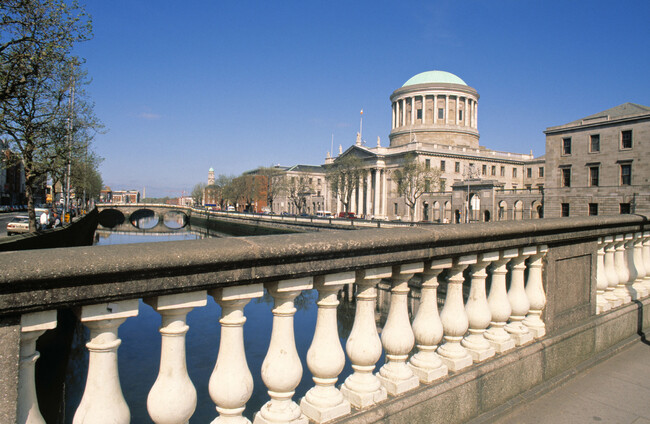
Dr Chris Luke asks if Ireland’s drugs strategy has tilted too far from accountability. Alamy Stock Photo

Accountability

Ireland’s modern drug policy has evolved to save lives, but society cannot ignore the real-world consequences of drug-related violence and harm to others, writes Dr Chris Luke.

ONE OF THE enduring legacies of my time as a young consultant in emergency medicine in Liverpool, in the 1990s, has been an enthusiasm for the city’s ‘Harm Reduction’ approach in tackling the use of (illicit) drugs.

For those unfamiliar with this now-widespread public health notion, the concept translates into a (1) compassionate and (2) ‘pragmatic’ approach to drug users, that prioritises keeping them alive and well instead of abruptly enforcing abstinence or ‘criminalising’ them by reflexively involving the police when drug use is discovered.

Earlier informal ‘harm reduction’ models did exist (like the ‘crash tents’ at the Isle of Wight or Glastonbury music festivals, the Ana Liffey Drug Project in Dublin in 1982, or the world’s first syringe exchange in Amsterdam in 1984), but the “Mersey Model” in the mid-1980s is widely credited with popularising harm reduction, with the UK’s first major syringe exchange service, a radical new policy by Merseyside Police of not prosecuting people for possessing needles for exchange and the advocacy of pioneers like Dr John Marks for prescribing pharmaceutical alternatives, including Heroin and Methadone, to ‘stabilise’ users’ lives and reduce crime.

And, in 1990, Liverpool (Dublin’s twin city) hosted the 1st International Conference on the Reduction of Drug Related Harm, which led to the founding of the International Harm Reduction Association (now Harm Reduction International).

I have good reason to appreciate the harm reduction model. For most of my career in emergency medicine, I worked in the heart of cities – Dublin, Edinburgh, Liverpool and Cork – with devastating drug problems, and dealt almost daily with the medical consequences, from overdoses to injection site abscesses, cardiac infections to AIDS, as well as the ‘challenging’ behaviour of those battling with addiction, like drug-seeking or pilfering from healthcare stocks.

Does harm reduction mean no responsibility?

Moreover, I’ve always had a particular empathy for the people of the inner city: my grandmother started life in Dublin’s north inner city tenements, I spent some of my own early years in an orphanage, and I’m acutely aware of the role of a ‘lucky break’ (I was profoundly fortunate to get into medical school), as well as the importance of social justice and fairness.

In short, I know that ‘talent is everywhere, but opportunity is not’ and that it is this latter reality (a.k.a. poverty) that ‘drives’ most drug misuse.

It is perhaps paradoxical then that it is the very notion of social justice that has recently made me question the whole paradigm of harm reduction, as set out by former Taoiseach, Leo Varadkar (in his foreword to the National Drug and Alcohol Strategy Document, of 2017): “treating substance abuse and drug addiction as a public health issue, rather than a criminal justice issue”.

But, as is so often the way with world-weary healthcare professionals, it was one very real and personally relevant case in my old workplace that convinced me that there’s an urgent need to review a key precept in harm reduction, namely, the prioritisation of ‘public health’ over ‘policing’.

The case was that of an 88-year-old newly widowed farmer, who was brutally attacked in his bed at a major hospital in this country three years ago by a deranged younger patient, who was reportedly in the throes of drug-related delirium. Subsequently, in court, the perpetrator was found not guilty of murder but guilty of manslaughter, through diminished responsibility (after consuming an opioid, Cannabis and a huge amount of Xanax).

In a moving post-trial statement, the victim’s daughter said that her father had deserved to ‘slip away from this world as gently and kindly as the man he was, surrounded by his family, hearing their voices and knowing he was loved. Not lying in bed terrified, then choking on his own blood after being beaten to death by a man shouting that our dad had eaten his children’.

She went on to say, “I consider such a verdict acceptable only for genuinely ill individuals, not for those suffering delirium due to self-induced drug withdrawal… We are the product of our choices, and I will never accept excuses suggesting the perpetrator was not responsible for his actions. His own life choices led to him punching our dad to death”.

After spending decades in city-centre emergency departments and courtrooms, I’m familiar with this argument, and there was a time when I would have reluctantly accepted that this was just ‘a tragic and unusual case’. But no longer. In recent times, there’s been a growing litany of drug-related cases in all parts of the Republic that have involved what one judge described in March 2026 as “almost indescribable savagery”.

The worst of these cases have involved screwdrivers, guns, axes, knives, Samurai swords, blowtorches, heated ‘branding irons’ and flammable liquids, driven by ‘spiralling’ paranoia or hallucinations, resulting in a quick death, if the victim was ‘lucky’ (with or without ‘demonic’ mutilation or dismemberment), a slow painful death due to multiple injuries or direct immolation or sometimes subsequent suicide out of fear of a drug gang.

In terms of the harm caused by drug-using individuals to others, these killings are still thankfully relatively rare. In truth, the vast majority of ‘harm to others’ is actually caused by frightening antisocial behaviour (often on public transport or in public spaces). Much of its origin lies with negligent, chaotic or brutal ‘parenting’ by (third-generation) drug addicts. And the many other manifestations of ‘third-party harm’ include rampant drug-adjacent vandalism of parks or city-centre shoplifting.

Or widespread drug-debt intimidation (2,600 drug-related intimidation crimes were reported to Gardaí since 2020). Or drug-driving (in about 10% of road fatalities). Or drug-using prisoners (70% of inmates) with violence-inducing paranoia and hallucinations.

Genuine harm reduction

None of this is an argument against harm reduction itself. The principle remains both humane and necessary, but we must, as a society, be clear about what harm reduction is and what it’s not. It should never be a diversion from accountability. Compassion for addiction should not extend to a tolerance of violence, because a society that prioritises public health must also protect the public. 

That means we must hold two truths at once… yes, addiction is complex and often rooted in disadvantage, but actions taken under its influence, especially those that terrorise, injure or kill, must still carry consequences. Without that balance, harm reduction risks losing both its credibility and moral footing. 

So when I think of ‘harm reduction’ now, I no longer think of the parable of the Prodigal Son, for whom a paternal welcome and forgiveness were a simple-ish solution. That notion belongs to a long-vanished era. I believe it is now a matter of common sense that the ‘harm’ we see today is not like that, mostly affecting disadvantaged users in a 1980s inner-city Heroin epidemic.

In reality, it is a calamitous epidemic mostly affecting non-drug users that we have hitherto played down, with a distorted kind of ‘charity’, or denial.

Let’s prioritise ‘Collective’ harm reduction then, and include the victims of drug crime in that. I suggest we move to a different (more ‘democratic’) public health plus policing approach, the sort applicable to a ‘major incident’, in which the scale of a disaster threatens to overwhelm the response resources available. And what we do is for the ‘greater good’, and while dealing with people who are not necessarily ‘compliant’.

Because – and believe this coming from a grizzled veteran of the healthcare frontline – it is not the ‘trauma-informed approach’ of a therapist you need when you’re dealing with a drug-fuelled and violent individual who’s threatening to kill you or your loved one.

If you’re expecting the healthcare or social welfare system to sort out that kind of threat, then you need to think really carefully about who you’re going to call regarding that very, very agitated young man or woman, who has just ended up in the next seat – or bed – to you. 

Dr Chris Luke is a retired consultant in emergency medicine and a healthcare commentator.

Readers like you are keeping these stories free for everyone...

A mix of advertising and supporting contributions helps keep paywalls away from valuable information like this article. Over 5,000 readers like you have already stepped up and support us with a monthly payment or a once-off donation.