


On Haulbowline Island in 1939, just days before the outbreak of the Second World War, the opening of Ireland’s first steel plant was a boost for local and national industry.
The Cork Harbour location had been chosen to address low employment in Cobh, and business was bolstered by friendly tariffs and government support.
Although it initially struggled as a private business, the plant’s transformation into a semi-state body in 1946 enabled Irish Steel to endure for more than 50 years. The plant remained a source of employment until its closure in June, 2001, with the loss of 400 jobs.
As the 25th anniversary of that dark day arrives, the plant still occupies an important space in the minds of its workers.
The 1960s saw a construction boom, with the plant operating 24/7 to meet demand. Johnny Campbell, who joined the plant in 1967, notes that “you could always do overtime” and, occasionally, he worked seven days a week.
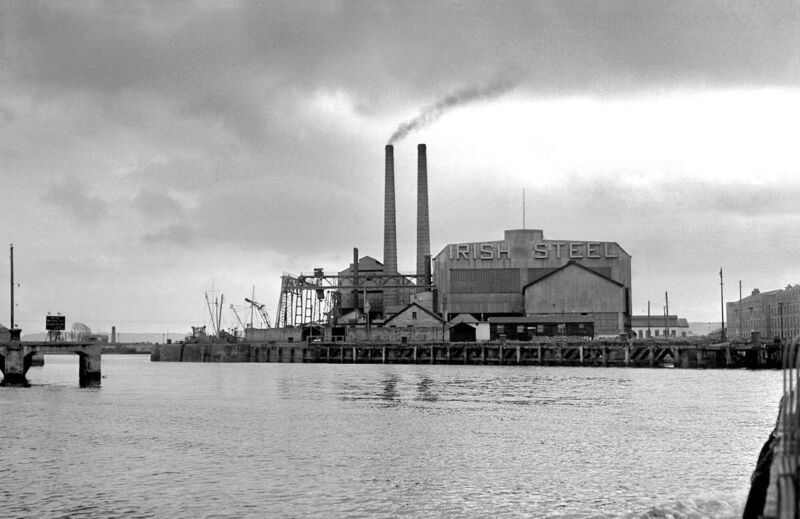
By the 1970s, the plant had upwards of 1,200 employees. It was a tough job. Michael O’Regan, who worked rolling steel in the mills after it was melted and poured in the foundry, says: “I had to bring my own overalls. I had no helmet. No mask. I bought overall pants and, basically, that was it.”
A ‘utility man’ who could turn his hand to anything, Michael became a lab technician. But “no matter what you touched”, he says, “you were dirty”.
With Ireland’s entry into the EEC, the State’s friendly tariffs disappeared just as an oil crisis caused demand to plummet. By the mid-1980s, the Irish Steel workforce had been halved.
After Dunlop, Ford, and the Verolme Cork Dockyard closed in the early 1980s, Fianna Fáil TD Pearse Wyse declared that “we, in Cork, have only one industry left and that is Irish Steel”. A further £108m (€137m) was provided to cover the company’s debts.
The plant was safeguarded by politicians who feared the consequences of closure. Irish Steel was, after all, reasonably well-paid and secure employment.
When Val O’Mahoney joined in 1986, his father had completed two decades of service. At first, Val “didn’t want to be in”, but was “delighted in the end”, as he went from £120 (€152) a week on construction sites to £350 (€444) or £400 (€508) a week driving gantries and loading product onto the dockside.
A young man, Val didn’t mind rolling shifts. He worked two 12-hour days and two 12-hour nights, with four days off. “It was hard, hard graft,” he says, but that didn’t stop him working a few extra shifts in Mojo’s, a music and biker bar on Buckingham Place.
Christopher Buckley, who joined the mills in 1988, could earn nearly double wages for weekend night-shifts. Only, “you’d miss your Saturday nights out or long weekends”. Still, “there was great craic”. He would golf or play snooker with colleagues on days off, while Val and Michael often took a boat out with the plant’s fishing club.
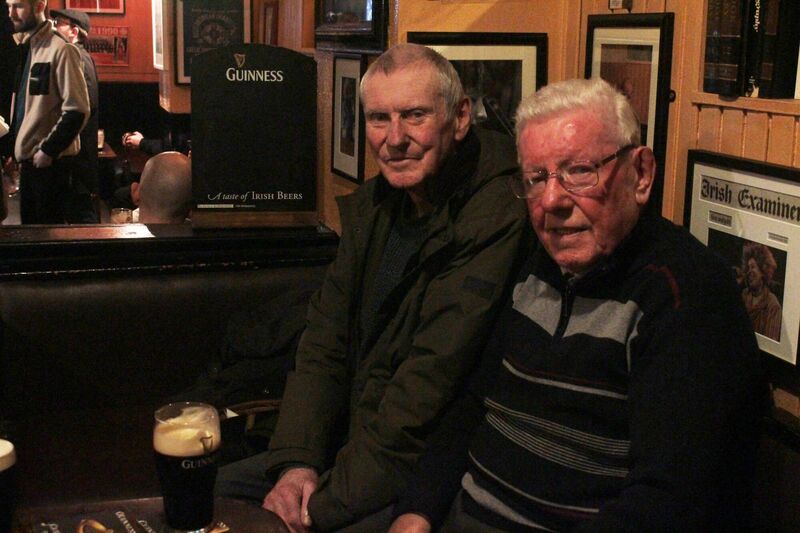
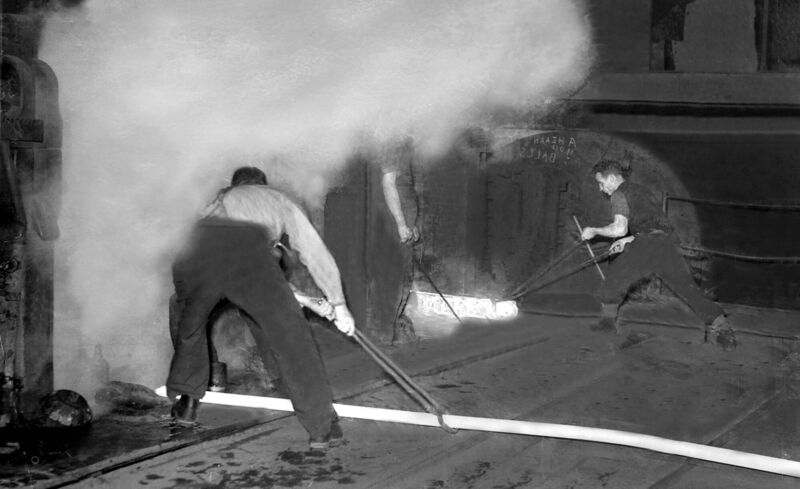
By Christopher’s time, “you were given your overalls, boots, a helmet, and earmuffs”, but the work remained “heavy, hot, and loud”. Accidents, some fatal, were not uncommon. As Michael says: “If something went wrong, it went wrong”.
He remembers “a lot of turmoil in different families. People I knew ended up in precarious situations. To see things like that is hard”.
In lieu of training, Val learned safe practice from hearing “horror stories” about former workers.
By the mid-1990s, Irish Steel was losing £1m (€1.26m) a month and political support had faded. The plant was sold in 1996 to steel-magnate Lakshmi Mittal’s ISPAT International for just £1 (€1.26). As part of a five-year contract, a £30m (€38m) investment was to be made and employment could not drop below 300 staff.
Workers were sceptical. Michael doesn’t think “anybody thought ISPAT were going to keep it open”, adding of Mr Mittal: “He promised them five years and that’s what he gave them.”
Sure enough, on Friday, June 15, 2001, ISPAT ceased operations and 407 jobs were lost. Staff received statutory redundancy.
Christopher wasn’t surprised, but he was disappointed by the way things ended.
As staff left the plant, they were greeted by a new security team to search their cars. The workers promptly responded: “Do you really think we’re carrying out lumps of steel in the boot?”
To Val, Mr Mittal “didn’t care about the workers. The week it closed, his daughter got married in London. It was £7.5m (€9.5m) for the one day.” The steel magnate is currently said to be worth €30bn.
Just before ISPAT took over, Johnny took a voluntary redundancy package.
Friends told him he was too young, at only 51 years of age, but he was confident he’d find enough work.
Christopher thinks “some lads didn’t take it that probably should have. Fellas with 40 years’ service ended up getting statutory (redundancy pay). They could’ve walked away with a nice sum, but they thought the place would never close; that it was there for life.”
Val thinks the closure was hardest for Cobh. When the Irish Fertiliser plant closed the following year, with more than 600 job losses nationwide, “there was nothing down there. The whole town was devastated.”
Over the years, 500,000 tonnes of dumped waste increased the size of Haulbowline by 22 acres.
After threats of legal action from the EU, a clean-up of the site was finally completed in 2021 at a cost of €60m. Now a public park with 200 trees, wildflower gardens, and sporting grounds, the site is nearly unrecognisable.
As they look back on the Irish Steel era, its workers celebrate their colleagues above anything else.
Christopher, who has been a driving instructor now for 22 years, notes that “you bump into them here and there and you always have a chat’”.
Val has managed The Gables Bar, on Douglas Street in Cork City, for 18 years, while Michael works just a few doors down, at the Cork Flower Studio, as their delivery driver.
At 68, Michael describes himself as “semi-retired”, despite working five days a week. He doesn’t need to work, but “you have to be doing something”, he says.
Does it feel like 25 years?, I ask.
“It’s all part of a life,” he says.
此内容由惯性聚合(RSS阅读器)自动聚合整理,仅供阅读参考。 原文来自 — 版权归原作者所有。