

惯性聚合 高效追踪和阅读你感兴趣的博客、新闻、科技资讯
阅读原文 在惯性聚合中打开

推荐订阅源

WordPress大学
WordPress大学
D
Darknet – Hacking Tools, Hacker News & Cyber Security
Hacker News: Ask HN
Hacker News: Ask HN
N
News and Events Feed by Topic
Forbes - Security
Forbes - Security
The Last Watchdog
The Last Watchdog
TaoSecurity Blog
TaoSecurity Blog
Schneier on Security
SecWiki News
SecWiki News
V
Vulnerabilities – Threatpost
Project Zero
Project Zero
O
OpenAI News
W
WeLiveSecurity
Security Archives - TechRepublic
Exploit-DB.com RSS Feed
H
Hacker News: Front Page
Cisco Talos Blog
Cisco Talos Blog
Spread Privacy
Spread Privacy
Help Net Security
Help Net Security
P
Privacy & Cybersecurity Law Blog
K
Kaspersky official blog
S
Security @ Cisco Blogs
Latest news
Latest news
AWS News Blog
AWS News Blog
U
Unit 42
Martin Fowler
Martin Fowler
阮一峰的网络日志
阮一峰的网络日志
S
Secure Thoughts
CTFtime.org: upcoming CTF events
Application and Cybersecurity Blog
Know Your Adversary
Know Your Adversary
Scott Helme
Scott Helme
博客园 - 司徒正美
B
Blog RSS Feed
C
Check Point Blog
Hacker News - Newest:
Hacker News - Newest: "LLM"
D
Docker
Google Online Security Blog
Jina AI
Jina AI
aimingoo的专栏
aimingoo的专栏
Recent Commits to openclaw:main
Last Week in AI
Last Week in AI
月光博客
月光博客
C
CXSECURITY Database RSS Feed - CXSecurity.com
S
SegmentFault 最新的问题
NISL@THU
NISL@THU
T
The Blog of Author Tim Ferriss
C
Cisco Blogs
Attack and Defense Labs
小众软件
小众软件

IrishExaminer.com

Seriously ill in Gaza: ‘I wondered whether the cancer or a missile would kill me first’ California dreamin’: Could a Trump-supporting Brexit cheerleader capitalise on Democrats' dithering? Ukraine saw 89 children killed in March. But we are sending them back? Louise Burne: Decade of squabbling over hospital leaves sick children in limbo Enda Brady: Charles did his job well this week, but will it be enough to sate Trump? 100 years of Fianna Fáil: Party must move from analysis to action to survive another century Margaret E Ward: Technology’s war on women — the new coercive control and confinement Ireland must act on fossil fuel phase-out Diversity and inclusion policies change lives — including mine Aoibhinn Ní Shúilleabháin: People care about losing the natural world — politics must catch up Ireland's towns bear the brunt of the urban/rural divide Our town centres cannot hold without reinforcements Free travel will help people fleeing abusive homes Workplace bullying is not rare — and the response is not improving Homeless figures don't count all those without housing Supports have improved for women in politics but there is more to do Cost-of-living crisis is impacting how we look after our pets Millennials have a moral obligation to avoid the Harry Potter reboot Sprucing up the truth: Schools should not be a battleground for vested interests Missing dogs tell a different story of greyhound welfare Mick Clifford: Nobody needs to 'lawyer up' to investigate treatment of Limerick gardaí Colin Sheridan: Has the world finally caught up with Lena Dunham's vision? We need a change in attitude to construction jobs if we are to deliver on housing and infrastructure Barry Andrews: Big publishers are ripping off our public libraries Losing my dad during covid is something I will never get over Tadgh McNally: Fine Gael has good reason to wish Leo Varadkar would just go away Major changes to espionage laws abroad sparks domestic review Louise Burne: Back and forth over shed laws shows unease still lodged between coalition parties Shed laws: New planning rules will cut red tape for homeowners Shed laws: We can't allow the creation of a shadow back garden rental market Small, practical measures can work alongside big ideas on solving housing crisis Fuel crisis shows Ireland cannot build a secure future on imported energy Adi Roche: Forty years have passed but Irish commitment to Chornobyl remains Singing together can help build community in divisive times Contraception is free, but it's not reaching everyone who needs it Seán Kelly: Viktor Orbán's loss is the EU's opportunity for a bold move on foreign policy TP O'Mahony: Link between religion and politics in the US is unique in the West Online abuse of politicians is a profitable business Power must be held accountable even in moments of pressure Ireland is addicted to contracting away all kinds of State capacity Here are the country's most senior civil servants running Ireland ‘I’m not a politician’: Clash with Pope Leo could prove dangerous for Donald Trump Global food systems are under fire due to a lack of political will Philomena's Law: Campaign steps up for UK-based survivors of mother and baby homes Are disruptive protests the new political force in Ireland? Fuel blockades expose state vulnerabilities From defiance to departure: 45 hours that changed everything for Michael Healy-Rae Louise Burne: All talk, no takeover — the problem with plotting Micheál Martin’s exit The tricolour is a powerful symbol of inclusion so let's reclaim it from those who use it to sow division Conviction of Scottish man in wife's suicide is a landmark case Our politics can't cope with TikTok's emotional instancy The Mick Clifford Podcast: Is Micheál Martin's leadership in peril? Conscription is being reintroduced all over Europe — where is the debate? Mediation should be the first resort for conflict resolution Fuel furore shows our systems are more fragile than we think New Deis strategy is not radical enough Paul Hosford: Healy-Rae resignation a shock but not a fatal blow for Government Ireland has a planning system, but it's not plan-led Cormac O'Keeffe: Fuel protests ignite concerns over security as EU presidency nears Conor McCabe: Protesters' grievances are real — they're bearing a heavy load Would Donald Trump threaten the Vatican over Pope Leo's anti-war stance? Anti-migration policies are threatening to dismantle human rights Who is Péter Magyar: Hungary’s next leader energised voters but is ‘a dark horse’ Paul Hosford: Life goes on in Kyiv as Russia's war on Ukraine grinds on Paul Hosford: Government fights back with €505m spend after social media posts fuel national crisis The hardest part of your dog dying isn't just losing them. It's that you decide when they go David O'Mahony: The real world is quickly surpassing any horror speculative fiction can create Shona Murray: EU faced with Russian trojan horse if Orbán gets re-elected Russia and White House doing all they can to prop up Viktor Orbán John Gibbons: I've changed my mind on nuclear power — we don't need it any more How this week's protests fuelled confusion and consternation at Leinster House Waiting for tide of public opinion to turn on fuel price protesters is a gamble Fuel protests are undemocratic and respect no rules If you want to object to building over Bessborough, you have one week Farmers need targeted supports as they're facing most pain Irish science's surprising role in the Artemis mission Dorcha Lee: Security will be the big challenge for Ireland's EU presidency Housing 'affordability' means different things in rental debate Our leaders must show courage in commitment to peace by keeping the triple lock Viktor Orbán blazed a trail for Donald Trump’s assault on independent media Don't let what's happened in London replicate itself in Cork Big Tech shouldn’t be writing the rules for AI €4 for a coffee is not expensive when you consider it’s a small miracle in a cup Why we’ve gone mad for puzzles The reality behind Ireland’s anti-submarine warfare plans Assessment of need reform will not fix wider crisis of accessing care and children will pay the price Teacher pay and school funding on agenda of conferences Enda Brady: Keir Starmer has set the clock running on Britain rejoining the European Union 'SSIA on steroids': Will the Government's new savings and investment account deliver? Seven deadlines and an AI dilemma: Is the new Leaving Cert fixing one problem by creating another? Marion McKeone: JD Vance needs all his Machiavellian instincts to avoid becoming Trump's whipping boy European Parliament vote creates legal vacuum in battle against online child abuse Why has it taken so long to return to the Moon? We don't just need to limit the number of TDs, we need radical reform of our electoral system Paul Hosford: Ukraine war merely another chapter in Russia's aggression against its neighbour The climate change warnings are getting louder — are we just refusing to listen? Our school meals programme must use community hubs and on-site kitchens cooking local produce Life goes on in Cuba despite brutal US blockade Paul Hosford: Ministerial meeting in Ukrainian bomb shelter reminds us of the stakes If Donald Trump were your ageing father, when would you take away his car keys? 'Drink‑driving is not an accident': Cork emergency consultant calls for urgent reforms to save lives
Kieran Connell: Ireland has a long multicultural history. It's time to tell that story
Kieran Connell · 2026-05-20 · via IrishExaminer.com

Most people reading this will know someone who has left Ireland. Many will have done so themselves. Some might still be overseas, reading the Irish Examiner to keep up with events back home.

From music, literature, and film to Irish presidential speeches, the experience of emigration is at the heart of Irish culture and identity.

Read More

But what of the people who made this journey in reverse? What were the experiences of people who moved to Ireland to make new lives for themselves, as opposed to those who followed the well-trodden path abroad in search of pastures new?

Immigration to Ireland is often thought about as a modern phenomenon. And it’s true that, over a short space of time, Ireland has become remarkably diverse.

HISTORY HUB

If you are interested in this article then no doubt you will enjoy exploring the various history collections and content in our history hub. Check it out HERE and happy reading

Between 2012 and 2022, more than 400,000 people migrated to Ireland. There are around a million people born overseas living in Ireland today. That’s 20% of the entire population.

Immigration is not new

But as the recent release of the 1926 Irish census shows, immigrants were a part of Irish life almost from the moment independent Ireland was born.
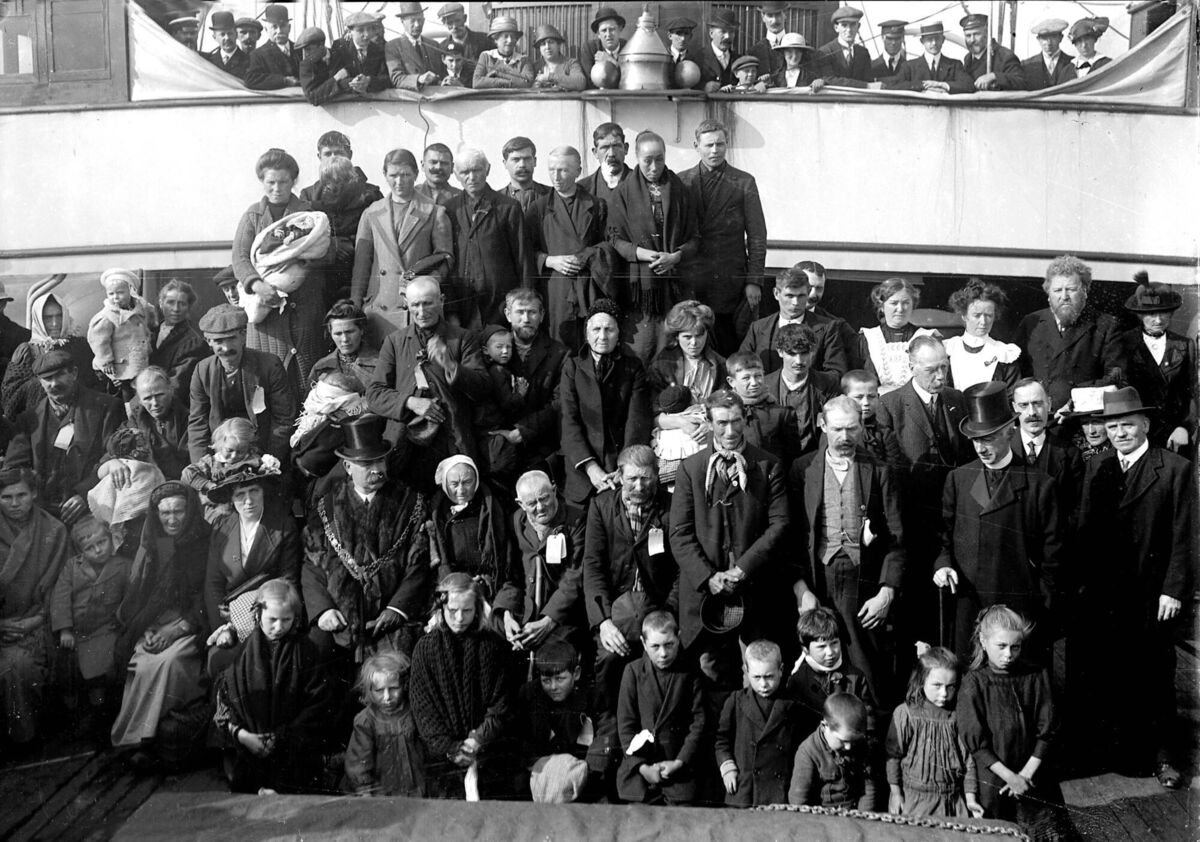
Lord mayor Henry O'Shea with Belgian war refugees in Cork in September 1914. O'Shea himself had emigrated from Ireland to the US and returned, building up a bakery business. The storied Cork nightclub Sir Henry's was named after him. Picture: Irish Examiner Archive

Immigrants were recorded making lives for themselves in pretty much every part of the Free State in the 1920s — from the Germans who moved to Limerick to work on a hydroelectric scheme, to the Egyptian sailors who settled in Cork, and the Polish immigrant who married an Irish woman and thereafter ran a hairdressers in Waterford.

As the century went on, university towns also attracted growing numbers of overseas students.

By the 1960s, there more than 1,000 such students studying across Ireland, many of whom came from Nigeria and elsewhere in Africa.

Having often formed relationships with locals, it was this period that saw the emergence of a small but significant mixed-race population in Ireland.

Hungarian refugees in 1956 

Newcomers didn’t always have an easy time. In 1956, with Ireland having just become a member of the UN, the Irish authorities decided to accept up to 1,000 refugees from Hungary, where the Soviet Union was brutally suppressing a popular movement for democratic reform.

The Hungarians were housed in an army barracks in Knocknalisheen, Co Clare.
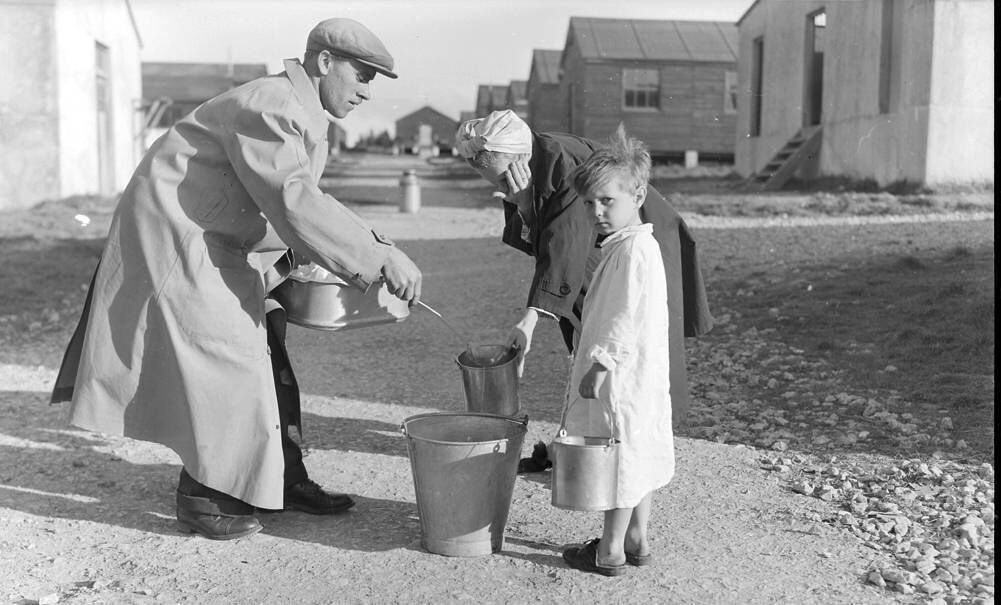
Hungarian refugees did not have an easy time at Knockalisheen camp in Co Clare in the mid-1950s. They were banned from leaving their cold and damp barracks, and gardaí were called on to restrict their movements. Picture courtesy of Sean Curtin

They initially received widespread support. Local priests welcomed them as anti-Communist Catholic crusaders.

But the authorities didn’t want the Hungarians to work or mix freely with the local population. They were banned from leaving the barracks, which were cold and damp. 

The gardaí were called on to restrict their movements. Some of the refugees went on hunger strike in an effort to improve conditions. By 1959, most of the Hungarians had left Ireland for Canada.
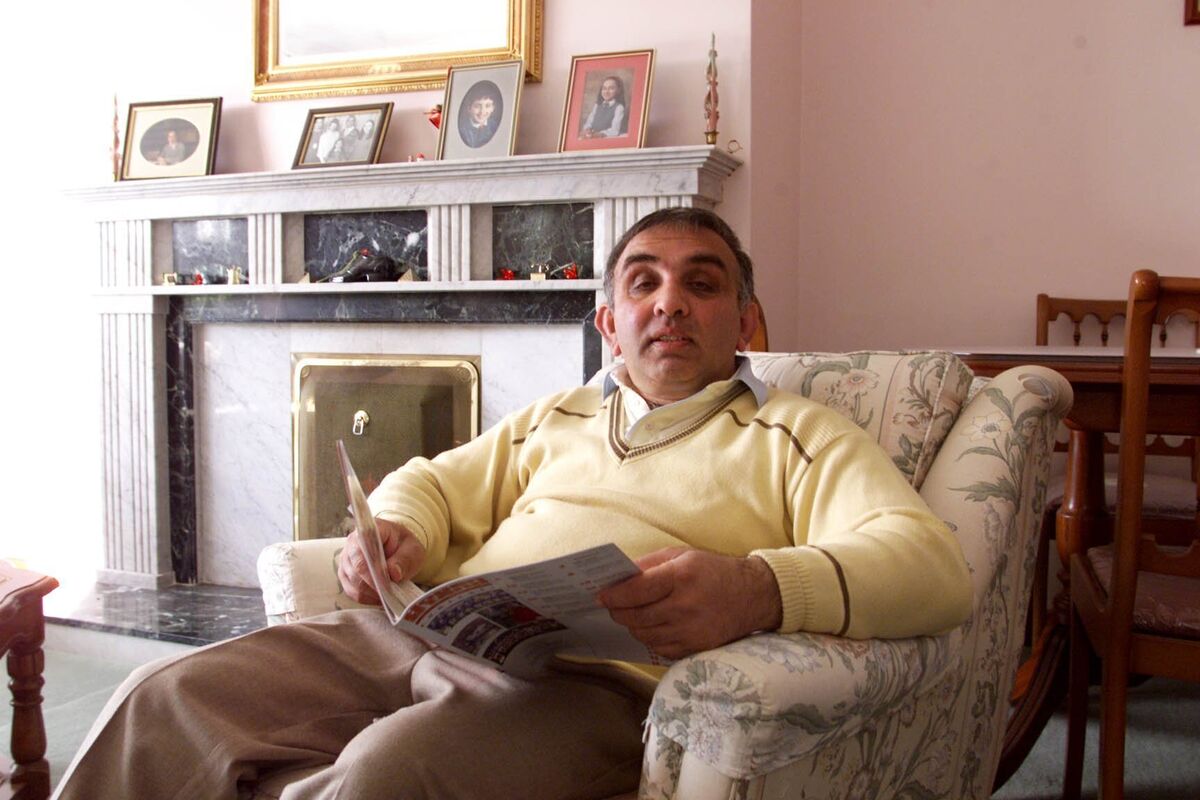
Anyone asking when Ireland will elect its first muslim TD might be reminded of Moosajee Bhamjee who served as Labour TD for the Clare constituency from 1992 to 1997. Irish Examiner Archive: Kieran Clancy

Such episodes didn’t stop migrants arriving with idealistic expectations of what life would be like in Ireland. In Germany, this was influenced by Irish Journal, the bestselling memoir by the writer Heinrich Böll that was published in 1957 and based on the time he spent with his family on Achill Island in Co Mayo.

Read More

Böll was one of the most famous writers in Europe. Irish Journal is his love letter to everyday life and customs in the West of Ireland, which contrasted with the hyper-industrialism of his native Germany. There are more than 11,000 Germans living in Ireland today. Such is the enduring influence of Böll’s writing, some live on Achill Island.

The biggest migrant group in Ireland has consistently been the English, who often had eccentric reasons for making the journey across the Irish Sea.
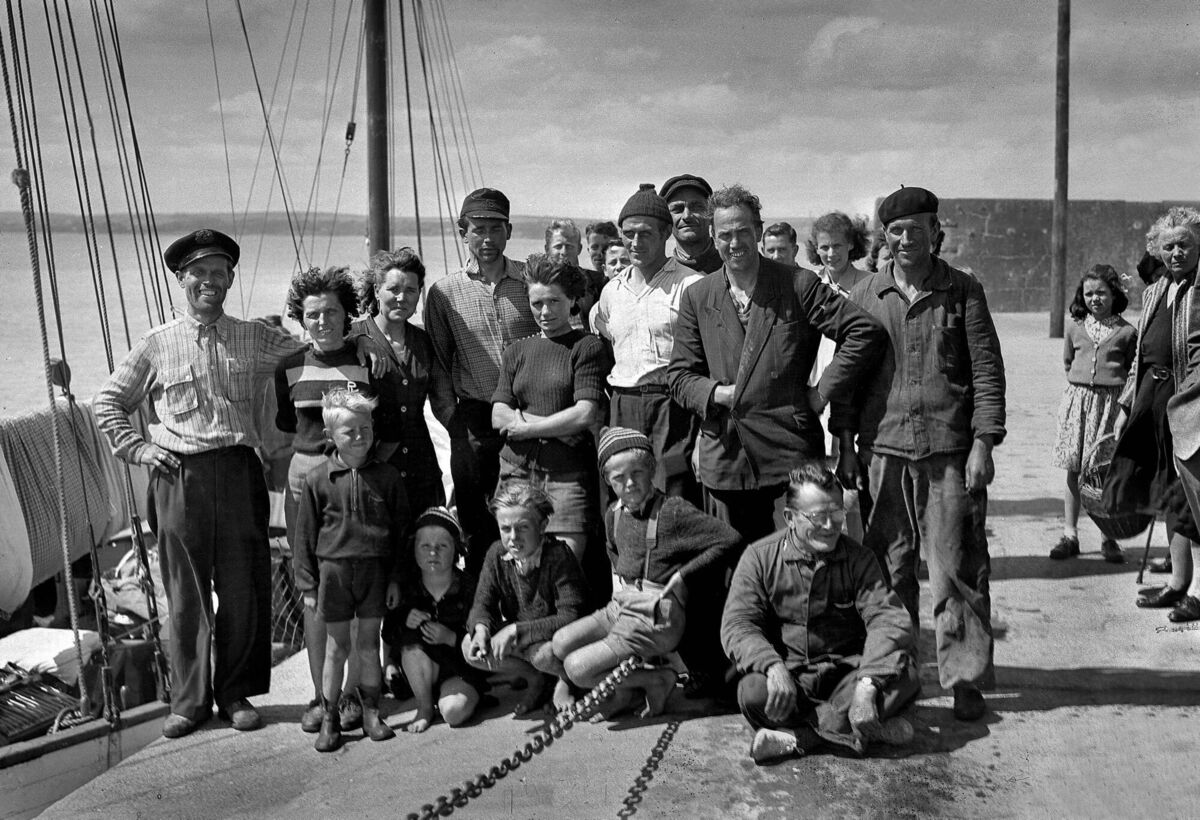
Walter Kunath and other refugees on Ballycotton pier in East Cork having sailed from Germany on board the Sea Wolf in June 1951. Picture: Irish Examiner Archive

In the early 1970s, for example, a group of English hippies tried to set up a commune on the remote Dorinish Island, 60km south from Achill. Predicably, the venture didn’t last long. As one local resident put it shortly after the hippies left: “The only thing to have lived on Dorinish for a great number of years are the rats.”

Like their German counterparts, English migrants often had a romanticised view of Ireland. They were commonly looking for an escape from the harsh nature of life in Britain, particularly during the political polarisation that followed the election of Margaret Thatcher as UK prime minister in 1979. But their knowledge of Irish culture — never mind Ireland’s colonised past — was very often lacking, and unduly influenced by British news reports on the worsening conflict in the North.

Returning Irish and 'plastic Paddies'

By the 1980s and '90s, a growing number of Irish men and women returned to Ireland, having spent significant time abroad in Britain, the US, and elsewhere. 

While this generation often struggled to re-acclimatise — something depicted powerfully in Colm Tóibín’s sequel to Brooklyn, Long Island — their children had it even worse. 

Hyphenated Irish 

With their foreign accents, this generation often found themselves dismissed as “blow-ins” in Ireland or — even worse — as “plastic Paddies”.

These kinds of complexities have become a commonplace feature of life in contemporary Ireland.

We have in recent years seen the emergence of “hyphened” Irish identities — Black-Irish, Asian-Irish, Polish-Irish, and many more besides.

Ethnic diversity is belatedly becoming a feature of Irish political life, too.

Galway West by-election 

In the forthcoming by-election in Galway West, for instance, the Nigerian-born Labour candidate, Helen Ogbu, has a genuine chance of success.

But, for far too long, we have allowed the subject of immigration to be hijacked by the populist far right. This is not just about anti-immigrant rioting and protests. 

High-profile immigrants in Ireland, particularly people of colour, increasingly find that they are subject to a torrent of online abuse.
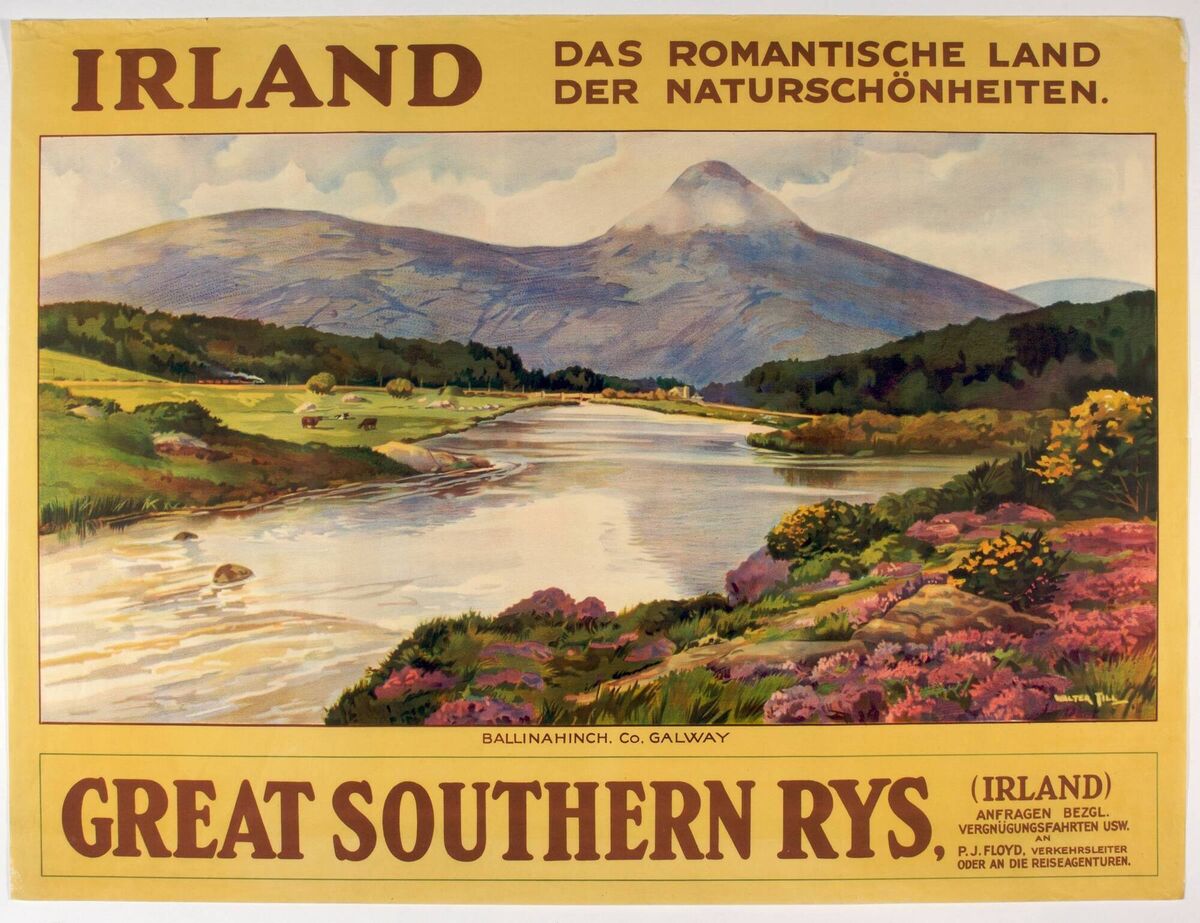
An interwar poster in German featuring a view of the (now defunct) Galway-Clifden railway line. 20th century Ireland had a more international outlook than many people seem to realise nowadays. Picture: National Museum of Ireland/Walter Till

Ms Ogbu’s staff recently said they spent 40% of their time blocking online racist abuse aimed at the councillor.

It’s not clear that the Government has a serious strategy for preventing the rising tide of racism. Neither is it apparent that much thinking has taken place about the demands that are likely to be placed on the State in areas like education as migrant communities become increasingly established.

It’s indicative of the stasis here that the Knocknalisheen barracks that was used to house refugees in 1956 is still being used for the same purpose today. 

Depressingly, conditions there remain as grim as they were 70 years ago. A recent report describes the rooms as mouldy, cramped, and unhygienic.

I am determined to shine a light on the many stories there are to tell from 100 years of multicultural Ireland, from partition up to the present day. 

In the coming years, as part of a major new research project on the subject, I will be trawling through the archival records that will help tell these stories: Census data, newspaper reports, planning applications and university archives.

But I also want to speak to people about their own experiences of immigration to Ireland — whether they are migrants themselves, or their parents or grandparents moved to Ireland at some point over the last 100 years.
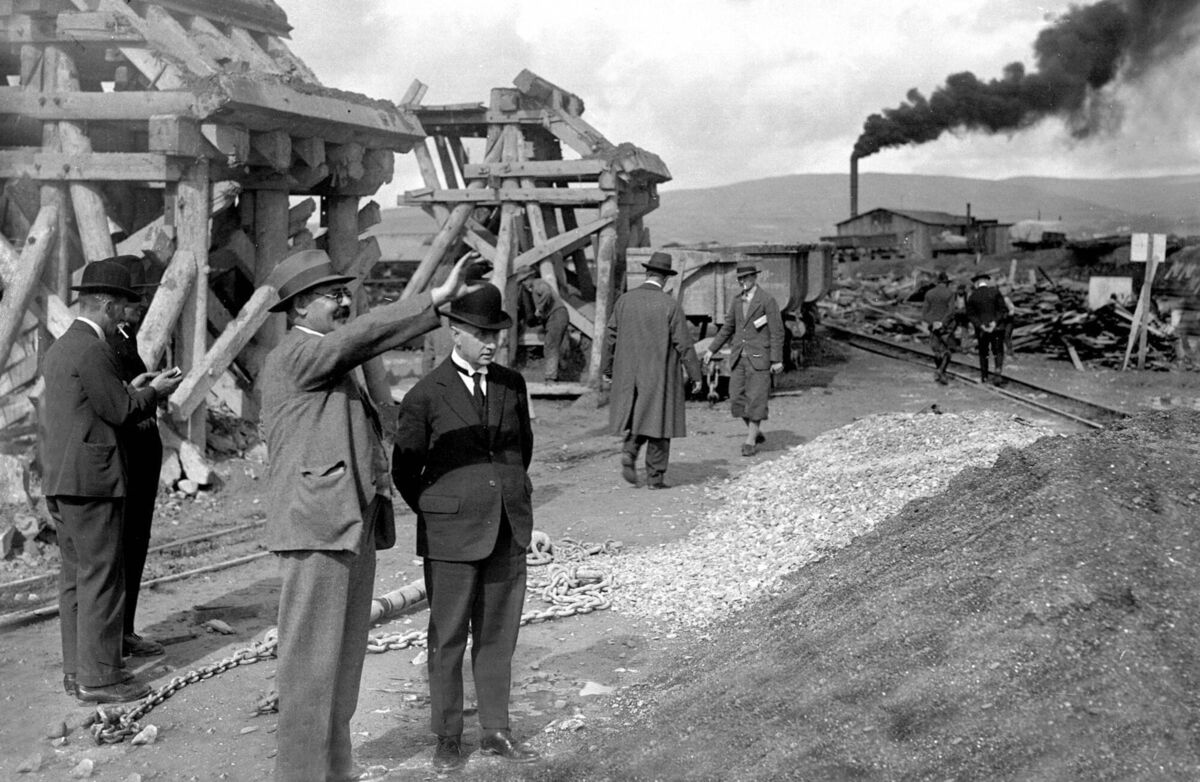
President WT Cosgrave is shown around the construction site at Ardnacrusha Co Clare of the 'Shannon Scheme' in September 1928. Engineers from Germany played a key part in delivering the massive project. Picture: Irish Examiner Archive

To reclaim the subject of immigration and diversity in Ireland from the far right, we need to treat the experiences of immigrants and their descendants with the same respect we commonly afford Irish emigrants abroad.

The story of multicultural Ireland has not yet been told.

But now more than ever, it is important it is heard.

  • Kieran Connell teaches history at Queen’s University Belfast. Along with Jack Crangle (Queen’s University Belfast) and Laura Kelly (University of Strathclyde), he runs the Multicultural Ireland project. To share your story of migration to Ireland, email multicultural.ireland@qub.ac.uk.

Read More