





Ireland’s journey into space did not begin with a rocket launch to the moon, but with a walk along the Royal Canal.
While strolling along the canal from Dunsink Observatory to the Royal Irish Academy in 1843, Sir William Rowan Hamilton had a flash of brilliance which sparked a whole new area of mathematics that more than a century later would guide astronauts to the moon and satellites through space.
At the same time, William Parsons, the third Earl of Rosse, was building a great telescope at Birr Castle in Co Offaly, which was the largest telescope in the world for over seven decades.
His innovative engineering enabled him to see farther than any other human being had ever seen, transforming humankind's understanding of galaxies and our place in the universe, while his son was the first person to accurately measure the temperature of the moon.
Today, these great Irish scientists are remembered by the Hamilton and Rosse craters on the moon — truly great Irish craters.
With the advent of Nasa’s Apollo programme to the moon in the 1960s, Irish scientists Denis O’Sullivan and Alex Thompson from the Dublin Institute for Advanced Studies were central to addressing some of the most challenging problems in our understanding of the moon and the sometimes dangerous cosmic radiation that astronauts are exposed to.
Professor O’Sullivan was among the first people to study moon rock samples brought back from the Apollo 11 mission by Neil Armstrong, while O’Sullivan and Thompson developed experiments to measure cosmic radiation, which landed on the moon during the Apollo 16 mission.
Today, researchers at Dunsink Observatory continue to study how high energy cosmic rays and solar radiation can cause damaging “space weather” impacts at Earth through Ireland’s involvement in space missions with Nasa and European Space Agency.
Space weather can impact our daily lives, interrupting communication and navigation systems and causing instabilities in electrical power distribution networks. Ireland has been a member of the European Space Agency since its foundation in 1975 and continues to invest in space exploration with Irish universities, supported by Research Ireland and Enterprise Ireland.
In 2024 alone, Irish companies working with the European Space Agency secured a record €24m in agency contracts in areas like microelectronics, satellite services, advanced materials and space-based AI.
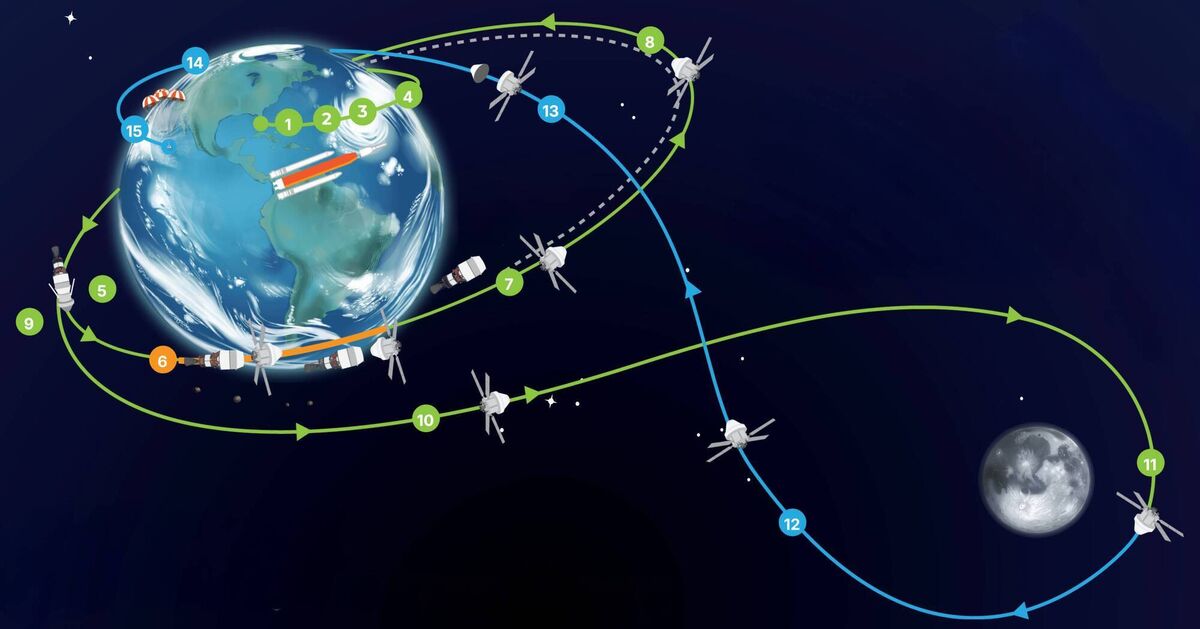
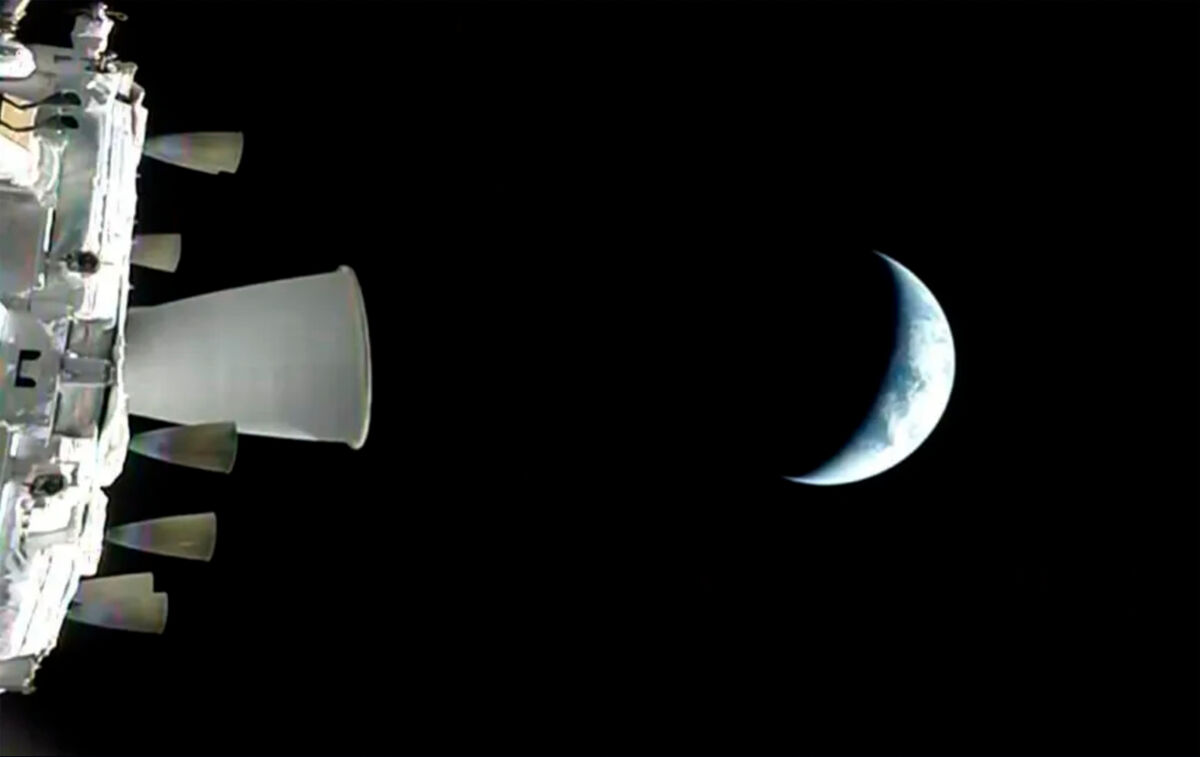
This week, the European Space Agency’s European Service Module has guided the Orion spacecraft to the moon and back as part of Nasa’s Artemis II mission. The service module is a critical component of the mission, providing propulsion, water and oxygen for the astronauts and navigational capabilities.
Additionally, Dublin-based company Skytek won a European Space Agency contract to develop advanced flight support software as part of Artemis II. Skytek's technology includes augmented reality-based apps which help to guide astronauts with complex tasks and procedures.
The global space economy is expected to triple in size, reaching $1.8trn by 2035.
Irish researchers are also leading the way in European Space Agency and Nasa space missions. The European Space Agency’s Solar Orbiter was launched by Nasa in February 2020 and involves teams at Dublin Institute for Advanced Studies and Dublin City University, who are using the spacecraft to study solar activity and how it can cause space weather impacts on Earth.
Indeed, it was the Irish company ENBIO who developed the heat shield for Solar Orbiter, which protects the sensitive spacecraft from the relentless heat and radiation from the Sun.
More recently, in 2023, the European Space Agency launched Juice (Jupiter Icy Moons Explorer), which will explore Jupiter’s icy missions. Professor Caitriona Jackman and her team at the Dublin Institute for Advanced Studies are deeply involved in this mission, developing machine learning techniques to understand the complex data that will be returned from Juice and other European Space Agency and Nasa space missions.
And the future is bright for Irish academic participation in future space missions, with Professor Tom Ray and his team at the Dublin Institute for Advanced Studies testing filters for the European Space Agency’s Ariel mission, which is planned for launch in 2031, and my team at the Dublin Institute for Advanced Studies developing software and providing scientific advice for the European Space Agency’s Vigil space weather mission to monitor solar activity and its impacts on Earth.
The launch of EIRSAT-1, Ireland’s first small satellite, is the clearest signal something has shifted in Irish space ambitions.
Built by students and researchers at University College Dublin under the leadership of Professor Lorraine Hanlon, EIRSAT-1 represents a new confidence in what Irish science and engineering can deliver.
Space is no longer a niche pursuit in Ireland. It underpins communications, navigation, climate monitoring and security.
Irish companies and universities working with the European Space Agency and Nasa are not just participating in space exploration, we are positioning ourselves in a growing sector that is becoming increasingly important to our daily lives in the coming decades.
From a formula carved into a bridge along to the Royal Canal, to the largest telescope in the world in Birr, to instruments on the moon, to spacecraft expanding our understanding of our world and beyond.
The curiosity and innovation of Irish scientists and engineers have been part of this story all along.
此内容由惯性聚合(RSS阅读器)自动聚合整理,仅供阅读参考。 原文来自 — 版权归原作者所有。