

惯性聚合 高效追踪和阅读你感兴趣的博客、新闻、科技资讯
阅读原文 在惯性聚合中打开

推荐订阅源

美团技术团队
奇客Solidot–传递最新科技情报
奇客Solidot–传递最新科技情报
博客园 - Franky
有赞技术团队
有赞技术团队
博客园 - 司徒正美
量子位
N
News and Events Feed by Topic
T
Threatpost
Last Week in AI
Last Week in AI
D
Darknet – Hacking Tools, Hacker News & Cyber Security
酷 壳 – CoolShell
酷 壳 – CoolShell
C
CERT Recently Published Vulnerability Notes
freeCodeCamp Programming Tutorials: Python, JavaScript, Git & More
I
Intezer
人人都是产品经理
人人都是产品经理
T
Tenable Blog
IT之家
IT之家
雷峰网
雷峰网
腾讯CDC
博客园 - 聂微东
V
Visual Studio Blog
S
SegmentFault 最新的问题
Scott Helme
Scott Helme
Spread Privacy
Spread Privacy
月光博客
月光博客
让小产品的独立变现更简单 - ezindie.com
V
V2EX
大猫的无限游戏
大猫的无限游戏
Apple Machine Learning Research
爱范儿
爱范儿
T
Tailwind CSS Blog
OSCHINA 社区最新新闻
OSCHINA 社区最新新闻
罗磊的独立博客
N
Netflix TechBlog - Medium
J
Java Code Geeks
宝玉的分享
宝玉的分享
F
Full Disclosure
WordPress大学
WordPress大学
A
Arctic Wolf
小众软件
小众软件
AWS News Blog
AWS News Blog
Attack and Defense Labs
NISL@THU
NISL@THU
AI
AI
Hugging Face - Blog
Hugging Face - Blog
F
Fortinet All Blogs
云风的 BLOG
云风的 BLOG
N
News | PayPal Newsroom
Cyber Security Advisories - MS-ISAC
cs.AI updates on arXiv.org

IrishExaminer.com

Seriously ill in Gaza: ‘I wondered whether the cancer or a missile would kill me first’ California dreamin’: Could a Trump-supporting Brexit cheerleader capitalise on Democrats' dithering? Ukraine saw 89 children killed in March. But we are sending them back? Louise Burne: Decade of squabbling over hospital leaves sick children in limbo Enda Brady: Charles did his job well this week, but will it be enough to sate Trump? 100 years of Fianna Fáil: Party must move from analysis to action to survive another century Margaret E Ward: Technology’s war on women — the new coercive control and confinement Ireland must act on fossil fuel phase-out Diversity and inclusion policies change lives — including mine Aoibhinn Ní Shúilleabháin: People care about losing the natural world — politics must catch up Ireland's towns bear the brunt of the urban/rural divide Our town centres cannot hold without reinforcements Free travel will help people fleeing abusive homes Workplace bullying is not rare — and the response is not improving Homeless figures don't count all those without housing Supports have improved for women in politics but there is more to do Cost-of-living crisis is impacting how we look after our pets Millennials have a moral obligation to avoid the Harry Potter reboot Sprucing up the truth: Schools should not be a battleground for vested interests Missing dogs tell a different story of greyhound welfare Mick Clifford: Nobody needs to 'lawyer up' to investigate treatment of Limerick gardaí Colin Sheridan: Has the world finally caught up with Lena Dunham's vision? We need a change in attitude to construction jobs if we are to deliver on housing and infrastructure Barry Andrews: Big publishers are ripping off our public libraries Losing my dad during covid is something I will never get over Tadgh McNally: Fine Gael has good reason to wish Leo Varadkar would just go away Major changes to espionage laws abroad sparks domestic review Louise Burne: Back and forth over shed laws shows unease still lodged between coalition parties Shed laws: New planning rules will cut red tape for homeowners Shed laws: We can't allow the creation of a shadow back garden rental market Small, practical measures can work alongside big ideas on solving housing crisis Fuel crisis shows Ireland cannot build a secure future on imported energy Adi Roche: Forty years have passed but Irish commitment to Chornobyl remains Singing together can help build community in divisive times Contraception is free, but it's not reaching everyone who needs it Seán Kelly: Viktor Orbán's loss is the EU's opportunity for a bold move on foreign policy TP O'Mahony: Link between religion and politics in the US is unique in the West Online abuse of politicians is a profitable business Power must be held accountable even in moments of pressure Ireland is addicted to contracting away all kinds of State capacity Here are the country's most senior civil servants running Ireland ‘I’m not a politician’: Clash with Pope Leo could prove dangerous for Donald Trump Global food systems are under fire due to a lack of political will Philomena's Law: Campaign steps up for UK-based survivors of mother and baby homes Are disruptive protests the new political force in Ireland? Fuel blockades expose state vulnerabilities From defiance to departure: 45 hours that changed everything for Michael Healy-Rae Louise Burne: All talk, no takeover — the problem with plotting Micheál Martin’s exit The tricolour is a powerful symbol of inclusion so let's reclaim it from those who use it to sow division Conviction of Scottish man in wife's suicide is a landmark case Our politics can't cope with TikTok's emotional instancy The Mick Clifford Podcast: Is Micheál Martin's leadership in peril? Conscription is being reintroduced all over Europe — where is the debate? Mediation should be the first resort for conflict resolution Fuel furore shows our systems are more fragile than we think New Deis strategy is not radical enough Paul Hosford: Healy-Rae resignation a shock but not a fatal blow for Government Ireland has a planning system, but it's not plan-led Cormac O'Keeffe: Fuel protests ignite concerns over security as EU presidency nears Conor McCabe: Protesters' grievances are real — they're bearing a heavy load Would Donald Trump threaten the Vatican over Pope Leo's anti-war stance? Anti-migration policies are threatening to dismantle human rights Who is Péter Magyar: Hungary’s next leader energised voters but is ‘a dark horse’ Paul Hosford: Life goes on in Kyiv as Russia's war on Ukraine grinds on Paul Hosford: Government fights back with €505m spend after social media posts fuel national crisis The hardest part of your dog dying isn't just losing them. It's that you decide when they go David O'Mahony: The real world is quickly surpassing any horror speculative fiction can create Shona Murray: EU faced with Russian trojan horse if Orbán gets re-elected Russia and White House doing all they can to prop up Viktor Orbán John Gibbons: I've changed my mind on nuclear power — we don't need it any more How this week's protests fuelled confusion and consternation at Leinster House Waiting for tide of public opinion to turn on fuel price protesters is a gamble Fuel protests are undemocratic and respect no rules If you want to object to building over Bessborough, you have one week Farmers need targeted supports as they're facing most pain Irish science's surprising role in the Artemis mission Dorcha Lee: Security will be the big challenge for Ireland's EU presidency Housing 'affordability' means different things in rental debate Our leaders must show courage in commitment to peace by keeping the triple lock Viktor Orbán blazed a trail for Donald Trump’s assault on independent media Don't let what's happened in London replicate itself in Cork Big Tech shouldn’t be writing the rules for AI €4 for a coffee is not expensive when you consider it’s a small miracle in a cup Why we’ve gone mad for puzzles The reality behind Ireland’s anti-submarine warfare plans Assessment of need reform will not fix wider crisis of accessing care and children will pay the price Teacher pay and school funding on agenda of conferences Enda Brady: Keir Starmer has set the clock running on Britain rejoining the European Union 'SSIA on steroids': Will the Government's new savings and investment account deliver? Seven deadlines and an AI dilemma: Is the new Leaving Cert fixing one problem by creating another? Marion McKeone: JD Vance needs all his Machiavellian instincts to avoid becoming Trump's whipping boy European Parliament vote creates legal vacuum in battle against online child abuse Why has it taken so long to return to the Moon? We don't just need to limit the number of TDs, we need radical reform of our electoral system Paul Hosford: Ukraine war merely another chapter in Russia's aggression against its neighbour The climate change warnings are getting louder — are we just refusing to listen? Our school meals programme must use community hubs and on-site kitchens cooking local produce Life goes on in Cuba despite brutal US blockade Paul Hosford: Ministerial meeting in Ukrainian bomb shelter reminds us of the stakes If Donald Trump were your ageing father, when would you take away his car keys? 'Drink‑driving is not an accident': Cork emergency consultant calls for urgent reforms to save lives
Iran war shows how instability is useful to a 'thugocracy'
Mohammad Reza Farzanegan · 2026-05-19 · via IrishExaminer.com

The US-Israeli war with Iran has revealed how instability can become a powerful political instrument. 

Leaders can exploit crises to maintain supporters’ loyalty, even while imposing costs on them, and extract concessions from domestic and foreign adversaries through coercion and manufactured unpredictability. 

Read More

In a forthcoming paper, Canadian economist Ronald Wintrobe calls this dynamic “thugocracy”: a form of rule grounded in coercion, intimidation, and unpredictability.

Over the past three months, the conflict has swung repeatedly — sometimes within hours — from escalation to de-escalation, with threats, strikes, sanctions, tolls, and ceasefire announcements following one another at breakneck speed. 

On April 7, for example, only hours after warning that “a whole civilization will die tonight,” US president Donald Trump abruptly shifted course and announced a ceasefire, claiming that America’s military objectives had already been achieved.

Conventional frameworks for diplomacy and deterrence are poorly suited to a conflict of this kind. Here, Wintrobe’s thugocracy concept is especially valuable because it highlights how coercion, instability, and political loyalty can interact in ways that redistribute the costs and benefits of conflict unevenly across society. 
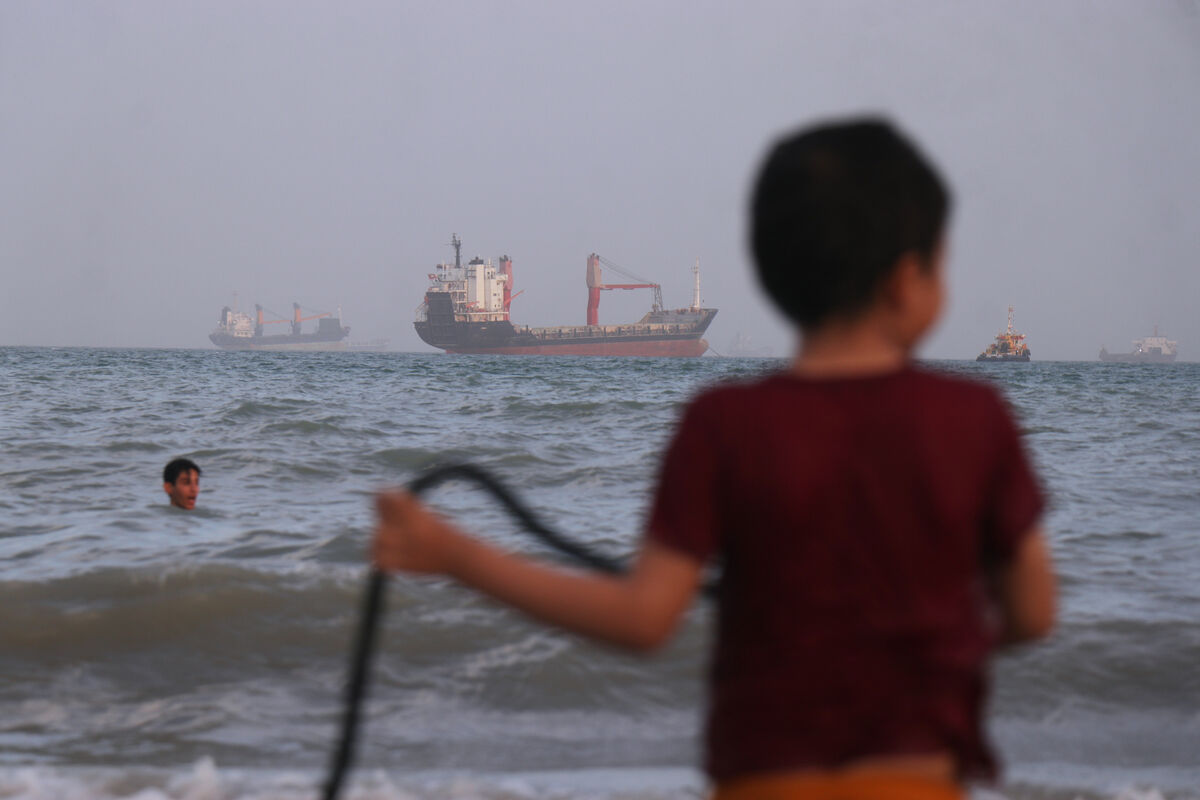
Bulk carriers, cargo ships, and service vessels sit offshore in the Strait of Hormuz in April 26. The fragile ceasefire with Iran may pause the violence for now, but it does not alter the underlying incentives driving the conflict. Picture: Razieh Poudat/ISNA via AP

Political and economic insiders have the financial resources and privileged information to benefit from instability, while all others absorb the costs. Convinced that the sacrifices imposed by war, sanctions, and economic coercion serve a larger purpose, the leader’s supporters are willing to endure substantial hardship.

The Trump administration illustrates how war and profit are becoming increasingly intertwined. In March, for example, the Financial Times reported that a broker associated with Secretary of “War” (Defense) Pete Hegseth attempted to acquire a defense-focused investment fund just before the start of the Iran war. 

While that allegation remains disputed, the broader dynamic is clear: those closest to power are uniquely positioned to anticipate shocks, hedge against them, and profit from the instability that follows. Prediction markets like Polymarket have pushed that logic even further, turning geopolitical escalation itself into a speculative asset.

The pattern extends beyond financial markets. Trump has repeatedly threatened to “take” Iran’s oil and target key oil-export infrastructure, including facilities on Kharg Island, underscoring how deeply material interests are embedded in his strategic calculus.

Sanctions

Trade policy has likewise become an instrument of coercion, with Trump threatening to impose sweeping tariffs on countries that continue trading with Iran. 

Together with sanctions and military pressure, trade restrictions have become part of a unified bargaining strategy aimed not only at weakening Iran but also at maximizing US leverage over third countries.

Viewed against the backdrop of Iran’s economy before the war began, the effects of these measures become much clearer. After decades of Western sanctions, many households were already grappling with falling living standards, while domestic industries struggled to stay afloat.

In a recent study, Nader Habibi of Brandeis University and I show that international sanctions were associated with a significant contraction of Iran’s middle class between 2012 and 2019. 

This was not simply a temporary shock, but the result of sustained declines in real incomes, persistent inflation, and severe labour-market disruptions. As purchasing power eroded, many households experienced downward mobility.

The consequences were not limited to lost income. Studies have shown that sanctions have made essential drugs far more expensive and harder to obtain. For many patients, this meant missing or delaying treatment and heightened health risks.

These economic and social pressures helped fuel the mass protests that swept Iran in early 2026. The war is therefore devastating an economy already weakened by years of cumulative shocks. 

And because ordinary Iranian households bear most of these costs, external actors remain insulated from many of the immediate political costs of escalation.

Continuing support

This helps explain why coercive policies may retain support among a leader’s core constituency despite imposing significant economic costs. Drawing on the concept of “Giffen goods,” Wintrobe argues that some policies can continue to command support even when they leave supporters materially worse off. 

That does not mean that the Iran war is popular among American voters, or that Iran’s government enjoys majority support. Rather, the mechanism operates within particular constituencies. 

In the United States, it may work through partisan loyalty, narratives of strength, and selective information flows. In Iran, external attacks and sanctions can reinforce nationalist solidarity, even among citizens who remain critical of the regime.

Information is central to this process, especially among Trump’s core supporters. The issue is not formal censorship, but a fragmented and polarized media environment in which the costs of the Iran war can be reframed as the price of strength, deterrence, and national renewal. 

In such a setting, economic strain can more easily be attributed to Iran, foreign rivals, or domestic opponents rather than to the administration’s own decisions. 

At the same time, Trump’s rapid shift from threatening Iran with catastrophic destruction to announcing a ceasefire can be cast as tactical success, reinforcing the perception that the president is acting decisively and strategically.

Mohammad Reza Farzanegan: 'As long as volatility enriches the powerful while ordinary people pay the price, escalation will remain politically useful.'

Identity also plays a powerful role. When policies are framed as vital to national security, they can create a strong sense of collective purpose even as they impose severe economic costs. 

That is because public attitudes are shaped as much by status, identity, and fear of external threats as they are by material interests.

In times of war, the connection between policy choices and economic hardship becomes obscured, making alternative explanations easier to accept. The result is a political equilibrium that perpetuates costly and destabilising policies. 

The persistence of sufficient public support for such measures reflects the interplay between economic incentives, weak political accountability, restricted information, and identity politics, rather than simple voter irrationality.

Moreover, when war generates economic gains for certain groups, it can create powerful incentives to prolong it. While not every beneficiary seeks escalation, some actors are structurally positioned to profit from it.

The fallout does not stop at national borders. Rising prices, supply-chain disruptions, and heightened uncertainty ripple through the global economy, affecting households and firms far beyond the immediate conflict zone and reshaping political incentives worldwide.

The fragile ceasefire with Iran may pause the violence for now, but it does not alter the underlying incentives driving the conflict. 

As long as volatility enriches the powerful while ordinary people pay the price, escalation will remain politically useful. The real challenge, therefore, is to sever the link between geopolitical instability and private gain.

  • Mohammad Reza Farzanegan is Professor of the Economics of the Middle East at the Center for Near and Middle Eastern Studies and the School of Business and Economics at Marburg University. He is a visiting fellow at the Hamburg Institute for Advanced Study and a research fellow at CESifo and the Economic Research Forum.