


惯性聚合 高效追踪和阅读你感兴趣的博客、新闻、科技资讯
阅读原文 在惯性聚合中打开

推荐订阅源

Scott Helme
Scott Helme
有赞技术团队
有赞技术团队
阮一峰的网络日志
阮一峰的网络日志
雷峰网
雷峰网
D
Docker
Stack Overflow Blog
Stack Overflow Blog
Hugging Face - Blog
Hugging Face - Blog
爱范儿
爱范儿
奇客Solidot–传递最新科技情报
奇客Solidot–传递最新科技情报
MyScale Blog
MyScale Blog
A
About on SuperTechFans
博客园 - 【当耐特】
U
Unit 42
H
Help Net Security
博客园 - 三生石上(FineUI控件)
V2EX - 技术
V2EX - 技术
T
Tor Project blog
博客园 - 叶小钗
G
Google Developers Blog
S
Securelist
Security Latest
Security Latest
Threat Intelligence Blog | Flashpoint
cs.CL updates on arXiv.org
T
Threat Research - Cisco Blogs
aimingoo的专栏
aimingoo的专栏
C
Cybersecurity and Infrastructure Security Agency CISA
博客园_首页
V
Vulnerabilities – Threatpost
P
Palo Alto Networks Blog
T
The Exploit Database - CXSecurity.com
The Register - Security
Recorded Future
Recorded Future
NISL@THU
NISL@THU
量子位
L
LangChain Blog
C
CXSECURITY Database RSS Feed - CXSecurity.com
C
Cyber Attacks, Cyber Crime and Cyber Security
C
CERT Recently Published Vulnerability Notes
The Hacker News
The Hacker News
D
DataBreaches.Net
小众软件
小众软件
罗磊的独立博客
Forbes - Security
Forbes - Security
The Last Watchdog
The Last Watchdog
Jina AI
Jina AI
I
InfoQ
S
Schneier on Security
Recent Announcements
CTFtime.org: upcoming CTF events
S
Secure Thoughts

IrishExaminer.com

Seriously ill in Gaza: ‘I wondered whether the cancer or a missile would kill me first’ California dreamin’: Could a Trump-supporting Brexit cheerleader capitalise on Democrats' dithering? Ukraine saw 89 children killed in March. But we are sending them back? Louise Burne: Decade of squabbling over hospital leaves sick children in limbo Enda Brady: Charles did his job well this week, but will it be enough to sate Trump? 100 years of Fianna Fáil: Party must move from analysis to action to survive another century Margaret E Ward: Technology’s war on women — the new coercive control and confinement Ireland must act on fossil fuel phase-out Diversity and inclusion policies change lives — including mine Aoibhinn Ní Shúilleabháin: People care about losing the natural world — politics must catch up Ireland's towns bear the brunt of the urban/rural divide Our town centres cannot hold without reinforcements Free travel will help people fleeing abusive homes Workplace bullying is not rare — and the response is not improving Homeless figures don't count all those without housing Supports have improved for women in politics but there is more to do Cost-of-living crisis is impacting how we look after our pets Millennials have a moral obligation to avoid the Harry Potter reboot Sprucing up the truth: Schools should not be a battleground for vested interests Missing dogs tell a different story of greyhound welfare Mick Clifford: Nobody needs to 'lawyer up' to investigate treatment of Limerick gardaí Colin Sheridan: Has the world finally caught up with Lena Dunham's vision? We need a change in attitude to construction jobs if we are to deliver on housing and infrastructure Barry Andrews: Big publishers are ripping off our public libraries Losing my dad during covid is something I will never get over Tadgh McNally: Fine Gael has good reason to wish Leo Varadkar would just go away Major changes to espionage laws abroad sparks domestic review Louise Burne: Back and forth over shed laws shows unease still lodged between coalition parties Shed laws: New planning rules will cut red tape for homeowners Shed laws: We can't allow the creation of a shadow back garden rental market Small, practical measures can work alongside big ideas on solving housing crisis Fuel crisis shows Ireland cannot build a secure future on imported energy Adi Roche: Forty years have passed but Irish commitment to Chornobyl remains Singing together can help build community in divisive times Contraception is free, but it's not reaching everyone who needs it Seán Kelly: Viktor Orbán's loss is the EU's opportunity for a bold move on foreign policy TP O'Mahony: Link between religion and politics in the US is unique in the West Online abuse of politicians is a profitable business Power must be held accountable even in moments of pressure Ireland is addicted to contracting away all kinds of State capacity Here are the country's most senior civil servants running Ireland ‘I’m not a politician’: Clash with Pope Leo could prove dangerous for Donald Trump Global food systems are under fire due to a lack of political will Philomena's Law: Campaign steps up for UK-based survivors of mother and baby homes Are disruptive protests the new political force in Ireland? Fuel blockades expose state vulnerabilities From defiance to departure: 45 hours that changed everything for Michael Healy-Rae Louise Burne: All talk, no takeover — the problem with plotting Micheál Martin’s exit The tricolour is a powerful symbol of inclusion so let's reclaim it from those who use it to sow division Conviction of Scottish man in wife's suicide is a landmark case Our politics can't cope with TikTok's emotional instancy The Mick Clifford Podcast: Is Micheál Martin's leadership in peril? Conscription is being reintroduced all over Europe — where is the debate? Mediation should be the first resort for conflict resolution Fuel furore shows our systems are more fragile than we think New Deis strategy is not radical enough Paul Hosford: Healy-Rae resignation a shock but not a fatal blow for Government Ireland has a planning system, but it's not plan-led Cormac O'Keeffe: Fuel protests ignite concerns over security as EU presidency nears Conor McCabe: Protesters' grievances are real — they're bearing a heavy load Would Donald Trump threaten the Vatican over Pope Leo's anti-war stance? Anti-migration policies are threatening to dismantle human rights Who is Péter Magyar: Hungary’s next leader energised voters but is ‘a dark horse’ Paul Hosford: Life goes on in Kyiv as Russia's war on Ukraine grinds on Paul Hosford: Government fights back with €505m spend after social media posts fuel national crisis The hardest part of your dog dying isn't just losing them. It's that you decide when they go David O'Mahony: The real world is quickly surpassing any horror speculative fiction can create Shona Murray: EU faced with Russian trojan horse if Orbán gets re-elected Russia and White House doing all they can to prop up Viktor Orbán John Gibbons: I've changed my mind on nuclear power — we don't need it any more How this week's protests fuelled confusion and consternation at Leinster House Waiting for tide of public opinion to turn on fuel price protesters is a gamble Fuel protests are undemocratic and respect no rules If you want to object to building over Bessborough, you have one week Farmers need targeted supports as they're facing most pain Irish science's surprising role in the Artemis mission Dorcha Lee: Security will be the big challenge for Ireland's EU presidency Housing 'affordability' means different things in rental debate Our leaders must show courage in commitment to peace by keeping the triple lock Viktor Orbán blazed a trail for Donald Trump’s assault on independent media Don't let what's happened in London replicate itself in Cork Big Tech shouldn’t be writing the rules for AI €4 for a coffee is not expensive when you consider it’s a small miracle in a cup Why we’ve gone mad for puzzles The reality behind Ireland’s anti-submarine warfare plans Assessment of need reform will not fix wider crisis of accessing care and children will pay the price Teacher pay and school funding on agenda of conferences Enda Brady: Keir Starmer has set the clock running on Britain rejoining the European Union 'SSIA on steroids': Will the Government's new savings and investment account deliver? Seven deadlines and an AI dilemma: Is the new Leaving Cert fixing one problem by creating another? Marion McKeone: JD Vance needs all his Machiavellian instincts to avoid becoming Trump's whipping boy European Parliament vote creates legal vacuum in battle against online child abuse Why has it taken so long to return to the Moon? We don't just need to limit the number of TDs, we need radical reform of our electoral system Paul Hosford: Ukraine war merely another chapter in Russia's aggression against its neighbour The climate change warnings are getting louder — are we just refusing to listen? Our school meals programme must use community hubs and on-site kitchens cooking local produce Life goes on in Cuba despite brutal US blockade Paul Hosford: Ministerial meeting in Ukrainian bomb shelter reminds us of the stakes If Donald Trump were your ageing father, when would you take away his car keys? 'Drink‑driving is not an accident': Cork emergency consultant calls for urgent reforms to save lives
Pride gains are real, but LGBT+ rights in Ireland cannot be taken for granted
Diarmuid Scully · 2026-06-23 · via IrishExaminer.com

As we come to the end of Pride month, it is heartening to see the tremendous work of activists and allies in Irish schools and universities, workplaces, and supportive environments for the LGBT+ community.

Earlier this month, University College Cork (UCC) launched its LGBT+ Action Plan 2026-28: the first such plan in a higher education institution in Ireland. This plan is not about vague aspirations: it commits UCC to specific actions in support of its LGBT+ staff and students. When staff, students, and visitors approach UCC campus via its Rainbow Walkway, they know that they are in a safe place for LGBT+ people.

But it would be a serious mistake to think that hatred of LGBT+ people belongs to the past, and current freedoms and security are permanent and irreversible.

Until 1993, LGBT+ sexuality was criminalised in Ireland. In 2015, Ireland became the world’s first country to legalise same-sex marriage by popular vote. It may seem that the Irish LGBT+ experience went from shame and rejection to pride and inclusion in the blink of an eye.

Exploring Irish LGBT+ history, however, suggests a more complex and less comfortable reality, all the more important to understand when anti-LGBT+ discourse and violence are resurgent across the globe.

Some 40 years ago, the first book written by Irish LGBT+ people about the Irish LGBT+ experience spelled out the realities of life before decriminalisation. 

Read More

Out for Ourselves: The Lives of Irish Lesbians and Gay Men was put together by members of the Dublin Lesbian and Gay Men’s Collectives in 1986. Its opening statement is stark: ‘The media censors us, the churches condemn us, the law outlaws us, and all decent right-thinking people know that we are perverts, child-molesters, genetically damaged, hormonally imbalanced, and generally disgusting’.

This statement does not exaggerate the extent of hostility and exclusion. Consider the Irish Supreme Court’s majority judgement in 1983, rejecting David Norris’s constitutional case against the criminalisation of homosexuality. 

Chief Justice Tom O’Higgins ruled: “On the ground of the Christian nature of our State and on the grounds that the deliberate practice of homosexuality is morally wrong, that it is damaging to the health both of individuals and the public and, finally, that it is potentially harmful to the institution of marriage, I can find no inconsistency with the Constitution in the laws which make such conduct criminal.”

These laws were a colonial inheritance and after independence in 1922 the Irish State continued to enforce them. Under British rule, “the detestable and abominable vice of buggery” became punishable by death in Ireland in 1634. The Anglican bishop of Waterford and Lismore, John Atherton, and his self-accused sexual partner John Child were hanged under this law in 1640 and 1641 respectively.

James Pratt and John Smith were the last men to be executed for consensual, adult same-sex activity in Britain and Ireland. They were hanged in England in 1835, and the death penalty remained the theoretical punishment for sodomy until 1861, when the maximum sentence was changed to life imprisonment.
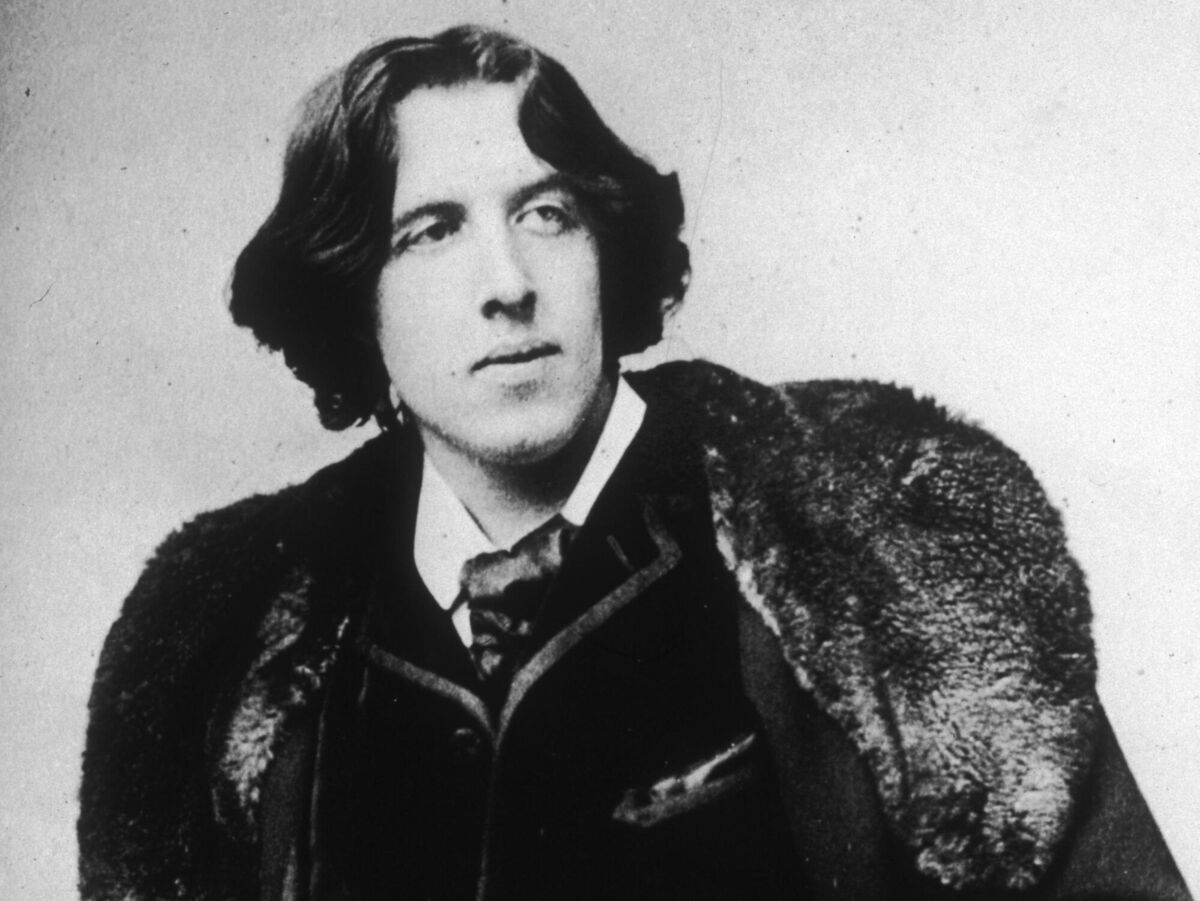
Oscar Wilde (1854-1900) was the first prominent Irish victim ‘the blackmailer’s charter.’ File picture: Hulton Archive/Getty

This change did not indicate toleration of LGBT+ sexuality. In fact, the policing and prosecution of gay men intensified after 1885, when UK law criminalised ‘gross indecency’ (undefined) between consenting adult men. 

Oscar Wilde was the first prominent Irish victim of this legislation, bitterly known as ‘the blackmailer’s charter.’ In 1895, he was sentenced to two years hard labour and his life was ruined for “the love that dare not speak its name.”

That famous phrase originated in the poem Two Loves, written by Wilde’s lover Lord Alfred Douglas, and it evokes an old legal term that framed homosexuality as literally unspeakable. In Douglas’s poem, when the figure of same-sex love identifies himself as ‘Love’, the figure of heterosexual love retorts: “He lieth, for his name is Shame.”

Nearly a century later, the shame imposed on Oscar Wilde still blighted Irish lives. In 1987, Phil Chevron performed Under Clery’s Clock at an Aids benefit concert in Dublin. It was perhaps the first song about the Irish LGBT+ experience to be written and performed by a gay Irish person: “Ten minutes more/I know will bring my love to me/The love that does not have a name.”

The song references Burgh Quay; its public toilets were a men’s cruising area at a time when there were very few places for gay people to meet. A sense of yearning, desire, loss, and alienation pervades the lyrics: “All I want is to embrace/By the streetlight/Just like other lovers do/Without disgrace.”

Today's Ireland

Six years later, Ireland decriminalised homosexuality. This was the result of some 20 years of LGBT+ activism, supported by friends and allies and the 1998 judgement of the European Court of Human Rights that criminalisation put Ireland in breach of the European Convention on Human Rights (following 14 years of legal challenges against the Irish State by the pioneering activist David Norris).

In 2018, marking the 25th anniversary of decriminalisation, the Taoiseach Leo Varadkar made a formal apology on behalf of the State for those convicted of same-sex sexual acts and indeed the wider LGBT+ community. 

His own identity as a gay man gave added force to his remembrance of “men and women of all ages” who “were aliens in their own country for their entire lives because they felt that love that dare not speak its name.” The taoiseach’s reference to women was vital.

They were not officially criminalised, but they suffered as much as men, and sometimes more, in a society where they had fewer rights. Lesbian contributors to Out for Ourselves outlined the fearful experience of married women with children, who risked losing custody of their children if their sexuality became known.

Physical, verbal, and online violence and intimidation against LGBT+ people of all ages are real issues in today’s Ireland. The most vulnerable are often the youngest and the oldest.

Children and young people should not be frightened and bullied in their schools. Older people should not be forced back into denial when seeking care: the first generation of out LGBT+ Irish people are now in their 70s and early 80s. Trans people are particularly at risk. The dehumanising language and silencing once directed against the entire LGBT+ community are now directed at them in countries formerly considered progressive and protective. It could happen here too.

  • Dr Diarmuid Scully is a lecturer in the School of History, UCC, a member of the LGBT Staff Network, and a contributor to UCC’s LGBT+ Action Plan.