








In a recent speech, minister of state at the Department of the Taoiseach Thomas Byrne spoke of Ireland’s “deep, abiding commitment to human rights, multilateralism and the rule of law” — but there is a deep cynicism at the heart of Ireland’s human rights policy.
While our Government is eager to present itself as a principled defender of international law, this rhetoric masks our willingness to flout our international legal obligations in the interests of multinational corporations, in particular the same US big tech firms that have aligned themselves closely with the state of Israel amid its genocide in Gaza.
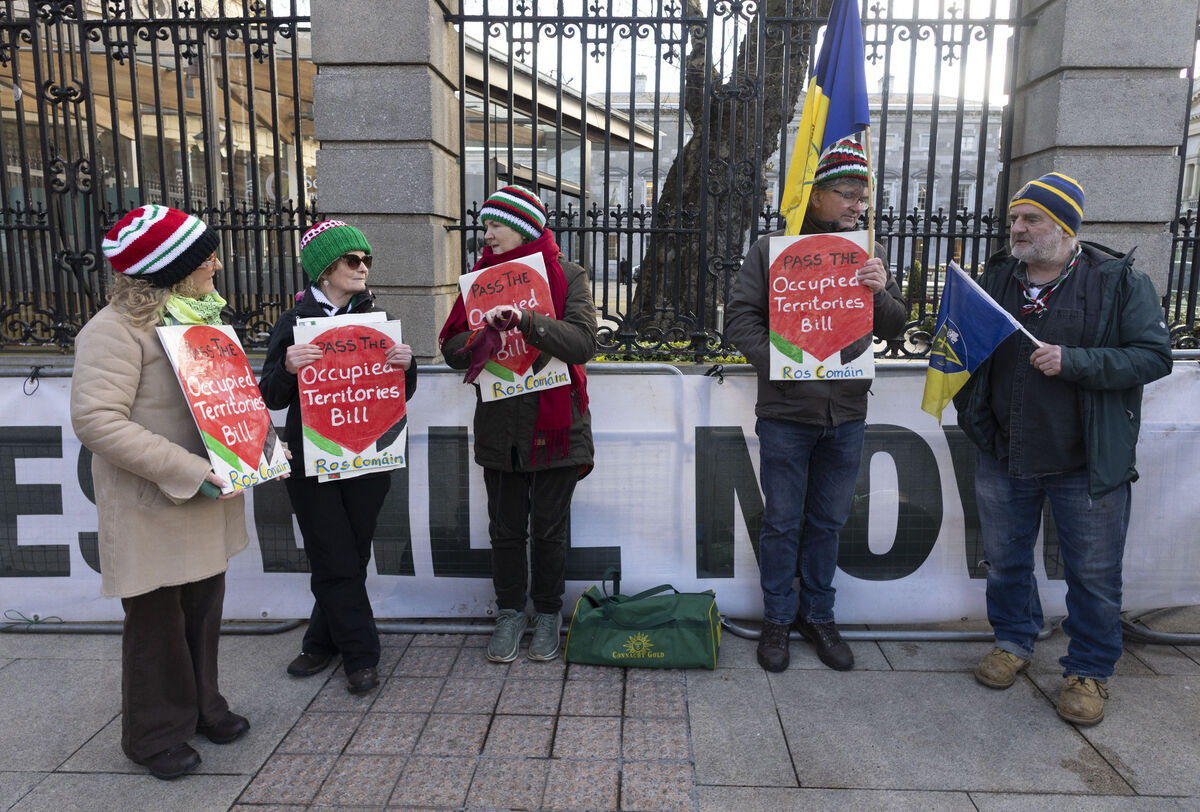
This grim reality is exemplified by the Government’s recent exclusion of services from the Occupied Territories Bill.
As the leading European hub for most of the world largest technology companies, Ireland has a key role as the chief regional enforcer of both European and international human rights law governing these companies.
This makes the Government of Ireland, on paper at least, one of the most influential regulators of big tech globally. It gives Ireland the kind of leverage and influence over matters of international human rights that most small countries could only dream of. Time and time again, though, the Irish Government has been found wanting in its role as big tech’s leading regional overseer.
The Government’s removal of services from the scope of the Occupied Territories Bill epitomises this tendency — effectively gutting the long-awaited legislation in order to exclude an estimated 70% of the trade between Ireland and Israel, and shielding tech companies such as Airbnb from its scope.
The Irish Human Rights and Equality Commission has condemned the move, and made clear the exclusion of services would entail a violation of Ireland’s obligations under international law.
In the Dáil last week, Taoiseach Mícheál Martin sought to defend the exclusion of services as an effort to protect Irish workers. What was not stated, but certainly implied, is that certain multinational corporations might withdraw from Ireland if we took stronger measures.
This threat was also implied in the US ambassador’s warning of "consequences" if the bill was passed in its original from — a warning which precipitated the review that ultimately led to the removal of services from the draft Occupied Territories Bill.
Big tech companies trade largely in services
Many of the big tech companies resident in Ireland trade largely in services. Airbnb, for example, has its European, Middle East and Africa headquarters in Ireland, and its Irish entity therefore bears responsibility for corporate activity in Palestine and Israel.
Airbnb is also listed as a target of the Palestinian-led Boycott, Divestment, Sanctions campaign due to its active listing of holiday rentals for rent in illegal settlements in occupied Palestinian land.
In 2023, Irish and Palestinian human rights lawyers filed a criminal complaint against Airbnb Ireland for its alleged role in "complicity in the war crimes underpinning the Israeli settlements". Although the case was initially dismissed, the High Court ordered in 2025 that gardaí re-open their investigation into Airbnb.
Taoiseach Mícheál Martin recently told the Dáil that only about "about €200,000 worth of goods, fruit and vegetables come in from the settlements", a tiny proportion of Ireland’s overall trade with Israel, much of which is driven by tech multinationals.
Ireland is Israel’s second-largest goods export market in the world, behind the US, with CSO estimates placing the value of inward trade in goods from Israel at close to €4bn in 2024.
Although they may not have active operations within settlements specifically, several influential US big tech firms based in Ireland have nonetheless faced significant criticism for their role in relation to Israel’s genocide and other systemic human rights abuses being perpetrated against the Palestinian people.
Intel alone accounts for a large portion of Irish trade with Israel. It is also a priority boycott target of the Palestinian-led Boycott, Divestment, Sanctions movement "due to its decision in December to invest $25bn in Israel despite its ongoing genocide in Gaza".
UN Special Rapporteur Francesca Albanese has separately identified Microsoft, Alphabet (Google) and Amazon — all with major regional operations here in Ireland — as corporate actors which have enabled and facilitated the Israeli military’s actions in Gaza.
Allegations have been made tying Microsoft’s data centres in Ireland, specifically, to the Israeli state’s mass surveillance of Palestinians and the generation of military targets in Palestine.
When corporations prioritise profit and growth over respecting human rights, it the responsibility of governments to step up, rein them in, and protect people’s rights through effective regulation which is properly enforced.
Legal responsibility
This is not merely a moral perspective; it is a matter of legal responsibility under international law. According to the UN Guiding Principles on Business and Human Rights, states must take appropriate steps to prevent, investigate, punish and redress human rights abuses by corporate actors domiciled in their territories.
In respect of Palestine specifically, the International Court of Justice in July 2024 found that states — including Ireland — are legally obliged not to engage in any economic or trade dealings connected to the occupied Palestinian territories.
More than 400 Irish lawyers have stated that a full ban — including services — constitutes the “absolute minimum required from the State to comply with its international legal obligations”. Yet while Ireland has been happy to reap the benefits of foreign investment, we have consistently paid lip service to the legal responsibilities that accompany it.
The Irish Government’s Occupied Territories Bill retreat is far from an isolated incident of human rights cynicism. It is consistent with the Government’s longstanding approach of virtue signalling about Irish solidarity while sacrificing meaningful human rights action at the altar of investment, and seeking to appease and please, rather than hold accountable, the big corporate actors which have made Ireland their home.
This trend is most apparent in respect of our longstanding position as Europe’s dawdling and reluctant enforcer of tech regulations. Ireland’s track record in this regard is most damning in respect of the General Data Protection Regulation (GDPR) — on paper, the world’s strongest data privacy framework.
Ireland is responsible for enforcing the GDPR over several serial violators including Meta and Google, the chief architects and beneficiaries of the system of surveillance capitalism that rests on systematic abuses of users’ privacy rights across the globe. The Irish Council for Civil Liberties has consistently called out Ireland’s failure to enforce the GDPR effectively.
Irish solidarity with Palestine is rooted in our shared history as colonised peoples, and UN Special Rapporteur Albanese’s report rightly notes “[c]olonial endeavours and their associated genocides have historically been driven and enabled by the corporate sector”.
For Ireland, taking our corporate accountability responsibilities seriously is the most impactful form of solidarity we can enact. And the law is clear: to comply with our international legal obligations, the government must re-insert services into the Occupied Territories Bill.
此内容由惯性聚合(RSS阅读器)自动聚合整理,仅供阅读参考。 原文来自 — 版权归原作者所有。