





As a child growing up in Budapest, Péter Magyar had a poster of Viktor Orbán – at the time a leading figure in the country’s pro-democracy movement – hanging above his bed. Orbán was one of several political figures who adorned his bedroom, Magyar told a podcast last year, hinting at his excitement over the changes sweeping the country after the collapse of communism.
Few could have predicted the meteoric rise of Magyar and his Tisza party. “He has built an opposition movement at amazing speed,” said Gábor Győri of Policy Solutions, a Budapest-based political research institute. “Never, since the history of this post-transition Hungary, have we seen a party rise this quickly.”
Conversations with those who know Magyar often alternate between admiration and antipathy. Many praise the tremendous movement he has built and the discipline he has shown as he crisscrosses the country, giving up to six speeches a day, while also describing him as someone with a short temper and a style that can be abrasive at times.
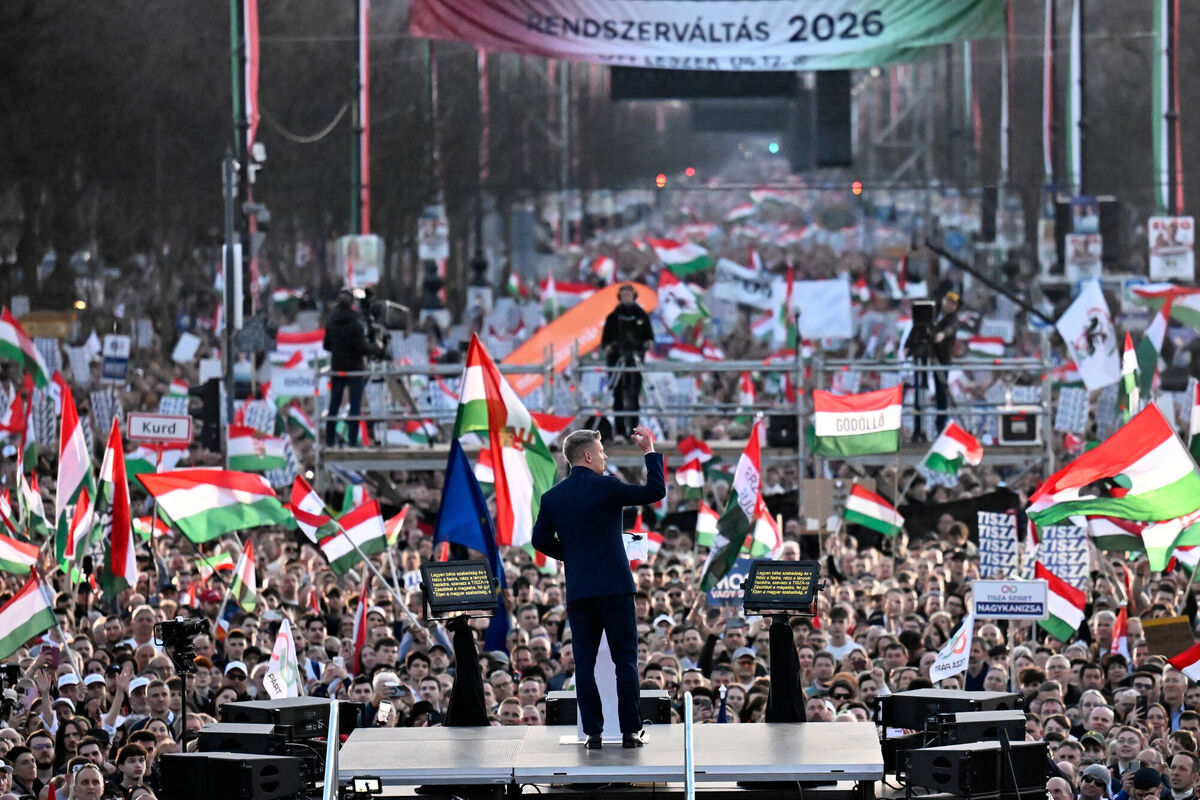
Others see him as the perfect fit for the magnitude of the moment. “I think, like all politicians, he can be a difficult person,” said Tamás Topolánszky, a film-maker who was part of a team that spent the past 18 months following Magyar for a film on the wider change sweeping Hungarian society.
Topolánszky described Magyar as authentic and passionate, but also someone who could be impatient at times. “I think that this is something that we Hungarians now see was necessary to get us to this point.”
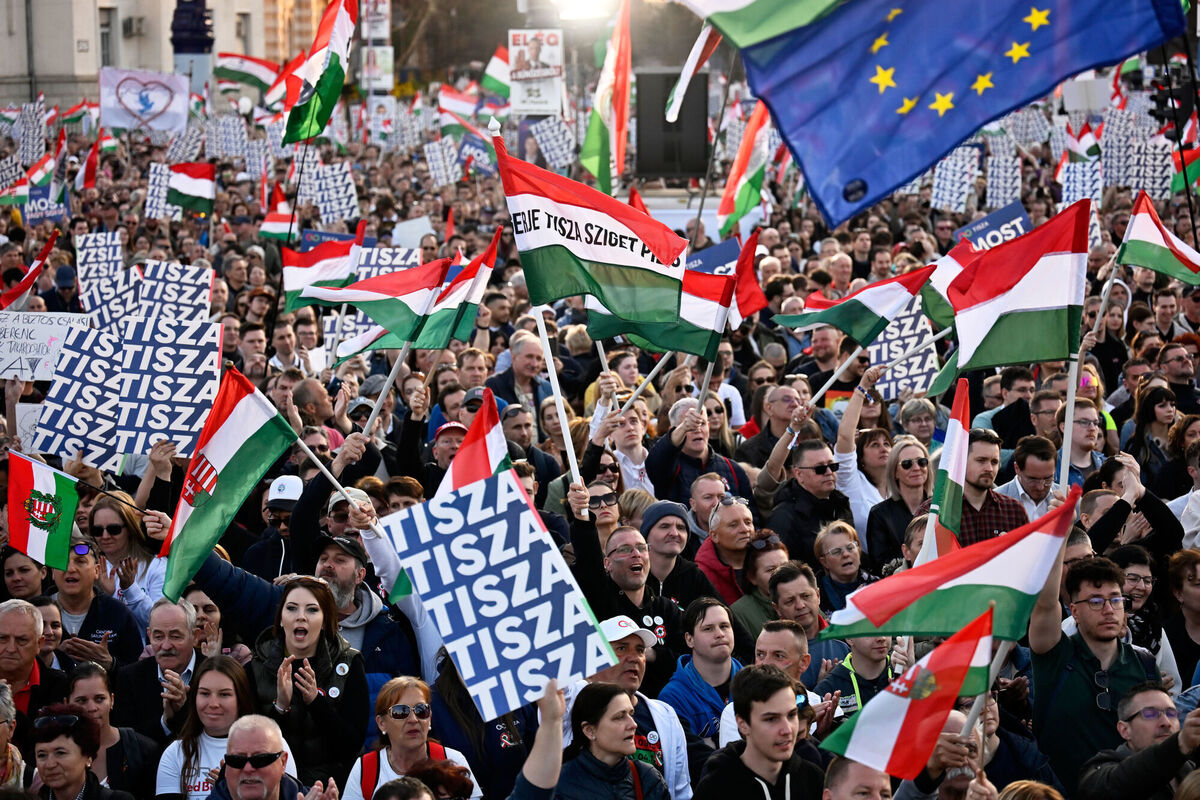
From behind his lens, Topolánszky tracked Magyar as he began turning up in villages and towns across Hungary, steadily chipping away at the apathy that had long characterised Hungarian politics. “The energy at these rallies was something I’ve never experienced before,” he said.
Adding to Magyar’s singular rise are his deep entanglements with Orbán’s Fidesz party. Much of his life has been spent hobnobbing among its elite inner circles. His close friends have included Gergely Gulyás, Orbán’s chief of staff, and in 2006 Magyar married Judit Varga, a former justice minister for Fidesz. He served as a Hungarian diplomat in Brussels and held senior positions in state entities.
Magyar catapulted into the limelight in 2024 after it emerged that Orbán’s government – which for years had built its brand on defending Christian families and protecting children – had pardoned a man convicted of helping to cover up a sex abuse scandal at a children’s home. Varga, who by then was Magyar’s ex-wife, resigned, along with Hungary’s president, Katalin Novák.
Magyar responded to the news with a blistering post on social media accusing Fidesz officials of scapegoating the two women, or as he wrote, “hiding behind women’s skirts”.
He then continued to speak up, rattling Hungarian society as a prominent insider who was now laying bare the workings of what he described as a rotten system. In Magyar’s telling, Fidesz was a “political product” that had been marketed to citizens while officials expanded their power and wealth at the expense of ordinary Hungarians.
The message resonated strongly, landing as many in the country were grappling with the soaring cost of living, fraying public services and salaries that had long been stagnant. After an estimated 35,000 people turned up to a protest helmed by Magyar in March 2024, he launched his movement.
While his status as a former Fidesz member had grabbed people’s attention, it proved complicated for his new political life. In Topolánszky’s documentary, Spring Wind, Magyar was asked: “Who are you friends with now?”
After a pause, he answered: “That’s a good question. It’s hard to say whether you have real friends in a situation like this.”
Despite more than two years of campaigning and a 240-page election manifesto, the details of what exactly Magyar will do remain vague. Much of this is by design: he ran a tight campaign, staying on-message as he has sought to avoid providing fodder for the estimated 80% of Hungary’s media that is controlled by Fidesz loyalists.
“He is very much a dark horse,” said Győri. “We don’t know much about him.”
With the exception of migration, where he has vowed to take a harder line than Orbán by scrapping the country’s guest worker scheme, Magyar has committed to doing away with many of the most problematic parts of Orbán’s programme.
He has vowed to restore democratic checks and balances, repair relations with the EU to unlock frozen EU funds and crack down on corruption. He has promised to end the dependence on Russian energy by 2035 while striving for “pragmatic relations” with Moscow.
When it comes to Ukraine, Magyar said he would continue Orbán’s opposition to sending arms to the country and fast-tracking EU entry for Kyiv. Even so, it would not take much to reset Hungary’s relationship with the bloc, said Győri. “I think what people underestimate is that if Hungary stops vetoing vital EU action in the European Council, that’s a major breakthrough,” he said. “You don’t have to have Péter Magyar go out and say: ‘We’re enthusiastic about helping Ukraine or everything the EU does.’”
In other key issues, such as the efforts by Orbán and his government to ban Pride events, Magyar has steered clear. “So gender and sexual minorities, he just doesn’t address,” said Győri. “Everybody assumes that he will be a lot friendlier on these issues than the Fidesz government was, and it’s probably true, but he just doesn’t talk about them. So this is speculative.”
Looming over the victory is the question of what a Tisza-led government will realistically be able to do. During Fidesz’s 16 years in power, the party stacked the Hungarian state, media and judiciary with loyalists; how they will respond to a change in government remains up in the air.
“When it comes to Péter Magyar, there are both question marks and exclamation marks,” said Ákos Hadházy, a Hungarian independent MP and longtime critic of Orbán. “But Hungarian society has accepted this.”
此内容由惯性聚合(RSS阅读器)自动聚合整理,仅供阅读参考。 原文来自 — 版权归原作者所有。