

惯性聚合 高效追踪和阅读你感兴趣的博客、新闻、科技资讯
阅读原文 在惯性聚合中打开

推荐订阅源

S
Secure Thoughts
Recent Commits to openclaw:main
H
Heimdal Security Blog
SecWiki News
SecWiki News
H
Hacker News: Front Page
N
News | PayPal Newsroom
L
LINUX DO - 最新话题
N
News and Events Feed by Topic
TaoSecurity Blog
TaoSecurity Blog
AI
AI
C
Cybersecurity and Infrastructure Security Agency CISA
Scott Helme
Scott Helme
PCI Perspectives
PCI Perspectives
S
Securelist
Exploit-DB.com RSS Feed
Cyberwarzone
Cyberwarzone
A
Arctic Wolf
Forbes - Security
Forbes - Security
T
Tor Project blog
Spread Privacy
Spread Privacy
WordPress大学
WordPress大学
I
Intezer
Martin Fowler
Martin Fowler
Help Net Security
Help Net Security
P
Proofpoint News Feed
让小产品的独立变现更简单 - ezindie.com
Cisco Talos Blog
Cisco Talos Blog
Latest news
Latest news
博客园 - 司徒正美
W
WeLiveSecurity
奇客Solidot–传递最新科技情报
奇客Solidot–传递最新科技情报
V
V2EX
P
Palo Alto Networks Blog
Google DeepMind News
IT之家
IT之家
阮一峰的网络日志
阮一峰的网络日志
V
Vulnerabilities – Threatpost
Jina AI
Jina AI
S
Security Affairs
Hacker News - Newest:
Hacker News - Newest: "LLM"
Simon Willison's Weblog
Project Zero
Project Zero
T
Threatpost
P
Privacy International News Feed
人人都是产品经理
人人都是产品经理
cs.CL updates on arXiv.org
Application and Cybersecurity Blog
博客园 - Franky
Hugging Face - Blog
Hugging Face - Blog
Apple Machine Learning Research

IrishExaminer.com

Seriously ill in Gaza: ‘I wondered whether the cancer or a missile would kill me first’ California dreamin’: Could a Trump-supporting Brexit cheerleader capitalise on Democrats' dithering? Ukraine saw 89 children killed in March. But we are sending them back? Louise Burne: Decade of squabbling over hospital leaves sick children in limbo Enda Brady: Charles did his job well this week, but will it be enough to sate Trump? 100 years of Fianna Fáil: Party must move from analysis to action to survive another century Margaret E Ward: Technology’s war on women — the new coercive control and confinement Ireland must act on fossil fuel phase-out Diversity and inclusion policies change lives — including mine Aoibhinn Ní Shúilleabháin: People care about losing the natural world — politics must catch up Ireland's towns bear the brunt of the urban/rural divide Our town centres cannot hold without reinforcements Free travel will help people fleeing abusive homes Workplace bullying is not rare — and the response is not improving Homeless figures don't count all those without housing Supports have improved for women in politics but there is more to do Cost-of-living crisis is impacting how we look after our pets Millennials have a moral obligation to avoid the Harry Potter reboot Sprucing up the truth: Schools should not be a battleground for vested interests Missing dogs tell a different story of greyhound welfare Mick Clifford: Nobody needs to 'lawyer up' to investigate treatment of Limerick gardaí Colin Sheridan: Has the world finally caught up with Lena Dunham's vision? We need a change in attitude to construction jobs if we are to deliver on housing and infrastructure Barry Andrews: Big publishers are ripping off our public libraries Losing my dad during covid is something I will never get over Tadgh McNally: Fine Gael has good reason to wish Leo Varadkar would just go away Major changes to espionage laws abroad sparks domestic review Louise Burne: Back and forth over shed laws shows unease still lodged between coalition parties Shed laws: New planning rules will cut red tape for homeowners Shed laws: We can't allow the creation of a shadow back garden rental market Small, practical measures can work alongside big ideas on solving housing crisis Fuel crisis shows Ireland cannot build a secure future on imported energy Adi Roche: Forty years have passed but Irish commitment to Chornobyl remains Singing together can help build community in divisive times Contraception is free, but it's not reaching everyone who needs it Seán Kelly: Viktor Orbán's loss is the EU's opportunity for a bold move on foreign policy TP O'Mahony: Link between religion and politics in the US is unique in the West Online abuse of politicians is a profitable business Power must be held accountable even in moments of pressure Ireland is addicted to contracting away all kinds of State capacity Here are the country's most senior civil servants running Ireland ‘I’m not a politician’: Clash with Pope Leo could prove dangerous for Donald Trump Global food systems are under fire due to a lack of political will Philomena's Law: Campaign steps up for UK-based survivors of mother and baby homes Are disruptive protests the new political force in Ireland? Fuel blockades expose state vulnerabilities From defiance to departure: 45 hours that changed everything for Michael Healy-Rae Louise Burne: All talk, no takeover — the problem with plotting Micheál Martin’s exit The tricolour is a powerful symbol of inclusion so let's reclaim it from those who use it to sow division Conviction of Scottish man in wife's suicide is a landmark case Our politics can't cope with TikTok's emotional instancy The Mick Clifford Podcast: Is Micheál Martin's leadership in peril? Conscription is being reintroduced all over Europe — where is the debate? Mediation should be the first resort for conflict resolution Fuel furore shows our systems are more fragile than we think New Deis strategy is not radical enough Paul Hosford: Healy-Rae resignation a shock but not a fatal blow for Government Ireland has a planning system, but it's not plan-led Cormac O'Keeffe: Fuel protests ignite concerns over security as EU presidency nears Conor McCabe: Protesters' grievances are real — they're bearing a heavy load Would Donald Trump threaten the Vatican over Pope Leo's anti-war stance? Anti-migration policies are threatening to dismantle human rights Who is Péter Magyar: Hungary’s next leader energised voters but is ‘a dark horse’ Paul Hosford: Life goes on in Kyiv as Russia's war on Ukraine grinds on Paul Hosford: Government fights back with €505m spend after social media posts fuel national crisis The hardest part of your dog dying isn't just losing them. It's that you decide when they go David O'Mahony: The real world is quickly surpassing any horror speculative fiction can create Shona Murray: EU faced with Russian trojan horse if Orbán gets re-elected Russia and White House doing all they can to prop up Viktor Orbán John Gibbons: I've changed my mind on nuclear power — we don't need it any more How this week's protests fuelled confusion and consternation at Leinster House Waiting for tide of public opinion to turn on fuel price protesters is a gamble Fuel protests are undemocratic and respect no rules If you want to object to building over Bessborough, you have one week Farmers need targeted supports as they're facing most pain Irish science's surprising role in the Artemis mission Dorcha Lee: Security will be the big challenge for Ireland's EU presidency Housing 'affordability' means different things in rental debate Our leaders must show courage in commitment to peace by keeping the triple lock Viktor Orbán blazed a trail for Donald Trump’s assault on independent media Don't let what's happened in London replicate itself in Cork Big Tech shouldn’t be writing the rules for AI €4 for a coffee is not expensive when you consider it’s a small miracle in a cup Why we’ve gone mad for puzzles The reality behind Ireland’s anti-submarine warfare plans Assessment of need reform will not fix wider crisis of accessing care and children will pay the price Teacher pay and school funding on agenda of conferences Enda Brady: Keir Starmer has set the clock running on Britain rejoining the European Union 'SSIA on steroids': Will the Government's new savings and investment account deliver? Seven deadlines and an AI dilemma: Is the new Leaving Cert fixing one problem by creating another? Marion McKeone: JD Vance needs all his Machiavellian instincts to avoid becoming Trump's whipping boy European Parliament vote creates legal vacuum in battle against online child abuse Why has it taken so long to return to the Moon? We don't just need to limit the number of TDs, we need radical reform of our electoral system Paul Hosford: Ukraine war merely another chapter in Russia's aggression against its neighbour The climate change warnings are getting louder — are we just refusing to listen? Our school meals programme must use community hubs and on-site kitchens cooking local produce Life goes on in Cuba despite brutal US blockade Paul Hosford: Ministerial meeting in Ukrainian bomb shelter reminds us of the stakes If Donald Trump were your ageing father, when would you take away his car keys? 'Drink‑driving is not an accident': Cork emergency consultant calls for urgent reforms to save lives
Alzheimer’s drugs offer hope, but good dementia care protects humanity of those they cannot help
Kate Irving · 2026-06-29 · via IrishExaminer.com

Disease-modifying Alzheimer’s drugs offer a meaningful glimpse of hope for many people who fear dementia.

Alzheimer’s disease is the most common cause of dementia, but dementia itself is an umbrella term for symptoms such as memory loss, confusion, and changes in thinking.

Unlike older dementia drugs, which help with symptoms but do not change the underlying disease, disease-modifying treatments are designed to slow the disease process itself. 

So far, these treatments appear to delay symptom progression by several months rather than years. They also carry a small but serious risk of side-effects, including swelling and bleeding in the brain. 

At present, they are suitable only for some people in the early stages of Alzheimer’s disease, meaning that many others will still face dementia with no cure on the horizon.

Read More

The fact that scientists are now achieving some degree of disease modification has generated enormous interest in dementia research.

That attention is essential if these advances are to continue. 

But public excitement can also narrow the conversation, drawing attention towards the biology of dementia and away from the lives of the people experiencing it.

For many years, social scientists have argued for a broader understanding of dementia. 

Dementia begins with changes in the brain, but affects the whole person.

It can change how someone remembers, communicates, relates to others, and makes sense of the world. 

That means dementia care has to do more than slow biological decline. It also has to ask what helps a person feel recognised, connected and still themselves.

Even when medicine cannot offer a cure, care can still reduce distress, support identity and create moments of meaning. 

Music, poetry, storytelling, theatre, visual art, dance and museum work can give people with dementia ways to respond and connect, especially when ordinary conversation becomes difficult.

The value of this work can be hard to measure. A person singing along to a familiar song, recognising an image, laughing at a shared joke or becoming briefly more engaged with others does not fit neatly into the same evidence framework used to assess a drug.

As these interventions become more common and increasingly extend beyond the very early stages of the disease, they make visible the humanity of people living well into the dementia process. 

Such work can challenge harmful stereotypes in print and social media, where dementia is often portrayed as a “living death” and people with dementia are reduced to “zombies” or “empty shells”. 

Language like this encourages the idea that a person with dementia has already disappeared, even while they are still alive, responsive, and capable of connection.

Yet there is a further risk. If public attention focuses mainly on people who can still speak, sing, paint, perform or respond in recognisable ways, those with very advanced dementia may be treated as unreachable. 

They are already frequently considered unsuitable for research, and sometimes even unsuitable for creative or relational engagement.

Limits and possibilities of engaging with people living with dementia

In dementia, this can create a damaging divide between those who can still communicate in familiar ways and those whose communication has become harder to understand.

In a recent publication, we explored the limits and possibilities of engaging with people living in the very late stages of dementia. 

The paper examined two ideas that can help us think about this problem: Narrative dispossession and critical fabulation.

Narrative dispossession means being deprived of control over your own story. 

As dementia progresses, people may become less able to explain themselves, describe memories, correct misunderstandings or tell others what matters to them.

Their life does not stop being meaningful, but their ability to narrate that life in conventional ways may become diminished.

This creates a serious ethical problem. How should carers, researchers, artists or family members respond when a person can no longer tell their own story clearly? 

What should we do with the fragments that remain: A gesture, a glance, a touch, a sound, a facial expression, or even an absence of response?

Critical fabulation offers one possible approach. The term comes from work on history, archives, and silence. It describes a careful form of imaginative reconstruction, used when direct evidence is partial, missing or impossible to recover.
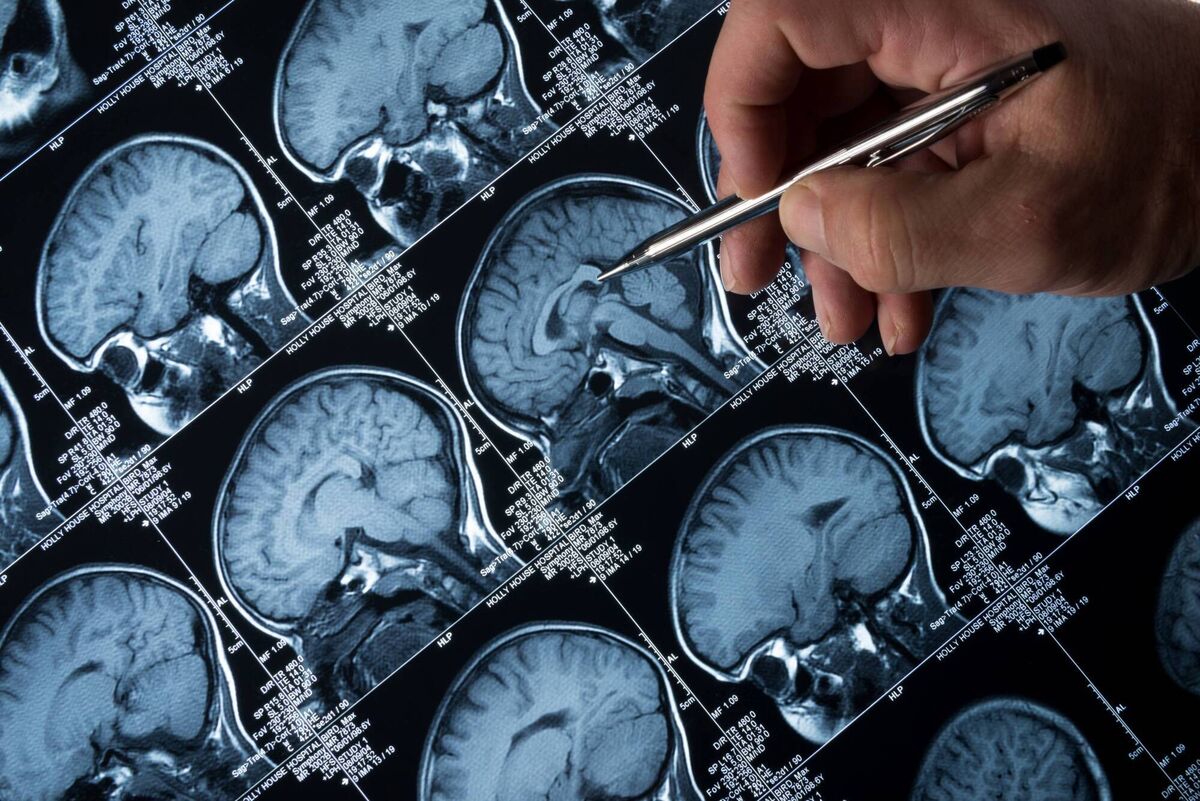
Dementia is often portrayed as a 'living death' which is damaging as it presumes that the person with the disease has already disappeared. 

In dementia care and research, it can help us think about how to engage ethically with the inner lives of people whose communication has become profoundly limited.

At its best, critical fabulation is tentative and restrained. It allows us to ask what a person might be feeling, remembering, or communicating, while remaining honest about the limits of interpretation.

That interpretation must be humble. A caregiver may know a person’s history, habits, preferences and fears better than anyone else. 

This familiarity can deepen understanding, but it does not guarantee accuracy. Even those closest to a person with dementia must remain alert to the risks of projection, over interpretation and reading their own assumptions into another person’s experience. Or, even, taking over someone else’s story entirely.

If we refuse all imaginative engagement, we may leave people in the latest stages of dementia in silence. That silence can become a form of erasure.

For this reason, critical fabulation in dementia care and research must remain anchored in restraint and relational care. It means examining our own assumptions, motives and power, and requires us to ask what this person might be experiencing, but also what right we have to narrate that experience.

New drugs may help some people stay in the earlier stages of Alzheimer’s disease for longer. But dementia care also requires us to think about those for whom these drugs will do little or nothing, and those who are already far beyond the point at which they can tell us their stories in familiar ways.

Their lives still require attention. Their silence should not be mistaken for absence .

  • Kate Irving is professor of clinical nursing at DCU, and received funding from Cost (European Co-operation in Science and Technology), an EU-funded programme that provides grants to set up collaborative, interdisciplinary research networks. She is on the board of the Alzheimer’s Association of Ireland.
  • The Conversation