

惯性聚合 高效追踪和阅读你感兴趣的博客、新闻、科技资讯
阅读原文 在惯性聚合中打开

推荐订阅源

博客园_首页
Google DeepMind News
J
Java Code Geeks
S
SegmentFault 最新的问题
Martin Fowler
Martin Fowler
罗磊的独立博客
T
The Blog of Author Tim Ferriss
N
Netflix TechBlog - Medium
大猫的无限游戏
大猫的无限游戏
Hugging Face - Blog
Hugging Face - Blog
Last Week in AI
Last Week in AI
奇客Solidot–传递最新科技情报
奇客Solidot–传递最新科技情报
H
Heimdal Security Blog
N
News and Events Feed by Topic
Threat Intelligence Blog | Flashpoint
P
Privacy International News Feed
T
Tailwind CSS Blog
AWS News Blog
AWS News Blog
雷峰网
雷峰网
PCI Perspectives
PCI Perspectives
CTFtime.org: upcoming CTF events
IT之家
IT之家
钛媒体:引领未来商业与生活新知
钛媒体:引领未来商业与生活新知
The Register - Security
N
News | PayPal Newsroom
C
CERT Recently Published Vulnerability Notes
Microsoft Security Blog
Attack and Defense Labs
T
Tenable Blog
博客园 - 【当耐特】
Vercel News
Vercel News
GbyAI
GbyAI
博客园 - 司徒正美
量子位
T
Threat Research - Cisco Blogs
The Cloudflare Blog
The Last Watchdog
The Last Watchdog
MyScale Blog
MyScale Blog
酷 壳 – CoolShell
酷 壳 – CoolShell
Hacker News - Newest:
Hacker News - Newest: "LLM"
TaoSecurity Blog
TaoSecurity Blog
T
Troy Hunt's Blog
Y
Y Combinator Blog
P
Proofpoint News Feed
L
LINUX DO - 最新话题
OSCHINA 社区最新新闻
OSCHINA 社区最新新闻
Jina AI
Jina AI
Recent Commits to openclaw:main
月光博客
月光博客
Apple Machine Learning Research

IrishExaminer.com

Seriously ill in Gaza: ‘I wondered whether the cancer or a missile would kill me first’ Carole Coleman: Don't ask Americans about news or politics. They're done California dreamin’: Could a Trump-supporting Brexit cheerleader capitalise on Democrats' dithering? Ukraine saw 89 children killed in March. But we are sending them back? Louise Burne: Decade of squabbling over hospital leaves sick children in limbo Enda Brady: Charles did his job well this week, but will it be enough to sate Trump? 100 years of Fianna Fáil: Party must move from analysis to action to survive another century Margaret E Ward: Technology’s war on women — the new coercive control and confinement Ireland must act on fossil fuel phase-out Diversity and inclusion policies change lives — including mine Aoibhinn Ní Shúilleabháin: People care about losing the natural world — politics must catch up Ireland's towns bear the brunt of the urban/rural divide Our town centres cannot hold without reinforcements Free travel will help people fleeing abusive homes Workplace bullying is not rare — and the response is not improving Homeless figures don't count all those without housing Supports have improved for women in politics but there is more to do Cost-of-living crisis is impacting how we look after our pets Millennials have a moral obligation to avoid the Harry Potter reboot Sprucing up the truth: Schools should not be a battleground for vested interests Missing dogs tell a different story of greyhound welfare Mick Clifford: Nobody needs to 'lawyer up' to investigate treatment of Limerick gardaí Colin Sheridan: Has the world finally caught up with Lena Dunham's vision? We need a change in attitude to construction jobs if we are to deliver on housing and infrastructure Barry Andrews: Big publishers are ripping off our public libraries Losing my dad during covid is something I will never get over Tadgh McNally: Fine Gael has good reason to wish Leo Varadkar would just go away Major changes to espionage laws abroad sparks domestic review Louise Burne: Back and forth over shed laws shows unease still lodged between coalition parties Shed laws: New planning rules will cut red tape for homeowners Shed laws: We can't allow the creation of a shadow back garden rental market Small, practical measures can work alongside big ideas on solving housing crisis Fuel crisis shows Ireland cannot build a secure future on imported energy Adi Roche: Forty years have passed but Irish commitment to Chornobyl remains Singing together can help build community in divisive times Contraception is free, but it's not reaching everyone who needs it Seán Kelly: Viktor Orbán's loss is the EU's opportunity for a bold move on foreign policy TP O'Mahony: Link between religion and politics in the US is unique in the West Online abuse of politicians is a profitable business Power must be held accountable even in moments of pressure Ireland is addicted to contracting away all kinds of State capacity Here are the country's most senior civil servants running Ireland ‘I’m not a politician’: Clash with Pope Leo could prove dangerous for Donald Trump Global food systems are under fire due to a lack of political will Philomena's Law: Campaign steps up for UK-based survivors of mother and baby homes Are disruptive protests the new political force in Ireland? Fuel blockades expose state vulnerabilities From defiance to departure: 45 hours that changed everything for Michael Healy-Rae Louise Burne: All talk, no takeover — the problem with plotting Micheál Martin’s exit Conviction of Scottish man in wife's suicide is a landmark case Our politics can't cope with TikTok's emotional instancy The Mick Clifford Podcast: Is Micheál Martin's leadership in peril? Conscription is being reintroduced all over Europe — where is the debate? Mediation should be the first resort for conflict resolution Fuel furore shows our systems are more fragile than we think New Deis strategy is not radical enough Paul Hosford: Healy-Rae resignation a shock but not a fatal blow for Government Ireland has a planning system, but it's not plan-led Cormac O'Keeffe: Fuel protests ignite concerns over security as EU presidency nears Conor McCabe: Protesters' grievances are real — they're bearing a heavy load Would Donald Trump threaten the Vatican over Pope Leo's anti-war stance? Anti-migration policies are threatening to dismantle human rights Who is Péter Magyar: Hungary’s next leader energised voters but is ‘a dark horse’ Paul Hosford: Life goes on in Kyiv as Russia's war on Ukraine grinds on Paul Hosford: Government fights back with €505m spend after social media posts fuel national crisis The hardest part of your dog dying isn't just losing them. It's that you decide when they go David O'Mahony: The real world is quickly surpassing any horror speculative fiction can create Shona Murray: EU faced with Russian trojan horse if Orbán gets re-elected Russia and White House doing all they can to prop up Viktor Orbán John Gibbons: I've changed my mind on nuclear power — we don't need it any more How this week's protests fuelled confusion and consternation at Leinster House Waiting for tide of public opinion to turn on fuel price protesters is a gamble Fuel protests are undemocratic and respect no rules If you want to object to building over Bessborough, you have one week Farmers need targeted supports as they're facing most pain Irish science's surprising role in the Artemis mission Dorcha Lee: Security will be the big challenge for Ireland's EU presidency Housing 'affordability' means different things in rental debate Our leaders must show courage in commitment to peace by keeping the triple lock Viktor Orbán blazed a trail for Donald Trump’s assault on independent media Don't let what's happened in London replicate itself in Cork Big Tech shouldn’t be writing the rules for AI €4 for a coffee is not expensive when you consider it’s a small miracle in a cup Why we’ve gone mad for puzzles The reality behind Ireland’s anti-submarine warfare plans Assessment of need reform will not fix wider crisis of accessing care and children will pay the price Teacher pay and school funding on agenda of conferences Enda Brady: Keir Starmer has set the clock running on Britain rejoining the European Union 'SSIA on steroids': Will the Government's new savings and investment account deliver? Seven deadlines and an AI dilemma: Is the new Leaving Cert fixing one problem by creating another? Marion McKeone: JD Vance needs all his Machiavellian instincts to avoid becoming Trump's whipping boy European Parliament vote creates legal vacuum in battle against online child abuse Why has it taken so long to return to the Moon? We don't just need to limit the number of TDs, we need radical reform of our electoral system Paul Hosford: Ukraine war merely another chapter in Russia's aggression against its neighbour The climate change warnings are getting louder — are we just refusing to listen? Our school meals programme must use community hubs and on-site kitchens cooking local produce Life goes on in Cuba despite brutal US blockade Paul Hosford: Ministerial meeting in Ukrainian bomb shelter reminds us of the stakes If Donald Trump were your ageing father, when would you take away his car keys? 'Drink‑driving is not an accident': Cork emergency consultant calls for urgent reforms to save lives
The tricolour is a powerful symbol of inclusion so let's reclaim it from those who use it to sow division
Irishexamine · 2026-04-18 · via IrishExaminer.com

If I was to fly our Irish flag outside my home right now, what conclusions would people draw about me, and why is this important? It is a simple question, but it carries a weight that would have seemed unusual not so long ago. 

The answer should be straightforward. Flying the Irish tricolour ought to be an unremarkable expression of national identity, a quiet signal of belonging to a shared republic. Yet in the current climate, it feels more complicated than that.

I recall cycling through suburban Copenhagen many years ago and seeing most homes flying the Danish flag. When I asked a Danish friend why this was the norm, he told me it was simply an expression of pride, of community, of belonging. There was no political signal in it, no sense it aligned you with one viewpoint or another. It was just a quiet and confident expression of being Danish. Why does it feel different in Ireland?

In recent days, the Irish tricolour has been raised, waved, and worn by individuals and groups who claim to speak for the people, even as they challenge the very democratic processes through which the will of the people is expressed. It is an unsettling sight, hinting at a shift from something shared to something more contested.

Because the tricolour is not just another emblem. It is one of the most carefully conceived national flags in the world. Its meaning is not accidental, nor is it ambiguous. The green represents the nationalist tradition, the orange the unionist community, and the white between them symbolises peace. 

It is, at its core, a flag of inclusion, a visual commitment to pluralism. And yet, like all powerful symbols, it is not immune from reinterpretation.

We have seen this elsewhere. In the United States, the Stars and Stripes, long regarded as a unifying emblem, has in recent years become increasingly politicised. In certain contexts, it is no longer read simply as a symbol of national identity but as shorthand for a particular ideological position. 

The same has been true in Britain where the Union Jack and the St George’s Cross have at times been associated with exclusionary politics, particularly around immigration and national identity.
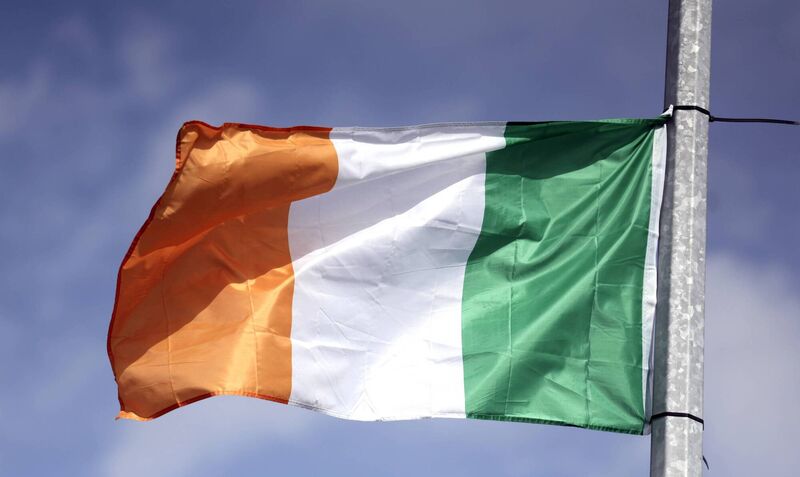
No group, however vocal, owns our Irish flag. It cannot be claimed, captured, or redefined by any single movement. Its meaning is rooted in the founding ideals of the State and in the broader aspirations of the people it represents. Picture: Leah Farrell/RollingNews.ieNo group, however vocal, owns our Irish flag. It cannot be claimed, captured, or redefined by any single movement. Its meaning is rooted in the founding ideals of the State and in the broader aspirations of the people it represents. Picture: Leah Farrell/RollingNews.ie

The pattern is consistent. A symbol that once belonged to everyone becomes more closely identified with a particular political current. With repetition, that association begins to shape how it is perceived. What once felt universal can start to feel partisan. 

Over time, some citizens may come to feel that the symbol no longer speaks for them at all. This is not because the flag itself has changed, but because its meaning is being contested in public space.

Ireland is not immune to this dynamic. The very potency of our national symbols, forged through struggle, sacrifice, and a long journey to independence, makes them especially vulnerable to appropriation. 

When a group wraps itself in the tricolour it is not simply making a visual statement. It is making a claim to legitimacy, to being the true representatives of the people of Ireland. It is saying we are the true inheritors and protectors of the republic. That is why the current moment matters.

When the tricolour is used in ways that seek to narrow the definition of who belongs or to cast doubt on democratic outcomes, it creates a deep and troubling contradiction. A flag designed to represent co-existence is being deployed in ways that imply exclusion. A symbol intended to bridge traditions is being used to elevate one perspective above all others.

It is important to be clear about what is and is not happening here. No group, however vocal, owns our Irish flag. It cannot be claimed, captured, or redefined by any single movement. Its meaning is rooted in the founding ideals of the State and in the broader aspirations of the people it represents. To suggest otherwise is to misunderstand both the flag and the republic itself.
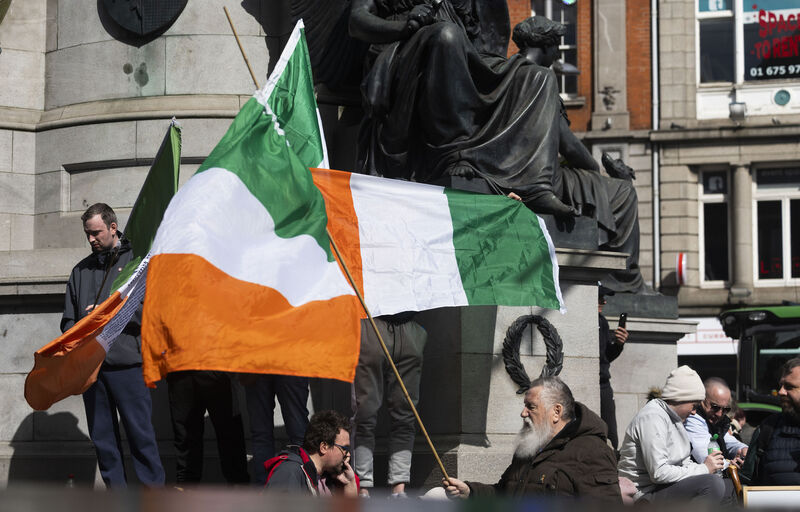
Demonstrators calling themselves Concerned Citizens protest the increase in fuel prices in Dublin last week. Picture: Sam Boal/Collins PhotosDemonstrators calling themselves Concerned Citizens protest the increase in fuel prices in Dublin last week. Picture: Sam Boal/Collins Photos

The tricolour belongs to all of us equally, unconditionally, and without exception. It belongs to those who agree and those who disagree, to those in power and those who oppose it, to those whose voices are loud and those whose voices are rarely heard.

Those are not abstract ideals. They are the foundation of our democracy. And democracy, by its nature, is sometimes noisy, sometimes frustrating, and often imperfect. But it remains the only legitimate means by which the will of the people is expressed. 

To challenge that process while draping oneself in the national flag is not an act of patriotism. It is, at best, a misunderstanding of what our republic demands and, at worst, an attempt to cloak division in the language of unity.

So let us reclaim our flag from those who would divide rather than unite. If we believe in pluralism, respect, and democratic legitimacy, our tricolour can still express those ideals, but only if we insist on that meaning and live by it.

Perhaps the answer is simpler than we think. We might look again to the example of the Danes, and choose to fly our flag more often, and more openly, not as a statement of division or grievance, but as a quiet and confident expression of belonging. Not to exclude, but to include. Not to assert superiority, but to affirm a shared identity. Not to deepen difference, but to signal unity and harmony.

  • Ciarán Cannon is a former minister of state at the Department of Foreign Affairs