
惯性聚合 高效追踪和阅读你感兴趣的博客、新闻、科技资讯
阅读原文 在惯性聚合中打开

推荐订阅源

大猫的无限游戏
大猫的无限游戏
博客园 - 【当耐特】
Cloudbric
Cloudbric
H
Hackread – Cybersecurity News, Data Breaches, AI and More
Attack and Defense Labs
爱范儿
爱范儿
The Cloudflare Blog
腾讯CDC
Security Archives - TechRepublic
TaoSecurity Blog
TaoSecurity Blog
云风的 BLOG
云风的 BLOG
Recent Announcements
C
Check Point Blog
Schneier on Security
S
Schneier on Security
J
Java Code Geeks
B
Blog RSS Feed
Cisco Talos Blog
Cisco Talos Blog
Vercel News
Vercel News
Stack Overflow Blog
Stack Overflow Blog
博客园_首页
cs.AI updates on arXiv.org
A
About on SuperTechFans
Threat Intelligence Blog | Flashpoint
Google DeepMind News
阮一峰的网络日志
阮一峰的网络日志
罗磊的独立博客
A
Arctic Wolf
S
Secure Thoughts
P
Palo Alto Networks Blog
The Last Watchdog
The Last Watchdog
SecWiki News
SecWiki News
cs.CV updates on arXiv.org
博客园 - 三生石上(FineUI控件)
D
Darknet – Hacking Tools, Hacker News & Cyber Security
量子位
U
Unit 42
I
InfoQ
D
DataBreaches.Net
P
Privacy International News Feed
T
Troy Hunt's Blog
博客园 - 叶小钗
T
Threatpost
博客园 - Franky
K
Kaspersky official blog
Hugging Face - Blog
Hugging Face - Blog
IT之家
IT之家
www.infosecurity-magazine.com
CTFtime.org: upcoming CTF events
C
Cisco Blogs

IrishExaminer.com

Seriously ill in Gaza: ‘I wondered whether the cancer or a missile would kill me first’ Carole Coleman: Don't ask Americans about news or politics. They're done California dreamin’: Could a Trump-supporting Brexit cheerleader capitalise on Democrats' dithering? Ukraine saw 89 children killed in March. But we are sending them back? Louise Burne: Decade of squabbling over hospital leaves sick children in limbo Enda Brady: Charles did his job well this week, but will it be enough to sate Trump? 100 years of Fianna Fáil: Party must move from analysis to action to survive another century Margaret E Ward: Technology’s war on women — the new coercive control and confinement Ireland must act on fossil fuel phase-out Diversity and inclusion policies change lives — including mine Aoibhinn Ní Shúilleabháin: People care about losing the natural world — politics must catch up Ireland's towns bear the brunt of the urban/rural divide Our town centres cannot hold without reinforcements Free travel will help people fleeing abusive homes Workplace bullying is not rare — and the response is not improving Homeless figures don't count all those without housing Supports have improved for women in politics but there is more to do Cost-of-living crisis is impacting how we look after our pets Millennials have a moral obligation to avoid the Harry Potter reboot Sprucing up the truth: Schools should not be a battleground for vested interests Missing dogs tell a different story of greyhound welfare Mick Clifford: Nobody needs to 'lawyer up' to investigate treatment of Limerick gardaí Colin Sheridan: Has the world finally caught up with Lena Dunham's vision? We need a change in attitude to construction jobs if we are to deliver on housing and infrastructure Barry Andrews: Big publishers are ripping off our public libraries Losing my dad during covid is something I will never get over Tadgh McNally: Fine Gael has good reason to wish Leo Varadkar would just go away Major changes to espionage laws abroad sparks domestic review Louise Burne: Back and forth over shed laws shows unease still lodged between coalition parties Shed laws: New planning rules will cut red tape for homeowners Shed laws: We can't allow the creation of a shadow back garden rental market Small, practical measures can work alongside big ideas on solving housing crisis Fuel crisis shows Ireland cannot build a secure future on imported energy Adi Roche: Forty years have passed but Irish commitment to Chornobyl remains Singing together can help build community in divisive times Contraception is free, but it's not reaching everyone who needs it Seán Kelly: Viktor Orbán's loss is the EU's opportunity for a bold move on foreign policy TP O'Mahony: Link between religion and politics in the US is unique in the West Online abuse of politicians is a profitable business Power must be held accountable even in moments of pressure Ireland is addicted to contracting away all kinds of State capacity Here are the country's most senior civil servants running Ireland ‘I’m not a politician’: Clash with Pope Leo could prove dangerous for Donald Trump Global food systems are under fire due to a lack of political will Philomena's Law: Campaign steps up for UK-based survivors of mother and baby homes Are disruptive protests the new political force in Ireland? Fuel blockades expose state vulnerabilities From defiance to departure: 45 hours that changed everything for Michael Healy-Rae Louise Burne: All talk, no takeover — the problem with plotting Micheál Martin’s exit The tricolour is a powerful symbol of inclusion so let's reclaim it from those who use it to sow division Conviction of Scottish man in wife's suicide is a landmark case Our politics can't cope with TikTok's emotional instancy The Mick Clifford Podcast: Is Micheál Martin's leadership in peril? Conscription is being reintroduced all over Europe — where is the debate? Mediation should be the first resort for conflict resolution Fuel furore shows our systems are more fragile than we think New Deis strategy is not radical enough Paul Hosford: Healy-Rae resignation a shock but not a fatal blow for Government Ireland has a planning system, but it's not plan-led Cormac O'Keeffe: Fuel protests ignite concerns over security as EU presidency nears Conor McCabe: Protesters' grievances are real — they're bearing a heavy load Would Donald Trump threaten the Vatican over Pope Leo's anti-war stance? Anti-migration policies are threatening to dismantle human rights Who is Péter Magyar: Hungary’s next leader energised voters but is ‘a dark horse’ Paul Hosford: Life goes on in Kyiv as Russia's war on Ukraine grinds on Paul Hosford: Government fights back with €505m spend after social media posts fuel national crisis The hardest part of your dog dying isn't just losing them. It's that you decide when they go David O'Mahony: The real world is quickly surpassing any horror speculative fiction can create Shona Murray: EU faced with Russian trojan horse if Orbán gets re-elected Russia and White House doing all they can to prop up Viktor Orbán John Gibbons: I've changed my mind on nuclear power — we don't need it any more How this week's protests fuelled confusion and consternation at Leinster House Waiting for tide of public opinion to turn on fuel price protesters is a gamble Fuel protests are undemocratic and respect no rules If you want to object to building over Bessborough, you have one week Farmers need targeted supports as they're facing most pain Irish science's surprising role in the Artemis mission Dorcha Lee: Security will be the big challenge for Ireland's EU presidency Housing 'affordability' means different things in rental debate Our leaders must show courage in commitment to peace by keeping the triple lock Viktor Orbán blazed a trail for Donald Trump’s assault on independent media Big Tech shouldn’t be writing the rules for AI €4 for a coffee is not expensive when you consider it’s a small miracle in a cup Why we’ve gone mad for puzzles The reality behind Ireland’s anti-submarine warfare plans Assessment of need reform will not fix wider crisis of accessing care and children will pay the price Teacher pay and school funding on agenda of conferences Enda Brady: Keir Starmer has set the clock running on Britain rejoining the European Union 'SSIA on steroids': Will the Government's new savings and investment account deliver? Seven deadlines and an AI dilemma: Is the new Leaving Cert fixing one problem by creating another? Marion McKeone: JD Vance needs all his Machiavellian instincts to avoid becoming Trump's whipping boy European Parliament vote creates legal vacuum in battle against online child abuse Why has it taken so long to return to the Moon? We don't just need to limit the number of TDs, we need radical reform of our electoral system Paul Hosford: Ukraine war merely another chapter in Russia's aggression against its neighbour The climate change warnings are getting louder — are we just refusing to listen? Our school meals programme must use community hubs and on-site kitchens cooking local produce Life goes on in Cuba despite brutal US blockade Paul Hosford: Ministerial meeting in Ukrainian bomb shelter reminds us of the stakes If Donald Trump were your ageing father, when would you take away his car keys? 'Drink‑driving is not an accident': Cork emergency consultant calls for urgent reforms to save lives
Don't let what's happened in London replicate itself in Cork
Allan Prosser · 2026-04-07 · via IrishExaminer.com

Dr Johnson may seem an unlikely starting point for a column published in Ireland. The 18th century polymath was a Tory and a deeply committed Anglican, two creeds which have not aged well in the Republic.

Johnson, rather like Goethe, the man who was good at everything, possessed that singular quality of knowing a great deal about whatever is worth knowing. He was a two-legged Georgian version of Google and his magisterial dictionary, published in 1755, contained 42,773 words and 114,000 illustrative quotations from the likes of Shakespeare, Jonathan Swift, Dryden and Milton.

Among his specialist subjects was London, where he lived for nearly two thirds of his 75 years, reputedly at some 17 different addresses. And Johnson came to mind when a reference in the recent Future Cork debate caught my eye, partly because it concerned the city where I lived for 17 years, but even more so because it had much to say about my birthplace, and home, for two thirds of my life.

There will be few who quibble with the arcadian vision for the development of Leeside presented by Monika Jain, principal city planner of Transport for London. 

Read More

Rich culture, innovation, public spaces, proximity, sustainability. The greening of the city in a climate-resilient way. The full nine yards of modern metropolitan planning.

It struck a chord because Londoners have been hearing this for a long time now as the squeeze on vehicles is extended and accelerated with the ultimate objective of abolishing traffic, and its accompanying pollution particulates and poor air quality, forever.

All of this, you might imagine, is carried by universal acclaim. 
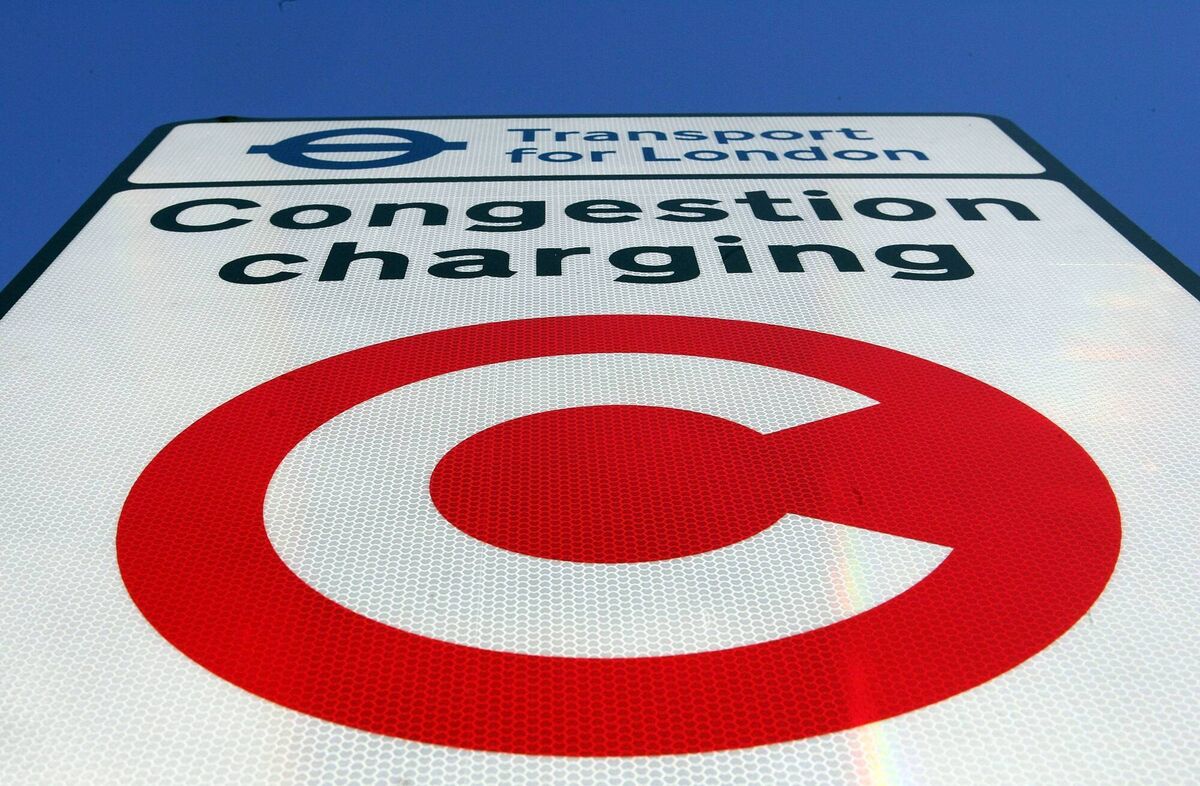
A congestion zone sign in London. File photo: Cate Gillon/Getty Images

But you would be wrong, even in a city which possesses the kind of joined up transport system of which Cork can only dream. 

There are a few facts to consider while embarking upon the revolutionary journey which logic dictates must end with the abolition of private transport in the urban environment, which is not something people have voted for, or even desire.

Cork emerged as a meaningful entity under the Vikings some 1,100 years ago. London was founded by Roman legionaries in 43AD. Some critics say Londoners have been coming the old soldier ever since.

Whatever the progress of two millennia — we no longer have Black Death, there are no cholera epidemics caused by contaminated water supply, and the city doesn’t burn down anymore — traffic management, or rather the methods deployed to “encourage” and “nudge” people to change their habits, remains a major cause of contention. 

And, although the scale is different, there are lessons Cork can learn.

London has long been one of Europe’s most congested cities. Despite a profusion of new bus corridors, cycle lanes, low traffic neighbourhoods, pedestrian-friendly initiatives, traffic calming, 20mph limits, congestion charging (€21 per day) and ulez  (Ultra Low Emission Zones) exclusion zones (€14 daily), it is getting worse.
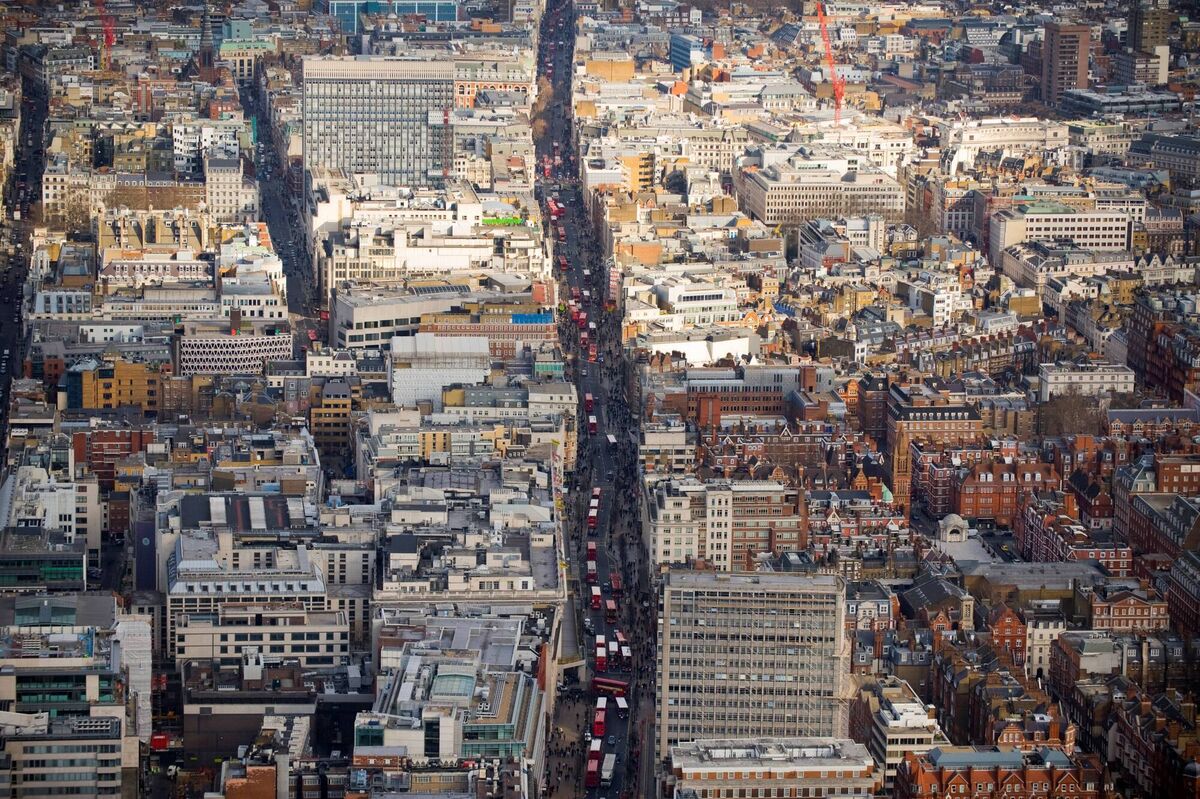
London's Oxford Street in 2008. Time lost by drivers in London traffic increased from 97 hours (2022) to 99 hours (2023) to 101 hours (2024). File photo: Jason Hawkes/Getty Images

Time lost by drivers in traffic increased from 97 hours (2022) to 99 hours (2023) to 101 hours (2024). Some data from the annual TomTom survey for last year shows that motorists spent the equivalent of about six days a year in jams.

There are explicit reasons for this. More vehicles are attempting to cram into less space. Private hire services such as Uber have increased exponentially, with many drivers circulating until their apps deliver up customers. Online delivery vans, making frequent stops, slow traffic. 

Constant roadwork and infrastructure upgrades impede flow. Ongoing construction brings road clogging HGVs and closures every day. More people are commuting again and peak times are heavier. There have been a dozen significant strikes on Tube and buses in the past three years.

Money grab

Each, or any, of these may be manageable in isolation. People may be prepared to make allowances. But where the worm turns is in the deep, and growing, suspicion that many policies are being enacted not for laudable, and supportable, environmental reasons, but as a money grab.

While that can dovetail neatly into the modern pantheon of conspiracy theories, the reasons why many people think this are easily listed.

When Ken Livingstone introduced congestion charging in 2003, he had four pillars of justification: 

  • cutting gridlock; 
  • improving journey times; 
  • reinvesting in public transport; 
  • improving air quality and public health. 

His charge was £5 per day (just over €7 at the rate of exchange 23 years ago). By 2026 this had increased by 260%.

Electric vehicles lost their exemption from congestion charging in January. They will, from April 2028, face a new tax of 30p (35c) per mile with drivers expected to self-declare annual mileage in advance and validate that figure either through the MOT test or at authorised garages.

This will include miles incurred outside the UK although drivers will be subject to the tolls and local taxes of the host country. Anyone taking their EV from the North into the Republic will suffer the same financial double jeopardy although electric vehicles registered overseas will be exempt from charges in Britain.

If all this presents as the kind of imbroglio identified by Sheriff Ed Tom Bell in Cormac McCarthy’s No Country for Old Men (“if it ain’t a mess, it will do until the mess gets here”) it pales alongside the aggressive revenue collection policies adopted by local authorities, desperate to boost their coffers.

In London, half of the councils view themselves as being on the edge of financial collapse due in great part to the explosion in costs for SEND — children with special educational needs. The boroughs predict a shortfall of around €600m this year.

Town Halls see motorists as a cash cow at the same time that central government has identified the need to replace declining fuel duty revenue. And there is no shortage of evidence to support this assertion.

This month, Croydon (population 400,000) was forced by a High Court judge to scrap six LTNs after he ruled that they were illegally established to generate cash rather than reap “modest” environmental benefits. Now the local authority, which has declared itself bankrupt three times in five years, has to refund motorists millions of pounds in unjustified fines. 
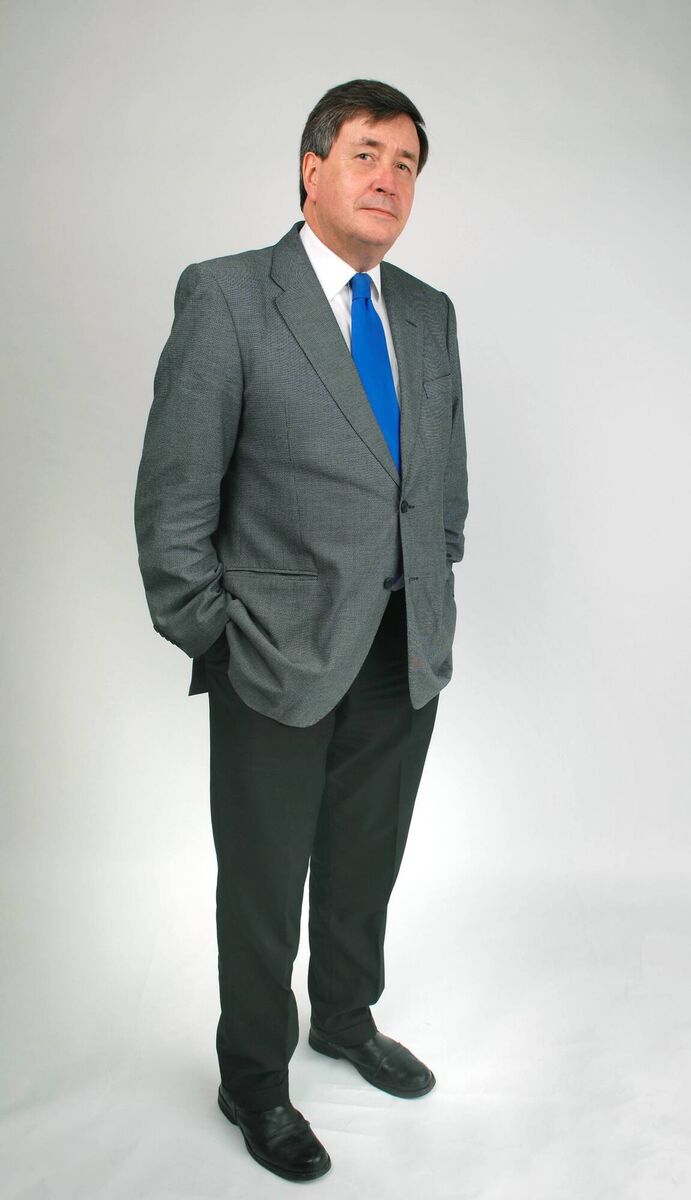
Allan Prosser: 'After 50 years, I have driven my last mile in the capital, proffered my last pound of council tax to the metropolis.'

CCTV enforcement — British authorities love CCTV cameras linked to automatic number plate recognition — showed that the borough raised £1.4m (€1.6m) from one LTN in just one month.

While Croydon is an extreme example of money harvesting it is far from unique and in the overwhelming majority of cases, the victims are ordinary citizens attempting to go about their daily business. 

They are assailed by speeding fines; penalties for misreading misleading and often opaque restrictions on roads; hawkish charges from incentivised parking wardens, or civil enforcement officers as they are now known. 

Add to that the perpetual scandal of unmanned car parks where services can only be activated by complicated and frequently misfunctioning apps and it is easy to understand why the patience of UK drivers — that’s 75% of the adult population — is wearing thin. 

It was noticeable how few expressions of sympathy there were over the collapse of the country’s largest parking provider, the private equity-led NCP, in the middle of March with the potential loss of more than 700 jobs. NCP charged as much as £60 (€90) for a full day in central London.

It is a political issue which is unlikely to go away. The Alliance of British Drivers pressure group says: “Motoring fines are a money-making racket dressed up as environmental policy.” 

According to Co-op Insurance, UK drivers received 9.61 million points on their licences in 2024, a 12% increase from 2023.

A lesson for Irish cities

Mission creep by bureaucrats, politicians and authorities in general is a trap Irish policy makers will do well to avoid. But for me, it is too late.

Until last week, I lived in Caledonian Road, the “Cally”, a location which, like Kilburn, used to be very familiar to London’s Irish population. And with some famous pubs too.

Nowadays, it is lauded in a song hugely familiar to Arsenal supporters following its adoption as their anthem to rival, You’ll Never Walk Alone.

These streets are our own, sings Louis Dunford in his mordantly sentimental but moving tribute The Angel (North London Forever). The full version is rarely offered up but it has something profound to say about the kind of social engineering now taking place in cities around the world:

“As I walk these streets alone, through a kingdom made of chrome 

I see them ripping up the cobbles, and tearing down our childhood homes 

I see the architecture changing, watch the history disappear 

And the skyline rearranging into towers of veneer” 

After 50 years, I have driven my last mile in the capital, proffered my last pound of council tax to the metropolis, and paid my last penalty notices (equivalent to €250 since you ask) for trivial car transgressions. 

I will henceforth view it through the eyes of a visitor rather than a local, ironically one exclusively using buses and trains. I draw the line at the heavyweight bikes which litter the streets or dodge recklessly among pedestrians.

Which brings us back to Dr Johnson who famously observed that “a man who is tired of London is tired of life”. 

Let’s put that to the test. There is a great deal happening in the UK. Society’s tectonic plates are moving. It is time to find out more.