



惯性聚合 高效追踪和阅读你感兴趣的博客、新闻、科技资讯
阅读原文 在惯性聚合中打开

推荐订阅源

P
Proofpoint News Feed
G
GRAHAM CLULEY
GbyAI
GbyAI
Martin Fowler
Martin Fowler
Last Week in AI
Last Week in AI
月光博客
月光博客
让小产品的独立变现更简单 - ezindie.com
V
Visual Studio Blog
博客园 - 聂微东
aimingoo的专栏
aimingoo的专栏
The GitHub Blog
The GitHub Blog
奇客Solidot–传递最新科技情报
奇客Solidot–传递最新科技情报
钛媒体:引领未来商业与生活新知
钛媒体:引领未来商业与生活新知
Blog — PlanetScale
Blog — PlanetScale
The Cloudflare Blog
博客园 - 叶小钗
罗磊的独立博客
宝玉的分享
宝玉的分享
P
Privacy International News Feed
酷 壳 – CoolShell
酷 壳 – CoolShell
Scott Helme
Scott Helme
Project Zero
Project Zero
P
Palo Alto Networks Blog
F
Fortinet All Blogs
Help Net Security
Help Net Security
K
Kaspersky official blog
cs.CV updates on arXiv.org
S
Schneier on Security
cs.CL updates on arXiv.org
F
Full Disclosure
Webroot Blog
Webroot Blog
V
V2EX
C
Check Point Blog
L
LangChain Blog
阮一峰的网络日志
阮一峰的网络日志
H
Hacker News: Front Page
G
Google Developers Blog
Hugging Face - Blog
Hugging Face - Blog
freeCodeCamp Programming Tutorials: Python, JavaScript, Git & More
博客园_首页
Application and Cybersecurity Blog
H
Help Net Security
量子位
Recorded Future
Recorded Future
H
Heimdal Security Blog
雷峰网
雷峰网
T
The Blog of Author Tim Ferriss
www.infosecurity-magazine.com
O
OpenAI News
D
DataBreaches.Net

IrishExaminer.com

Terrible timing but some positives in Special Needs Assistants Workforce Development Plan Childcare: State is doing more than ever to reduce costs — but parents aren't likely to be grateful AI backlash is growing — and tech execs know it Ursula Shannon fought for the Bessborough babies — now we must continue Mick Clifford: The house of Healy-Rae has fallen victim to 'The Split' Irish people's lack of concern over climate action due to mixed messaging from politicians Ruti Lachs: Cork has so many precious memories of a vanished Jewish community The Pope has moral power but won't set the global agenda on AI Yvonne Daly: Funding changes threaten existence of criminal legal aid lawyers Can Ireland benefit from leading the EU? What to expect from the 2026 presidency Irish tech workers at Meta and Covalen can turn to unions to help fight AI replacement What have we really learned from the Enhanced Games? Unqualified influencers are promoting dangerous peptides and regulators can't cope Geothermal must be in the mix for solving energy crisis Why is Ireland's Government cheerleading for privately owned AI? Tracy Martin: Over a million Irish people have a disability, but nowhere is accessible AI has led to a rise in fraud and identity theft ieExplains: Why sunbeds are under scrutiny — and could face a total ban Umar al-Qadri: We can be both proudly Irish and proudly Muslim this Eid As Ireland's EV sales surge, is the age of oil-powered vehicles nearly over? Jim Clarken: Ebola is spreading in DRC because of cuts to global aid funding Paul Hosford: Nobody in a rush to applaud Government's version of Occupied Territories Bill Jillian Godsil: Aidan Turner or not — after Epstein and #MeToo I just can't stomach ‘Rivals’ Politicians playing political football with European Court of Human Rights to gain anti-migrant votes People think 'Irish food culture' is hot chicken rolls and Taytos — we need to change that Ali Sheridan: It's a key moment for climate transition — we must show people the benefits Fianna Fáil’s by-election collapse exposes bigger problem: what does the party stand for? Theresa Reidy: By-election results will be troubling for Fianna Fáil and Sinn Féin In the Occupied West Bank, I witnessed apartheid Emer O'Neill: I was born here. I represented Ireland — when will I be Irish enough for the racists? Joyce Fegan: Even girl bosses Reese Witherspoon and Mel Robbins can't convince women we need AI Marion McKeone: By getting him fired, Trump has unwittingly cemented Stephen Colbert’s stature as a cultural icon Israel kidnapped and mistreated Irish citizens. When will the Government act? Micheál Martin invites Pope Leo to visit Ireland during state visit to Vatican We must be better prepared to prevent the next pandemic Sheila Gilheany: New alcohol labels should have been introduced today, but lobbyists derailed them Rents and house prices up in Limerick and Cork as Munster cities become investor playgrounds Podcast: The rise of Kneecap and what Cork audiences can expect from their live shows Five things we learned from canvassing with Galway West by-election candidates Colin Doherty: Bertie Ahern is wrong - Irish healthcare relies on migrants Séamus Boland: Organisations like the GAA and Rural Link hold Irish society together Dominic Crowley: We spend 30 times more killing each other than ensuring everyone is fed Aoife Cassidy: School sacraments have no place in modern education Naoise Nunn: I'm an arts festival organiser — our funding  has been gutted in the name of tourism RTÉ: What is the financial scandal facing the broadcaster? Kieran Connell: Ireland has a long multicultural history. It's time to tell that story Galway West: Fianna Fáil's young Cillian Keane wooing voters for transfers ieExplains: Why does Ireland need an additional 3,000 community nurses and therapists? President Catherine Connolly braves 'Galway weather' at the Chelsea Flower Show Why is the Irish Government silent on Dubliner Daniel's German show trial? Ebun Joseph: Bertie Ahern's anti-immigrantcomments are nothing new to Black Irish people Iran war shows how instability is useful to a 'thugocracy' 'I'm told I'm brutal at it': Mary Lou McDonald bowls up in Galway to a warm welcome 'The home I was evicted from in Cork is now an AirBnB charging nearly €10,000 per month' No diagnosis needed for children’s supports at an early age Ireland is a rich country with poor infrastructure due to delays, disputes, and overruns Ireland favours greater EU independence from the US ahead of assuming EU presidency Elaine Loughlin: Jovial spirit among Fianna Fáil members despite by-election woes Paul Hosford: Bertie Ahern's impact on Fianna Fáil still lingers The 'Irish goodbye': Slipping away without saying farewell can be your kindest way out Politics has tossed friendship out of the window — as Keir Starmer is realising Kilkee's bathing water is filthy — so why are people objecting to a water treatment plant? Nick Charalambous: Is your mortgage ready for what's coming? The Mick Clifford Podcast: Fianna Fáil at 100 — Has Ireland passed the party by or can it change with the times? Paul Hosford: Simon Harris has one big chance to shape his party and the country The pain of infertility has always been part of life and how we make sense of ourselves Mary McGill: Laws on AI sexual abuse images are too late for many victims Fianna Fáil dissent remains largely private as UK Labour openly turns on Keir Starmer Elaine Loughlin: Simple steps that could alleviate pressure on nurses Enda Brady: It was the lack of hope which killed Starmer’s premiership What will it take for Ireland to prioritise marine protection? Paul Hosford: Petitions committee a good place to see what's on Irish people's minds As French ambassador to Ireland, I am delighted that Cork is our twin county during EU presidency 'Only God knows': Don brings a wealth of understanding to his nursing job in Dublin Sharp contrast in supports for adult and teenage asylum seekers worth examining Catherine Conlon: The last bastion of urban silence is being shattered by drones Malcolm Noonan: We must reconnect with nature to restore it for future generations Terry Prone: Dubliner Suad Mooge is a new kind of Rose for a new kind of Ireland Nuclear option: Adi Roche says Ireland should commit to renewables rather than nukes Nuclear option: Cork TD says reversing Ireland's ban on nuclear energy is crucial for our future Nuclear option: Could Ireland emulate Finland’s energy model? Nuclear option is back on the table — but politicians and the public will take some convincing Returning to a country shaped by conflict and resilience Harassment by online influencers requires legal change Belle Burden's story of a collapsed marriage is very close to the bone Shona Murray: EU's bids to mollify Trump were met with nothing but chaos, tariffs, and war Ireland's Atlantic coastal clans were not isolated, purely Gaelic societies in the Middle Ages Catherine Conlon: Hantavirus hell on a cruise ship – has covid taught us anything? Colin Sheridan: Pressure grows on university over partnership with Israeli military-linked institution Liam Quaide: Rural Ireland is not a costume to put on for political theatre Restaurants are desperately waiting for the reduced Vat rate Reaction to Timothée Chalamet's comment on opera and ballet prove they are not dying art forms The Mick Clifford Podcast: When will tomorrow come for the National Children’s Hospital? Ireland sees the risks but acts too late and pays for it every time 'Bad parenting' trope is back in the frame for autism Sabastian Sawe's story is incredible — and it's not about his shoes What have we actually learned from five decades of the CAO? Ireland's food strategy needs a radical overhaul Seriously ill in Gaza: ‘I wondered whether the cancer or a missile would kill me first’ Carole Coleman: Don't ask Americans about news or politics. They're done
My grandmother fought for reproductive rights over 50 years ago — why are we still fighting?
Aisling McGee · 2026-05-25 · via IrishExaminer.com

In my first week at university, I wrote that “laws are in a constant state of motion”. At the time, I believed Ireland was a utopian society; that our laws and legislation evolved alongside the people they governed. 

Perhaps it was naivety, or even just hopeful optimism. After all, I grew up listening to stories about my grandmother May McGee and the battle she had to fight for her own autonomy. 

Six years after I wrote those words, I no longer believe them.

The Irish State has always approached women’s reproductive healthcare with hesitation, discomfort, and political caution. My grandmother was an ordinary woman in the face of extraordinary circumstances. For a long time, I did not realise the extent of her influence and impact. To me, she was my Nana who liked crochet and endless cups of tea. The reality, however, was that her body was in the hands of the State; she used to say: "It just wasn't right".

She believed in female autonomy, so much so that she was willing to take the state to the Supreme Court and air out her private marital matters for her body and every woman who came after. 

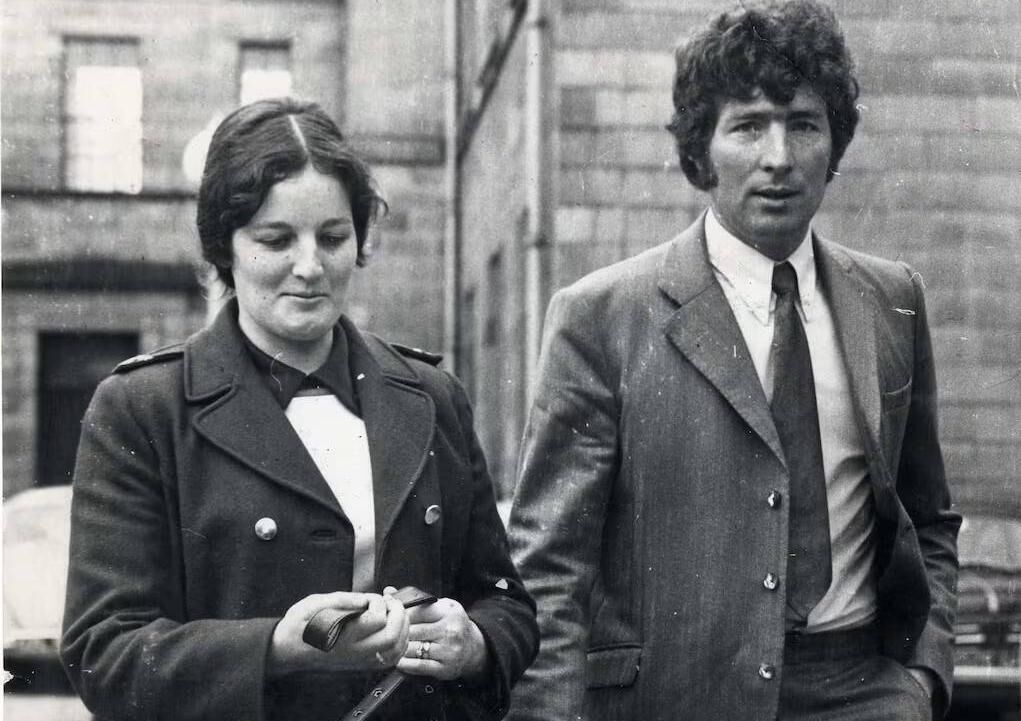
In 1973, the landmark case McGee v Attorney General came before the Supreme Court, which ruled that the 1935 ban on the importation and sale of contraceptives violated the constitutional right to marital privacy. Following the judgement, married couples could legally import contraceptives for the purpose of family planning, while the sale of contraceptives within Ireland remained illegal.
Read More

Mary McGee, who sought a court ruling that the confiscation of contraceptives she ordered was unconstitutional, leaves the court with her husband Seamus. Picture: National Women's Council/Dermot Barry

In 1979, six years later, legislation was finally introduced. Ireland at the time remained deeply shaped by Catholic teachings, with the law reflecting this reality. Charles Haughey famously described the 1979 act as “an Irish solution to an Irish problem”. Many criticised the legislation, arguing that it undermined women’s ability to make their own decisions regarding reproductive healthcare.

One would hope that, as a society, we have learned from our history. Yet, more than 50 years on, we are once again confronted with “an Irish solution to an Irish problem”. Whilst the language has changed, the underlying issue remains the same: mistrust of female bodily autonomy.

Barrier to healthcare

It shocks me that, half a century after my grandmother's fight for the State to acknowledge her autonomy, the female body is once again at the centre of political debate. Eight years ago, the Irish people voted overwhelmingly to repeal the Eighth Amendment. But significant barriers to abortion access remain, including this female bodily autonomy that I naively believed the State to respect.

The three-day wait period has repeatedly been identified as a barrier to healthcare access. In her independent review of the Health (Regulation of Termination of Pregnancy) Act 2018, submitted to then-health minister Stephen Donnelly, Marie O’Shea highlighted systemic barriers facing women seeking abortion care in Ireland. It has been widely criticised as medically unnecessary, patronising, and unjustified.

Opponents of the Reproductive Rights (Amendment) Bill 2026 argued that the waiting period provides “compassion” and “time for reflection”. Yet this argument ignores the fundamental reality that women do not decide to terminate a pregnancy lightly.

Research has consistently shown that abortion is a deeply personal and emotionally complex decision, and the mandatory delay has negative mental health impacts, with many describing the process as demeaning and distressing. 

To seek abortion care already requires emotional resilience and strength. To then be told by the State that you must wait three more days to “reflect” on your decision is not compassionate; it is paternalistic. It undermines female bodily autonomy by implying that women cannot be trusted to make informed decisions about their own healthcare without State intervention.

Restricting or criminalising abortion has never eliminated the need to end pregnancies. What it does instead is place women at greater risk by limiting access to safe and regulated healthcare. Ireland has already witnessed the consequences of inaccessible reproductive care. For decades, women travelled abroad in silence, while others faced desperation, stigma, and unsafe alternatives at home.

A fundamental human right

My grandmother fought for her bodily autonomy when faced with the real risk that she may not have survived another pregnancy. Why, more than 50 years later, are women still facing such challenges? 
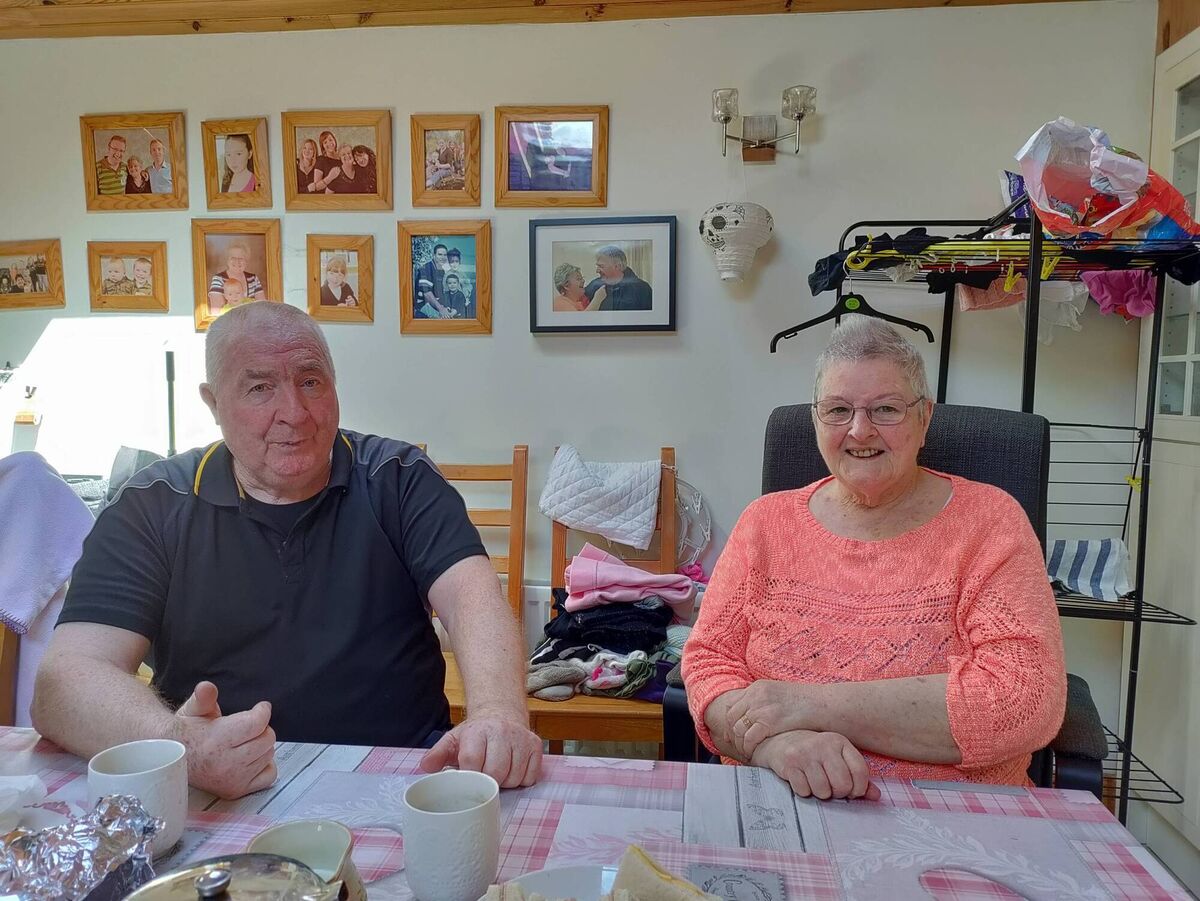
Changemakers: Seamus and May McGee at home in Skerries in 2022, almost 50 years after their landmark win in the Supreme Court.

While May stepped out of the world of politics after her success in the Supreme Court, she remained a strong supporter of women's reproductive rights, often expressing her frustration that a woman's decision was still open to criticism. She questioned, as I do now, why women’s bodies were a political battleground.

Access to abortion services is not a political problem. It is healthcare. 

Access to healthcare is a fundamental human right. Reproductive healthcare is inseparable from bodily autonomy, dignity, and equality. Ireland may have repealed the Eighth Amendment, but the culture that mistrusts women’s bodily autonomy persists. 

I can no longer believe that Ireland’s legal system is constantly ‘in motion’ and responding to the needs of her citizens; how can it be possible that 53 years after my grandmother took her case to the Supreme Court, the female body is still a political battleground in Ireland?

Read More