




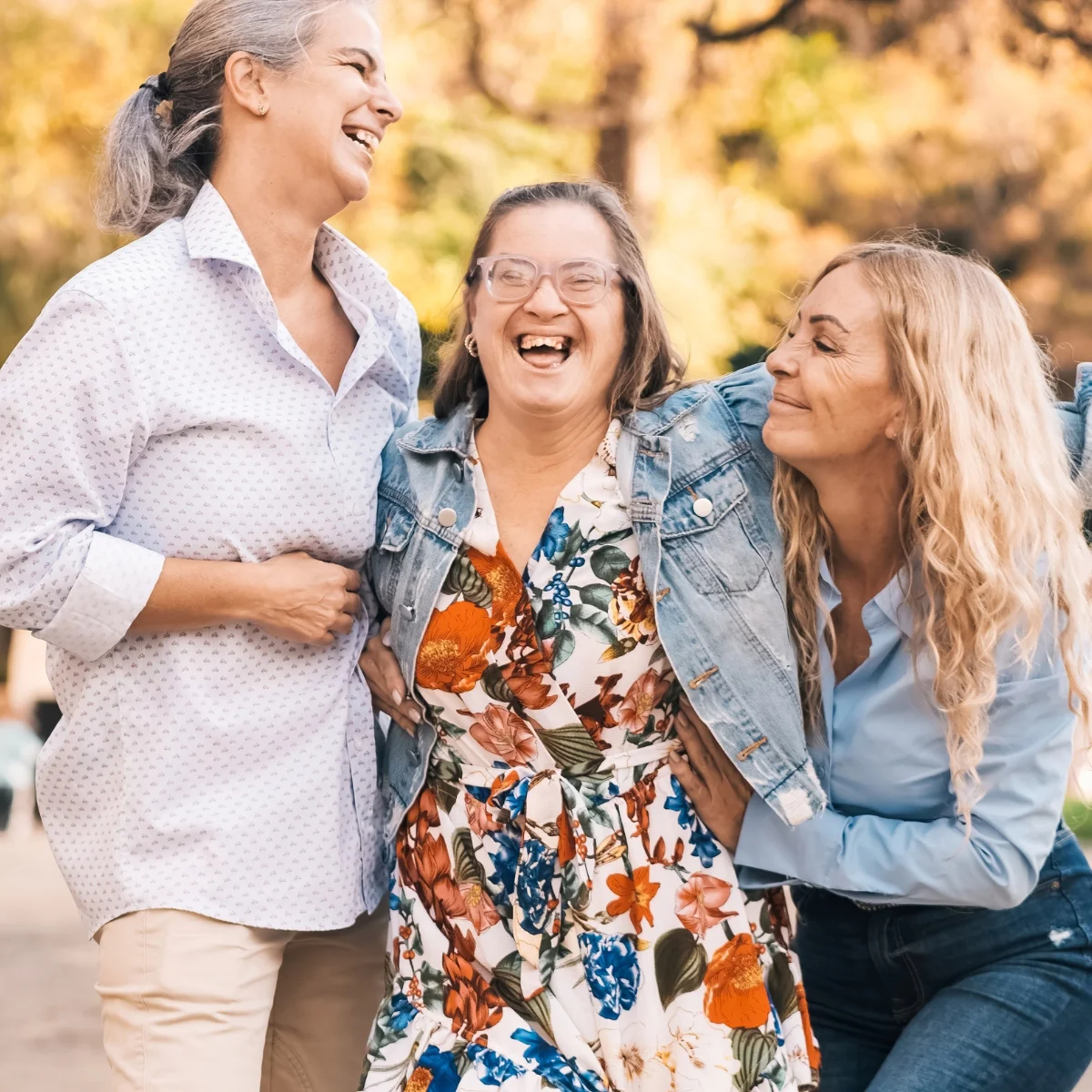

Charlotte McReynolds, National Museums NI and Elizabeth McCrum, former Curator of Applied Art.

Heading to Belfast this spring/summer fashion season? Ashes to Fashion is a must-see for fashion and textile lovers alike with a wide range of events running alongside this important exhibition, which celebrates the rebuilding of the Ulster Museum’s fashion and textile collection, 50 years on from a devastating fire. Ruth O’Connor speaks to Charlotte McReynolds, Curator of Art at National Museums NI.
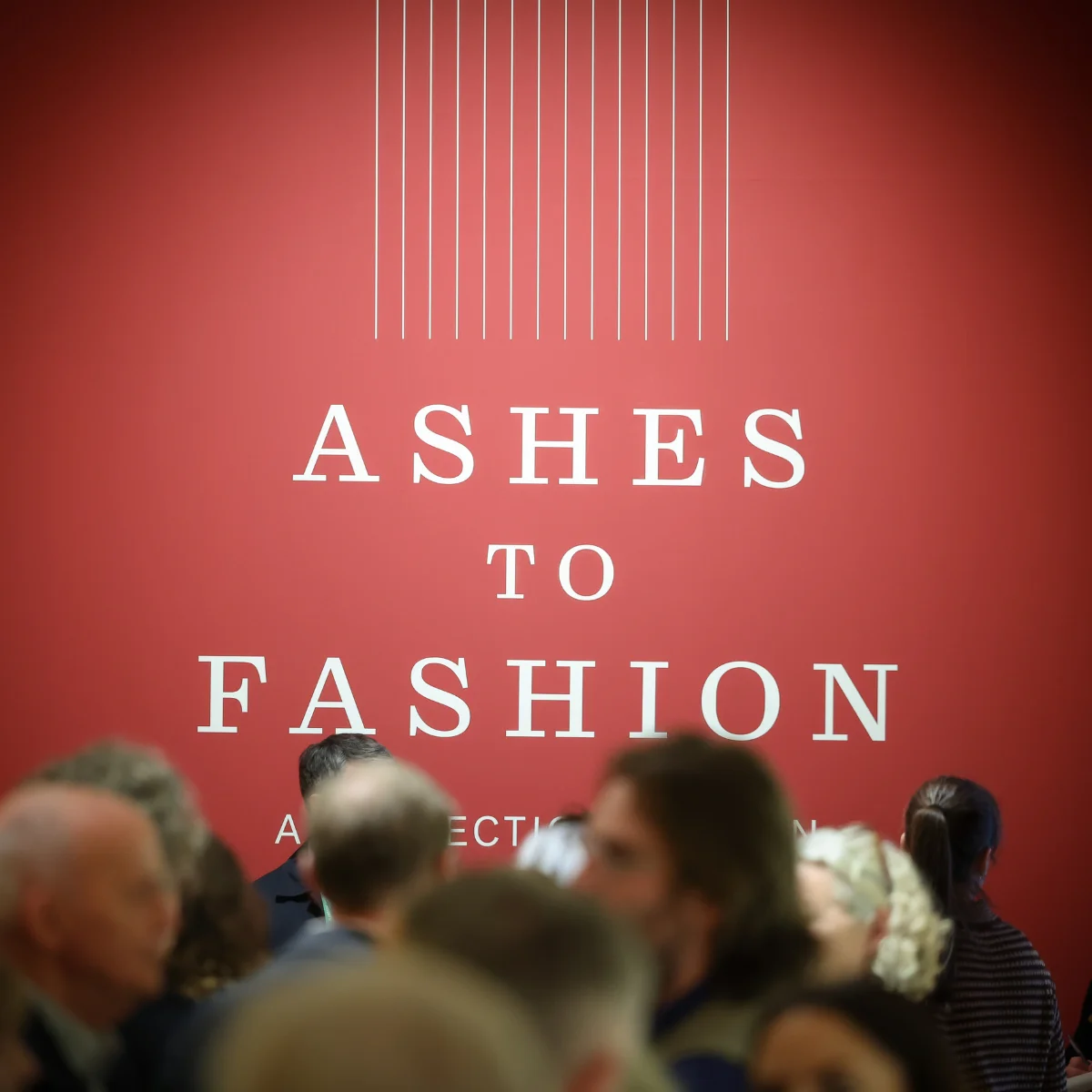
Ashes to Fashion is now open at the Ulster Museum.
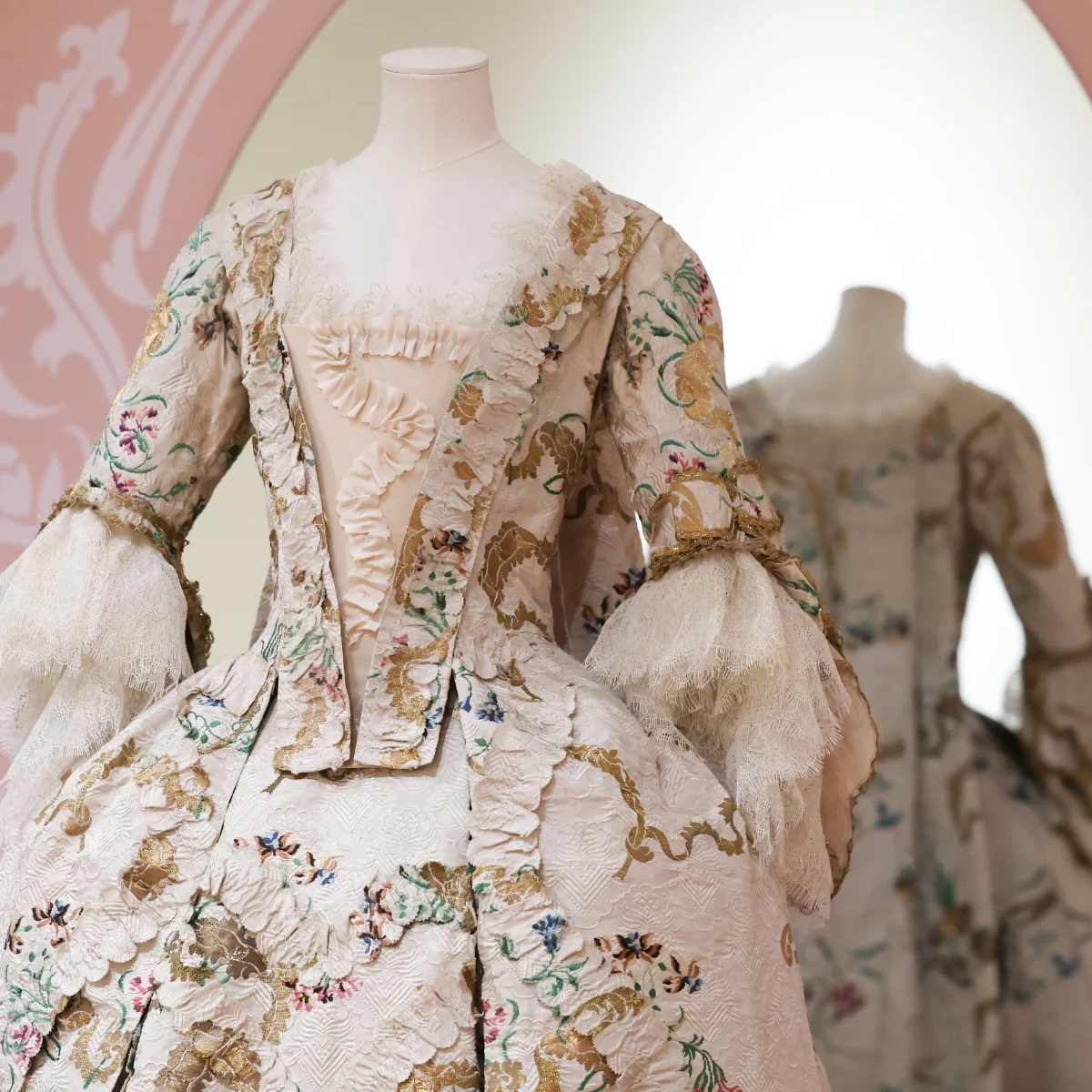
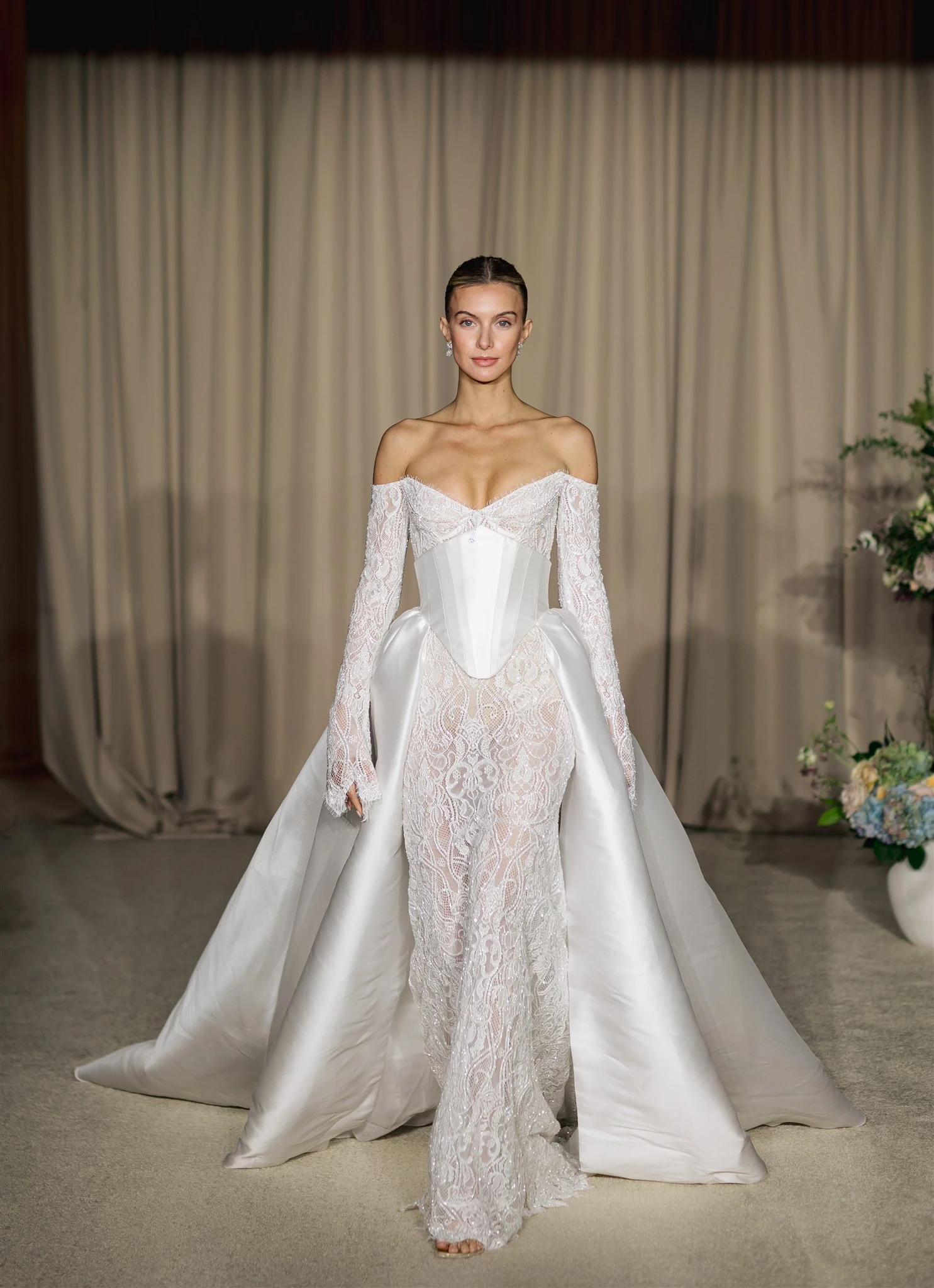
‘Belvedere’ robe, unknown maker, National Museums NI, Ulster Museum.
On November 11, 1976, a devastating fire at Malone House in South Belfast, where the Ulster Museum’s fashion collection was being stored, led to the near-total loss of the original costume and textile collection. Why was Malone House targeted at the time, and what were the effects of the firebomb attack?
It’s unknown why Malone House was targeted; it was one of many public buildings damaged during the Troubles. What is most important to remember is that nobody was harmed in the attack. In the 1970s, the building was used by the National Trust in Northern Ireland as its headquarters. The Ulster Museum was able to use the unoccupied second floor to store its very large costume and textile collection, which had outgrown its storage space in the museum building. When the fire happened, not only was the collection destroyed, but also almost all of its records, and the records belonging to the National Trust stored in Malone House. The building also suffered substantial damage – at one point, it looked like it would have to be demolished, but was successfully restored and reopened in 1983.
When news of the fire first reached the press, there was, of course, an outpouring of sympathy from the public all over the UK and Ireland and from institutions. Museums from all over the world wrote to the Ulster Museum offering help – the V&A in particular helped by moving potential gifts in the Ulster Museum’s direction. A public appeal was initially launched in 1977, requesting donations of historic dress, lace and accessories. The generosity of the public was spectacular – that year alone, the Ulster Museum received no fewer than 400 donations to its costume collection from all over Ireland and the UK, but it became apparent very soon, however, that to replace anything predating 1900, especially 18th-century clothing, would mean having to buy rather than wait to be given pieces.
Fortunately, in a strange silver lining, because terrorist violence was involved, the museum had government indemnity insurance and, therefore, a budget to start building up a new collection. With consultation from expert colleagues at the Victoria and Albert Museum in particular, approximate valuations of all the categories that were lost in the fire were gathered. The final valuation turned out to be very substantial, giving the curator at the time, Elizabeth McCrum, a very healthy budget to use for rebuilding the collection.
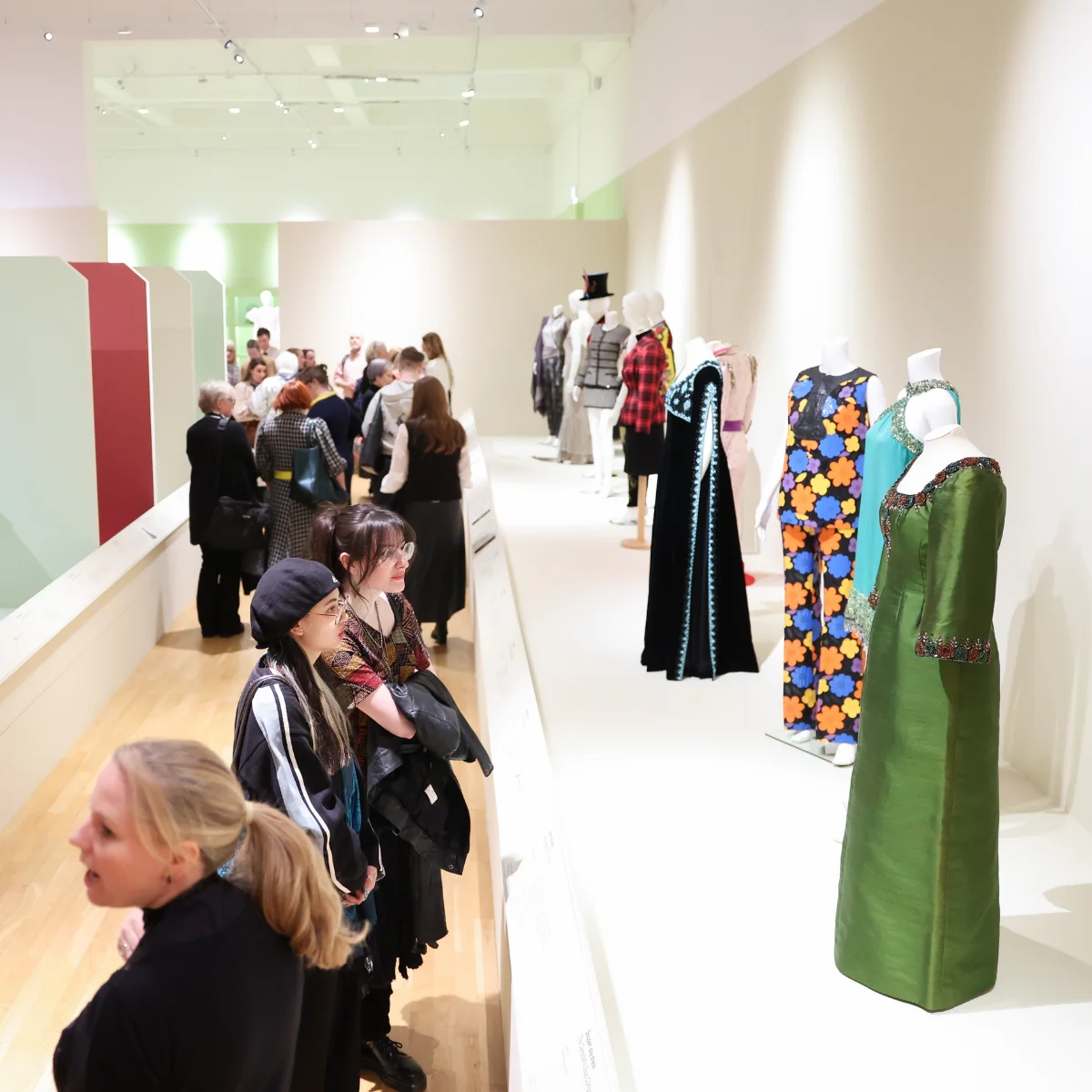
Visitors taking in key pieces from the newly rebuilt collection.
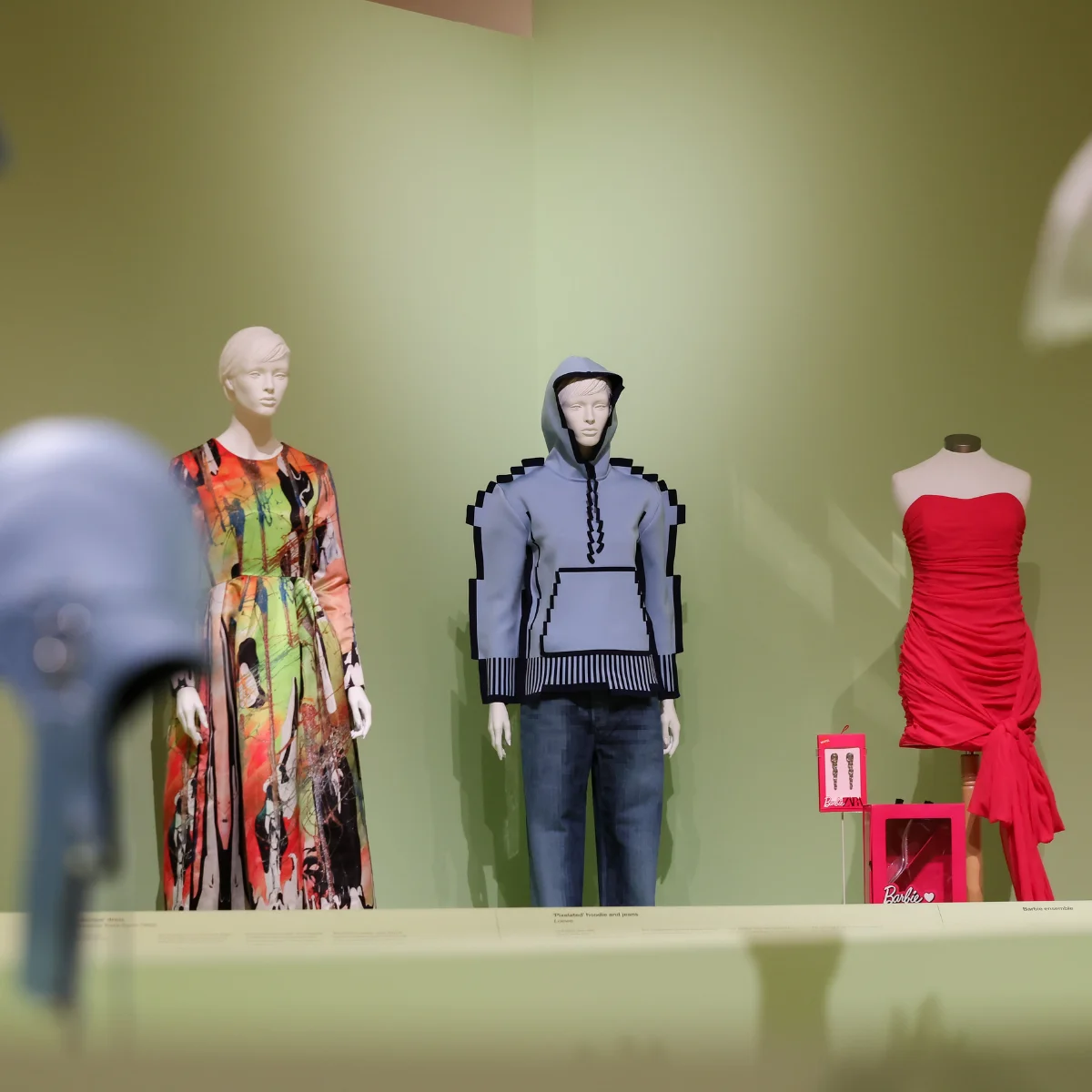
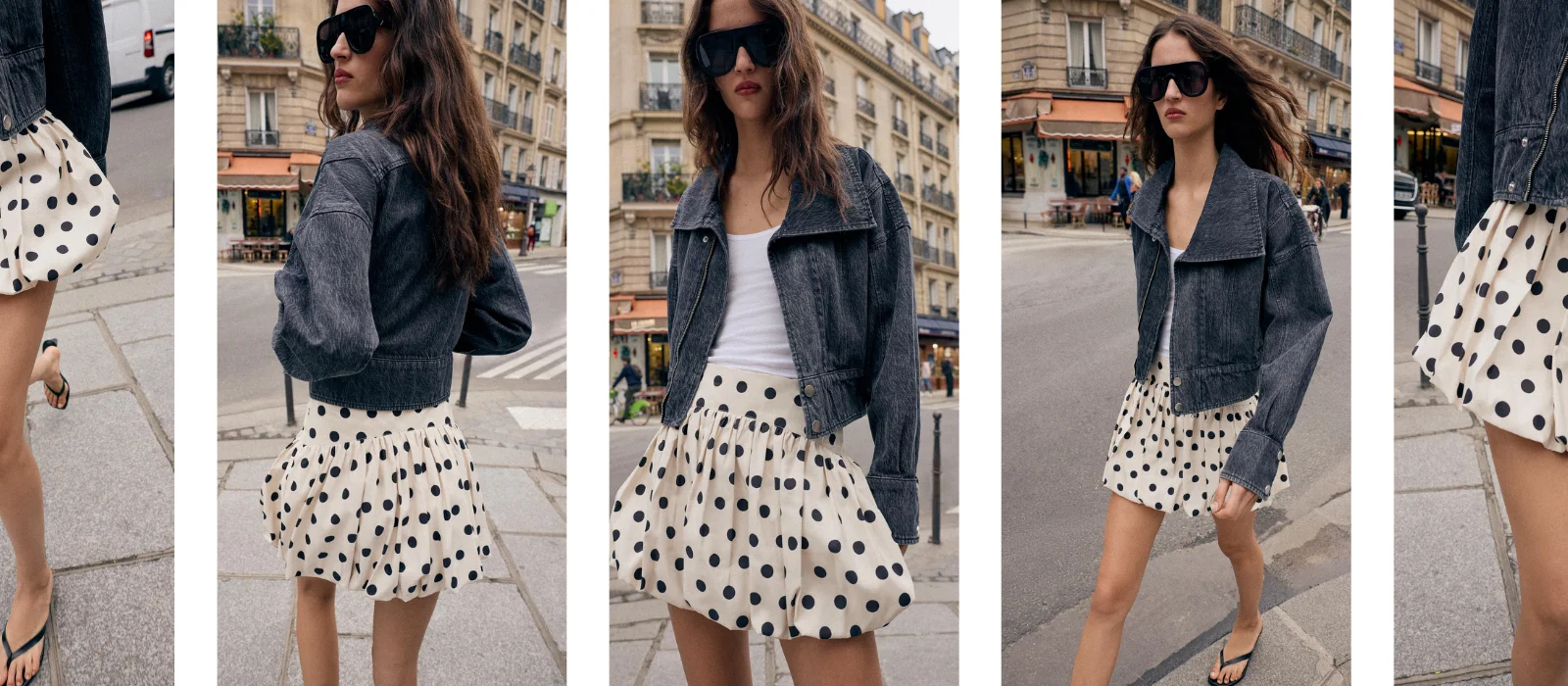
Loewe ‘Pixelated’ hoodie and jeans, Jonathan Anderson for Loewe, Spring/Summer 2023.
How did restarting the collection from scratch impact acquisition decisions at the time? Has your policy changed over the past five decades?
Beginning from a ‘clean slate’ forced the curator Elizabeth McCrum to re-examine the Ulster Museum’s collecting policy and think very carefully about exactly what type of collection would be most useful and practical to build. Many of the pieces destroyed in the fire were irreplaceable, with connections to local history that could never be recovered, so trying to backfill and recreate what was lost had to be ruled out. Instead, the aim became to create a collection that told the story of fashionable Western dress, from the earliest period possible (effectively the eighteenth century, as pieces earlier than that tend not to survive) to today. In the late 1970s and even through to the 1990s, most museums were not actively collecting costume, and many excellent pieces, especially of 20th-century couture, were available to buy at high-end auctions in places like Christie’s and Sotheby’s. Today, many of the same pieces purchased for the museum by McCrum would be much more difficult for the museum to acquire, but she found the silver lining and turned it into gold.
In 1984, Elizabeth McCrum also succeeded in pushing through a policy at the Ulster Museum of actively purchasing both international designer and high street outfits every year, so that the museum can always be sure to reflect not just historic, but also up-to-date contemporary fashion design. The very first contemporary designer purchase was a complete Autumn/ Winter 1984 outfit assembled specially for us by the Irish designer Paul Costelloe. Costelloe was extremely enthusiastic about the museum’s mission to represent modern fashion design in its collections and saw the value in having high-quality fashion pieces on display for the public. Today, as the current curator of the Ulster Museum’s fashion and textiles collection, I get to build on Elizabeth’s legacy and continue to acquire new pieces for the collection, many of which are on display.
Have many of the pieces in Ashes to Fashion been displayed previously?
Some pieces, like the Lennox Quilt, have been on display before, but not for many years in order to preserve the colours of the embroidery’s delicate natural dyes. Other key pieces, such as the exquisite eighteenth-century Belvedere robe, have now undergone such extensive specialist textile conservation for the exhibition that they are now presented more beautifully and accurately than was ever possible in the past. Finally, the exhibition culminates with a display of brand new acquisitions and donations that have never been seen before. This includes pieces by Magherafelt-born designer Jonathan Anderson, now creative director for Dior, Sarah Burton for Alexander McQueen, Robert Wun, Di Petsa, Kindred of Ireland, Oran Aurelio, Jennifer Hackett in collaboration with Noema James, and many others.
Why do you think people are so interested in fashion and textile exhibitions?
I think the author DH Lawrence put it perfectly when he said: ‘Things men have made with wakened hands, and put soft life into, are awake through years with transferred touch, and go on glowing for long years. And for this reason, some old things are lovely, warm still with the life of forgotten men who made them.” These words come to mind when I see something like the Lennox Quilt, the only piece in the collection which survived the fire, as it was on display in the museum at the time. Entirely handstitched, beautiful, and made by a woman who lived centuries ago – when standing in front of a piece like this, I feel connected as if my own hands could add a stitch to hers.
I think clothing through the centuries, and right up to today, has a similar power. They are artworks, but ones that take on a human form, meaning that even at a glance, we all have a visceral reaction to these garments, unconsciously imagining ourselves as the wearer, feeling perhaps what it would be like to be weighed down with silks and petticoats, or cutting a swathe through a crowd in a jaw-dropping sequin gown. Our eyes and hearts read clothing long before our intellects catch up. Their power to connect and inspire is immense because it is rooted in their humanity.
What key pieces should visitors to Ashes to Fashion look out for?
I’ve mentioned already the Lennox Quilt, but also the Paul Costelloe outfit, as that is a key piece in telling the story of how the collection became a home for contemporary fashion design. One outfit that might surprise visitors is a 1990s Chanel suit donated by the Chanel company to the Ulster Museum that was actually worn on the runway by supermodel Christie Turlington. I would also highly recommend people spend time watching the behind-the-scenes conservation videos to get a small glimpse into the work the museum’s team of conservators do to get an exhibition like Ashes to Fashion ready, and to see rare footage from the BBC Rewind service of the Malone House fire, as well as wonderful RTÉ archive of major Irish fashion exhibitions curated by Elizabeth McCrum after she successfully rebuilt the collection from scratch. Another favourite piece of mine in the exhibition is a pair of ‘Balloon Shoes’ by JW Anderson, which I’d encourage visitors to look out for, as they are very witty and fun.
The most striking piece is probably a transparent multi-layered tulle dress by the LA-based label Rodarte, founded by sisters Kate and Laura Mulleavy. As an acquisition, it ticks a lot of boxes. The piece is also a great example of storytelling in design. It is inspired by ‘Bram Stoker’s Dracula’ by Francis Ford Coppola, and the pretty pieces of red foil that decorate it are, in fact, meant to evoke specks of blood.
I’m also drawn to contemporary pieces that contain references to fashion history – for example, the ‘Wet Dress’ by Greek label Di Petsa is an incredibly clever design that creates the illusion of a soaking wet fabric draping and clinging to the body, an effect achieved through the use of innovative draping techniques and strategically placed mesh inserts. This kind of garment, with its transparent, diaphanous illusion, harkens back to the ethereal white muslin gowns that were seen in the early 1800s, which were considered so shockingly revealing at the time that satirists claimed women would douse their dresses with water so they would look even more provocative.
What do you hope visitors to Ashes to Fashion will take away from their visit to the exhibition?
I hope that they come away feeling inspired. Following a tragedy like the Malone House fire and the loss of an entire collection, many people and institutions could have, understandably, walked away and given up. The resilience and determination to rebuild is what stands out most for me as a message to take from Ashes to Fashion – that ability to take a tragic loss and turn it into something different and beautiful is inspiring, even if you have no interest in fashion whatsoever.
I would also like visitors to come away with an appreciation for the world-class quality of the Ulster Museum’s collection. I have known for years that many of the pieces in the collection are on a par with what you might see at the V&A, but what they haven’t had for a long time is the right showcase to really bring that to light. Finally, I really hope visitors come out with an appreciation for the artistry and beauty of fashion and textiles, having had a chance to see some of the very best examples we have in our collection up close. There’s a chance the next Jonathan Anderson or Sybil Connolly will be visiting, and I would love to think they will come out of the exhibition brimming with ideas and inspiration.
Ashes to Fashion is open at the Ulster Museum until Sunday, September 13, with a wide range of expert talks, fashion-themed workshops and the ‘Fashionably Late’ after-hours event coming up in May too. To find out more, visit ulstermuseum.org/temporary-exhibition/ashes-fashion.