






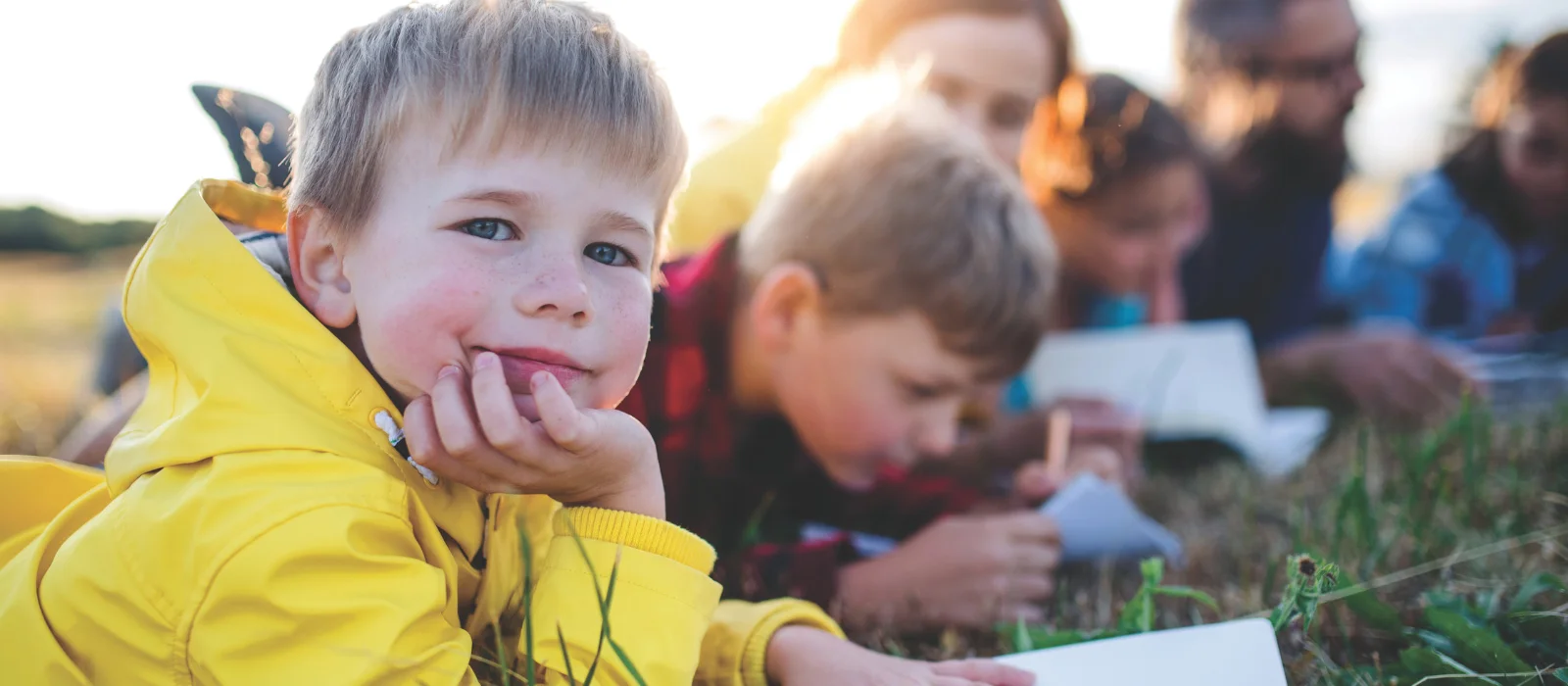

Choosing a school that is outside of the mainstream can be daunting, but it can also be transformative, writes Nathalie Marquez Courtney.
When you become a parent, you suddenly realise how unnerving the task of choosing your child’s educational path is. So many of us were shaped – negatively and positively – by our own school experiences; it’s no wonder we approach selecting our children’s schools with some trepidation.
For my husband and me, it forced us to explore the question of how we wanted our kids to grow up. We knew what we didn’t want: our vibrant, inquisitive son sitting still at a desk, filling in worksheets, his natural curiosity slowly dimming. But knowing what we did want proved harder to articulate. Words like confident, joyful, playful, brave, curious, imaginative and adventurous all bubbled up. When I dug into the research, the importance of unstructured, outdoor play came up time and again. For these – and many other – reasons, we chose a Waldorf Steiner school.
Thanks to a small Australian blue cartoon dog, many people have become more familiar with the Waldorf Steiner approach. Several episodes of the sweet, award-winning cartoon series Bluey are set in school and while the show has never explicitly confirmed it, the tell-tale signs that it’s a Waldorf Steiner school (not to mention the building’s striking similarity to Brisbane’s Samford Valley Steiner School) are clear.
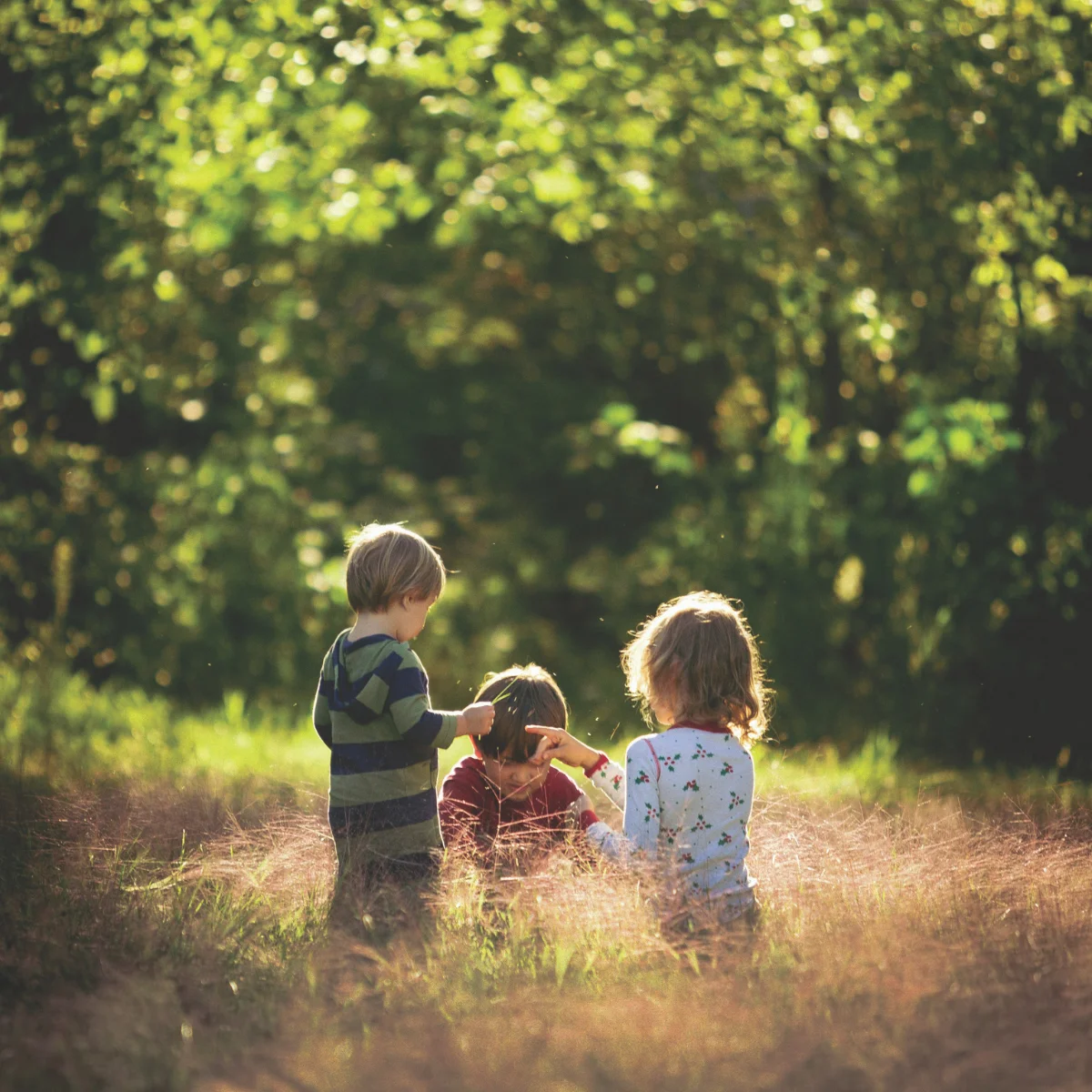
In a 2019 interview with Australian outlet The Father Hood, the show’s creator, Joe Brumm, explained why he decided to take his daughter out of mainstream school, and how her experiences went on to shape the show: “Play time was suddenly taken away from her, it was just yanked and seeing the difference in her was horrendous,” he said. “There was no playing, there was no drawing, it was just straight into all this academic stuff. And the light in her eyes just died.” His own research into the value of play and play-based learning led to them changing schools, but those initial seeds had a profound impact on the show’s development. “Bluey is just one long extrapolation of that,” Brumm said. “It’s to encourage people to look at play not just as kids mucking around, but as a really critical stage in their development that, I think, we overlook at their peril.”
Jayne Enright, chair of the Irish Waldorf Education Association (IWEA) and former national school teacher, found herself drawn to the Waldorf Steiner approach after having her first child, who is now a teen. “I didn’t feel great about her going into a mainstream setting,” she explains. What attracted her to it was the approach: children don’t begin formal learning until around age seven, the program is play-based with a developmentally focused curriculum, and there’s lots of outdoor time. “She went to a naíonra for a year and they wouldn’t let her pick up acorns because they were dirty, so she hid them in her socks, picking and collecting them secretly,” Enright recalls wryly. “Waldorf Steiner is so developmentally focused, and gives space to that precious early years phase in a child’s life. When you find something that nurtures, appreciates and facilitates that sense of exploration and interest in the natural world, you hang on to it.”
Enright was instrumental in setting up what has since become the Dublin Waldorf School, which caters to children aged 3 to 12. There are now three community national Waldorf Steiner schools and six independent schools across Ireland, with around 800 across Europe. Though it is widely considered an alternative education, many aspects of the approach are increasingly being backed by mainstream science and research. The redeveloped Irish primary curriculum, announced last September, listed “playful and inquiry-based learning” as a key feature, and went on to say that there would be “greater emphasis […] on active, engaging, and inquiry-led learning, with more opportunities for outdoor education and child-led exploration.”
Some of the facets that seemed alien and counter-intuitive at first – like delaying reading and writing until the equivalent of first class – are increasingly being supported by the latest research. In the UK, early childhood education experts have long been calling for a delay to the start of formal schooling until the age of seven. State schools in countries such as Finland – which consistently ranks highly for child literacy and mathematical skills – have already adopted this.
Here in Ireland, the Waldorf Steiner approach tends to follow the same holistic philosophy found worldwide, which focuses on developing children’s intellectual, artistic, and practical skills. Helen Sherry, principal of Cuan na Gaillimhe, a community national school in Galway with a Waldorf Steiner ethos, spent 20 years teaching in mainstream schools, but her own love of nature and the outdoors drew her to the Waldorf Steiner approach. “Nature is not only good for us to stay connected to, it’s also very, very regulating,” she says. “It’s somewhere the children can breathe out and feel free.”
“I also love that Steiner education doesn’t rely on technology,” she continues. “And that it’s more tuned into the body – for example, you learn your times tables by clapping and stamping. It’s a more embodied way of learning as a human being.”
Since our son has started on this path, I have found myself wishing more people knew that there are alternatives to the typical Catholic primary school so many of us grew up or even struggled with. Across Europe, it’s a mixed bag: Waldorf Steiner schools in places like the UK, France, Italy, Spain and Portugal receive little to no state funding, while countries like Germany, Denmark, Norway, Finland and Sweden have models that provide anything from 50 per cent to the same funding as public schools.
Our son’s school is one of only a small number in the country that are supported by the Department of Education, meaning we don’t have to pay any fees (other schools, like the ones in Dublin and Kildare, operate as independent private schools). It welcomes all faiths and none, so preparation for Holy Communion is not part of the school day, delivers the national curriculum, and places a huge focus on connecting with the outdoors.
A recent post by UNICEF highlighted that, as the amount of time children are spending outdoors is decreasing, the amount of research showing that outdoor play is hugely important for their development has grown. “Children who spend more time in green spaces, such as wooded playgrounds or gardens, have better focus, lower stress levels and better emotional resilience,” the report states.
Academic development is still valued, it’s just not the only thing that is valued. Our son’s school week features walks to the woods, lots of art and baking, as well as maths, writing, reading, Irish, and a whole host of other activities throughout the year, including gymnastics, tag rugby, swimming and Spanish. Even the most “airy-fairy” aspects of the approach – the pastel-hued rooms, the natural materials, the fairy tales – are all purposeful, informed choices designed to help children thrive.
More and more, proponents say a Waldorf Steiner approach better equips children for the world of the future, moving away from the purely knowledge-based teachings of the past to a more holistic approach that encourages creativity, critical thinking and empathy. But that’s not why we picked it. It felt, to us, the best path to helping our kids uncover and become who they innately were, rather than something designed to shape them.
As we picked up a cheery, excited boy at the end of that first year, cheeks flushed from running, rain pants threadbare and mud-streaked, I felt a breath I had been holding release; this was the right choice for us. Ultimately, it’s not about trying to convince anyone that this is better, but rather, highlighting that there can be options, and we should all have the freedom to choose which path we follow.
This article originally appeared in the Spring 2026 issue of IMAGE Magazine.