



惯性聚合 高效追踪和阅读你感兴趣的博客、新闻、科技资讯
阅读原文 在惯性聚合中打开

推荐订阅源

H
Hackread – Cybersecurity News, Data Breaches, AI and More
C
Check Point Blog
Hacker News: Ask HN
Hacker News: Ask HN
cs.CL updates on arXiv.org
WordPress大学
WordPress大学
P
Proofpoint News Feed
V
Visual Studio Blog
C
Cyber Attacks, Cyber Crime and Cyber Security
N
Netflix TechBlog - Medium
C
CXSECURITY Database RSS Feed - CXSecurity.com
博客园 - 聂微东
Threat Intelligence Blog | Flashpoint
博客园 - 叶小钗
Cisco Talos Blog
Cisco Talos Blog
S
Schneier on Security
T
Threat Research - Cisco Blogs
腾讯CDC
cs.AI updates on arXiv.org
The Hacker News
The Hacker News
Google DeepMind News
Microsoft Security Blog
奇客Solidot–传递最新科技情报
奇客Solidot–传递最新科技情报
GbyAI
GbyAI
N
News | PayPal Newsroom
L
LINUX DO - 最新话题
酷 壳 – CoolShell
酷 壳 – CoolShell
P
Palo Alto Networks Blog
T
Tenable Blog
S
Secure Thoughts
T
Threatpost
V2EX - 技术
V2EX - 技术
大猫的无限游戏
大猫的无限游戏
Martin Fowler
Martin Fowler
freeCodeCamp Programming Tutorials: Python, JavaScript, Git & More
Vercel News
Vercel News
罗磊的独立博客
P
Privacy & Cybersecurity Law Blog
Engineering at Meta
Engineering at Meta
小众软件
小众软件
Google DeepMind News
N
News and Events Feed by Topic
Y
Y Combinator Blog
CTFtime.org: upcoming CTF events
C
Cybersecurity and Infrastructure Security Agency CISA
P
Proofpoint News Feed
L
Lohrmann on Cybersecurity
P
Privacy International News Feed
H
Heimdal Security Blog
量子位
B
Blog

Security Affairs

Copy Fail: New Linux bug enables Root via page‑cache corruption Agent’s claims on WhatsApp access spark security concerns Meta accused of violating DSA by failing to safeguard minors Large-scale Roblox hacking operation shut down by Ukrainian authorities CVE-2026-42208: LiteLLM bug exploited 36 hours after its disclosure Internet censorship index reveals Russia’s lead and widespread content blocking All supported cPanel versions hit by critical auth bug, now patched U.S. CISA adds Microsoft Windows Shell and ConnectWise ScreenConnect flaws to its Known Exploited Vulnerabilities catalog ShinyHunters exploit Anodot incident to target Vimeo CVE-2026-3854 GitHub flaw enables remote code execution Signal Phishing Campaign Targets German Officials in Suspected Russian Operation Microsoft fixes Entra ID flaw enabling privilege escalation New Android spyware Morpheus linked to Italian surveillance firm Medtronic discloses security incident after ShinyHunters claimed theft of 9M+ records Chinese spy posed as researcher in spear-phishing campaign targeting NASA to steal defense software LINKEDIN BROWSERGATE Firefox bug CVE-2026-6770 enabled cross-site tracking and Tor fingerprinting Fast16: Pre-Stuxnet malware that targeted precision engineering software Italy moves to extradite Chinese national to the U.S. over hacking charges U.S. utility giant Itron discloses a security breach Critical bug in CrowdStrike LogScale let attackers access files GopherWhisper: new China-linked APT targets Mongolia with Go-based malware SECURITY AFFAIRS MALWARE NEWSLETTER ROUND 94 Trigona ransomware adopts custom tool to steal data and evade detection Security Affairs newsletter Round 574 by Pierluigi Paganini – INTERNATIONAL EDITION U.S. CISA adds SimpleHelp, Samsung, and D-Link flaws to its Known Exploited Vulnerabilities catalog Over 400,000 sites at risk as hackers exploit Breeze Cache plugin flaw (CVE-2026-3844) CISA reports persistent FIRESTARTER backdoor on Cisco ASA device in federal network 12-year-old Pack2TheRoot bug lets Linux users gain root privileges Signal phishing campaign targets Germany’s Bundestag President Julia Klöckner China-linked threat actors use consumer device botnets to evade detection, warn UK and partners Luxury cosmetics giant Rituals discloses data breach impacting member personal details iOS Flaw Let Deleted Notifications Linger, Apple Issues Fix RAMP Uncovered: Anatomy of Russia’s Ransomware Marketplace U.S. CISA adds a flaw in Microsoft Defender to its Known Exploited Vulnerabilities catalog Microsoft Graph API misused by new GoGra Linux malware for hidden communication DDoS wave continues as Mastodon hit after Bluesky incident Mirai Botnet exploits CVE-2025-29635 to target legacy D-Link routers Microsoft out-of-band updates fixed critical ASP.NET Core privilege escalation flaw Critical BRIDGE:BREAK flaws impact Lantronix and Silex Technology converters Venezuela energy sector targeted by highly destructive Lotus wiper Ransomware negotiator caught secretly assisting BlackCat extortion scheme North Korea’s Lazarus APT stole $290M from Kelp DAO The US NSA is using Anthropic’s Claude Mythos despite supply chain risk U.S. CISA adds Cisco Catalyst, Kentico Xperience, PaperCut NG/MF, Synacor ZCS, Quest KACE SMA, and JetBrains TeamCity flaws to its Known Exploited Vulnerabilities catalog Bluesky hit by 24-hour DDoS attack as pro-Iran group claims responsibility France’s ANTS ID System website hit by cyberattack, possible data breach Scattered Spider member Tyler Buchanan pleads guilty to major crypto theft CVE-2023-33538 under attack for a year, but exploitation still unsuccessful Third-party AI hack triggers Vercel breach, internal environments accessed AI Model Claude Opus turns bugs into exploits for just $2,283 Cyber attacks fuel surge in cargo theft across logistics industry SECURITY AFFAIRS MALWARE NEWSLETTER ROUND 93 Security Affairs newsletter Round 573 by Pierluigi Paganini – INTERNATIONAL EDITION Hidden VMs: how hackers leverage QEMU to stealthily steal data and spread malware Nexcorium Mirai variant exploits TBK DVR flaw to launch DDoS attacks Microsoft Defender under attack as three zero-days, two of them still unpatched, enable elevated access Kyrgyzstan-based crypto exchange Grinex shuts down after $13.7M cyber heist, blames Western Intelligence DraftKings hacker sentenced to prison, ordered to pay $1.4 Million Operation PowerOFF: 53 DDoS domains seized and 3 Million criminal accounts uncovered Inside ZionSiphon: politically driven malware aims at Israeli water systems U.S. CISA adds a flaw in Apache ActiveMQ to its Known Exploited Vulnerabilities catalog Cisco fixed four critical flaws in Identity Services and Webex Cookeville Regional Medical Center hospital data breach impacts 337,917 people AI platform n8n abused for stealthy phishing and malware delivery From clinics to government: UAC-0247 expands cyber campaign across Ukraine Sweden reports cyberattack attempt on heating plant amid rising energy threats CVE-2026-33032: severe nginx-ui bug grants unauthenticated server access U.S. CISA adds Microsoft SharePoint Server, and Microsoft Office Excel flaws to its Known Exploited Vulnerabilities catalog Mirax malware campaign hits 220K accounts, enables full remote control PHP Composer flaws enable remote command execution via Perforce VCS Microsoft Patch Tuesday for April 2026 fixed actively exploited SharePoint zero-day Personal data of 1 million gym members compromised in Basic-Fit security incident US, UK and Canada disrupt $45M crypto theft in Operation Atlantic ShinyHunters claim the hack of Rockstar Games breach and started leaking data Attackers target unpatched ShowDoc servers via CVE-2025-0520 U.S. CISA adds Adobe, Fortinet, Microsoft Exchange Server, and Microsoft Windows flaws to its Known Exploited Vulnerabilities catalog Fake Claude AI installer abuses DLL sideloading to deploy PlugX Hackers access Booking.com user data, company secures systems iPhone forensics expose Signal messages after app removal in U.S. case Citizen Lab: Webloc tracked 500M devices for global law enforcement Iran-linked group Handala claims to have breached three major UAE organizations CPUID watering hole attack spreads STX RAT malware Adobe fixes actively exploited Acrobat Reader flaw CVE-2026-34621 Hackers claim control over Venice San Marco anti-flood pumps SECURITY AFFAIRS MALWARE NEWSLETTER ROUND 92 Security Affairs newsletter Round 572 by Pierluigi Paganini – INTERNATIONAL EDITION Censys finds 5,219 devices exposed to attacks by Iranian APTs, majority in U.S. GlassWorm evolves with Zig dropper to infect multiple developer tools CVE-2026-39987: Marimo RCE exploited in hours after disclosure Ransomware attack on ChipSoft knocks EHR services offline across hospitals in the Netherlands and Belgium UAT-10362 linked to LucidRook attacks targeting Taiwan-based institutions EngageLab SDK flaw opens door to private data on 50M Android devices Bitcoin Depot hack leads to $3.6M Bitcoin theft via stolen credentials Eurail data breach impacted 308,777 people Malicious PDF reveals active Adobe Reader zero-day in the wild Masjesu botnet targets IoT devices while evading high-profile networks The alleged breach of China’s National Supercomputing Center can have serious geopolitical consequences Internet-Exposed ICS Devices Raise Alarm for Critical Sectors U.S. CISA adds a flaw in Ivanti EPMM to its Known Exploited Vulnerabilities catalog
NCSC launches SilentGlass, a plug-in device to secure HDMI and DisplayPort links
Pierluigi Pa · 2026-04-28 · via Security Affairs

NCSC’s SilentGlass blocks malicious HDMI/DisplayPort links, protecting monitors from hardware attacks. Now commercialized for global use.

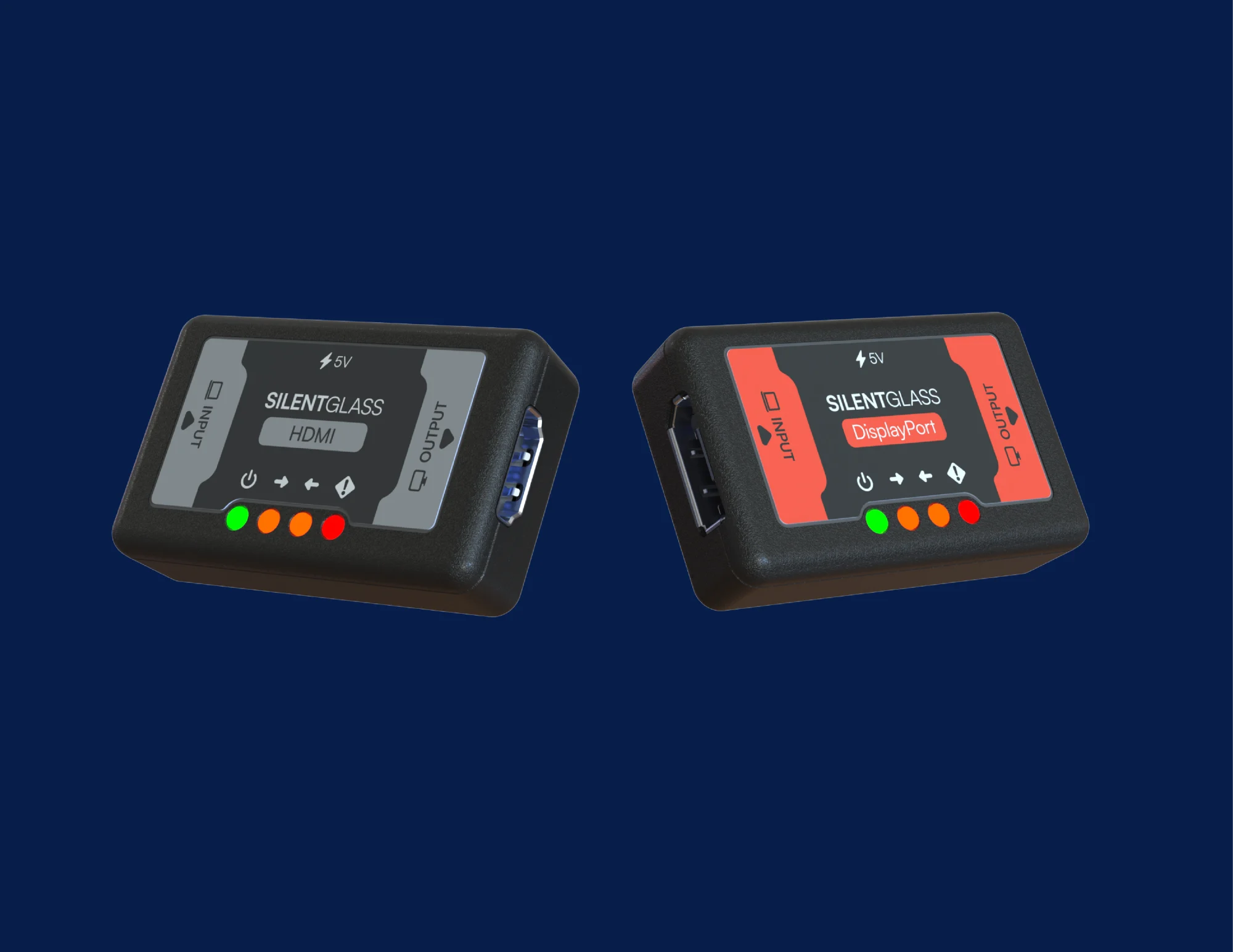
The UK’s National Cyber Security Centre (NCSC) has launched SilentGlass, a new device to protect one of the most overlooked parts of modern IT systems: the physical links between screens and computers. It is a small plug-in security device designed to monitor and block suspicious activity on HDMI and DisplayPort connections.

Developed through research led by the NCSC and now licensed for production to Goldilock Labs in partnership with Sony UK Technology Centre, SilentGlass represents a shift in how hardware interfaces are treated in cybersecurity. Instead of focusing only on software threats, it addresses risks that arise when physical connections themselves are exploited.

“First commercially available product licensed to use NCSC branding granted to Goldilock Labs in manufacturing partnership with Sony UK Technology Centre.” reads the announcement. “UK government and businesses to be protected at scale by the affordable plug-in cyber security device”

The device works in a simple but powerful way. It sits between a computer and a display and inspects everything passing through the connection. If anything unexpected, unauthorized, or potentially malicious is detected, it immediately blocks the transmission. This prevents attackers from using display channels as an entry point or surveillance path.

According to the NCSC, monitors and screens are increasingly attractive targets for attackers because they often display sensitive information and are widely deployed across organizations. In some cases, they can even be used as an indirect pathway into larger systems, especially in environments where physical access or supply chain exposure is possible. As more advanced adapters and intermediary devices have been introduced over time, the attack surface has grown without many organizations realizing it.

SilentGlass was created to close this gap. It is designed as a plug-and-play solution that does not require complex configuration, making it suitable for large-scale deployment in both government and private-sector environments. It is also intended to be affordable, allowing wider adoption beyond highly specialized security operations.

“Display screens and monitors are everywhere in modern business environments, and the SilentGlass device will help protect previously vulnerable IT infrastructure with unprecedented ease.

Its development and commercialisation shows the impact that the NCSC can have, alongside industry partners, with an affordable and effective product now globally available.” said Ollie Whitehouse, NCSC Chief Technology Officer.

“By helping to launch a UK company onto the global market with this world-class innovation, we are breaking new ground and helping to strengthen national prosperity.

The technology has already been tested in high-security government settings and is now being introduced to the broader market at CYBERUK, the UK government’s main cybersecurity conference. Its commercial release marks a significant step in bringing national-security-grade innovation into everyday business environments.

From the industry side, Goldilock Labs highlights that hardware interfaces have historically been treated as trusted components rather than security boundaries. However, these interfaces can be exposed to risks from supply chains, third-party maintenance, or direct physical manipulation. SilentGlass reframes this assumption by enforcing security checks directly at the point of connection.

The device is also part of a broader shift in cybersecurity thinking: instead of reacting to software vulnerabilities alone, it introduces control mechanisms at the hardware level before data even enters a system. This proactive approach aims to reduce entire categories of attacks that have traditionally been difficult to detect or mitigate.

By combining government-led research with commercial manufacturing and global distribution, SilentGlass is positioned as a practical example of how public-sector innovation can be transformed into widely deployable security solutions. It reflects a growing recognition that cybersecurity must extend beyond networks and applications to include the physical pathways that connect them.

With its global release, SilentGlass is expected to be adopted by governments, critical infrastructure operators, and security-conscious organizations seeking stronger protection against increasingly sophisticated physical and hardware-based threats.

Follow me on Twitter: @securityaffairs and Facebook and Mastodon

Pierluigi Paganini

(SecurityAffairs – hacking, NCSC)