







As the crickets chirped at 2 A.M. near Kennedy Space Center, a large team of scientists was puzzling over data tracking the temperature of a rocket component. A cold-gas thruster, which would help position NASA’s Psyche spacecraft to communicate with Earth after launch, wasn’t working properly. And with just 12 days to go before liftoff, the anomaly placed the entire $1.2-billion mission in jeopardy.
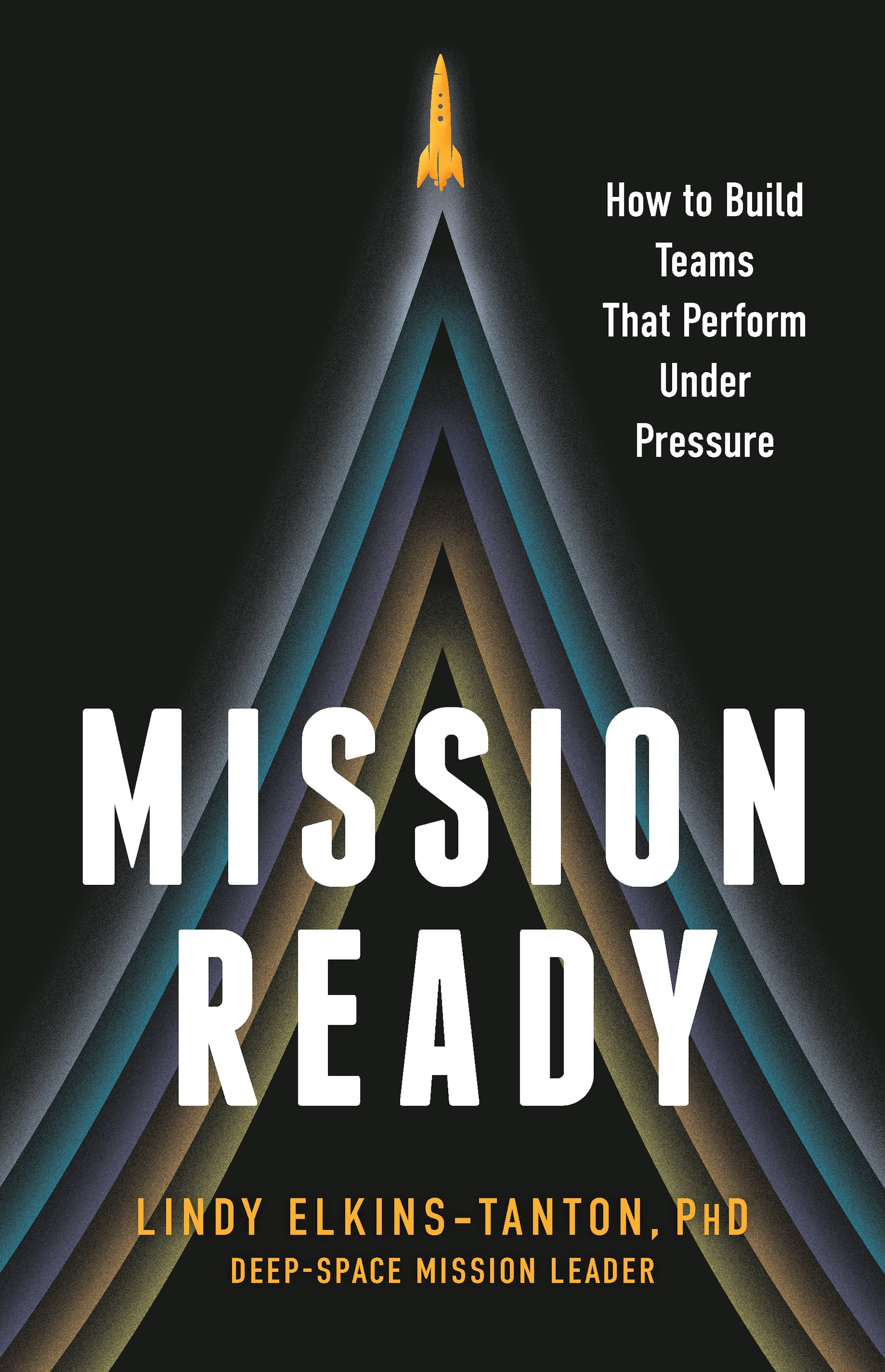
Faced with such a high stress situation, it would be understandable for the scientists to lose their cool, but the storm of emotion never came. As Lindy Elkins-Tanton writes in the opening of her new book, Mission Ready: How to Build Teams That Perform under Pressure, “There was hardly a misstep. Everyone listened, everyone made suggestions, everyone joined one or more subteams testing every possible solution, working around the clock.”
The spacecraft ultimately launched as planned and is now approaching the halfway mark of its six-year-long voyage to reach the asteroid 16 Psyche. Once it arrives in 2029, it will spend nearly two years studying this mysterious space rock, which, based on telescopic observations, appears to be made mainly of metal. Elkins-Tanton is a professor of planetary science at Arizona State University and the Psyche mission’s principal investigator.
If you're enjoying this article, consider supporting our award-winning journalism by subscribing. By purchasing a subscription you are helping to ensure the future of impactful stories about the discoveries and ideas shaping our world today.
Despite her long career in planetary science, the mission’s cold-thruster close call marked one of the most enlightening moments Elkins-Tanton has ever experienced in her work. The same project management techniques required to pull off an interplanetary mission, she realized, can also be valuable in myriad other endeavors right here on Earth. As Elkins-Tanton looks forward to the discoveries that Psyche will yield, she is also reflecting on the past. Her book outlines what leading the mission taught her about creating successful teams—and provides a framework for others to develop their leadership skills.
Scientific American spoke with Elkins-Tanton about leadership, team building and leveraging soft skills in an extremely technical career.
[An edited transcript of the interview follows.]
Your book opens with a high-pressure situation that you say showed the “heart and soul” of your team. Do you think maintaining calm in a high-pressure situation is a teachable skill?
I think it’s something people can learn, yes—and I also think they can unlearn it. It has to be constantly maintained. And one of the things that was helping our team maintain it was that we built up a huge amount of trust. I think that everyone knew their expertise was highly respected.
Throughout your book, it was clear how much you credit the people around you for supporting the positive workplace culture you aimed to create. Would you say that you see leadership as a form of collaboration?
There are times when leadership is guidance and when a leader has to be willing to make a final decision, but short of those moments, I think it’s all about collaboration. The ability that one in a leadership position has to try to help everyone else succeed is an incredible gift.
Did you have any strategies for developing your own leadership style?
When I took my first major leadership position, I wasn’t that young, but I hadn’t really spent any time thinking of myself as a leader. I remember looking down at my hand one day and thinking, “Do I have to stop wearing sparkle nail polish?” In the end, I made a very freeing decision: I was going to be the best leader that I could be only if I was authentically myself. Much more importantly than sparkle nail polish was knowing what my values were like. Instead of saying, “The team creates the product, and the individual is irrelevant,” I know that individuals are what a team is.
It sounds like that leadership style is predicated on having good “soft skills.” What are your strategies for developing those in a technical career?
One moment that taught me these skills really predates the Psyche mission entirely. I was in my early 20s. I got a job as a management consultant, and we were working with a big helicopter manufacturer, trying to fix some issues they had with their inventory counts.... The problem was not that the workers couldn’t count; it was that their processes were set up in a way that didn’t incentivize people to get it right. Working fast was being prioritized over being thorough and keeping good records. I had this flash of insight that everything we do is about the people, so we had to be able to reinvent processes to motivate individuals.
It turned out to be a really big advantage, that decade that I spent working in business before I went back to school for my doctorate. At the time, everyone thought it was a huge mistake if I wanted to be a serious scientist, but I learned things like budgeting and forecasting and strategy and negotiation. Suddenly I saw everything in terms of teams and human organization. People say these are soft skills, but I love thinking of them as transferable skills or durable skills. They pertain to every human workplace.
Basic Venture
What would you rank as the top three durable skills for people working in STEM fields?
I would put metacognition first: constantly thinking about whether a process is leading to the goal that you intended and constantly thinking about your actions’ effect on other people on the team working toward that goal. I just think that’s kind of a superpower.
Then, I would say your question asking and group problem-solving skills. In school, you’re in this false environment where the person speaking from the front of the room knows all the answers. But in the real world, if you know the answer, you share it with the team. So conversational and interpersonal skills, I think, are incredibly durable.
And here’s one that some people are going to roll their eyes at: writing clearly and grammatically still really matters. That will just make you stand out.
Are there any learning experiences you wanted to put into the book that didn’t quite make the cut?
We've talked about how important communications are and how, if there’s a part of the team that is silent, that you’re not hearing from, you should take it as an alarm. “Silent” is not “happy”; it’s often “in deep trouble.”
But there’s another form of trouble that’s less silent but no less dangerous: the team that is, for a long time, struggling. They’re communicating, everyone is talking, things are progressing—but it’s happening too slowly, and problems keep cropping up over and over. This happened, for example, in a company with an engineering team writing some new software for a mission to orbit the moon. On a green-yellow-red scale, the team had been yellow for about six months. It was one problem, then it was another problem; we’re making progress, and then something else crops up right away.
Finally we looked more closely, and what we found was a series of structural and personnel issues: too many people without enough experience, resources [that were] too constrained and a bully. As we worked to heal the team so they could perform, someone put the lesson learned concisely: if you are yellow for six months, you are really red.
What have you, as a professor, learned from watching young people who are first developing durable skills that even long-standing teams struggle with?
I think it’s helped inform this very important realization I’d had about teams, which is that the only way you’ll know something is wrong in time to fix it is if the most junior people on the team can speak up and be heard respectfully. I think we’ve all been on teams where the most junior people are expected to be silent. But on a big team, junior people are the people who are authentically doing the work. They’re typing the code; they’re turning the wrench. And they’re the ones who actually know when something is wrong.
Thinking of these up-and-coming leaders in science and technology—and others who might read your book—what is your best advice for creating a collaborative and successful team?
Ha, well, I totally advise them to read my book! The structure that I came up with in the end is informed by how I think people’s development occurs. You start by thinking about yourself as an individual and then about how to interact successfully.
Increasingly, I think the biggest questions are ones that have to be answered by interdisciplinary teams, and so it really behooves you, no matter what you're doing in your life, to figure out how to better work with other people.
此内容由惯性聚合(RSS阅读器)自动聚合整理,仅供阅读参考。 原文来自 — 版权归原作者所有。