


Even if you aren’t going to be within the path of totality, you can still watch the solar eclipse as it happens with Scientific American
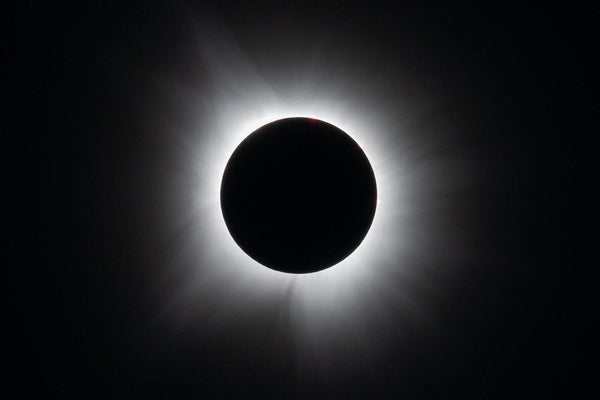
NASA/Keegan Barber
Solar eclipses have captivated human imaginations for millennia and they still fuel scientific discovery today. On August 12, the moon will pass directly between the Earth and the sun, blocking its light over a swathe of western Europe and the Arctic.
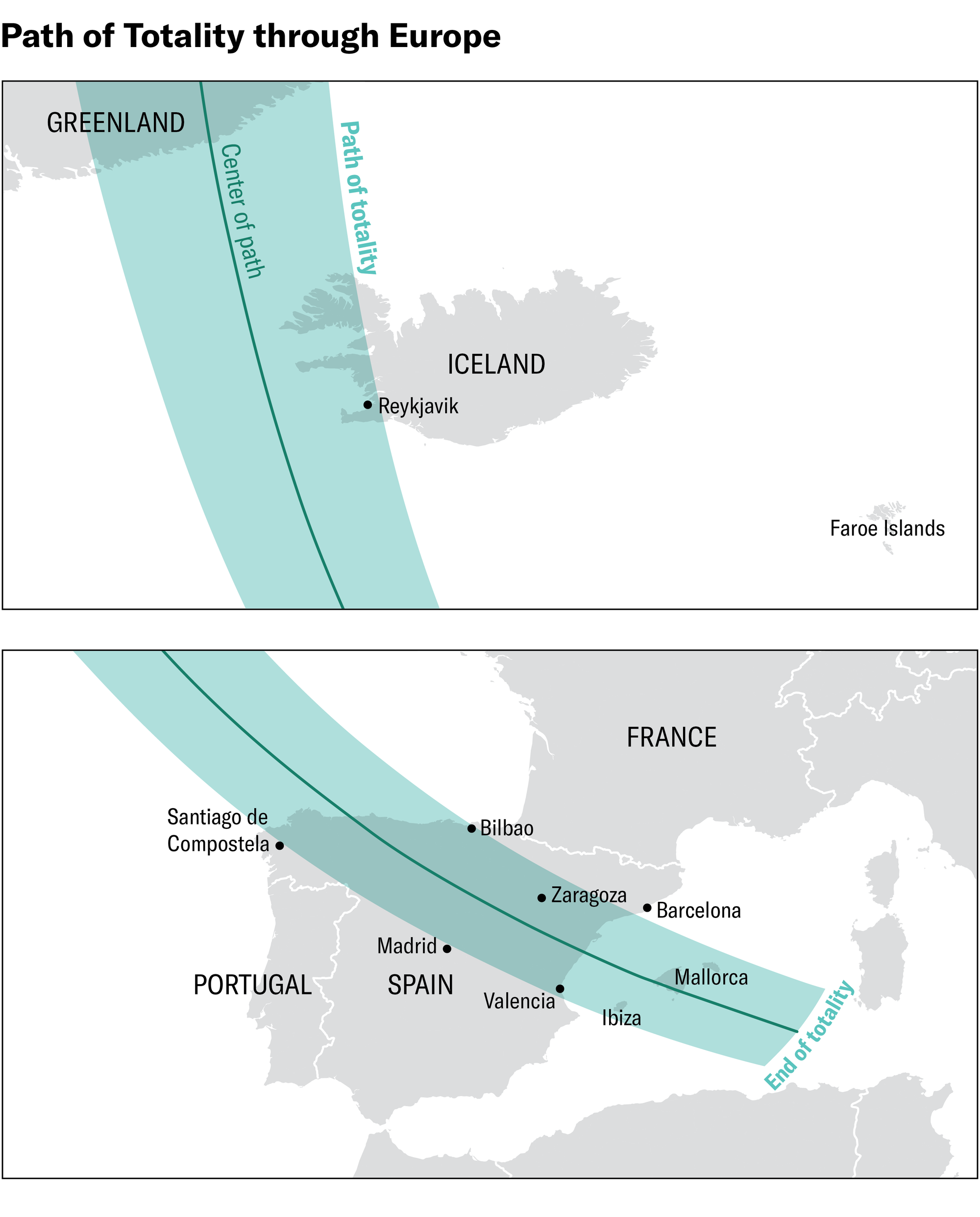
A total solar eclipse occurs about once every 18 months; the last one on April 8, 2024 was visible across North America. But although they’re relatively common, it is rare for any given spot on Earth to see a total solar eclipse—one estimate suggests a specific place will experience a total solar eclipse about once every 373 years. The upcoming total eclipse on August 12 will be most visible from northern Spain and Portugal, eastern Greenland, western Iceland and the Russian and Canadian Arctic, although much of Europe will see at least a partial eclipse.
If you're enjoying this article, consider supporting our award-winning journalism by subscribing. By purchasing a subscription you are helping to ensure the future of impactful stories about the discoveries and ideas shaping our world today.
When to see the eclipse and how long it lasts will depend on where you are viewing it from. The August 12 eclipse will start at approximately 5:48 P.M. local time in Reykjavík, Iceland, where totality will last for around 2 minutes. In Valencia, Spain, it will start at approximately 8:32 P.M. local time and endure for around one minute. Other particularly good spots to see this eclipse are Zaragoza, Spain, and Segovia, a Spanish city that’s just an hour from Madrid, and Sant Elm on the Balearic island of Mallorca. If you want to travel to catch this one in person, reserve your transportation and accommodations as soon as possible, as popular sites are booking up fast.
Because the eclipse is occurring right at sunset in Spain, viewers will need to look toward the horizon. Although the best viewing is definitely over Europe, even some people in Canada and the U.S. may be able to catch a glimpse of a partial eclipse. (The U.S. will see its next total solar eclipse in 2044).
Whether you are hoping to catch the total eclipse or a partial eclipse, always wear eye protection, such as solar eclipse viewing glasses or other solar filters, to protect your eyes from the sun’s light. Even a moment of direct sunlight can damage your eyesight, including when looking through a camera lens. You can also use a pinhole projector to indirectly view the eclipse.
And if you won’t be in Europe this summer, don’t fret. For those of us who can’t see the total solar eclipse up close, Scientific American will be on the ground and livestreaming the event from Ibiza, Spain. Subscribe to our YouTube channel so you don’t miss it, and check back on our homepage on August 12—the eclipse begins over Ibiza at approximately 7:30 P.M. local time, which is 1:30 P.M. EDT.
If you enjoyed this article, I’d like to ask for your support. Scientific American has served as an advocate for science and industry for 180 years, and right now may be the most critical moment in that two-century history.
I’ve been a Scientific American subscriber since I was 12 years old, and it helped shape the way I look at the world. SciAm always educates and delights me, and inspires a sense of awe for our vast, beautiful universe. I hope it does that for you, too.
If you subscribe to Scientific American, you help ensure that our coverage is centered on meaningful research and discovery; that we have the resources to report on the decisions that threaten labs across the U.S.; and that we support both budding and working scientists at a time when the value of science itself too often goes unrecognized.
In return, you get essential news, captivating podcasts, brilliant infographics, can't-miss newsletters, must-watch videos, challenging games, and the science world's best writing and reporting. You can even gift someone a subscription.
There has never been a more important time for us to stand up and show why science matters. I hope you’ll support us in that mission.
此内容由惯性聚合(RSS阅读器)自动聚合整理,仅供阅读参考。 原文来自 — 版权归原作者所有。