


June 16, 2026
Creating techniques to allow scientists to see biological processes in real time
Jessine Hein
Join Our Community of Science Lovers!
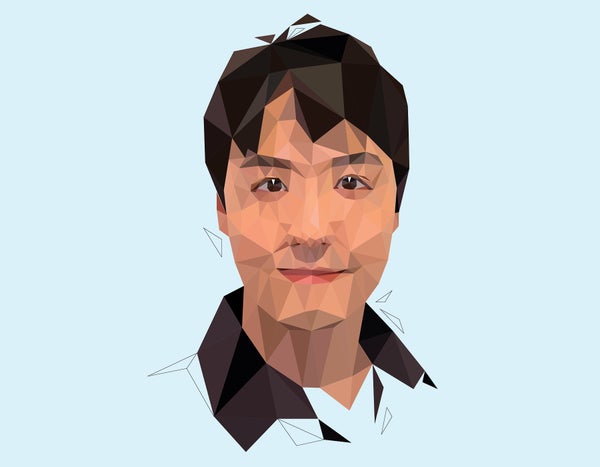
Growing up in Klang, Malaysia, Chee-Huat Linus Eng took a particular interest in the hows of life, beginning with an early curiosity about how vitamin C impacts skin cells. Now, after completing a doctorate in chemistry at the California Institute of Technology, Eng is taking the field of spatial genomics by storm.
As vice president of R&D at Spatial Genomics, Eng focuses on a deceptively simple task: capturing a cell’s genetic activity at a specific point in time. That activity is recorded in RNA transcripts, which are copies of the information encoded by a particular gene sequence. Together the different types of RNA transcripts make up a cell’s transcriptome. Scientists could already capture this transcriptome for a single cell isolated from the tissue around it, but Eng and his Caltech colleagues wanted to capture the information while the cell remained in situ.
On supporting science journalism
If you're enjoying this article, consider supporting our award-winning journalism by subscribing. By purchasing a subscription you are helping to ensure the future of impactful stories about the discoveries and ideas shaping our world today.

Christie Hemm Klok
Most recently, Eng has created seqFISH+, a technology based on sequential fluorescence in situ hybridization, which lets scientists use fluorescent probes to detect specific proteins and other molecules. With seqFISH+, researchers can capture a cell’s entire transcriptome—tens of thousands of genes—and observe how their expression changes according to whether the cell is near, for example, a cancer cell or an immune cell.
Eng’s adviser at Caltech, Long Cai, says Eng’s “transformative contributions” to the field of spatial genomics have “fundamentally changed how scientists visualize and understand cellular biology.” The “versatility and broad applicability” of Eng’s method, Cai says, mean it can elucidate what cells are doing in ways that are useful in many diverse areas, including developmental biology, neuroscience, cancer research, immunology and microbiology.
“Any field requiring a spatial map of gene expression stands to benefit from this technology,” Eng says.
This article is part of “The Young American Scientists,” an editorially independent project that was produced with financial support from Regeneron.
It’s Time to Stand Up for Science
If you enjoyed this article, I’d like to ask for your support. Scientific American has served as an advocate for science and industry for 180 years, and right now may be the most critical moment in that two-century history.
I’ve been a Scientific American subscriber since I was 12 years old, and it helped shape the way I look at the world. SciAm always educates and delights me, and inspires a sense of awe for our vast, beautiful universe. I hope it does that for you, too.
If you subscribe to Scientific American, you help ensure that our coverage is centered on meaningful research and discovery; that we have the resources to report on the decisions that threaten labs across the U.S.; and that we support both budding and working scientists at a time when the value of science itself too often goes unrecognized.
In return, you get essential news, captivating podcasts, brilliant infographics, can't-miss newsletters, must-watch videos, challenging games, and the science world's best writing and reporting. You can even gift someone a subscription.
There has never been a more important time for us to stand up and show why science matters. I hope you’ll support us in that mission.