


June 16, 2026
Applying new tools to behavioral tests to discern how we learn
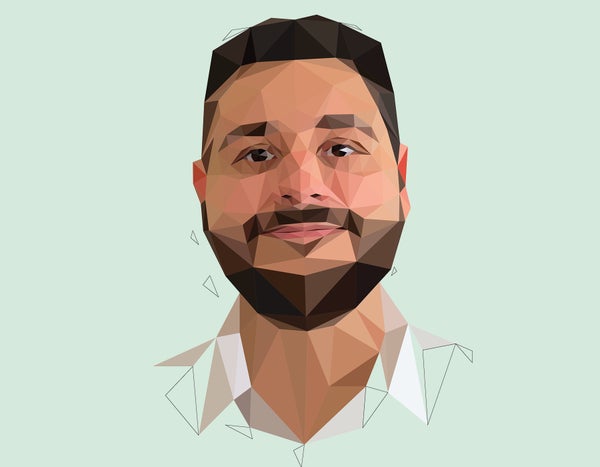
Jessine Hein
Join Our Community of Science Lovers!
Kauê M. Costa was a Ph.D. student in Germany trying to understand how amphetamines cause hyperactivity when he noticed his mice were acting weird. The mice were genetically engineered to help researchers study dopamine in the brain, and they were unusually hyperactive. The amphetamines they were taking calmed the females but not the males. The mice were learning differently based on sex, and this divergence was scrambling his results.
Born in Amazonian Brazil, Costa is now an assistant professor at the University of Alabama at Birmingham, studying how animals learn. He’s applying new tools to neuroscience’s classic behavioral tests, food cues, mazes and lever pressing, trying to understand how the brain decides what information is important and should be stored and what can be thrown out. “We are constantly bombarded with, let’s say, a practically infinite amount of information,” Costa says. “What are the principles that determine what we learn and how we learn it?”
On supporting science journalism
If you're enjoying this article, consider supporting our award-winning journalism by subscribing. By purchasing a subscription you are helping to ensure the future of impactful stories about the discoveries and ideas shaping our world today.
His work suggests that dopamine is involved not just in helping us learn what is good and what is bad. Dopamine also plays a role in a more complex type of learning that helps us infer what’s next based on past events.
Whether dreaming of field biology or rising fast in neuroscience, Costa is guided by adventure. For this young person who once thought he would explore the Amazon, the brain is more complex, and thus more appealing, uncharted territory. He could have left the U.S. after finishing his postdoctoral fellowship, but even amid federal funding chaos, doing research in the U.S. is still “incomparable.” He teaches his students to follow their interests and their own minds—which now we understand a little better thanks to his pursuits.
This article is part of “The Young American Scientists,” an editorially independent project that was produced with financial support from Regeneron.
It’s Time to Stand Up for Science
If you enjoyed this article, I’d like to ask for your support. Scientific American has served as an advocate for science and industry for 180 years, and right now may be the most critical moment in that two-century history.
I’ve been a Scientific American subscriber since I was 12 years old, and it helped shape the way I look at the world. SciAm always educates and delights me, and inspires a sense of awe for our vast, beautiful universe. I hope it does that for you, too.
If you subscribe to Scientific American, you help ensure that our coverage is centered on meaningful research and discovery; that we have the resources to report on the decisions that threaten labs across the U.S.; and that we support both budding and working scientists at a time when the value of science itself too often goes unrecognized.
In return, you get essential news, captivating podcasts, brilliant infographics, can't-miss newsletters, must-watch videos, challenging games, and the science world's best writing and reporting. You can even gift someone a subscription.
There has never been a more important time for us to stand up and show why science matters. I hope you’ll support us in that mission.