


A century before social-media bans and advice to disable device notifications, the inventor and science-fiction writer Hugo Gernsback proposed a more extreme way to avoid distraction: an isolating wooden helmet. Outside influences, he said, were “the greatest difficulty that the human mind has to contend with.” Gernsback’s isolator device — part diving suit, part monastic cell — did help him to work, he said, but it came with a risk of suffocation. He later installed an air supply.
Concerns that sustained thought is under assault have become even more acute in the digital era. Smartphones buzz, Internet tabs multiply and television episodes carry regular reminders to help people keep track of the plot. Surveys suggest that we feel less able to concentrate, teachers report distracted students and headlines declare that our attention spans are shrinking.
Research across psychology and neuroscience, however, has built up a more nuanced picture of what is happening to our attention spans. The results suggest that people do flit from one task to another more frequently than they did in previous decades, and that this switching is often detrimental to performance. But there is little evidence that the brain’s fundamental ability to concentrate has been impaired. This suggests that if we can shut down the distractions of our environment, it is possible to recover focus.
If you're enjoying this article, consider supporting our award-winning journalism by subscribing. By purchasing a subscription you are helping to ensure the future of impactful stories about the discoveries and ideas shaping our world today.
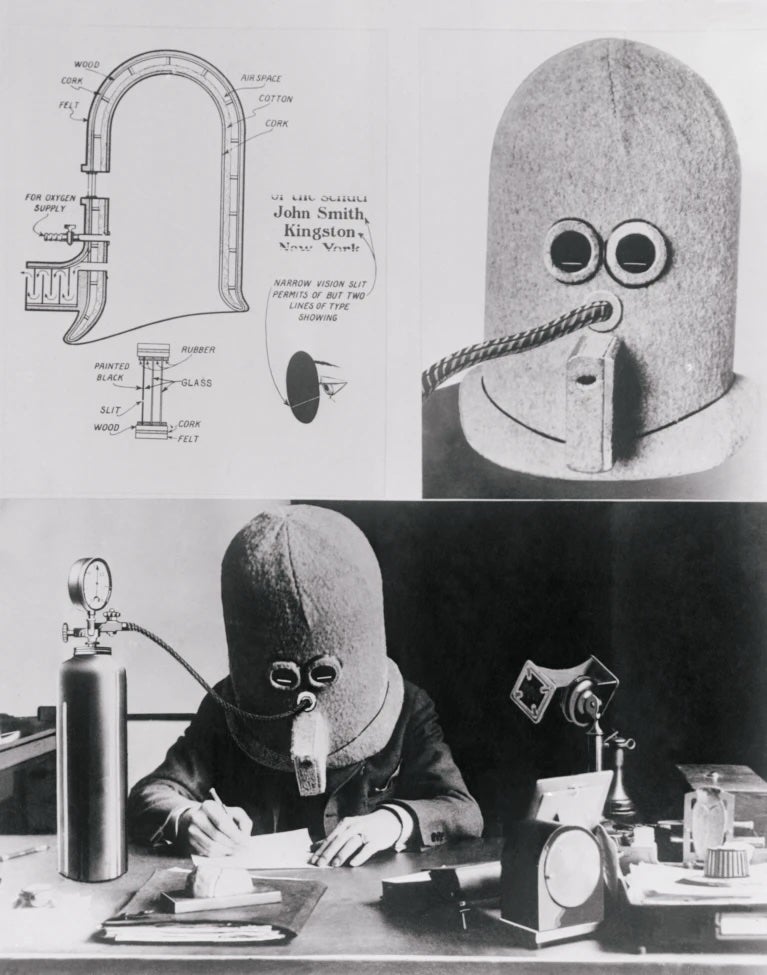
Inventor Hugo Gernsback wearing his ‘isolator’ wooden helmet.
Bettmann/Getty Images
“I think there’s a huge disconnect between what we feel like is happening and what is actually happening,” says Monica Rosenberg, a psychologist at the University of Chicago in Illinois.
“There is a whole flurry of people reporting that they feel like they can’t pay attention,” says Nilli Lavie, a cognitive neuroscientist at University College London. “They say they are constantly distracted, their attention jumps from one thing to another, and they can’t concentrate.”
In a 2021 survey of more than 2,000 UK adults, almost half said they felt their attention span was shorter than it used to be. And two-thirds thought that the attention span of young people has declined. Teachers and schools around the world have responded to this perception with modular lessons that break topics into digestible pieces. Some students now study literary extracts rather than full novels. When the novelist Elif Shafak questioned why TED talks were becoming shorter, she said last year she was told that it was because “the world’s average attention span has shrunk.”
The idea of an average attention span carries intuitive appeal. But the way it’s discussed can tangle distinct concepts. Researchers distinguish between people’s capacity to pay attention, that is, their underlying ability to concentrate on a particular task, and their real-world behaviour, or what people actually focus on from moment to moment.
What’s more, the capacity to pay attention is the result of several processes in the brain. These include sustained attention, the ability to stay engaged with a task over time; selective attention, the ability to prioritize some information and ignore the rest; and executive control, the ability to steer attention in line with a goal rather than whatever happens to be more tempting.
Capacity is measured under controlled laboratory conditions that test performance on a task — often a tedious one — over time. To test sustained attention, volunteers might monitor a screen showing streams of letters and shapes and identify specific changes. The ‘d2’ task, for instance, displays rows of letters, such as d and p, sometimes with dashes drawn above or below them, and asks people to mark the letter d only if it has two lines underneath.
Many lab studies have shown how performance on such tasks declines in about ten minutes, although the pattern of decline is not smooth: even apparently strong attention naturally fluctuates between bursts of good performance, lapses and recovery.
Further tests demonstrate how providing a distracting environment, such as playing sounds of babies crying and dogs barking, worsens people’s performance on cognitive tasks. This provides a basis for understanding distractions in the real world. Analyses have demonstrated that, for instance, traffic accidents are more likely to occur if drivers are talking on their phones.
The lab studies haven’t shown evidence that — when free of distractions — people’s underlying capacity to pay attention has changed. But there are differences in how people perform. Those who say they frequently juggle several streams of media at once tend to perform worse on tests of selective attention, for example showing greater difficulty filtering out irrelevant information. They also show differences in tests related to working memory and executive control.
But these correlations might only reflect that individuals with different attentional tendencies could be naturally drawn to switch focus more often; the observations can’t prove that their digital environment has causally altered their brains. And although attention deficit hyperactivity disorder (ADHD) diagnoses have increased in recent years, researchers generally attribute the rise to changes in awareness and access to assessment and diagnostic practice, rather than to an underlying change in people’s attention capacity.
Overall, there are no convincing data from controlled lab tests to support the idea that people have become less able to concentrate because the capacity of attention is being degraded over time. A 2024 meta-analysis of results from d2 tests performed by more than 21,000 people from 32 countries between 1990 and 2021 showed no differences in how children scored and, if anything, a slight improvement in adult performance.
“It’s not so much that human biology has changed, it’s more a change in habits. And the question is how reversible those habits are,” says Nelson Cowan, a psychologist at the University of Missouri in Columbia.
The strongest evidence for change when it comes to attention is not from laboratory tasks but from measures of real-world behaviour. For two decades, Gloria Mark, a psychologist at the University of California, Irvine, has monitored how office workers use computers. Her studies, based on direct observation and digital tracking, show that the average duration of attention to a single task has steadily declined. “We do know that attention spans on screens have measurably decreased,” she says.
Mark’s work does not seek to measure sustained focus towards a specific goal. Instead, she counted when and how often workers switch between tasks. Such switches don’t have to be towards trivial distractions that would annoy the boss. They include opening a new browser tab, checking an e-mail and moving between documents, as well as glancing at a phone. In the mid-2000s, she says, she observed that workers spent about two and a half minutes on average on a dedicated screen task before switching. By the 2010s, that was down to about 75 seconds, and in the early 2020s it was about 47 seconds, according to Mark’s 2023 book.
Often included in discussion of these results is a 2015 marketing report by Microsoft Canada, which stated that the average human attention span had fallen from 12 seconds in 2000 to 8 seconds in 2013. The report noted that this was shorter than a goldfish’s average attention span, which it reported as 9 seconds. But the report’s findings, based on surveys, filmed behaviour and electroencephalogram (EEG) data — which uses spikes in brain activity to measure when people switch their focus — reflected changing digital habits rather than cognitive limits and even noted that people were becoming more efficient at processing information. (Also, goldfish are unfairly maligned; there is no evidence that they have particularly short attention spans, and studies show they retain some information for months).
Mark’s research shows that frequent switching of attention carries a cognitive cost. “When people switch, and especially when they switch fairly rapidly, which is what the data show, they tend to make more errors,” she says. “It takes them longer to accomplish any single task compared to if they were to do work sequentially, and stress goes up.” Constant switching also diverts the kind of mental effort used. “We’re not utilizing those skills of reflection, deliberation, working memory,” she says. This can lead to the familiar malaise of superficial busyness without seeming to make progress.
Every generation has a panic that new technology will undermine the ability to concentrate. “But now we are in the digital age, and I do argue it’s different,” Mark says: both the scale of information available and the speed with which we can access it has changed. Importantly, the nature of the competing pulls on our attention has changed, too. The modern environment does not simply impose distractions. It bombards us with alternatives that offer more immediate rewards. People are switching tasks so often and resetting their attention each time because they choose to do so, even if they don’t realize it.
“If the alternatives are really rewarding and high value, then it will be very hard to focus on something else that’s going to require more subjective effort,” says Michael Esterman, a neuroscientist at Boston University in Massachusetts.
That’s ‘high value’ as classed by a psychologist or neuroscientist — which is not necessarily the way a parent, teacher or corporate superior would see it. Notifications, messages and social-media feeds provide the brain with bursts of social validation, novelty and information.
Mark argues that these rewarding digital environments might be altering our attentional habits, including our tendency to drift even in the absence of obvious distraction. Her research suggests that the sources of interruptions are not solely external — such as the ping of an arriving message. “People are about as likely to self-interrupt as they are to be interrupted,” Mark says. And when external interruptions decrease, internal ones often increase — a pattern that suggests that distraction and switching can become habitual, she argues, and leave attention more fragmented.
Real-world studies such as Mark’s are too messy to generate reliable data on specific aspects of brain performance. But Lavie also worries that this constant switching could relate to weaker executive control. She suggests that it could have long-term implications for the brain.
Her work shows that the ability to control attention is linked to structural differences in the brain, specifically the amount of grey matter in regions of the frontal cortex. Using magnetic resonance imaging (MRI) scans and behavioural tests, she has shown that individuals with greater grey-matter volume in these areas perform better on tasks that require maintaining focus and resisting distraction. The grey-matter volume can be used to make accurate predictions about how people will perform, and might reflect a combination of genetic factors and long-term experience.
In principle, such measurements might be used to detect changes in attention capacity over time or between cohorts of people. Lavie doesn’t have the data to show that, and no such pattern has shown up in controlled lab studies, but she argues that it could happen. “There is the possibility that you either exercise it and it’s got a good grey-matter volume,” she says, “or you don’t, and it shrinks.”
Rosenberg studies a different brain signature of attention. Using functional MRI, which measures brain activity, her team has identified patterns that link several systems, including the frontoparietal cortex, subcortical structures and the cerebellum, that together predict how well a person performs on sustained-attention tasks. These connectivity signatures are robust across individuals, populations and clinical groups, such as people with ADHD, and can be used to predict attention performance in people who haven’t been tested before.
Again, because patterns of connectivity can predict how well individuals perform on sustained-attention tasks, repeatedly scanning the same people could reveal whether that capacity is stable or changing. But Rosenberg’s studies so far are only snapshots or short-term, and focused on brain development rather than long-term changes.
What does research on attention suggest about how we can improve our focus? “If we want to change our attention, then I think changing our environments will be much more effective than changing ourselves,” says Rosenberg.
One way is to remove known sources of external distraction, especially those that offer short-term value and reward, even if the distraction seems faint. In some studies of cognitive tasks, people do worse if they have their phone in their pocket, even if it’s on silent.
Because attention naturally switches to high-reward distractions, another strategy is to artificially inflate the value of the task at hand. Payments for accuracy and consistency on attention tasks reduce lapses, produce fewer errors and can slow the rate of attentional decline over time.
In a job and getting paid already? Feedback, internal competition and clear goals can help to make accuracy and consistency feel important. So can a sense that what you are doing matters.
If attention is shaped by habits, as Mark suggests, then it should also be possible to train and reverse those habits. Techniques such as mindfulness seem to strengthen the ability to notice when attention drifts and bring it back. Short breaks can restore performance.
And distraction itself is not always the enemy. An important finding from controlled lab studies of attention is that even when volunteers have no external distractions, their minds still wander, often without conscious awareness that they have gone off task.
Esterman, who has spent years studying these fluctuations, argues that the flickering of attention must originate in the brain as useful internal processes that can distract us, including thoughts, ruminations and worries. Periods of mind-wandering can support creativity, planning and problem-solving, enabling the brain to explore and integrate ideas.
Not only is sustained attention riddled with inevitable lapses, it is also shaped by mood, stress, sleep and anxiety, all of which influence both performance and how people interpret their own lapses. Negative moments loom large in memory, whereas successful concentration often passes unnoticed.
Most importantly, the steady performance on the lab studies suggests that despite the competing attractions of the modern world, focus can still be found when we really need it. “We pay attention according to our goals,” Mark says. The question is what those goals have become.
And if nothing else works, there’s always a wooden helmet.
This article is reproduced with permission and was first published on May 6, 2026.
此内容由惯性聚合(RSS阅读器)自动聚合整理,仅供阅读参考。 原文来自 — 版权归原作者所有。