





 Summarize this articleHere’s what you need to know:
Among the myriad shifts in consumer behavior from the pandemic, the enduring impact on consumer grocery shopping stands out prominently. While many customers have returned to stores to browse the aisles, a large portion continues to take advantage of the added convenience of delivery or curb pick-up for their weekly essentials. As of 2022, consumers were still buying in bulk, with low-threshold, fast-delivery services for supplemental ingredients also consistently being used.
As people integrate digital into their grocery shopping routines, grocery and CPG providers can expand their digital offerings. A McKinsey & Company survey found that Grocery e-commerce penetration is expected to double in the next five years – from 11% to 23%.
Today, 76.5% of grocery customers expect a tailored digital shopping experience and are frustrated when they don’t get it. This creates steep competition for capturing loyalty and retaining customers, and those lacking mature online offerings risk delayed growth. Because of this, many have begun to implement grocery/GPC personalization strategies like wish lists and auto-baskets—but there are so many more opportunities to take it to the next level and generate improved margins with larger basket sizes and higher customer lifetime value.
Here’s what teams should be focused on at a high level:
This will be critical to grocery/CPG companies blending the conveniences of online shopping with the benefits of buying in-store, ensuring the offline experience is reflected online and vice versa.
From the homepage to category and department pages, product pages, the checkout process, and beyond (think aisle or shelf pages), there are many places to factor these tailored experiences into the buying journey.
Here, we go through the stages and how your brand can use different personalization strategies to aid the process.
As a potential customer, entering a virtual grocery storefront for the first time can be overwhelming. Often, promotions and offers make up the majority of the page, and the user has to navigate to the search bar to start shopping for their first item. By contrast, returning logged-in users often have their favorites and previously purchased items displayed, ready to add to their bags.
This massive disparity between the new and returning customer experience can be easily solved with greater personalization on the homepage. For example, you can surface “quick start” product recommendations for new users, showcasing the most popular products in the store’s top categories, such as a pack of tomatoes for Fruits and Vegetables, a carton of butter for Dairy, a loaf of bread for Bakery, kosher salt for Food Cupboard, and a gallon of bleach for Household Essentials.
This first-time homepage experience can also leverage content personalization that includes:
Brands in the industry have a wealth of data available to personalize the journey of customers who have made more than one purchase. As stated, most online grocery stores use wish lists or smart baskets to help customers repeat regular orders. The next step would be to integrate recommendation widgets at critical points throughout the customer journey and suggest products, both previously purchased and new to the customer.
The search bar is an excellent place for this, as its results can be auto-populated to suggest frequently purchased products and those similar to recent purchases—even before the shopper clicks search.
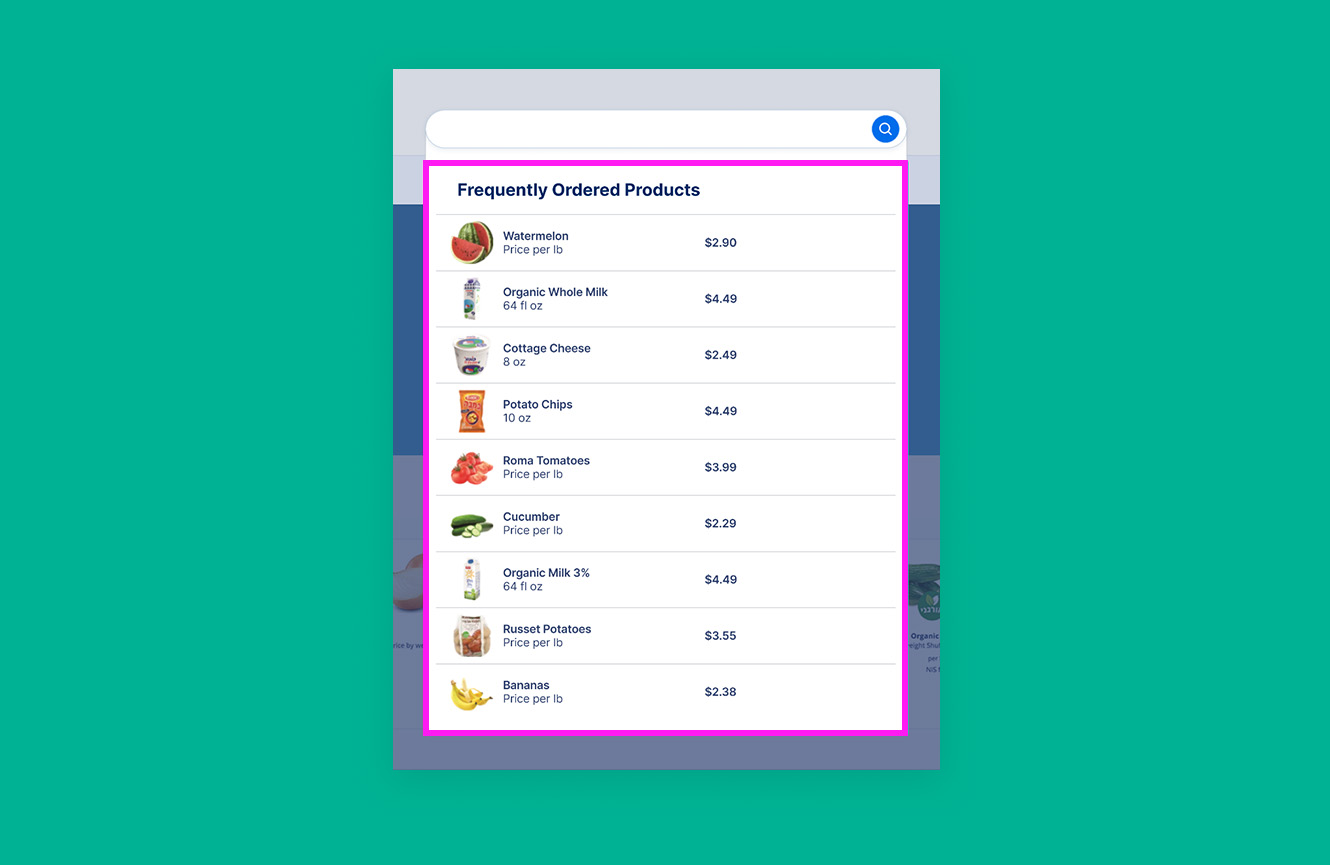
You can use your brand’s search function to serve product recommendations based on a user’s previously purchased items
You can also offer a “just for you” personal shopping page that includes recently purchased items and brands, and product recommendations based on the customer’s displayed shopping behavior and diet preferences.
There’s a misconception that personalized experiences can only be shown to identified users who have explicitly stated their preferences (based on data stored in a grocery retailer’s CRM system). But in fact, even data collected during anonymous browsing sessions can be used to increase add-to-cart metrics using powerful, same-session personalization (so long as it is obtained with the proper consent). For example, suppose a first-time visitor comes to the site and browses only vegan or vegetarian products. That data can be used in real-time (through affinity profiling) to showcase only non-meat products in recommendation carousels on the next page. It’s also possible to ensure these users don’t see meat-related promotions (such as BBQ meat offers) or only see plant-based or meat-free alternatives.
For known users, these recommendations can also be enhanced by purchase data. Once the user has ordered, relevant items related to past purchases can be showcased. So, if they’ve bought vegan cheese slices before, shredded vegan cheese or something similar is recommended the next time they visit.
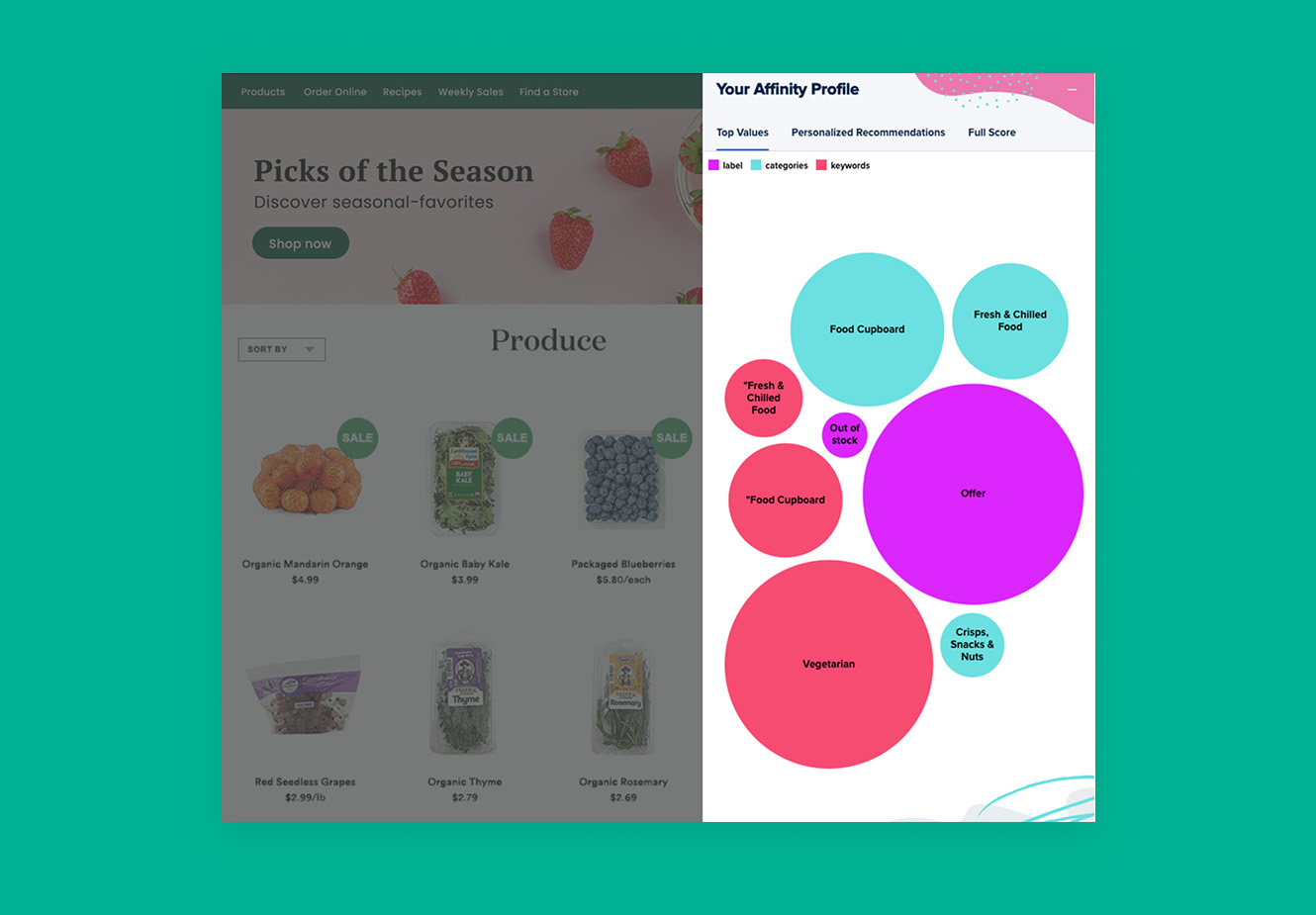
Visual representation of a user with a strong affinity for purchasing vegetarian-related items, products with offers, and those categorized as pantry or cupboard staples
Just like in the store, once a customer reaches checkout, your goal should be getting them to complete a purchase – whilst also providing them a last-minute chance to add something extra to their basket. Unlike in-store, however, the online checkout process provides an opportunity for personalized recommendations or relevant add-ons and offers for users who have purchased at least one time before.
For example, you can recommend frequently bought together products via a pop-up modal when an item is added to the cart. If a customer adds strawberry jelly to their cart, the pop-up can recommend three popular peanut butter options. If a customer has marked a peanut allergy in their dietary preferences, alternative nut-based butter products could be displayed instead.
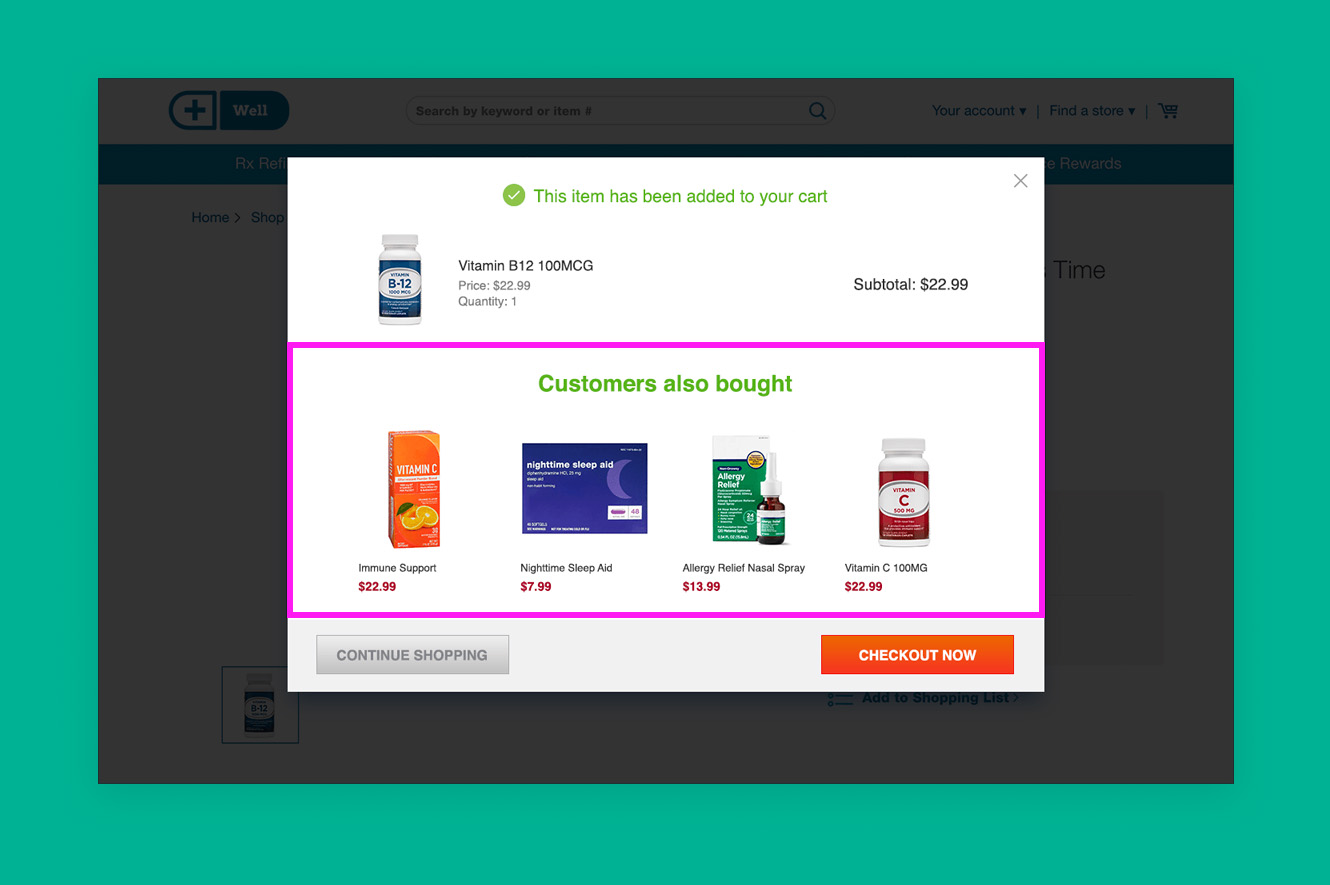
In this use case, a user who adds vitamin B12 tablets to their cart will see other items frequently bought together, such as over-the-counter cold-and-flu season staples like immunity support tablets and sleep aids
These recommendations can also be placed in the pre-checkout cart phase to showcase items related to the entire basket rather than individual products for increased discovery and engagement. Imagine a customer adds baking ingredients to the cart – other baking ingredients included in similar carts can be recommended. Additionally, like the in-store experience, you can cap the item price and encourage users to add these items without too much deliberation.
For next-level personalization, highlight missed offers relevant to the customer, such as those that can help them hit the threshold for a three-for-two or buy-one-get-one-free promotion. You can further program these recommendations to align with business priorities by showing overstock items, products with vendor deals, or using localized stock functionality to stop recommending items that aren’t available in a given location.
After a user makes a purchase, you should use the data collected from their transaction to restart the next purchase journey. This can effectively be done by delivering personalized emails that tout promotions, content, and products based on the customer’s affinity to items, brands, or categories. For example, suppose they tend to buy seasonal produce. In that case, an email can recommend fruits and vegetables that are in season and other popular items like novelties, drinks, and even cooking supplies. When it comes to churned customers who have not purchased in a month or more, an email recommending their previous order or similar items can jog their memory and get them back to the website to shop again.
Many brands are integrating their ESPs with specialized personalization solutions to deliver these highly tailored email experiences more efficiently, which were historically very difficult to achieve.
The paradigms of consumer behavior have shifted, catalyzed by the pandemic and accelerated by the convenience of digital shopping. Today, the stage is set for a new era of personalization within the grocery industry, one that leverages data-driven insights to connect with consumers on a personal level, reshaping the grocery journey from mundane to delightful.
The window of opportunity is open but not indefinite—early adopters and innovators of personalization technology and trends will inevitably redefine grocery dynamics, so the time to invest is now. Those who hesitate face a significant opportunity cost that will be deeply felt in smaller market share and customer loyalty.
此内容由惯性聚合(RSS阅读器)自动聚合整理,仅供阅读参考。 原文来自 — 版权归原作者所有。