








 Summarize this articleHere’s what you need to know:
These days, personalization is key to driving great customer experiences. In fact, data from Forrester unveiled that 61% of customers are unlikely to return to a brand that does not provide a satisfactory experience. And banking is no exception, with 72% of consumers polled by Capco rating personalization as “highly important” in today’s financial services landscape. Further, 76% of banking customers expect an omnichannel experience.
It’s no surprise that our latest research found 92% of financial institutions shared a belief in personalization’s value and have already allocated resources to support it internally. But belief doesn’t manifest into meaningful implementation unless the right processes and methodologies are also prioritized.
With new and existing customers hanging in the balance, how can FIs deliver the timely, relevant, and personalized interactions that customers expect on every channel? In this post, we’ll outline the right audiences, relevant KPIs, and ideal communication channels to help teams align personalization throughout the customer lifecycle.
There are three main customer lifecycle stages that financial brands should think about when integrating personalization into the larger business strategy: acquisition, adoption, and lifecycle management.

When broken down at a high level:
Acquisition – Optimizing acquisition ROI (and reducing CAC) by leveraging available data to deliver relevant experiences from the very first pageview.
Adoption – Expediting activations, account setup, and early product usage with tailored experiences that promote key customer behaviors.
Lifecycle Management – Upselling, encouraging product and service usage, and driving customer lifetime value by infusing existing and real-time data into experience delivery with AI.
But how do teams get there, and what are the most important components to consider when thinking about how to apply personalization across the customer lifecycle?
Three important questions come to mind:
Now, let’s dive a bit deeper into each of these within the different stages and highlight some great use case examples.
Referring back to our first question above, the first step to driving acquisition (or improvement of any other funnel stage) through personalization is understanding your audiences.
And that starts with data.
Without going into analysis paralysis, a helpful way to get started is by bucketing your visitors’ behavior according to the level of intent:
The goal is to move low-intent prospects to medium intent, medium-intent prospects to high intent, and high-intent prospects to customers.
Now, what about our KPIs?
Within the customer acquisition phase, financial services brands most often seek to influence:
From there, you can think about your main channels for delivering personalization.
These are best understood in two categories:
Each lifecycle stage utilizes different triggers and responses that correspond to their distinct audiences and KPIs. Within customer acquisition, those are:
Customer acquisition channels for personalization | |||||||||||||||||||||||||||||||||||||||||||||||||||||||||||||||||||||||||||||||||||||||||||||||||||
Trigger channels | Response channels | ||||||||||||||||||||||||||||||||||||||||||||||||||||||||||||||||||||||||||||||||||||||||||||||||||
Performance marketing | Web | ||||||||||||||||||||||||||||||||||||||||||||||||||||||||||||||||||||||||||||||||||||||||||||||||||
Social media | App | ||||||||||||||||||||||||||||||||||||||||||||||||||||||||||||||||||||||||||||||||||||||||||||||||||
Referral (trusted sources) | Email (in some cases) | ||||||||||||||||||||||||||||||||||||||||||||||||||||||||||||||||||||||||||||||||||||||||||||||||||
Direct traffic | |||||||||||||||||||||||||||||||||||||||||||||||||||||||||||||||||||||||||||||||||||||||||||||||||||
Physical locations | |||||||||||||||||||||||||||||||||||||||||||||||||||||||||||||||||||||||||||||||||||||||||||||||||||
On to the most exciting part… the use cases.
Using contextual data to tailor homepage content for new users
Let’s say after digging into our data, we find a large portion of visitors are coming directly to the site (trigger channel) from a few distinct locations (low-intent audience segment). We can then use that data to inform the personalization of web experiences (response channel), including the tailoring of welcome messages, homepage banners, email signup overlays, and more to influence key KPIs like application submissions or tool usage.

For example, one might serve a homepage hero banner promoting business insurance to people in New York City, and another version for agribusiness coverage in Nebraska. By doing so, teams can ensure greater relevance right out of the gate, a higher likelihood of continued engagement, and lower rates of site abandonment.
Other acquisition personalization use cases include:
Strive to ensure that every potential customer is met with the most relevant digital experience possible with the available data and you’ll enjoy higher returns from acquisition investments and lower customer acquisition cost (CAC).
If you remember from the funnel slide at the beginning of this post, adoption is all about leveraging visitor data to drive important activities early in the product relationship.
But before you can optimize adoption efforts, you need to distinguish between your customers based on their level of engagement. This distinction comes back to data, which can be mined from direct, first-party data, engagement-level data from across digital properties, zero-party survey data, as well as 3rd party information to enrich customer profiles.
In a similar fashion, we can use a funnel to bucket customer behavior by low, medium, and high engagement, with the goal to move low-engagement customers to medium, medium to high, and to keep high-engagement customers where they are while serving relevant experiences designed to increase spending and cross-sell.
But how do you measure the success of personalization in the adoption phase?
The key metrics that are most relevant to customer adoption are:
As we go on to think about how to influence the KPIs above for the adoption phase, let’s consider our trigger and response channels, which both include:
Customer adoption channels for personalization | |||||||||||||||||||||||||||||||||||||||||||||||||||||||||||||||||||||||||||||||||||||||||||||||||||
Trigger channels | Response channels | ||||||||||||||||||||||||||||||||||||||||||||||||||||||||||||||||||||||||||||||||||||||||||||||||||
Mobile app | Mobile app | ||||||||||||||||||||||||||||||||||||||||||||||||||||||||||||||||||||||||||||||||||||||||||||||||||
Website | Website | ||||||||||||||||||||||||||||||||||||||||||||||||||||||||||||||||||||||||||||||||||||||||||||||||||
SMS (less often) | SMS (more often) | ||||||||||||||||||||||||||||||||||||||||||||||||||||||||||||||||||||||||||||||||||||||||||||||||||
Now, let’s take a look at personalization use cases within the adoption stage.
Using 3rd party data to enrich customer profiles for segmentation
Consider a scenario in which a new customer who has not yet registered their card (low engagement customer) visits the site (trigger channel). Instead of receiving the generic homepage experience, a team could use the information to A/B test which messaging, content, product recommendations, promotions, and more on the site (response channel) is most effective at generating registrations (KPI).

Synchrony personalizes with LiveRamp data to create relevant experiences based on the type of credit card a site visitor has – another strong example of how to encourage key customer behavior based on available information during the adoption phase.
Other adoption personalization use cases include:
Every new customer is unique and has different needs, preferences, and reasons for their behaviors, meaning how they engage and when is distinct to the individual.
And while you might have mapped out an ideal, linear path for adoption, it’s not always an orchestrated journey.
The adoption journey | |||||||||||||||||||||||||||||||||||||||||||||||||||||||||||||||||||||||||||||||||||||||||||||||||||
The mythical orchestrared journey | The actual journey for one person | The actual journey for another person | |||||||||||||||||||||||||||||||||||||||||||||||||||||||||||||||||||||||||||||||||||||||||||||||||
1. Card registration | 1. App download | 1. Card registration | |||||||||||||||||||||||||||||||||||||||||||||||||||||||||||||||||||||||||||||||||||||||||||||||||
2. App download | 2. Card registration | 2. First transaction | |||||||||||||||||||||||||||||||||||||||||||||||||||||||||||||||||||||||||||||||||||||||||||||||||
3. First transaction | 3. Digital billing setup | 3. Add to mobile wallet | |||||||||||||||||||||||||||||||||||||||||||||||||||||||||||||||||||||||||||||||||||||||||||||||||
4. Add to mobile wallet | 4. First transaction | 4. App download | |||||||||||||||||||||||||||||||||||||||||||||||||||||||||||||||||||||||||||||||||||||||||||||||||
5. Autpay setup | 5. Add additional user | ||||||||||||||||||||||||||||||||||||||||||||||||||||||||||||||||||||||||||||||||||||||||||||||||||
6. Digital billing setup | 6. Autopay setup | ||||||||||||||||||||||||||||||||||||||||||||||||||||||||||||||||||||||||||||||||||||||||||||||||||
7. Add authorized user | |||||||||||||||||||||||||||||||||||||||||||||||||||||||||||||||||||||||||||||||||||||||||||||||||||
Instead, adoption must be viewed as a series of engagements to be managed in real-time, using the available data and customer cues to adapt to the various journeys and encouraging the completion of the remaining, relevant key engagements.
Within the ongoing lifecycle management phase, it’s all about maintaining customer engagement and top-of-wallet behavior as well as increasing account and card usage.
Similar to adoption, customers within the lifecycle phase can be bucketed by their overall level of engagement, with the goal being to elevate each tier’s level of engagement with relevant content and offers. This means reinvigorating low-engagement customers to medium, pushing medium-engagement customers to high, and maintaining high-engagement customers while encouraging them to increase spend and expand their product usage.
Through this lens, you can start to tailor your personalization efforts for each audience, optimizing for the relevant KPIs.
These include:
Banking customers vary widely in their spending habits, card usage, and channel preferences. FIs can use the available data from all available trigger channels to paint a clear picture of each customer, and nudge them towards relevant products and services on whichever medium they prefer — with the ability to continue the conversation across all channels.
Lifecycle management channels for personalization | |||||||||||||||||||||||||||||||||||||||||||||||||||||||||||||||||||||||||||||||||||||||||||||||||||
Trigger channels | Response channels | ||||||||||||||||||||||||||||||||||||||||||||||||||||||||||||||||||||||||||||||||||||||||||||||||||
Mobile app | Mobile app | ||||||||||||||||||||||||||||||||||||||||||||||||||||||||||||||||||||||||||||||||||||||||||||||||||
Website | Website | ||||||||||||||||||||||||||||||||||||||||||||||||||||||||||||||||||||||||||||||||||||||||||||||||||
SMS | |||||||||||||||||||||||||||||||||||||||||||||||||||||||||||||||||||||||||||||||||||||||||||||||||||
Paid and organic search | |||||||||||||||||||||||||||||||||||||||||||||||||||||||||||||||||||||||||||||||||||||||||||||||||||
Social | |||||||||||||||||||||||||||||||||||||||||||||||||||||||||||||||||||||||||||||||||||||||||||||||||||
Referral traffic (from trusted sources) | |||||||||||||||||||||||||||||||||||||||||||||||||||||||||||||||||||||||||||||||||||||||||||||||||||
Performance programs | |||||||||||||||||||||||||||||||||||||||||||||||||||||||||||||||||||||||||||||||||||||||||||||||||||
Here’s what personalization aligned with lifecycle management can look like:
Algorithmically recommend the most relevant content and services
Let’s say we have a new credit card user (low engagement customer) who visits the website (trigger channel) and sees recommendations and content that’s inline with their current situation (response channel) to drive their overall spend as well as their card and account usage (KPIs) rather than a generic experience.
As time goes on, the customer evolves into a homeowner (high engagement customer) and, with the help of AI, the website experience (response channel) changes to incorporate more cross-sell and upsell opportunities, encourage educational downloads for relevant but undiscovered products, and promote key customer behaviors like home loan applications or refinancing (KPIs).
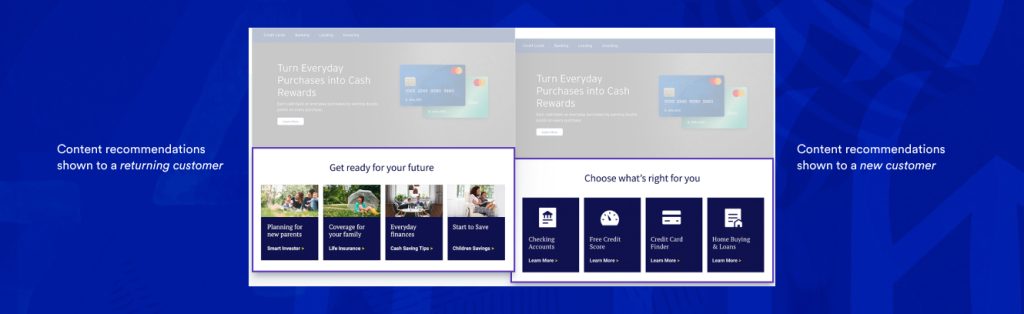
For example, the variation on the left incorporates web personalization to serve a tailored experience for a returning customer with specific, AI-powered content recommendations that correspond to the available customer data, whereas the experience on the right for a new customer showcases generic and broad resources in an effort to learn more about their needs and interests and to serve deeper, more relevant recommendations in the future.
Other adoption personalization use cases include:
With growing numbers of consumers turning to digital banking, there are more options available to them than ever before. With so much new competition, FIs need to stay top of mind with their customers throughout their individual journeys through the delivery of highly relevant experiences.
Acquiring, activating, and managing customers throughout the lifecycle is no longer predicated on a bank’s physical location or in-person service, but the timely, relevant, and personalized digital interactions that consumers expect every time they engage, no matter the channel.
Knowing which audiences, KPIs, channels, and types of experiences correspond best with the different lifecycle phases translates into greater agility and results. Use the information outlined in this post to launch experiences faster, more quickly understand what performed well, and refine campaigns at every step of the customer’s relationship with your company. Greater sophistication in your approach to the customer experience awaits, as do the exponential revenue gains.
此内容由惯性聚合(RSS阅读器)自动聚合整理,仅供阅读参考。 原文来自 — 版权归原作者所有。