






Signal 1 - Culture The organization understands the value and business impact of personalization
A strong culture of personalization is evidenced by it being made a top priority, with clear, quantitative business goals and KPIs that are used to inform a testing program and strategy. Those that will benefit most put personalization at the core of their customer journey efforts and have full organizational alignment.
Signal 2 - Resources The right resources and talent are made available to execute on personalization
Leadership appoints the right business, technical, and creative talent to drive personalization orchestration among other departmental programs or activities, which can be achieved in a timely, coordinated, and cohesive fashion across key digital channels.
Signal 3 - Processes Processes exist to streamline key program activities and facilitate proper campaign execution
The benefits of personalization cannot be realized by simply acquiring the right technology or set of capabilities. Mature brands have processes around data identification and activation, know how to derive insights from and distribute test results, and have free rein to conduct cross-site testing – paving the way to their success.
Signal 4 - Effectiveness The organization is aligned on the who, how, and why of its personalization program
A strong personalization strategy requires alignment on the business’ key audiences. Not even the right resources will be enough to generate results without a data-driven approach and KPIs that measure efforts for shaping the future roadmap. That means following the data rather than anecdotal instinct or executive mandates for program prioritization.
To implement personalization successfully, organizations must educate about the program’s potential at every level, cultivate a deep, cross-functional culture of experimentation, and evolve previous practices and mindsets.
Our take on the findings:
A growing number of grocery/CPGs have recognized the importance of personalization, with varying degrees of implementation and strategic priority across the industry. While the belief in the practice’s significance is strong, respondents feel it has yet to permeate every organizational level successfully. Additionally, only some fully comprehend personalization’s quantified impact on the larger business strategy.
“As the grocery industry continues to embrace the power of personalization, organizations must bridge the gap between belief and action. Previous notions, mentalities, KPIs, and sometimes even ways of operating when it comes to testing will have to evolve to drive tangible business growth and meet evolving consumer demands.”

Jonatan Ramirez Vice President, Global Head of Sales Engineering, Dynamic Yield


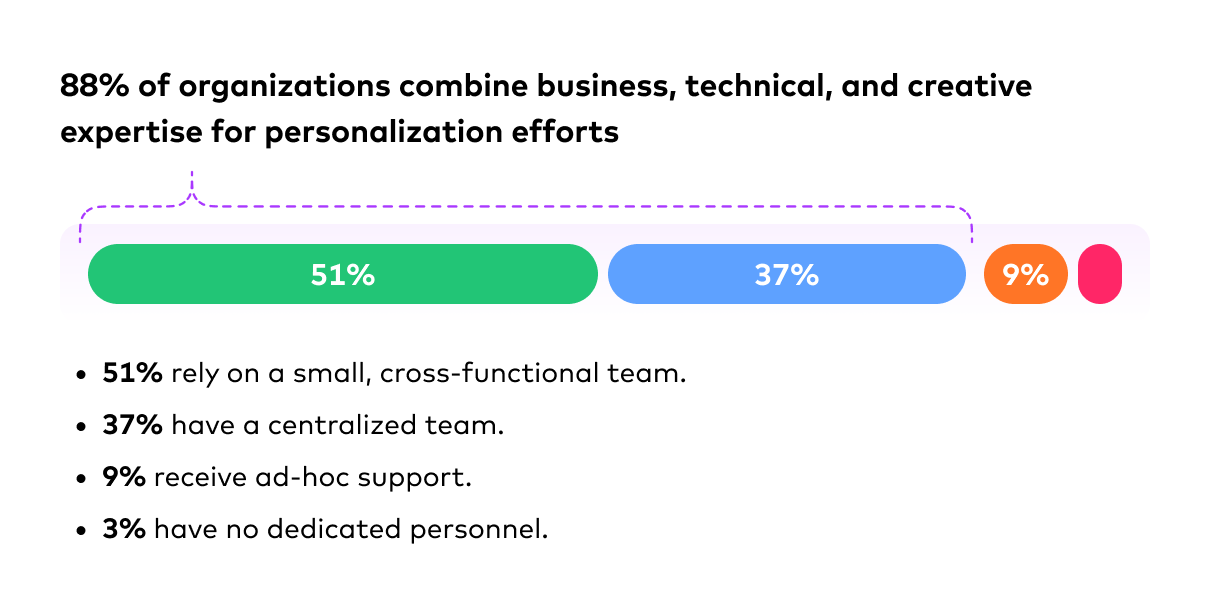
Organizations need critical functions (e.g. channel owners, creative gurus, business operators, and technical executors) to start and scale a personalization team across business units. Ideally, these functions would roll up under one central team or work cross-functionally to activate in a unified capacity.
Our take on the findings:
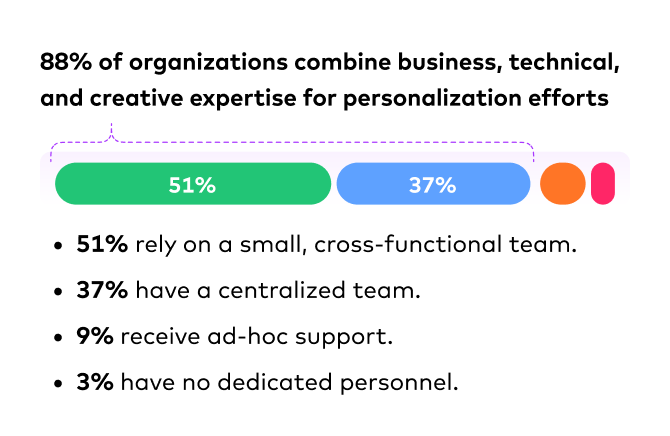
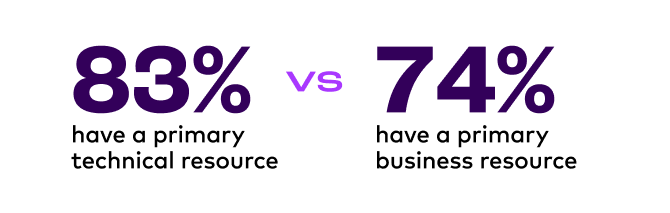
Despite incorporating diverse expertise, most organizations lack a dedicated resources at the team-level. Further, there’s a limited prevalence of specific business units dedicated solely to these tasks compared to technical owners. This indicates that organizations are more likely to view personalization as a technical endeavor rather than a business one, and thus, may be viewing program process in optimizing for short-term performance indicators (e.g. speed or efficiency) over improving the overall customer experience long-term.
“Amidst the dynamic landscape of grocery retail, it’s evident that the lack of dedicated resources poses a significant challenge in achieving a synchronized and cohesive approach to personalization. While technical support remains accessible, the limited investment in a business owner for personalization hinders a seamless program execution. Until clear ownership is assigned, it will be challenging to deliver a strategic roadmap due to ever-conflicting priorities across all business units.“

Klaudia Karcz Customer Success Team Lead, Dynamic Yield



All organizations need to complete several critical steps to grow sustainably long-term: Analyze existing data; Brainstorm concepts; Define a hypothesis and goal; Plan testing priorities, parameters, and conditions; Build the experience; Optimize experiences and tests based on new insights; and Circulate outcomes to all cross-departmental stakeholders.
Our take on the findings:
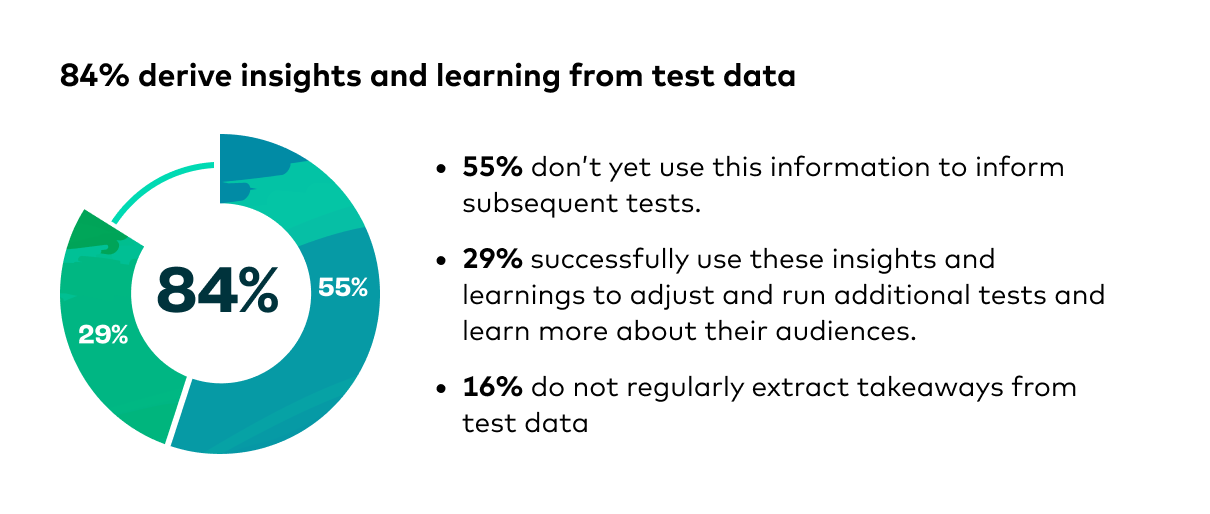
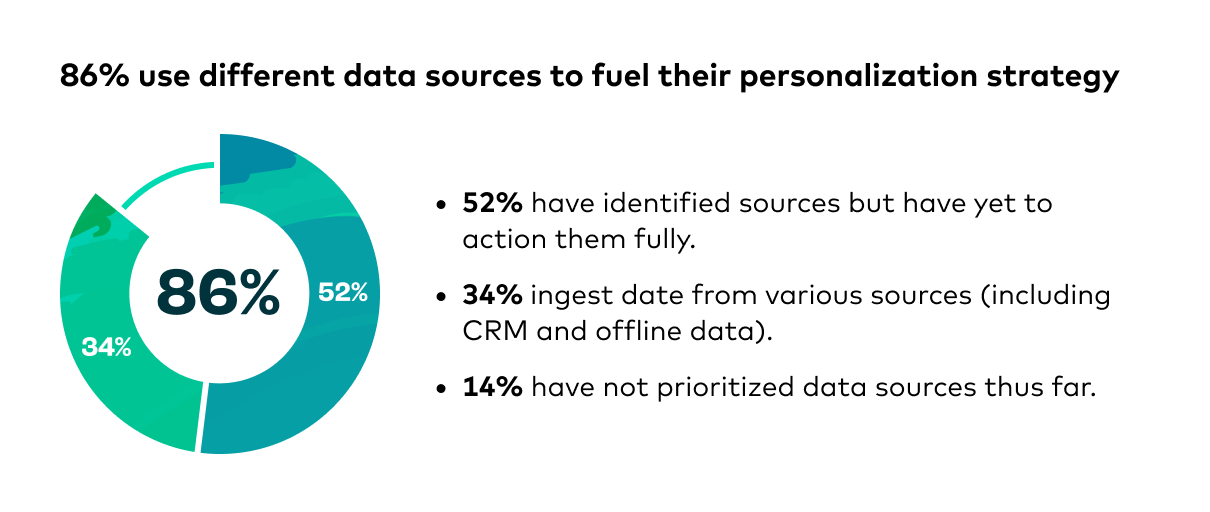
While most organizations have identified meaningful data sources to fuel their personalization strategy, a significant portion has yet to integrate them fully into their personalization efforts. This indicates that brands often need to be more extensive in their initial analysis and, therefore, now hold a less comprehensive and holistic understanding of customer preferences and behaviors.
Additionally, most organizations face constraints in implementing comprehensive testing practices in core website elements, further impeding their ability to thoroughly evaluate and optimize their strategies.
Even if organizations granted personalization teams the autonomy to conduct comprehensive testing, most lack the procedures to leverage the collected data and streamline their key program activities. Most organizations do not utilize data-driven insights to inform iterative testing and refining processes, hindering their ability to optimize an audience strategy.
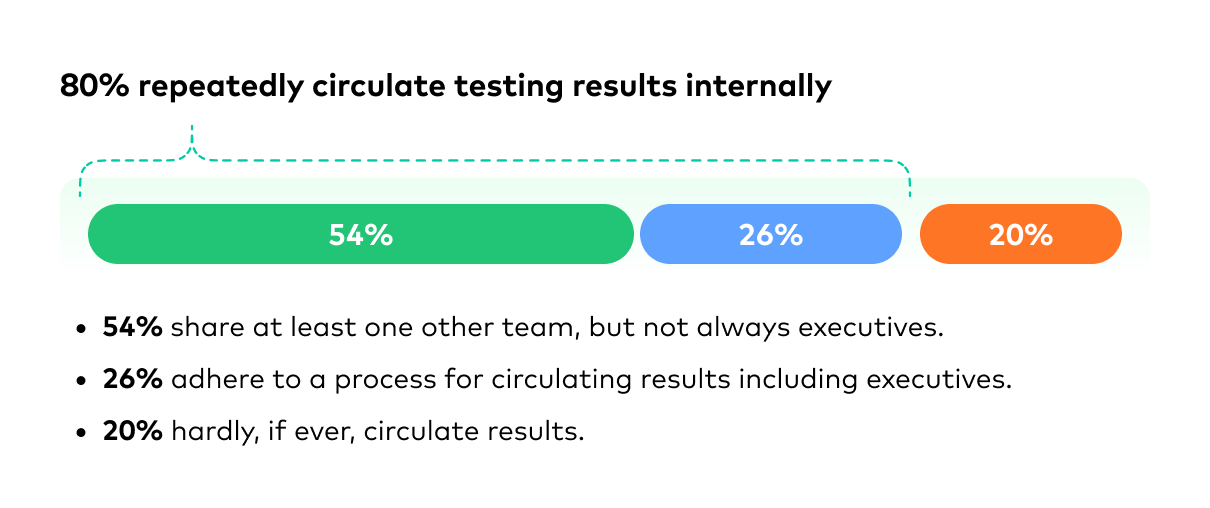
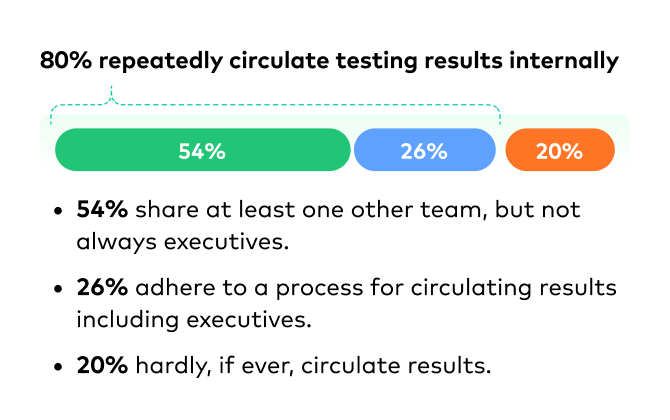
While most organizations share their testing results, a significant portion may not do so in a manner that meets the standard of excellence. Many organizations lack a systematic approach to sharing testing outcomes, potentially hindering effective communication and collaboration across departments and executive presence.
Those organizations that hardly circulate results may face a gap in the communication process within these organizations, which could impede the collective understanding of testing outcomes and hinder the alignment of efforts toward common goals.
"When shown the data, everyone can see the value of testing and personalization, but it can't exist in a vacuum. Grocery/CPG brands must work to close this communication gap and grow collective understanding of testing outcomes, particularly when reporting success to the executive level."

Liz Powell Senior Customer Success Manager, Dynamic Yield



Personalization isn't just a tactic; it's a comprehensive discipline. Simply securing the right tools isn't enough. Our research demonstrates that organizations that develop a robust ecosystem around their personalization efforts consistently achieve superior results.
Our take on the findings:
"Successful personalization hinges on a strategic, data-driven roadmap that cuts through the clutter of instinct-based decision-making and executive directives," says Jonatan Ramirez, Vice President, Global Head of Sales Engineering at Dynamic Yield. "Without this, organizations will never mature their out-of-the-box personalization tactics into the bespoke powerhouse that is a strategic advantage."
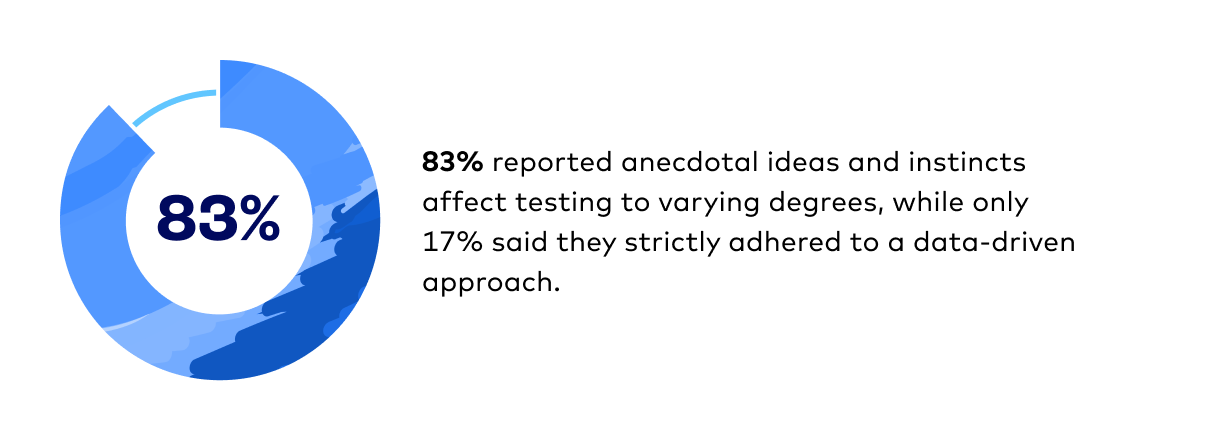
The data underscores that the preference for short-term wins often comes before establishing the long-term processes required for effectiveness and optimization. For example, many organizations have a documented audience strategy, but practical, long-term considerations like implementation and team alignment still need to be improved. Additionally, most brands continually favor anecdotal processes over data-driven methodologies.
"Building a robust personalization framework within an organization requires a commitment to fostering effective processes and authentic connections. While personalization tactics can bring short-term wins, the gains from a long-term view are exponential—and organizations need to prioritize that.”

Jonatan Ramirez Vice President, Global Head of Sales Engineering, Dynamic Yield




Beyond looking at the top level, we cut the data across geography, company size, and job level of the respondent for a deeper look at how personalization implementation varies by each dimension. Use this data to benchmark yourself against similar companies accurately.


The data aligns with overall trends in eCommerce personalization per region: The greater the penetration per market, the greater the ability to implement personalization in grocery scenarios and quickly mature the market.
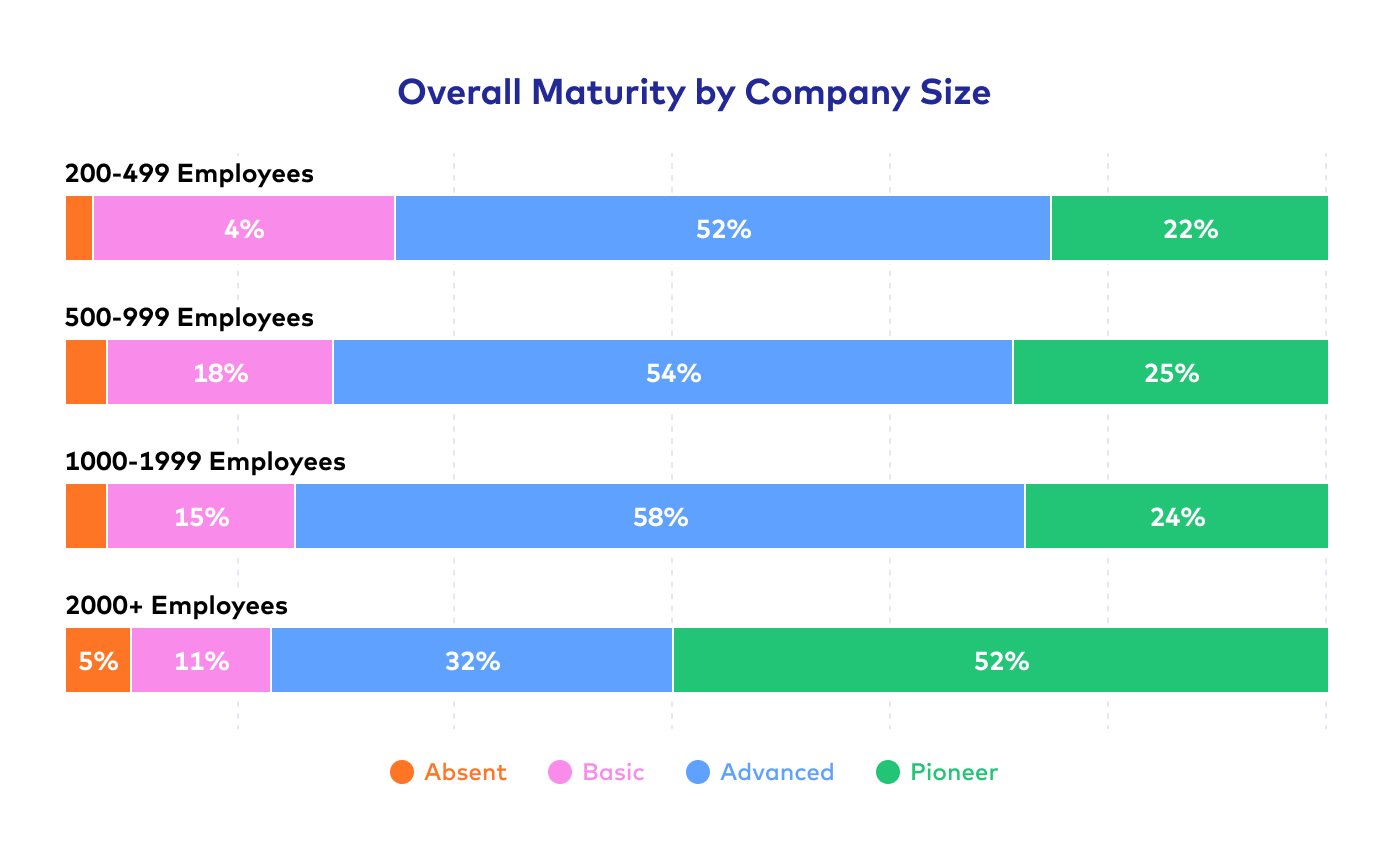

For the most part, the bigger the company, the more mature the personalization program. This can be attributed to enterprises typically being more process-oriented, influencing long-term planning. Because of this, their teams can also be more likely to receive more generous resourcing and budgeting. However, internal silos and stricter regulations may keep robust personalization programs from reaching peak efficiency.

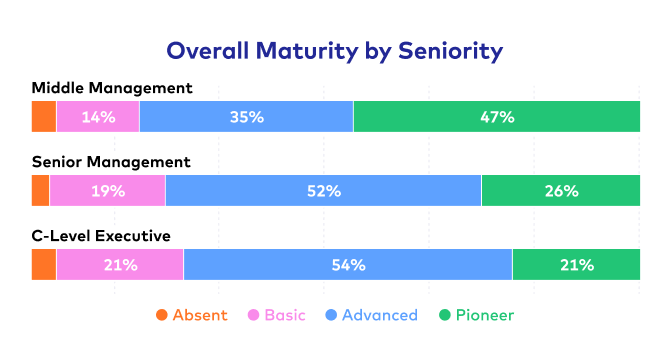
The disparity between job level and perception of maturity indicates potential communication gaps in hierarchical levels within organizations. This disconnect can be tied to other findings: one, that many programs have trouble regularly communicating their test results to different areas of the org, including executives; and two, that testing is not associated with overall business goals. While Middle Managers may report remarkably mature personalization programs, these gains could be lost in translation by senior leadership.
此内容由惯性聚合(RSS阅读器)自动聚合整理,仅供阅读参考。 原文来自 — 版权归原作者所有。