


惯性聚合 高效追踪和阅读你感兴趣的博客、新闻、科技资讯
阅读原文 在惯性聚合中打开

推荐订阅源

Threat Intelligence Blog | Flashpoint
MyScale Blog
MyScale Blog
Jina AI
Jina AI
爱范儿
爱范儿
cs.CL updates on arXiv.org
I
Intezer
The Cloudflare Blog
T
Threat Research - Cisco Blogs
G
Google Developers Blog
Stack Overflow Blog
Stack Overflow Blog
freeCodeCamp Programming Tutorials: Python, JavaScript, Git & More
D
Docker
AI
AI
Scott Helme
Scott Helme
Attack and Defense Labs
让小产品的独立变现更简单 - ezindie.com
L
LangChain Blog
Recent Announcements
Security Latest
Security Latest
Hugging Face - Blog
Hugging Face - Blog
W
WeLiveSecurity
Last Week in AI
Last Week in AI
Security Archives - TechRepublic
OSCHINA 社区最新新闻
OSCHINA 社区最新新闻
P
Proofpoint News Feed
S
Securelist
S
Security Affairs
Project Zero
Project Zero
博客园 - 叶小钗
Google DeepMind News
T
Tor Project blog
A
About on SuperTechFans
V2EX - 技术
V2EX - 技术
宝玉的分享
宝玉的分享
T
Tenable Blog
博客园 - 聂微东
人人都是产品经理
人人都是产品经理
Simon Willison's Weblog
Forbes - Security
Forbes - Security
K
KPMG report finds enterprise disconnect between AI and its ROI | CIO
V
V2EX
AWS News Blog
AWS News Blog
The GitHub Blog
The GitHub Blog
酷 壳 – CoolShell
酷 壳 – CoolShell
P
Privacy & Cybersecurity Law Blog
阮一峰的网络日志
阮一峰的网络日志
I
InfoQ
C
CXSECURITY Database RSS Feed - CXSecurity.com
H
Hacker News: Front Page
美团技术团队

WeLiveSecurity

Recovery scammers hit you when you’re down: Here’s how to avoid a ‘second strike’ As breakout time accelerates, prevention-first cybersecurity takes center stage Digital assets after death: Managing risks to your loved one’s digital estate This month in security with Tony Anscombe – March 2026 edition RSAC 2026 wrap-up – Week in security with Tony Anscombe A cunning predator: How Silver Fox preys on Japanese firms this tax season Virtual machines, virtually everywhere – but not all protected Cloud workload security: Mind the gaps Move fast and save things: A quick guide to recovering a hacked account EDR killers explained: Beyond the drivers Face value: What it takes to fool facial recognition Cyber fallout from the Iran war: What to have on your radar Sednit reloaded: Back in the trenches What cybersecurity actually does for your business How SMBs use threat research and MDR to build a defensive edge Protecting education: How MDR can tip the balance in favor of schools This month in security with Tony Anscombe – February 2026 edition Mobile app permissions (still) matter more than you may think Faking it on the phone: How to tell if a voice call is AI or not PromptSpy ushers in the era of Android threats using GenAI Is Poshmark safe? How to buy and sell without getting scammed Is it OK to let your children post selfies online? Naming and shaming: How ransomware groups tighten the screws on victims Taxing times: Top IRS scams to look out for in 2026 OfferUp scammers are out in force: Here’s what you should know A slippery slope: Beware of Winter Olympics scams and other cyberthreats This month in security with Tony Anscombe – January 2026 edition DynoWiper update: Technical analysis and attribution Love? Actually: Fake dating app used as lure in targeted spyware campaign in Pakistan Drowning in spam or scam emails lately? Here’s why ESET Research: Sandworm behind cyberattack on Poland’s power grid in late 2025 Children and chatbots: What parents should know Common Apple Pay scams, and how to stay safe Old habits die hard: 2025’s most common passwords were as predictable as ever Why LinkedIn is a hunting ground for threat actors – and how to protect yourself Is it time for internet services to adopt identity verification? Your information is on the dark web. What happens next? Credential stuffing: What it is and how to protect yourself This month in security with Tony Anscombe – December 2025 edition A brush with online fraud: What are brushing scams and how do I stay safe? Revisiting CVE‑2025‑50165: A critical flaw in Windows Imaging Component LongNosedGoblin tries to sniff out governmental affairs in Southeast Asia and Japan ESET Threat Report H2 2025 Black Hat Europe 2025: Was that device designed to be on the internet at all? Black Hat Europe 2025: Reputation is currency – even in the ransomware economy Locks, SOCs and a cat in a box: What Schrödinger can teach us about cybersecurity Seeking symmetry during ATT&CK® season: How to harness today’s diverse analyst and tester landscape to paint a security masterpiece The biggest catch: How whaling attacks target top executives Phishing, privileges and passwords: Why identity is critical to improving cybersecurity posture MuddyWater: Snakes by the riverbank Oversharing is not caring: What’s at stake if your employees post too much online This month in security with Tony Anscombe – November 2025 edition What parents should know to protect their children from doxxing Influencers in the crosshairs: How cybercriminals are targeting content creators MDR is the answer – now, what’s the question? The OSINT playbook: Find your weak spots before attackers do PlushDaemon compromises network devices for adversary-in-the-middle attacks What if your romantic AI chatbot can’t keep a secret? Can password managers get hacked? Here’s what to know Why shadow AI could be your biggest security blind spot In memoriam: David Harley The who, where, and how of APT attacks in Q2 2025–Q3 2025 ESET APT Activity Report Q2 2025–Q3 2025 Sharing is scaring: The WhatsApp screen-sharing scam you didn’t see coming How social engineering really works | Unlocked 403 cybersecurity podcast (S2E6) Ground zero: 5 things to do after discovering a cyberattack This month in security with Tony Anscombe – October 2025 edition Fraud prevention: How to help older family members avoid scams Cybersecurity Awareness Month 2025: When seeing isn't believing Recruitment red flags: Can you spot a spy posing as a job seeker? How MDR can give MSPs the edge in a competitive market Cybersecurity Awareness Month 2025: Cyber risk thrives in the shadows Gotta fly: Lazarus targets the UAV sector SnakeStealer: How it preys on personal data – and how to stay safe Cybersecurity Awareness Month 2025: Building resilience against ransomware Minecraft mods: When ‘hacking’ your game becomes a security risk IT service desks: The security blind spot that may put your business at risk Cybersecurity Awareness Month 2025: Why software patching matters more than ever AI-aided malvertising: How chatbots can help spread scams How Uber seems to know where you are – even with restricted location permissions Cybersecurity Awareness Month 2025: Passwords alone are not enough The case for cybersecurity: Why successful businesses are built on protection Beware of threats lurking in booby-trapped PDF files Manufacturing under fire: Strengthening cyber-defenses amid surging threats New spyware campaigns target privacy-conscious Android users in the UAE Cybersecurity Awareness Month 2025: Knowledge is power This month in security with Tony Anscombe – September 2025 edition Roblox executors: It’s all fun and games until someone gets hacked DeceptiveDevelopment: From primitive crypto theft to sophisticated AI-based deception Watch out for SVG files booby-trapped with malware Gamaredon X Turla collab Small business, big risk: How SMBs can fight back against ransomware HybridPetya: A Petya/NotPetya copycat comes with a twist Introducing HybridPetya: Petya/NotPetya copycat with UEFI Secure Boot bypass Are cybercriminals hacking your systems – or just logging in? Preventing business disruption and building cyber-resilience with MDR Under lock and key: Safeguarding business data with encryption GhostRedirector poisons Windows servers: Backdoors with a side of Potatoes This month in security with Tony Anscombe – August 2025 edition Don’t let “back to school” become “back to bullying”
Lessons for life: Why children’s data is a long-term identity risk
Phil Muncaster · 2026-06-03 · via WeLiveSecurity

Kids Online

Your child’s first data breach may happen before they’ve even opened a bank account. Here’s how to keep their digital life safe.

03 Jun 2026  •  , 6 min. read

Lessons for life: Why children’s data is a long-term identity risk

When we talk about cybersecurity and digital safety in the context of our children, it’s often framed in one of two ways. Either it’s about inappropriate or unsafe content – of the sort that COPPA is meant to regulate in the US. Or it’s about managing the psychological and social impacts of excessive screen time. But there’s an elephant in the room.

Our kids are exposed to many of the same identity, privacy, and data security risks as their parents. In fact they may be even more at risk. Helping them understand how to protect their data and online accounts at an early age is an increasingly important parental responsibility.  

Why do people want my kids’ data?

Our children are digital natives. From an early age they might have logins to school accounts, gaming profiles, cloud photos, health records, and accounts with a variety of other apps. All of these contain potentially lucrative data for identity thieves.

Why is this information a popular target? Because from a fraud perspective it has a relatively long shelf life. That means, if it’s stolen and used by a scammer to open a new line of credit, it’s unlikely the victim would find out, until perhaps they apply for their first loan many years later. What’s more, it will have a pristine credit score, meaning the fraudulent application will likely sail through unchecked. Fraudsters might use it as is, or combine it with made-up information to create synthetic identities.

The emergence of AI tools has made it far easier to spin up these fake identities. They might be harder for companies to spot. But when they do finally flag fraud, the impact on your child’s credit history can be severe.

These are not theoretical risks. One report reveals the story of risk and compliance professional Renata Galvão, whose identity was stolen at the age of six and used to run up debt in excess of $400,000. It reportedly took her over two decades to clear her name and restore her credit rating. In another case, Axton Betz-Hamilton was 11 when her identity was stolen and used to rack up thousands of dollars in unpaid credit card bills. She only found out when applying to set up her first utility bill at college.

Current data is hard to come by, but the FTC claims that child identity theft increased by 40% between 2021 and 2024.

What could go wrong?

Children’s data is at risk in other ways. Kids might be digitally savvy enough to set up online accounts, but they’re not always security-smart. They may be more prone to fall for a phishing message; especially if it appears to be sent from a trusted authority or friend. Too-good-to-be-true offers, innocuous-looking quizzes and FOMO-type ads are all more likely to hit home if the target is a credulous 13-year-old rather than a skeptical adult. Kids are also more likely to unwittingly download malware onto their devices or share their passwords and personal info with their peers, compounding security risk.
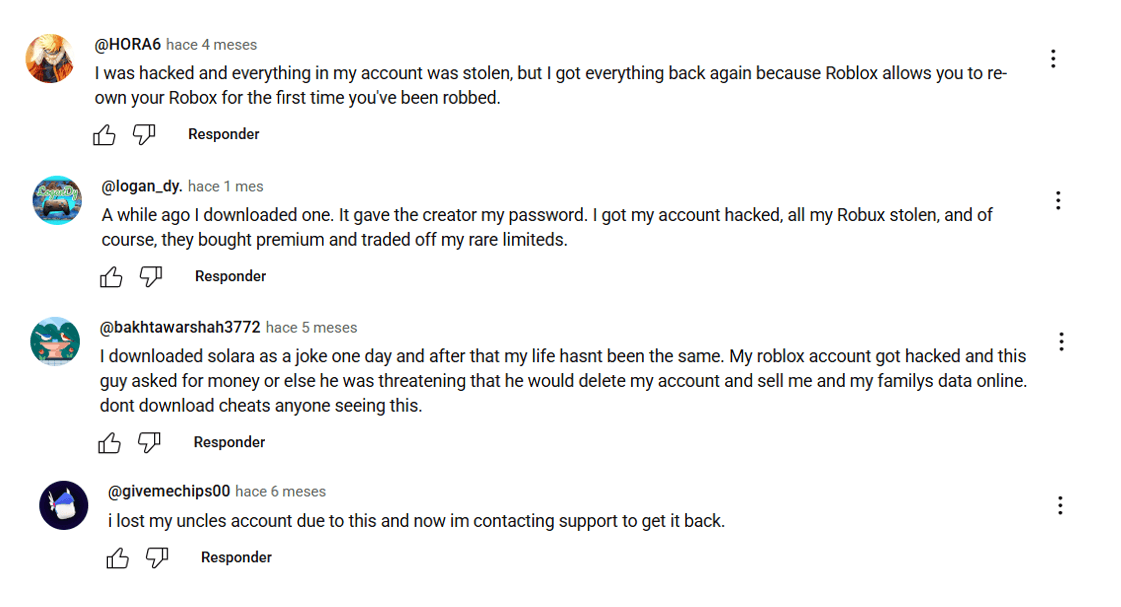
roblox-hacked-accounts
Roblox gamers sharing their experiences after downloading fake versions of Solara. Source: YouTube

But it’s not just our children who represent a potential weak link in the security chain. Research from the University of Southampton last year found that nearly half (45%) of parents regularly share information about their children online. Sharenting like this increases the risk of it falling into the hands of fraudsters. Around one-in-six children have already experienced at least one form of digital harm, including cyberbullying, privacy breaches, or identity misuse, the study claimed.

There’s also a growing risk that the edtech vendors, school platforms, gaming providers, smart toy makers, social media companies and other firms entrusted with your child’s data are themselves breached. The non-profit Identity Theft Resource Center (ITRC) tracked 3322 data breaches in the US last year – an all-time high and a 79% increase from five years ago. Nearly 279 million victims had their data exposed, with the healthcare and education sectors among the top five for breaches.

The proliferation of AI apps is also a privacy risk. Kids may use AI tools with no understanding that they’re actually sharing sensitive information which could end up in the wrong hands if the provider is breached.

Gaming accounts are another attractive target for fraudsters. They contain highly prized assets such as:

  • Your credit card/financial information, for use in fraud
  • Social graphs that can be used to spam/phish other kids in the same network
  • Skins, which can be stolen and cashed out
  • Private chats which may contain monetizable information

All of which creates a large potential surface for your child’s personal information to be exposed.

How to check if something’s gone wrong

There are several ways to check if your child has had their identity or personal information (including credentials) stolen. The following should all be red flags:

  • Passwords that suddenly don’t work, indicating someone has accessed their account and changed the logins
  • Missing skins, coins or other items in your child’s gaming account
  • Notifications about account changes, logins or resets
  • Purchases that you didn’t authorize
  • Friends and contacts reporting strange activity or messages from your child’s account
  • Your child is denied welfare benefits (because someone else is using their Social Security details)
  • They are denied a student loan or bank account due to a poor credit rating
  • Your child receives a government notice claiming unpaid taxes (because someone is using their details to register for new jobs)
  • You receive phone calls or correspondence claiming overdue bills run up by your child

It’s a shared responsibility

In truth, there are multiple stakeholders involved in protecting your children’s identity data. Parents are the most obvious. But also your school, and the app developers and device makers they are often forced to share information with. No single party can manage and secure the entire data lifecycle.

So what can you do as a parent? Limit data sharing, securely configure account settings, and teach your child best practices.

Start with the data. Take a step back and consider whether it really is necessary to set up that new account, grant permissions to that school app, or “sharent” online. Data minimization is one of the core principles of the GDPR. The less personal information is out there, the lower the risk of it ending up in the wrong hands.

Next, for the accounts they do have, adjust the settings to minimize risk. That means long, strong and unique passwords for every account, stored in a family password manager. That will reduce the risk of brute-force attacks. Switch on multifactor authentication (MFA) where possible to mitigate phishing risks.

Review all the privacy settings on all their apps and social platforms to lock them down to the most secure version. That should mean location sharing/tracking is restricted or turned off. Restrict any in-app purchases so they require your approval. Keep all devices and apps updated so they’re less exposed to hacking attempts. And use in-app parental controls where available to monitor usage and minimize sensitive data sharing.

Apply for a credit freeze for your child’s identity with all three major credit bureaus. This will require some paperwork, but is worth it for the peace of mind that means no third party can apply for credit in their name.

Finally, it’s time to sit down with your kids and explain the importance of identity protection, what’s at stake, and how bad people can steal and use their data – including popular phishing tactics. Teach them the basics of good password management, and how to spot suspicious activity online. Above all, they should feel safe telling you anything.

Keeping your child’s identity safe should not be about restricting their digital world. It’s about giving them the confidence to traverse it safely – now and in the future.


Let us keep you
up to date

Sign up for our newsletters