
As MongoDB expands beyond its database roots to create a unified data platform for running AI tools in production, the vendor is adding new vector indexing capabilities and improving the performance of its core platform.
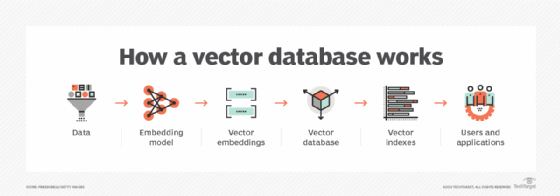
Vector embeddings are numerical representations of data that make both structured and unstructured data easy to discover through various search methods, including similarity and keyword. Such searches feed relevant data into pipelines that provide agents and other AI applications the proper contextual knowledge they need to deliver accurate outputs.
Unveiled in preview on May 7, Automated Voyage AI Embeddings in MongoDB Vector Search automates creating vector embeddings via MongoDB's Voyage models, reducing the time it takes to build a search infrastructure from weeks when performed by humans to minutes.
In addition, the launch of MongoDB 8.3, made generally available on May 7, improves database performance to meet the higher demands that AI workloads place on systems than traditional data management and analytics workloads. The new version delivers higher reads and writes, higher ACID transactions without requiring any changes in code, and is capable of handling more complex operations than MongoDB 8.0, according to the vendor.
Together, the new and improved capabilities represent MongoDB's advancement toward becoming a unified data platform for AI, according to Mike Leone, an analyst at Moor Insights & Strategy.
"It's a step forward because the ingredients underneath are real," he said, noting that MongoDB's aspiration is grounded in its capabilities. "MongoDB owns a top-tier embedding model, the operational database, and now the wiring between them, and very few competitors can say all three are first-party and tightly integrated. That's makes the platform claim land for me instead of feeling like marketing."
William McKnight, president of McKnight consulting, likewise noted that MongoDB's new capabilities are valuable for users and represent progress for the vendor. However, he also pointed out that MongoDB's competitors are adding similar capabilities.
"These enhancements reduce manual plumbing and provide performance gains, allowing enterprises to deploy secure, high-speed AI agents with minimal operational complexity," McKnight said. "They could also be viewed as table stakes since all major platforms are similarly adding support for AI agents."
Data discovery for AI
Based in New York City, MongoDB is a longtime database vendor that has expanded beyond its roots to create a data platform for AI workloads over the past few years in response to surging enterprise interest in developing and deploying agents and other AI applications.
Competing vendors including database specialists, data platform vendors and hyperscalers such as Oracle and AWS have also made it a priority to add features that enable customers to build and manage AI tools.
MongoDB's new capabilities, however, keep the vendor current, and the simplicity of its platform provides some differentiation, according to McKnight.
"While specialized rivals lead in raw vector latency, MongoDB offers operational simplicity and long-term memory management by eliminating the need to sync data between disparate systems," he said. "It also has high-end capabilities for JSON-styled data. Ultimately, it's a pragmatic choice that combines enterprise-grade reliability and high-performance JSON storage with integrated AI orchestration."
Despite heightened enterprise interest in AI development and tools provided by vendors such as MongoDB and its competitors designed to simplify the complex process of building agents and other AI applications, most AI initiatives never make it into production. The reasons for the high failure rate vary, but the inability to retrieve relevant data, without which AI tools can't be trusted to deliver accurate outputs, is among them.
By automating the process of creating vector embeddings -- which follows MongoDB's January release of five Voyage AI embedding and reranking models -- MongoDB is addressing the data retrieval problems that plague many AI projects, according to Pete Johnson, the vendor's field chief technology officer.
"Without consistent, high-accuracy retrieval, you can't trust the decisions that an agent makes, and without that trust, you can't put an agent into production," he said. "That's the sentiment we hear from customers."
Despite the common sentiment that accuracy problems can be addressed by upgrading to a new large language model, inaccuracy based on irrelevant data is not an LLM problem, Johnson continued.
"Bad AI often less an LLM problem and more of a retrieval problem," he said. "The LLM can only act on the information that it's given, if that information … is lacking the right context, then the output will inevitably be wrong."
In addition to MongoDB, data management vendors unveiling new capabilities aimed at feeding agents and other AI tools with more appropriate context since the start of 2026 include Databricks, GoodData, Qlik and Tableau, among others.
Given the need to discover contextually relevant data through retrieval-augmented generation pipelines for AI, while platform performance improvements are valuable, the Automated Voyage AI Embeddings are the most significant of MongoDB's new capabilities, according to Leone.
"It's the one because the embedding pipeline is where production RAG quietly dies," he said. "Teams ship something that demos beautifully, then six months later the data has drifted, the embeddings haven't, and the agent is confidently retrieving last quarter's reality. Closing that loop in the database keeps an agent trustworthy a year after it ships, and that's where the real customer value shows up."
McKnight similarly noted the value of automating vector embedding generation.
"Automated Voyage AI Embeddings have the potential to reduce deployment time by enabling semantic search quickly," he said. "By providing real-time data updates and top-tier retrieval accuracy, this feature ensures that AI agents operate with the most current and precise context available."
Beyond automated vector embedding creation and added database performance with the launch of MongoDB 8.3, the vendor made a new integration with LangGraph.js generally available and added cross-region connectivity for AWS PrivateLink.
Collectively, the new features are designed to advance MongoDB's goal of becoming a platform for AI, according to Ben Cefalo, the vendor's chief product officer for core products.
"These updates advance automated retrieval and persistent agent memory as part of our mission to unify the agentic AI stack, strengthen the core database foundation for mission critical workloads and provide with the skills to deploy production AI," he said.
Next steps
With so many enterprises building agents and so many data and analytics providers trying to appeal to those enterprises by simplifying AI development, the vendors that best serve the needs of existing users and potentially capture new ones will be those that help customers see and fix problems quickly, according to Leone.
"The next year is going to expose a lot of agents that looked great in a demo and quietly fail in production, and the vendors who win will be the ones who help customers catch that early," he said.
Consequently, he suggested that MongoDB add agent observability capabilities so developers and engineers can address potential issues with AI tools before they cause problems in production or get scrapped before they ever make it that far.
"If I were MongoDB, I'd lean hard into agent observability and evaluation as a first-party capability, since that's the credibility layer behind every 'trust an agent at scale' claim they're already making," Leone said. "Owning that gives AI-native teams one less thing to stitch together from outside the platform."
McKnight, meanwhile, suggested that MongoDB broaden its support for complex data structures. He noted that the vendor excels at operational simplicity, but support for data structures such as tensors and matrices would enable it to better handle high-dimensionality data.
"Furthermore, incorporating built-in search enhancements such as native spellcheck and real-time recommendations would bridge the gap between its current document-store roots and the specialized capabilities of pure-play search engines," McKnight said.
Eric Avidon is a senior news writer for Informa TechTarget and a journalist with more than three decades of experience. He covers analytics and data management.