
惯性聚合 高效追踪和阅读你感兴趣的博客、新闻、科技资讯
阅读原文 在惯性聚合中打开

推荐订阅源

T
Threat Research - Cisco Blogs
OSCHINA 社区最新新闻
OSCHINA 社区最新新闻
The Register - Security
A
About on SuperTechFans
Cyber Security Advisories - MS-ISAC
L
LangChain Blog
N
Netflix TechBlog - Medium
量子位
博客园 - 三生石上(FineUI控件)
宝玉的分享
宝玉的分享
H
Help Net Security
D
Docker
D
DataBreaches.Net
T
Tailwind CSS Blog
阮一峰的网络日志
阮一峰的网络日志
B
Blog
博客园 - 聂微东
Apple Machine Learning Research
Google DeepMind News
The Cloudflare Blog
F
Full Disclosure
GbyAI
GbyAI
F
Fortinet All Blogs
Last Week in AI
Last Week in AI
Y
Y Combinator Blog
人人都是产品经理
人人都是产品经理
Recent Announcements
博客园 - Franky
MongoDB | Blog
MongoDB | Blog
有赞技术团队
有赞技术团队
博客园 - 叶小钗
小众软件
小众软件
V
Visual Studio Blog
月光博客
月光博客
Stack Overflow Blog
Stack Overflow Blog
The GitHub Blog
The GitHub Blog
Recorded Future
Recorded Future
J
Java Code Geeks
雷峰网
雷峰网
P
Privacy & Cybersecurity Law Blog
C
Cisco Blogs
C
Cyber Attacks, Cyber Crime and Cyber Security
AWS News Blog
AWS News Blog
Webroot Blog
Webroot Blog
美团技术团队
N
News | PayPal Newsroom
G
Google Developers Blog
Security Archives - TechRepublic
博客园_首页
V
Vulnerabilities – Threatpost

60 Minutes - CBSNews.com

"Payam Method" hits the right note with piano students, making music education fun and accessible for kids Piano teacher's students sweep national competitions after learning the "Payam Method" Scientists focus on genetically engineering mice to cut Lyme disease transmission Sally Field says she believes "in the resilience of our Constitution" | 60 Minutes AI boom propping up economy as some guardrails are coming off, journalist Andrew Ross Sorkin warns Christopher Nolan imagines every movie is the last he'll ever make Christopher Nolan worked to make "most extreme version of a story possible" with "The Odyssey" Robotaxis are on the road to London. Cabbies, who pass a grueling test, aren't about to hand over their keys. Suspected insider accounts net $2.4 million on Polymarket Iran war bets with 98% win rate, firm finds Christopher Nolan: The 60 Minutes Interview London cabbies not ready to hand over their keys to AI-powered, autonomous taxis High win rate of bets on military operations a likely sign of insider trading Meet Gout Gout, the Australian sprinting phenom drawing comparisons to Usain Bolt Louisiana's governor on the Supreme Court decision and his suspending of House primary elections Extended interview: Israeli Prime Minister Benjamin Netanyahu Gout Gout, the fastest teen ever in the 200m, got his start when a coach saw him running around with friends Netanyahu wants Israel "to draw down to zero the American financial support" Read the full transcript of Major Garrett's interview with Israeli Prime Minister Benjamin Netanyahu here Israeli Prime Minister Benjamin Netanyahu: The 2026 60 Minutes Interview Louisiana rushes to redraw congressional maps after Gov. Landry suspends primaries Gout Gout: The 60 Minutes Interview Netanyahu wants to phase out U.S. military aid | 60 Minutes Iran war is "not over" until highly enriched uranium is removed, Israel Netanyahu says there's still "work to be done" before Iran war ends | 60 Minutes Historian Jill Lepore on constitutional amendments | 60 Minutes Inside Grasse, where flowers for Chanel No. 5 have been grown for more than a century Grasse, birthplace to Chanel No. 5, is experiencing a perfume revival Birding takes flight after peace deal between Colombia and guerrilla group | 60 Minutes Discover Grasse, the flower-filled French town behind the world's most famous perfume When the volunteer helping after a hurricane is a white nationalist | 60 Minutes Colombia has nearly 2,000 types of birds. Discover some of the species birders flock there to see. Once a hostage of Colombian rebels, he decided to teach his former captors birding Birding paradise flourishes in Colombian region that was once a war zone Some white nationalists swoop in after natural disasters, trying to soften their image while offering help Read the full transcript of Norah O'Donnell's interview with President Trump here Extended interview: President Trump on White House Correspondents' Dinner Fowl play: The criminals stealing elite racing pigeons The Pigeon Mafia: International criminal networks are stealing high-priced pigeons Former Sen. Ben Sasse, living with terminal cancer, sees an opportunity in living on a deadline Former Sen. Ben Sasse, dying of cancer, reflects on family, faith and the future of America Trump "wasn't worried" during White House Correspondents' Dinner shooting Retired Adm. William McRaven, who organized the bin Laden operation, reflects on honor The Pigeon Mafia: How high-priced pigeons became an organized crime target | 60 Minutes Ben Sasse: The 60 Minutes Interview President Donald Trump: The 2026 60 Minutes Interview Trump says he "wasn't making it that easy" for Secret Service during shooting "60 Minutes" to interview President Trump after White House Correspondents' Dinner shooting Ben Sasse was given a few months to live. He credits "providence, prayer and a miracle drug" for giving him more time. José Andrés on how food fits into America's story | 60 Minutes Rachel Goldberg-Polin on grief after Hamas abducted, killed her son | 60 Minutes Animals become Stewart Copeland's bandmates in album preserving the sounds of nature Stewart Copeland album "Wild Concerto" fuses music with sounds of hyenas, monkeys, owls Rock legend, naturalist team up to turn field recordings of animals into music What it would take for the U.S. to secure Iran's highly enriched uranium | 60 Minutes What it could take for the U.S. to remove highly enriched uranium from Iran Rachel Goldberg-Polin, grieving mother who fought for Israeli hostages' return, says she feels like she failed Rachel Goldberg-Polin, whose son Hersh was abducted October 7 and murdered by Hamas: Grief is a "badge of love" Iran's HEU | Sunday on 60 Minutes Wild Concerto | Sunday on 60 Minutes South Africa's great white sharks mysteriously vanished. Scientists can't agree who, or what, is the culprit. Great white sharks started disappearing from a former hotspot years ago, but scientists can The trucking companies evading federal safety enforcement and plaguing U.S. highways Pope Leo and President Trump are at odds over immigration in the U.S. and the Iran war Google CEO Sundar Pichai says "America must take the lead" on AI | 60 Minutes This was a great white shark hotspot. Then they mysteriously vanished | 60 Minutes Trucking fleets shed old identities in scheme to evade federal enforcement | 60 Minutes Pope Leo statements on Iran war and mass deportations inspire American cardinals to speak out Influential U.S. cardinals caution against Iran war, Trump immigration policies Mardi Gras Indians, or Black Masking Indians, spend months, thousands of dollars preparing hand-sewn suits Transportation Secretary Sean Duffy's statement for 60 Minutes' "Ghost Train" report High-speed rail is commonplace in many other countries. Will it track in the U.S.? Other countries have 200 mph passenger trains. Why has high-speed rail not tracked here? Mardi Gras Indians, or Black Masking Indians, carry on tradition in stunning, painstakingly crafted suits RAM pop-up clinics provide free medical, dental, and vision care to uninsured or underinsured Americans After getting help from health care charity RAM, Tennessee man says he "could be a normal human again" Why high-speed rail hasn't tracked in the U.S. | 60 Minutes One of America's last true secret societies: The Mardi Gras Indians | 60 Minutes Evangelist Franklin Graham on the value he believes shaped the U.S. | 60 Minutes Doctors volunteer to help Americans cut off from health care by the cost | 60 Minutes 12/1/2024: ​​Notre Dame; Smith Island; Kate Winslet; Welcome to the Wedding U.S. military must adapt to drones on battlefield or risk losing supremacy, Marine veteran warns D.C. air traffic controller speaks about stressed conditions before midair crash: "It worked until it didn't" Drone arms race transforms war in Ukraine, with U.S. now learning lessons | 60 Minutes Vietnam's Son Doong cave is big enough for a skyscraper to fit inside | 60 Minutes Hall of Fame basketball coach Mike Krzyzewski with a game plan for the country's future 60 Minutes obtains documents showing close calls one day before D.C. midair collision What swimmer Katie Ledecky learned about America in her time with Team USA | 60 Minutes Jamie Lee Curtis doesn't "think it's possible to have a perfect union" | 60 Minutes Bill Ford on the secret to American innovation | 60 Minutes Amanda Gorman on what it means to be an American | 60 Minutes Mike Eruzione reflects on "Miracle on Ice" Olympic hockey game | 60 Minutes 3 of the Holocaust's youngest survivors share a special bond: Their pregnant mothers all deceived the Nazis Miracle babies of Mauthausen find each other decades after the Holocaust | 60 Minutes Ken Burns on what he thinks would surprise the founders of America | 60 Minutes Inside NASA's journey to the far side of the moon with Artemis II | 60 Minutes The Smithsonian secretary's favorite representation of America | 60 Minutes What struck astronaut Suni Williams about the view of America from orbit | 60 Minutes Getting ready for the 250th anniversary of the Declaration of Independence | 60 Minutes Character AI pushes dangerous content to kids, parents and researchers say | 60 Minutes UConn's Dan Hurley on the intensity he brings to coaching, his superstitions, and living up to the family name
Robotaxis coming to London pose a threat to traditional cabbies who memorize 25,000 streets to earn licenses
Anderson Cooper, Aliza Chasan · 2026-05-18 · via 60 Minutes - CBSNews.com

By ,

Aliza Chasan

Digital Content Producer

Aliza Chasan is a Digital Content Producer for "60 Minutes" and CBSNews.com. She has previously written for outlets including PIX11 News, The New York Daily News, Inside Edition and DNAinfo. Aliza covers trending news, often focusing on crime and politics.

Read Full Bio

Katie Brennan, Matthew Riley

/ CBS News

Add CBS News on Google

London's black cab drivers, already besieged by rideshare companies, may soon face another threat: AI-powered, autonomous taxis. 

Yet many drivers feel they can offer something that AI can't  – deep knowledge of the city's ancient streets and medieval alleyways. To get a cab license, drivers must pass the Knowledge, a 161-year-old test that requires memorizing  25,000 streets and thousands of landmarks and businesses. The exam process also tests an aspiring cabbie's ability to determine the shortest route between two random points, and articulate it on the fly. 

Tom Scullion, who's been driving one of London's black cabs for more than 30 years, says this knowledge is what makes Google Maps inferior to a black cab driver.

"It's like comparing a hot dog vendor to Gordon Ramsay," Scullion said, referring to the British celebrity chef.

This knowledge will soon be tested like never before. Autonomous vehicles, powered by AI, aren't picking up passengers yet, but several tech companies are already trying out their cars in London.

What it takes to become a black cab driver in London 

Trust and confidence in cabbies dates back to 1865 when the Knowledge exam was first introduced to London's horse drawn cabmen. Today, aspiring cabbies head to the Transport for London office, which oversees transportation in the city, for a series of oral exams known as "appearances."

Candidates are quizzed on how to get between two random points as examiners measure the distance, ensuring they're calling the shortest route. Some cabbie hopefuls try dozens of times over years to pass the test. Anshu Moorjani successfully completed the Knowledge this past week after trying to pass for the last five years.
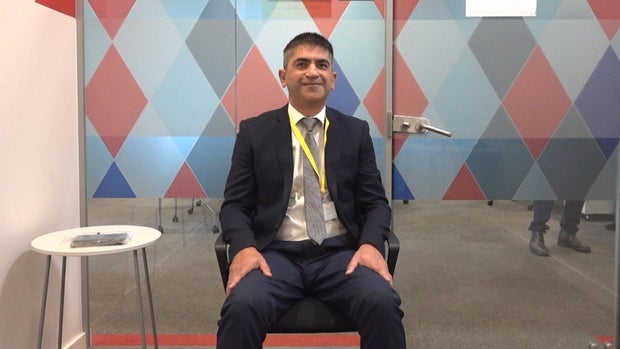
Anshu Moorjani
Anshu Moorjani 60 Minutes

The memorization required to be a black cab driver has proven so challenging that it can change the structure of cabbies' brains. A study from University College London found cab drivers' posterior hippocampi, the part of the brain linked to memory, got bigger throughout their careers.

The effort is worth it to some drivers, who feel like they're an iconic and essential part of London.

"It's hundreds of years of all of history," Moorjani said.

What AI brings to the roads

Though the cabs are still beloved, the black cab industry has declined in recent years, with the number of drivers falling from 25,000 to 16,000 over the last decade, according to Transport for London statistics. Driver income has also dropped as Uber and other ride-hailing companies cut into their business. 

Now, robotaxis are coming into the picture. British startup Wayve, backed by Nvidia and Microsoft, hopes to be operational in London later this year, as does Waymo, which is owned by Google's parent company Alphabet.

Waymo has already made significant inroads in the U.S. The company began offering rides to customers in a Phoenix suburb in 2020. Now millions of riders across 11 major U.S. cities are driven by Waymo's robotaxis each month.
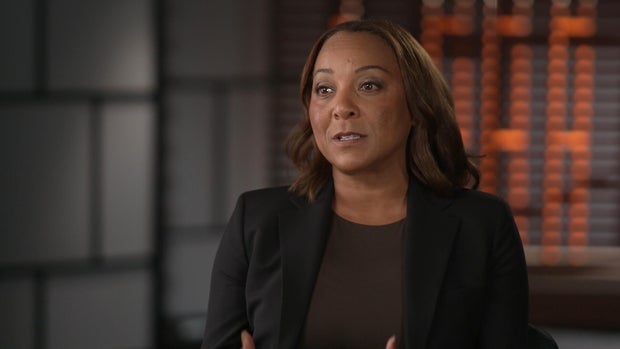
Tekedra Mawakana
Tekedra Mawakana 60 Minutes

Co-CEO Tekedra Mawakana said Waymo's driverless cars are five times safer than human drivers in the areas they operate. The Waymo "driver" is trained on every single ride the Waymo fleet has given, which makes it "the most experienced driver in the world," according to Mawakana. Collectively, Waymo's fleet travels more than 2 million miles a week, while the average person drives about 700,000 miles in a lifetime. 

"So this is almost three lifetimes per week that our fleet is driving," Mawakana said.

Waymo's AI has also driven billions of miles in simulation to train for the countless rare scenarios it might face on roads, like snow on the Golden Gate Bridge or even an elephant stopping traffic.

Waymo's robotaxis are outfitted with 29 cameras, six radars, five microphones, and five lidar sensors, which continuously pulse to measure distances, objects, and people as far as three football fields away. These sensors also enable the robotaxi to see around other cars.

"And that's partly the design of the placement of the sensors. Makes it superhuman compared to what a human would be able to do," " Waymo product manager Chris Ludwick said. 

But despite the hours of training and its suite of sensors, Waymo robotaxis still have problems, some of which have been caught on camera.  In Los Angeles, a Waymo drove through an active police scene. There's also been incidents of the robotaxis getting in the way of emergency responders and illegally passing stopped school buses, leading to a software recall last year and a federal investigation.

Robotaxis on the road to London

In London, Waymo's robotaxis have been driving the streets to build a detailed 3D map to train its AI – a company standard before operating in a new area.

Unlike Waymo, Wayve's AI doesn't map out a city before driving in it. 

"We train it on millions of hours of experience driving all around the world," Wayve CEO Alex Kendall said. "So this means when it goes somewhere it's never seen before or that's never been mapped, it can understand what's in front of it and make decisions in real time."
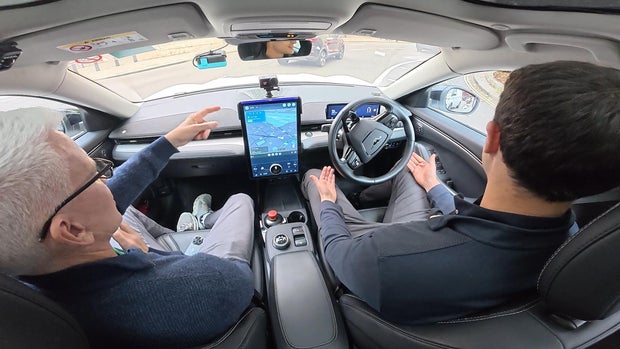
Anderson Cooper and Alex Kendall in a Wayve
Anderson Cooper and Alex Kendall in a Wayve 60 Minutes

Wayve's robotaxis are still in testing and not yet available to the public, but Kendall believes his AI will be able to more easily adapt to new environments.

Since 2019, Wayve has been testing its fleet in central London.

"There's just such a long list of things that can happen on the road," Kendall said. "I think that's the main advantage of an AI driver here, is that it can have the intelligence to deal with things that you may never expect on the roads."

It's too early to tell if robotaxis will overtake the black cab industry. Moorjani says he's worried, after spending years trying to pass the Knowledge.

"Every profession is being affected by AI. I don't know what it's going to do in the near future, but it's always there on your mind that yes, you're getting into a career not knowing what the future is," he said.

However, Steven Fairbrass, who's been studying for the Knowledge for eight years, didn't seem too concerned about the threat of self-driving cars.

"To me, the human brain will always be the strongest tool," Fairbrass said. "Can you imagine you're trying to hail down a vehicle with no driver in it? You're standing there in the rain, trying to get home? And that vehicle just drives straight past you because it hasn't got a sensor or a human brain or an eye to turn. So to me, human beings, drivers, always gonna be needed. Always."

In: