






The fate of the war between Iran and America hangs on just three letters: HEU — highly enriched uranium — an essential ingredient for nuclear weapons.
It's believed Iran currently has enough HEU to eventually make 10 atomic bombs. But international inspectors have not been allowed to verify Iran's stockpile since last June, when the U.S. and Israel struck three nuclear sites.
Over the last seven weeks of war, President Trump has insisted the U.S. will take whatever is left, whether with boots on the ground fighting their way in or striking a deal with the Iranian regime to allow scientists to safely secure the stockpile and bring it back to the United States.
What you may not know — that option has been done before — in a high-stakes mission that could become the blueprint for how to get HEU out of Iran.
Andrew Weber: It was a crazy time after the Soviet Union fell apart and we knew that Iran was pursuing nuclear material throughout the region.
In 1994, after the fall of the Soviet Union, Andrew Weber was a young foreign service officer in the newly-minted country of Kazakhstan, which held the fourth largest nuclear arsenal in the world. Left behind by the Soviets, part of it was sitting inside a factory.
Andrew Weber: We knew about the factory. We knew it had a purpose in the nuclear power sector. What we didn't know was that they had a cache of highly enriched uranium that was weapons-usable.
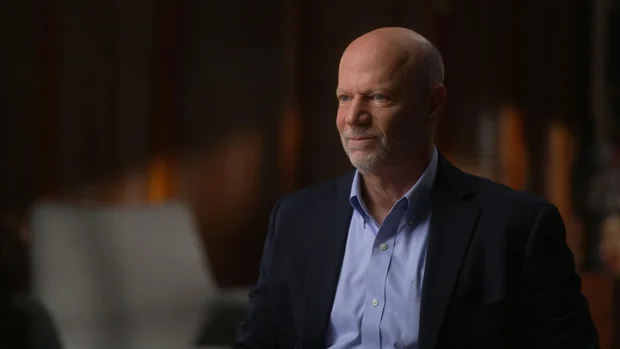
It took several months, but using good old-fashioned diplomacy and a moose hunting trip, Weber built trust with the factory director. And one day it paid off in the form of a note.
Andrew Weber: And I remember it was one of the first snows that day. And so, we're walking in the courtyard, and he said, "Andy, I have a message from Vitaly." And he passed me this little note.
Cecilia Vega: Let's see. This tiny little piece of paper he hands you, and it says, "U-235 90%, 600 kilograms." And that means what to you?
Andrew Weber: Dozens of nuclear weapons.
Uranium enriched to 90% is ready to be made into a bomb. The revelation made it all the way up to President Bill Clinton. Soon both countries came to an agreement: the U.S. would take the stockpile to prevent countries like Iran and North Korea from getting a hold of it.
Andrew Weber: They could have just bought the 90% enriched uranium metal, and they would have been able to fabricate bombs very quickly out of it.
Weber became the point person for the operation codenamed Project Sapphire. He took these pictures with his own camera, showing canisters holding more than 1,300 pounds of the bomb-grade uranium. The only thing protecting them was a militia woman with a sidearm and…
Andrew Weber: It was protected by a good, a good padlock, sort of the kind you see in an antique shop.
Project Sapphire was the first of its kind. Three massive C-5 Galaxy cargo planes were dispatched to Kazakhstan, carrying 31 specialists from the Departments of Defense and Energy. The teams brought 450 drums built to transport nuclear cargo, strong enough to survive a plane crash. And the whole thing was covert, under the cover of a humanitarian mission.
Andrew Weber: It was all done in utmost secrecy. A team of over 30 people working for about five or six weeks to finish this packaging operation. It didn't leak, and nobody knew they were even there.
Every gram of HEU was secured and loaded onto rickety Soviet-era trucks.
Andrew Weber: And that night there was black ice on the roads. And the trucks were sliding. That's when the material was most vulnerable. We didn't want the Iranians or organized criminal groups to know that the material was being transported. It was very important that nobody knew that we were gonna be moving the material that snowy, cold night.
The planes were loaded up and the HEU was flown back to the United States, taken to a Department of Energy complex in Oak Ridge, Tennessee, for safekeeping. Weber went on to become an assistant secretary of defense responsible for nuclear deterrence.
Cecilia Vega: From touchdown to takeoff, Project Sapphire took six weeks to remove more than 1,300 pounds of bomb-grade uranium from Kazakhstan. Would the same mission be possible today in Iran?
Andrew Weber: In Iran, we couldn't send a team in to do this unilaterally without great risk. You would need to set up in the middle of the country a secure perimeter. It would probably take thousands of U.S. troops to secure the facility while our experts excavated the HEU that's located inside deep tunnels at a place called Isfahan.
This is the Isfahan nuclear facility deep in Iran's desert. Under this mountain, international inspectors say most of Iran's HEU is stored in scuba tank sized containers. It's believed those containers are in tunnels so far below ground, America's bunker busting bombs may not be able to reach them.
Satellite images show in the weeks leading up to this current war, the Iranians blocked the tunnel entrances with dirt. Two weeks ago, images showed roadblocks. Nuclear analysts say it suggests Tehran is concerned about a U.S. or Israeli raid on the facility.
Matthew Bunn: It's not like Iran hasn't thought about the possibility that we might do this. But U.S. Special Forces have been training for deep underground facilities of one kind or another for a long, long, long time.
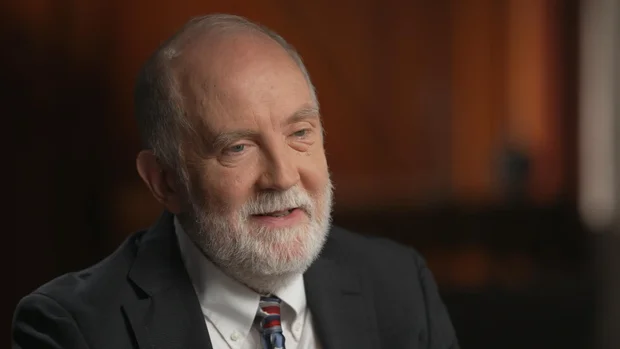
Dr. Matthew Bunn is a former White House nuclear adviser, who has spent decades trying to prevent nuclear material from falling into the wrong hands. From his perch at Harvard's Belfer Center, he monitors Iran's nuclear activity as best he can.
Matthew Bunn: So what you can see from a satellite is what's goin' on the surface, right? But what you can't see is anything going on inside buildings, anything going on in other underground facilities.
Cecilia Vega: President Trump has said repeatedly that Iran's nuclear program was completely obliterated after the strikes last June.
Matthew Bunn: Yeah, that statement is just not true. You can't say that a program that still has enough nuclear material for a bunch of nuclear bombs is obliterated. Unfortunately. There's no doubt that the combination of the strikes in June of last year, and the ongoing war, have seriously set back Iran's capabilities. But the remaining capabilities are substantial. You can't bomb away their knowledge.
U.N. inspectors believe Iran has close to 1,000 pounds of uranium enriched to 60%, nearly ready to be used in a nuclear weapon.
Cecilia Vega: 970 pounds of 60% highly enriched uranium. What can you do with that?
Matthew Bunn: So that is enough material for if you enrich it just a little bit more, for ten to eleven nuclear bombs.
Nuclear analysts have become increasingly concerned about another site in Iran, known as Pickaxe Mountain. Satellite images from February show an entrance to what's believed to be a massive nuclear facility deep under solid rock.
Cecilia Vega: Can you bomb your way to Iran's stockpile and get it and remove it?
Scott Roecker: I don't think that there is a lasting, durable solution to Iran's nuclear program through military means.
Scott Roecker was a top official in the NNSA, a $24 billion agency buried inside the Department of Energy. He left in 2021.
Scott Roecker: If there was a deal between the United States and Iran for the United States to take possession of that material it would be the National Nuclear Security Administration that would lead that effort.
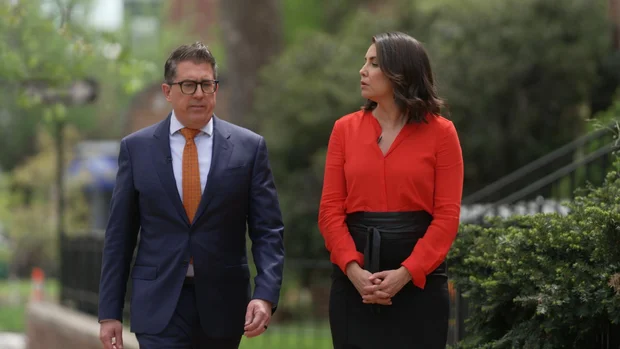
Roecker used lessons learned from Project Sapphire to remove nuclear material from countries around the world and ship it to the U.S. for safekeeping. So far the NNSA has removed more than 16,000 pounds of HEU.
Scott Roecker: There was agreement in place with the countries. And so that's a really key fact here. You wanna have a willing partner who's working with you hand in hand.
Cecilia Vega: Cooperation.
Scott Roecker: Exactly.
Cecilia Vega: Can it be done without that?
Scott Roecker: I've never seen it done without that. Never in my experience have I seen that.
Cecilia Vega: If your phone rang tomorrow and your former colleagues said, "Hey, come back, we're going into Isfahan to package this up and get it out of the country," would you go?
Scott Roecker: I would go in a heartbeat.
This past week, President Trump said Iran agreed to hand over its stockpile, what he calls nuclear dust, as part of a deal to end the war. Hours later, the Iranians insisted their HEU was not going anywhere.
President Trump: Iran will not have a nuclear weapon, and we're going to get the dust back. We'll get it back either - we'll get it back from them, or we'll take it.
Cecilia Vega: Would an operation like this be worth risking American lives?
Vice Admiral Robert Harward: In my opinion? Yes.
Retired Vice Admiral Robert Harward is a former NAVY Seal and deputy director of U.S. Central Command. He led elite special operations in the Middle East and says an operation in Iran could take many weeks and require a large footprint involving all the branches of the military.
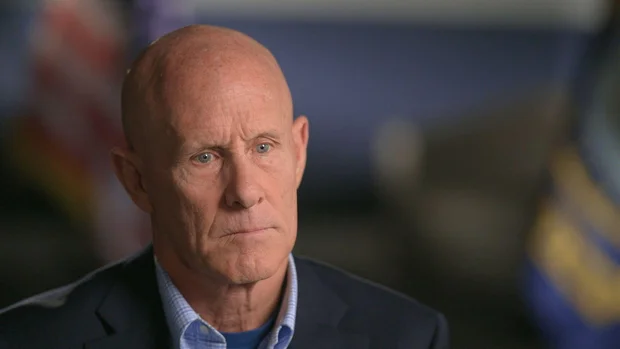
Vice Admiral Robert Harward: It's high risk. You have to occupy territory. You have to confront. You have to force your way in so all those risks are inherent in that operation but we can do it.
Cecilia Vega: It's been said troops would have to secure a full perimeter around any facility they'd enter. They might have to bring in their own bulldozers to clear rubble, maybe even build their own landing strip in order to pull this off as a successful operation.
Vice Admiral Robert Harward: That's what our military does. When we went into Afghanistan, we built a runway in the desert and we brought in C-17's.
What does concern Vice Admiral Harward is the weapons still available to Iran on today's battlefield.
Vice Admiral Robert Harward: The most prevalent threat is their abilities then to respond with drones, kinetic drones, maybe whatever's left in their inventory of missiles. That's your real threat to your time on the ground and the force.
Cecilia Vega: Would you expect casualties in an operation like this?
Vice Admiral Robert Harward: Sure. You have to plan for that.
The fragile ceasefire between the U.S. and Iran is set to expire on Wednesday. Dr. Matthew Bunn says any nuclear agreement should not be based on trust, but verification.
Matthew Bunn: Iran has been lying about its nuclear weapons effort for over 20 years now. They have always claimed our program was 100% peaceful, we were never pursuing nuclear weapons. That's a lie. And then once the international inspectors got in and started finding some things out, the Iranians kept lying to them.
Cecilia Vega: What specifically does the United States need Iran to commit to, to deal with its nuclear capabilities once and for all?
Matthew Bunn: I think the most important thing is no highly enriched uranium and some in-depth monitoring, international monitoring. That's what's most essential, and it's gonna be very difficult now, given all of the distrust following this war, following Trump pulling out of talks repeatedly to launch more strikes.
Cecilia Vega: You don't sound very optimistic.
Matthew Bunn: I'm not very optimistic. I think we're gonna be dealing with Iran's nuclear program, with very few realistic tools available to us, for a long time to come.
Produced by Michael Karzis Graham, Messick. Associate producers, Katie Kerbstat and Alex Ortiz. Broadcast associates, Grace Conley and Erin DuCharme. News associate, Julia C. Doyle. Edited by Craig Crawford, Matthew Lev, Mike Levine. Assistant editor, Aisha Crespo
In:
此内容由惯性聚合(RSS阅读器)自动聚合整理,仅供阅读参考。 原文来自 — 版权归原作者所有。