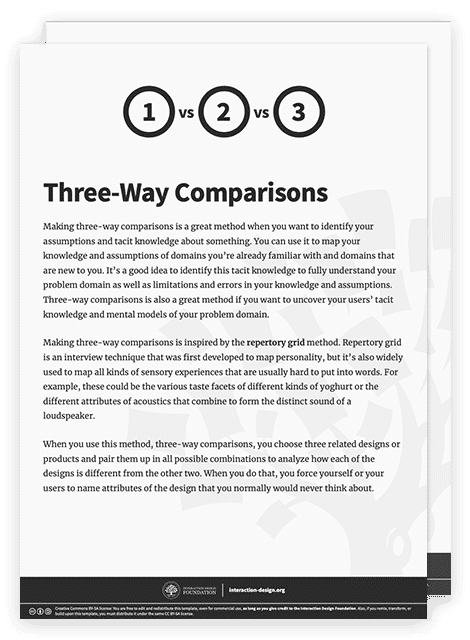
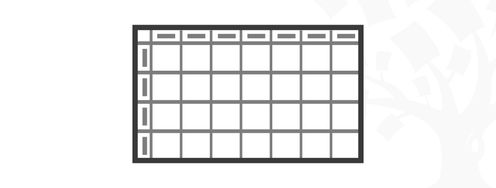
Externalization of uncovered tacit knowledge is important, but how do you make that valuable tacit knowledge explicit in a way so you can use it more effectively? Often, this is easier when we’re forced to compare things as we may be able to articulate the difference between things even if we struggle to find the words to describe the critical features of any or either on its own.
In this video, you’ll learn how to use three-way comparisons as a powerful ideation method to force yourself to think of new ways of looking at things, instead of falling back on pre-existing categories and concepts.
Download our Three-way Comparisons Template and Get Started Right Now
Download our step-by-step guide and learn how to make three-way comparisons alone or in collaboration with your users as part of your ideation process.
Advance Your Career With This Free Template
for “Three-Way Comparisons”
Big news: We redesigned the platform and we're hiring new team members!
Today is a HUGE day for us. On this day, we’ve launched a head-to-toe redesign of our entire platform—our biggest release ever! Today marks the culmination of more than a year of intensive, painstaking work, and we’re so proud and excited to finally be able to share this with you!Why did we do all t
Human-Centered Design: How to Focus on People When You Solve Complex Global Challenges
When we design products and services, we use human-centered design insights to help us focus on the people. But how do we focus on the people in the context of complex global challenges? What should we be aware of? What are the pitfalls? And when should we reach out to help people? In this video, Do
UX Designer Job Descriptions: The Comprehensive Guide
A UX designer creates and optimizes the overall human experience when interacting with digital products, systems, or services. Your role as a UX designer would revolve around working on every aspect of digital product development, which includes design, usability, functioning, and sometimes branding
Design plays a role that’s utterly crucial in our daily lives—it bridges functionality with aesthetics to meet user needs. In product development, it’s design that determines how user-friendly and appealing a product is. The field of human-computer interaction (HCI) is foundational to UX design. To
How to overcome Fixation and Bias in Creative Problem Solving
[[video:112]]
Sometimes, you get stuck when you’ve been working and working on a problem. Perhaps it’s a crossword or a difficult design issue. You go over the same things again and again, but you don’t make any progress. And the more you try to get unstuck, the harder it becomes to think outside o
Can You Design for Someone You Don’t Understand? The Role of Personas in Cross-Cultural UX Design
Can you design for someone you don’t understand? Too often, biases and assumptions creep into the design process. Cultural context shapes the way people navigate, interpret, and engage with digital products, services and experiences. What feels intuitive in one culture might be confusing, or even al
[[video:91]]
Do you prefer to think abstractly or concretely? It can help you see your problem area from a different perspective if you move between the two types of thinking when you work with ideation and design. In UX design, we often start with quite vague sketches of an abstract idea, but then
How to Use Busywork to Enable Your Creativity in Your Daily Planning
[[video:107]]
Busywork is work that keeps us busy, but the work has little value in itself—for example, washing the dishes. These are tasks that you know you can easily do. Busywork is used in many different senses, but always to represent something very uncreative. Sometimes it’s even used for
When you create a journey map, it can be a challenge to combine research data and the ideas of people in your organization into a map that tells an accurate, simple story. But success in this is critical. An inaccurate map could lead to bad decisions, and one that is too complex may prevent people f
Agile methods boost UX design teams' adaptability. The shift from traditional to agile methods occurred because the former fell short. Agile nurtures a dynamic environment where innovation thrives—it promotes early and frequent testing to minimize risks through short, iterative cycles while teams co