惯性聚合 高效追踪和阅读你感兴趣的博客、新闻、科技资讯
阅读原文 在惯性聚合中打开

推荐订阅源

AI
AI
O
OpenAI News
Engineering at Meta
Engineering at Meta
F
Fortinet All Blogs
Jina AI
Jina AI
D
Docker
N
News and Events Feed by Topic
TaoSecurity Blog
TaoSecurity Blog
雷峰网
雷峰网
V
V2EX
小众软件
小众软件
N
News | PayPal Newsroom
GbyAI
GbyAI
Recorded Future
Recorded Future
SecWiki News
SecWiki News
WordPress大学
WordPress大学
钛媒体:引领未来商业与生活新知
钛媒体:引领未来商业与生活新知
酷 壳 – CoolShell
酷 壳 – CoolShell
Security Latest
Security Latest
Google DeepMind News
cs.AI updates on arXiv.org
Hacker News: Ask HN
Hacker News: Ask HN
Project Zero
Project Zero
Cyberwarzone
Cyberwarzone
MyScale Blog
MyScale Blog
T
The Blog of Author Tim Ferriss
U
Unit 42
The Last Watchdog
The Last Watchdog
V
Visual Studio Blog
C
Cisco Blogs
T
Tor Project blog
Google Online Security Blog
I
InfoQ
Attack and Defense Labs
Y
Y Combinator Blog
博客园 - 聂微东
L
LangChain Blog
Blog — PlanetScale
Blog — PlanetScale
Apple Machine Learning Research
S
Schneier on Security
S
Securelist
博客园_首页
W
WeLiveSecurity
P
Privacy International News Feed
S
SegmentFault 最新的问题
博客园 - 【当耐特】
L
LINUX DO - 热门话题
Latest news
Latest news
大猫的无限游戏
大猫的无限游戏
M
MIT News - Artificial intelligence

UX Daily - User Experience Daily

Why You'll Frustrate Players on Purpose (And When You Shouldn't) What the Numbers Missed: 4 Times Personas Could Have Saved Millions Can You Design for Someone You Don’t Understand? The Role of Personas in Cross-Cultural UX Design What If Your Users Lie? How Personas Help You Get to the Truth Why Personas Don’t Represent Every User How Personas Shape Stronger Design Decisions How to Get Started with Affinity Diagrams Grounded Theory: Base Findings on Research, Not Preconceptions Stop the Generic Portfolio Trap! Design a Stand-Out Portfolio for Your UX/UI Niche How to Improve Your UX with HCI Insights 6 Insights to Achieve Agile UX Excellence Top Tips to Create Effective Journey Maps Your Guide to Hamburger Menus Tree Testing: A Complete Guide Enter the World of Social VR UX Designer Job Descriptions: The Comprehensive Guide What Does a Creative Designer Do? Why Do We Not Act on Climate Change? Why Should Designers Become Leaders? How to Apply Incremental Modular Design to Global Challenges What is the UX Design Process? 5 Steps to Success Use Circular Design To Reverse Harm Recycling is Not Enough. Let's Design for Reuse Anything Artificial We Can Design Better How Has Technology Evolved to Affect Your Daily Life? Case Study: How does Gmail use Grouping? How to Use Cultural Probes to Understand Your Users What is Design? How to Get Meaningful Design Feedback from Your Clients How to Create a Perspective Grid Human-Centered Design: How to Focus on People When You Solve Complex Global Challenges How to Design Ethically: Expert Advice from Guthrie Weinschenk Big news: We redesigned the platform and we're hiring new team members! Plan for Incubation Time: When Is Doing Nothing the Best Thing to Do? How to Use Busywork to Enable Your Creativity in Your Daily Planning How to overcome Fixation and Bias in Creative Problem Solving Ideation Method: Multiple Classifications Ideation Method: Embrace Opposites Ideation Method: More Specific and More General Ideation Method: Three-way Comparisons
Personas: What They Are and Why They Matter
William Hudson · 2025-03-26 · via UX Daily - User Experience Daily

Why do so many products and services fail to meet users' needs? Do we not have the right tools? Or perhaps our users just aren't smart enough for our designs? All wrong! The truth is, the tools used in traditional software development don't cut it if we want to genuinely understand users and design for them. The solution lies in personas, and you'll discover why below.

What are Personas?

“Personas represent the needs and behaviors of a subset of users your product aims to delight.”

- William Hudson, User Experience Strategist and Founder of Syntagm Ltd

The optimal design does exist—just not how you might think. We’re all unique individuals with vastly different goals, behaviors, motivations, preferences—the list goes on. If you try to design for everyone, you will create a mediocre solution at best.

Instead, you must focus on a subset of people—of users—and create the optimal design for them. If you can delight these users, then you will succeed. So, how do you focus on them? With personas.

A persona distills a collection of users with similar needs and behaviors into a fictional character whom we consider a real person. It is a research-backed reminder of who you are designing for—it keeps you on track and ensures you take a user-centered approach. When you use personas in your team or organization, you align around a common understanding of your users and make informed decisions throughout the design process.
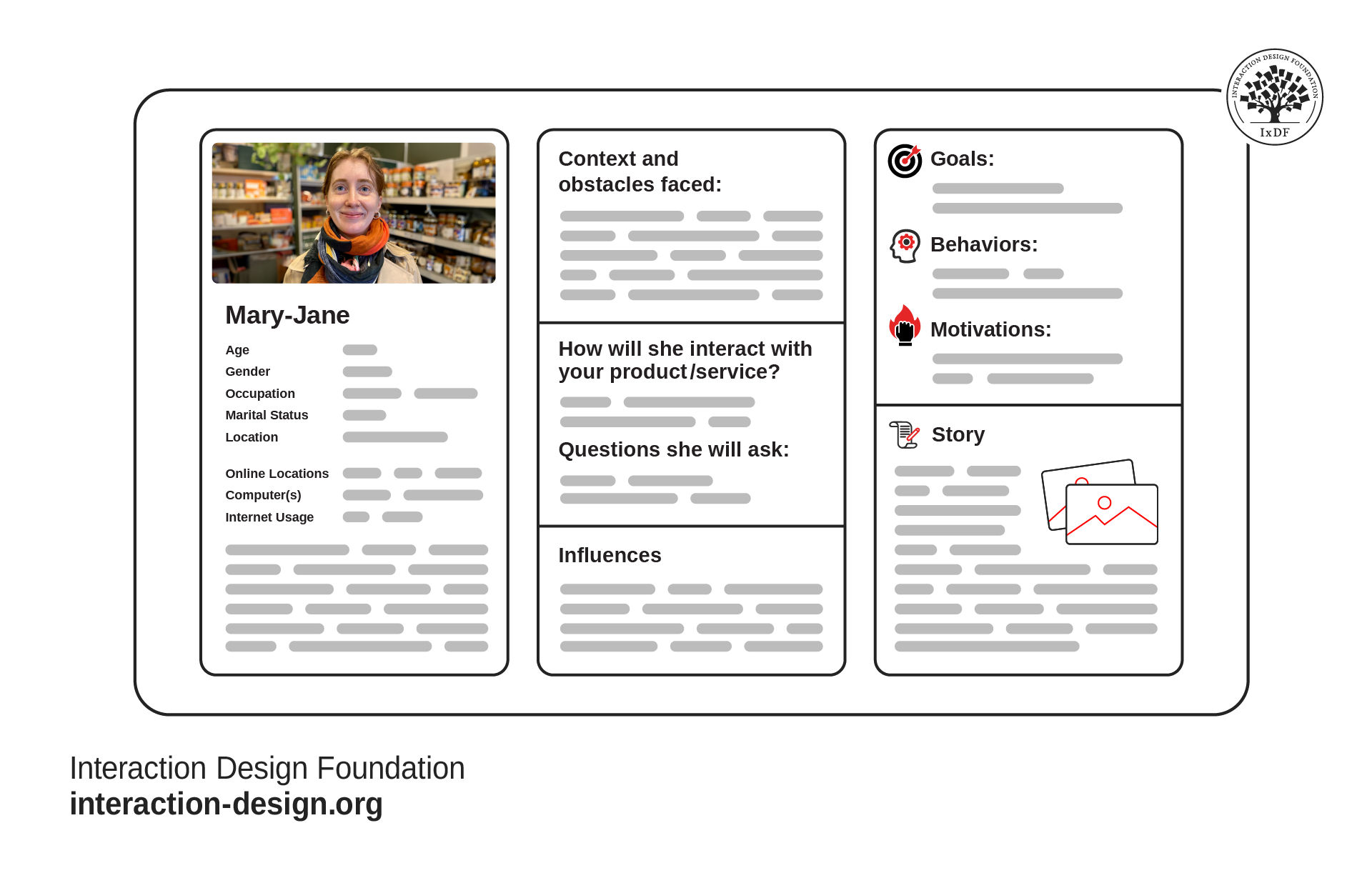
A persona template including demographics, context and obstacles faced, how the personas will interact with the product, questions they will ask, influences, goals, behaviors, motivations, and story.

You will typically represent personas on a one-page document that contains all the information you need to design for them. In addition to their behavioral profile, personas should feel like real people and include a picture, a name, and demographics.

© Interaction Design Foundation, CC BY-SA 4.0

Here’s Why Design Without Personas Falls Short

In this video, William explains why personas are essential for putting users at the center of our processes.

Designing without personas is like navigating without a map—you might get somewhere, but it’s unlikely to be where your users need you to go. Personas are more than profiles; they’re the lens through which we understand user motivations, challenges, and goals. When faced with countless interesting features, we use personas to determine which ones best align with user interests and motivations.
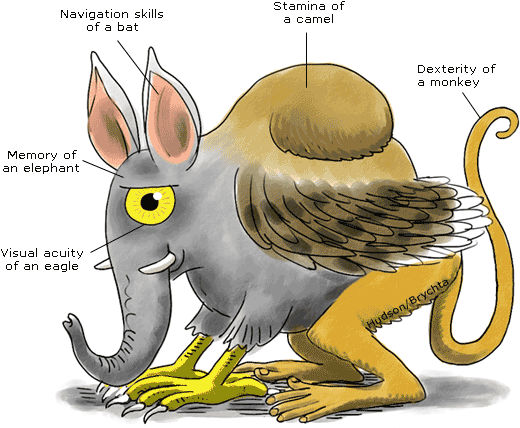
Illustration of an imaginary creature with the visual acuity of an eagle, the memory of an elephant, the navigation skills of a bat, the stamina of a camel, and the dexterity of a monkey.

Some development teams mistakenly believe that users can handle anything they throw at them. This approach results in solutions built for the “Perfect User,” pictured above. This hybrid is a super-user who simply does not exist.

© William Hudson, used with permission

Without Context, User Needs Are Just Assumptions

In this video, William explains why project teams need to understand the whole user journey to build effective solutions for users.

Without the big picture, team members approach each small part of a problem with their own understandings and assumptions. If each team member designs for users they assume, rather than truly understand, the final product or service will be disjointed and fail to meet user needs. User research and personas help prevent this issue.
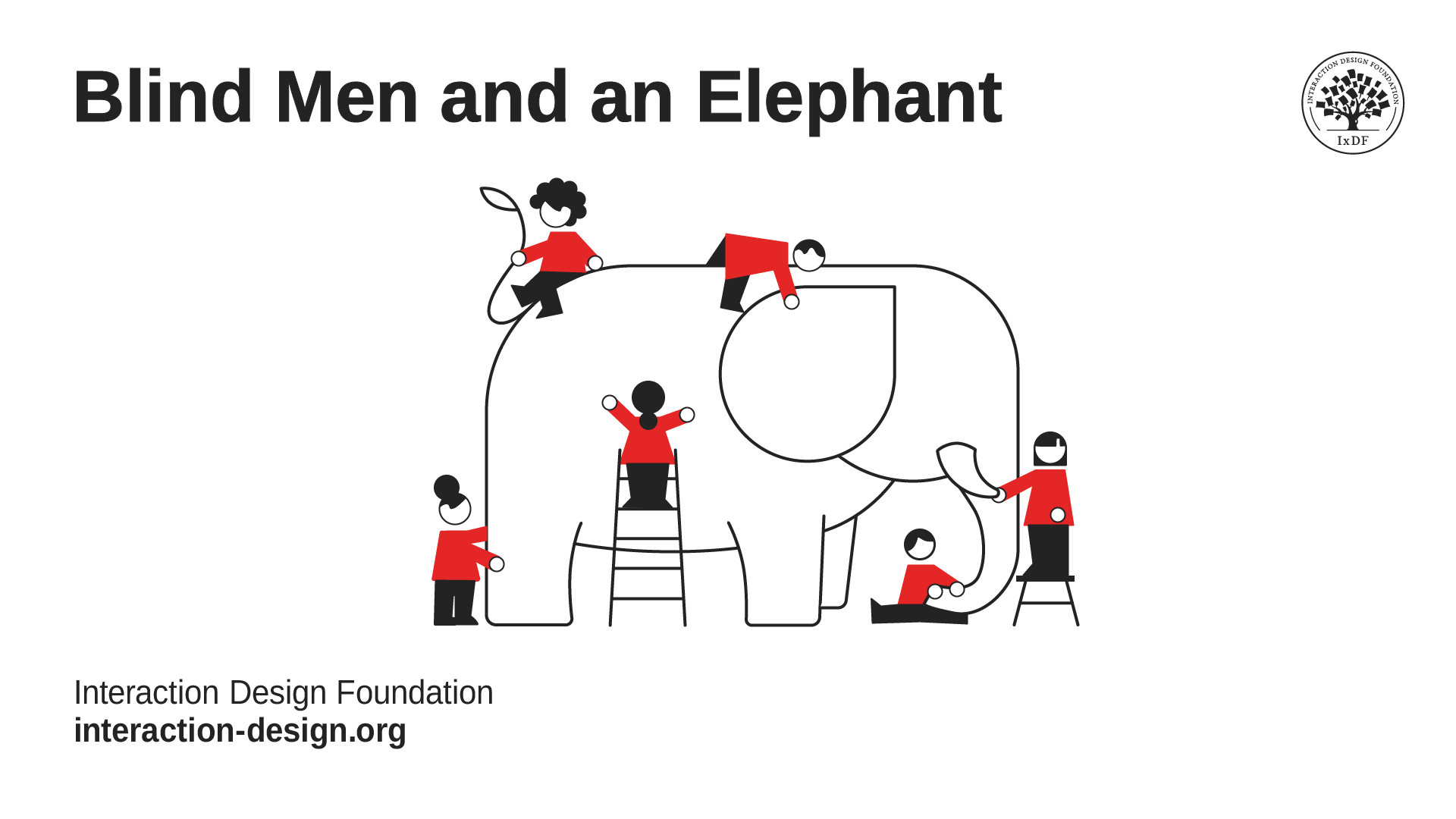
Illustration of six people investigating an elephant. One touching the tusk, one the trunk, one the ear, one the flank, one the tail, and one the lag.

The Indian parable of the Blind Men and the Elephant is a perfect illustration of what happens when a project team lacks sufficient user understanding. In the story, each man investigates an individual part of an elephant. One man believes the elephant's trunk is a snake, while another thinks the leg is a tree.

© Interaction Design Foundation, CC BY-SA 4.0

The Take Away

Personas represent a subset of your users whom you aim to delight. They are the north star that guides you towards user-centered results. When you use personas, you:

  • Get a constant reminder of who you’re designing for and their needs and behaviors.

  • Give focus to the development process, especially in situations where user-centered design is not practiced.

  • Improve the awareness of users within your team and organization.

  • Contextualize your users’ journeys to minimize misunderstandings about them.

This is just the beginning of how personas can transform your design process. If you’ve never used them before, you’ll wish you’d started sooner!

References and Where to Learn More

Read Alan Cooper’s book, The Inmates Are Running the Asylum, to discover why many solutions struggle to meet user needs.

Explore our definitive topic definition of User-Centered Design.

Hero image: © Interaction Design Foundation, CC BY-SA 4.0
What You Should Read Next

  • Read full article
    A Simple Introduction to Lean UX - Article hero image

    A Simple Introduction to Lean UX

    Lean UX is an incredibly useful technique when working on projects where the Agile development method is used. Traditional UX techniques often don’t work when development is conducted in rapid bursts – there’s not enough time to deliver UX in the same way. Fundamentally Lean UX and other forms of UX

    Social shares
    1.3k
    Published
  • Read full article
    How to Do a Thematic Analysis of User Interviews - Article hero image

    How to Do a Thematic Analysis of User Interviews

    You have been in the field talking to users and you now find yourself with a massive amount of audio, notes, video, pictures, and interesting impressions. All that information can be overwhelming, and it’s difficult to know where to start to make sense of all the data. Here, we will teach you how to

    Social shares
    1.3k
    Published
  • Read full article
    How to Conduct User Interviews - Article hero image

    How to Conduct User Interviews

    You may have noticed in life that few (if any!) people think like you do. So there’s absolutely no reason for you to think your users think like you either! You need to go out and meet your users if you want to properly understand and design for them, and user interviews are a great way to achieve t

    Social shares
    1.3k
    Published
  • Read full article
    14 UX Deliverables: What Will I Be Making as a UX Designer? - Article hero image

    14 UX Deliverables: What Will I Be Making as a UX Designer?

    What does a UX designer actually produce? Here’s a map of the most common UX deliverables, the things you'll make day to day, from early research through testing and launch. You won't make all of the deliverables from day one, and you’ll most likely not make them alone, so think of this as a guide t

    Social shares
    1.2k
    Published
  • Read full article
    Data Analysis: Techniques, Tools, and Processes - Article hero image

    Data Analysis: Techniques, Tools, and Processes

    Data analysis is one of those terms that “is what it sounds like,” although there’s more to it than may meet the eye. In any case, it’s a valuable skill for making better decisions—a skill that you can bring to bear on both your professional and personal life, from personal budgeting to analyzing cu

    Social shares
    1.2k
    Published
  • Read full article
    7 Great, Tried and Tested UX Research Techniques - Article hero image

    7 Great, Tried and Tested UX Research Techniques

    Thinking about conducting some user research? Wondering which techniques are most likely to provide useful results? Then look no further. We’ve compiled a list of 7 excellent techniques which are tried and tested and have been proven to deliver real value in UX projects. Let’s take a look at each te

    Social shares
    1.2k
    Published
  • Read full article
    UX Roles: The Ultimate Guide – Who Does What and Which One You Should Go For? - Article hero image

    UX Roles: The Ultimate Guide – Who Does What and Which One You Should Go For?

    Do you have the ambition and enthusiasm for a career in UX design but don’t know where to start? You’ll be pleased to know there are many paths you can take. Even as a relatively new field, user experience (UX) design has both general and specialist job roles. This variety means there is a role wait

    Social shares
    1.2k
    Published
  • Read full article
    User Research: What It Is and Why You Should Do It - Article hero image

    User Research: What It Is and Why You Should Do It

    User research is an essential part of UX design. Unless we understand who we are designing for and why, how can we even know what to create or where to begin? Depending on your project, requirements and constraints, you can choose different types of research methods, from surveys and tests to interv

    Social shares
    1.1k
    Published
  • Read full article
    Minimum Viable Product (MVP) and Design - Balancing Risk to Gain Reward - Article hero image

    Minimum Viable Product (MVP) and Design - Balancing Risk to Gain Reward

    The idea of the minimum viable product (MVP) has been around for some time. The term itself was coined by Frank Robinson but was made popular by two influential names in product design – Steve Blank, a serial-entrepreneur and academic, and Eric Ries, the pioneer of the Lean Startup movement.What is

    Social shares
    1.1k
    Published
  • Read full article
    How to Conduct User Observations - Article hero image

    How to Conduct User Observations

    Observing users interacting with a product can be a great way to understand the usability of a product and to some extent the overall user experience. Conducting observations is relatively easy as it doesn’t require a huge amount of training and it can be relatively fast – depending on the sample si

    Social shares
    1.1k
    Published

Top Articles

Top Topic Definitions