



惯性聚合 高效追踪和阅读你感兴趣的博客、新闻、科技资讯
阅读原文 在惯性聚合中打开

推荐订阅源

C
Cisco Blogs
爱范儿
爱范儿
有赞技术团队
有赞技术团队
博客园 - 【当耐特】
Jina AI
Jina AI
Project Zero
Project Zero
宝玉的分享
宝玉的分享
Martin Fowler
Martin Fowler
WordPress大学
WordPress大学
Simon Willison's Weblog
钛媒体:引领未来商业与生活新知
钛媒体:引领未来商业与生活新知
T
Tenable Blog
F
Fortinet All Blogs
大猫的无限游戏
大猫的无限游戏
Last Week in AI
Last Week in AI
月光博客
月光博客
雷峰网
雷峰网
G
Google Developers Blog
V
V2EX
T
Tor Project blog
罗磊的独立博客
Schneier on Security
Know Your Adversary
Know Your Adversary
W
WeLiveSecurity
freeCodeCamp Programming Tutorials: Python, JavaScript, Git & More
P
Privacy International News Feed
S
Securelist
奇客Solidot–传递最新科技情报
奇客Solidot–传递最新科技情报
P
Proofpoint News Feed
Blog — PlanetScale
Blog — PlanetScale
Threat Intelligence Blog | Flashpoint
小众软件
小众软件
Scott Helme
Scott Helme
I
Intezer
T
Threat Research - Cisco Blogs
The GitHub Blog
The GitHub Blog
N
Netflix TechBlog - Medium
C
CERT Recently Published Vulnerability Notes
Security Archives - TechRepublic
酷 壳 – CoolShell
酷 壳 – CoolShell
L
LINUX DO - 最新话题
N
News | PayPal Newsroom
L
Lohrmann on Cybersecurity
T
Troy Hunt's Blog
Google DeepMind News
P
Proofpoint News Feed
人人都是产品经理
人人都是产品经理
Latest news
Latest news
AWS News Blog
AWS News Blog
Apple Machine Learning Research

BGR - Industry-Leading Insights In Tech And Entertainment

4 Features To Look For In Your Next Phone Case The Apple Watch Series 11 Is Great, But Smart Money Buys This Smartwatch Instead 4 Of The Most Useful Gadgets For Seniors (Besides Phones) Is It Safe To Plug Your Phone Into A USB Wall Socket? 5 Ways To Speed Up Your MacBook Neo 5 Myths About Incognito Mode You Need To Stop Believing Here's How Much The MacBook Neo's Display Costs To Replace 5 Of The Best Nintendo Switch 2 Carrying Cases New Breakthrough In Quantum Computers Could Completely Change How Much They Cost 5 3D Printer Projects To Take Your Raspberry Pi Builds To The Next Level What Makes The Apple Pencil So Expensive? 5 Notoriously Unreliable Retro Consoles You Should Avoid Why You Can't Just Buy A Petabyte Hard Drive 4 Reliable USB Charger Brands That Can Compete With Anker There Might Be A Drawback To Using Your Roku On A Monitor 5 Email Etiquette Rules People Break All The Time Here's What Those Two Holes Are For On Your Samsung Galaxy Phone Cheap Projectors Will Probably Leave You Disappointed - Here's Why 5 Weird Raspberry Pi Projects That Will Freak Out Your Friends What's The Point Of A Mini PC If You Already Have A Laptop? Yellowstone Star Wes Bentley Explored Deep Space In A Beloved Sci-Fi Movie 7 Renter-Friendly Smart Home Upgrades Your Landlord Won't Mind This Palm-Sized Camera Gadget Is The Secret To Capturing Perfect Lightning Strikes Upstream Vs. Downstream USB Ports On Your Monitor: What's The Difference? 4 Of The Coolest Gadgets For Your Xbox Don't Wait To Upgrade Your MacBook In 2026 - Here's Why Should You Accept Or Reject Cookies From A Website? 5 Gaming Monitors That Are Perfect For Your PlayStation 5 What A Smart Thermostat Actually Saves You Money On (And What It Doesn't) 5 USB-Powered Gadgets That Can Replace Traditional Appliances These 15 Laptops Have The Longest Lasting Batteries In 2026 Is It Safe To Read A Kindle In The Bath? 5 Reasons Why I Chose PC Gaming Over Consoles In 2026 What To Do If Your Battery Dies And Your Android Phone Won't Turn On Jason Statham's Only Video Game Movie Is Absolutely Terrible The 8 Best New Sam's Club Electronics Of 2026 (So Far) Is It Safe To Use A 100W Charger On A 65W Laptop? Change These 4 PlayStation 5 Settings To Instantly Boost Performance What's The Difference Between American And British Keyboards? 5 Reasons Kindle Is Still Worth It To Physical Book Lovers Why There's Simply No Need For Wi-Fi Extenders Anymore Did The TactiBite Fish Call Survive After Shark Tank? Here's What Happened After Season 8 How Often Should You Clean Your Xbox Series X? 3 Cheaper Alternatives To The Apple Pencil Worth Trying What The Orange Light Means On Your AirPods Case A Recycled Prop Landed One Total Recall Actor His Role In The Sci-Fi Classic 5 Subscription Services That Are Actually Worth The Money, According To Users The CPSC Issued An Urgent Recall On Over 400,000 Portable Power Banks Elle Fanning And Michelle Pfeiffer's Apple TV Miniseries Is A Must-Watch 5 T-Mobile Perks At Costco That Put Money Back In Your Pocket Avengers: Doomsday CinemaCon Trailer Description Puts Doctor Doom In The Spotlight Spotify Is Getting A Major Revamp For Tablets - Here's What's New Your Old Amazon Fire Stick Might Be Involved In This New Lawsuit - Here's Why The Design Issue Star Trek's Starship Enterprise Could Never Escape 10 Amazon Gadgets That Can Save You Money Over Time Do New Speakers Have A Break-In Period? 4 Things You Might Not Realize Supercomputers Are Used For This Sci-Fi Moon Ring Concept Could Send Infinite Clean Energy To Earth 5 Budget Android Phones More Powerful Than The Google Pixel 10a A Major Change Is Coming To Costco's Checkout Technology Why HDR Looks Washed Out On PS5 (And How To Fix It) One Fictional Planet Has Made An Appearance In Both Star Wars And Star Trek Nvidia's Newest GPUs Are Costing 1,000% More In Warranty Claims - Here's What We Know These Chrome Extensions Are Stealing Your Data – Uninstall Them Immediately NASA Approved The iPhone 17 Pro Max For Space Travel – Here's What It Took You Can Get A Year Of YouTube Premium For 50% Off Right Now - Here's How Steven Spielberg Loved A Star Wars Movie Most Fans Rank As One Of George Lucas' Worst Here's Why Your Galaxy Watch Battery Might Be Draining Faster You Might Be Wearing Your AirPods Wrong - Here's How 5 Wi-Fi Myths You Need To Stop Believing Amazon Just Dropped The Price Of This Hisense 55-Inch UHD TV By 30% Your Google Pixel 10 Just Got A Major Security Upgrade Every Android Phone Should Copy Dyson's New Wearable Gadget Might Be Its Weirdest-Looking Product Yet Ian Fleming Helped Create A TV Show About A Super Spy With James Bond-Style Adventures 8 Headphone Brands You Should Avoid, According To Users The Coolest Color You Can Find On Every Major Phone Brand In 2026 Sonos Era 100 SL Review: A New Era Of Affordability Are Kindles Actually Better For Your Eyes Than Phone Screens? Here's What Science Says New Hacking Threat Could Steal Your Accounts And Passwords - Even Through 2FA 5 Amazon Finds That Let You Build A Retro Arcade At Home Amazon's New Fire TV Stick Looks Like A Major Upgrade - Here's What We Know One Of Ghostbusters' Most Iconic Characters Was Originally Cut From The Sequel Your iPad Has A Power Bank Feature You're Probably Not Using Every Samsung Phone And Tablet Getting A Price Hike In 2026 This New Google Messages Feature Fixes One Of Its Greatest Frustrations George Takei Called This Star Trek Parody A 'Chillingly Realistic Documentary' Did The Beulr App Survive After Shark Tank? Here's What Happened After Season 13 5 Of The Best T-Mobile Android Deals In April 2026 AirPods Max 2 Review: A Bigger Upgrade Than You Think The Alarm Clock Consumer Reports Recommends For A Better Night's Sleep Old And Unsupported Kindles Might Become The Best Tech Deal Of 2026 Who Is Mara Jade? Luke Skywalker's Non-Canon Wife In Star Wars, Explained 10 Handy Uses For NFC Tags Around The House This Lenovo Android Tablet Takes Audio To The Next Level 5 Clever Bluetooth Gadgets For Your MacBook Google Is Testing A New Android Feature To Solve Your Storage Problems Are Rugged Phone Cases Actually Worth The Bulky Look? Change These 4 Samsung Camera Settings Now For Better Photos This $14 Gadget Lets You Add More Ethernet Ports To Your Router 5 PC Upgrades You Can Actually Afford
6 Ways GPS Tech Is Saving The Environment
Sydney Louw Butler · 2026-05-29 · via BGR - Industry-Leading Insights In Tech And Entertainment
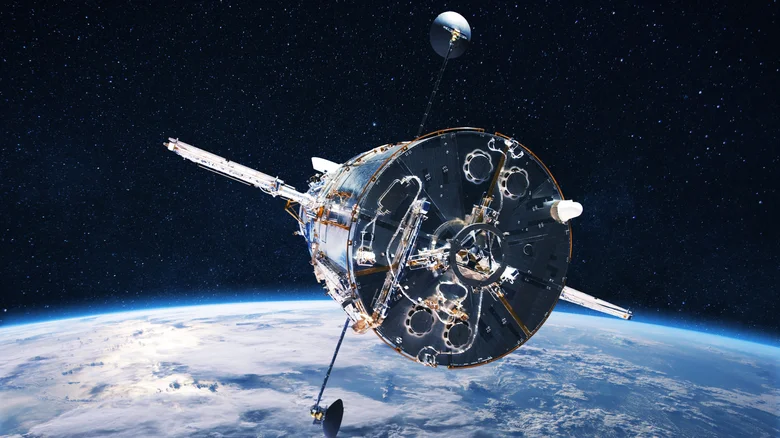
Satellite orbiting above Earth with antennas and solar equipment visible.

Alones/Shutterstock

For most people "GPS" is the thing they use in their cars or on their smartphones to avoid getting lost on the way somewhere. The Global Positioning System used in the U.S. may be a technology that is commonplace in our daily lives, but it actually started out as a military project for the U.S. Navy conducting submarine-tracking experiments in the 1960s. Although, ironically, GPS can't work underwater!

As the '70s rolled on, the US Department of Defense needed a global navigation and positioning system desperately, and that research resulted in the NAVSTAR satellite in 1978. Today, the GPS we use isn't the only choice either as various countries have specific satellite tracking systems including China's advanced GPS alternative and Russia's GLONASS system. Once GPS became widely available, scientists across the world started taking advantage of it to aid in research that helps us conserve the environment, and private companies have used it to reduce cost and thus waste. So even if it was created for war, GPS is now actually saving the planet in various unexpected ways.

GPS tech helps track endangered wildlife

A Great Grey Owl perched on a wooden post.

Galloots13/Shutterstock

Before the age of GPS, scientists tracked the movements — especially endangered species — using a radio telemetry technology. Animals were collared or tagged with a radio transmitter and the signal was then sent to a receiver, but in order to work, the receiver had to be within a mile or two of the transmitter. When GPS came on the scene, it revolutionized conservation, making it possible to track the exact position of tagged animals in real time. With this data, conservationists can keep an eye on endangered animals in the air, on the land, and even in the sea.

It's trickier to track and tag aquatic animals since the location only pings when the GPS tracker is near the surface. This information is invaluable not only to track endangered ocean life, such as North Atlantic right whales, but also potentially dangerous animals, such as great white sharks. Many animal species have benefited from GPS tracking technology, and as climate change takes hold it will become even more crucial to understand what's happening in various ecosystems around the world.

GPS helps enforce environmental laws
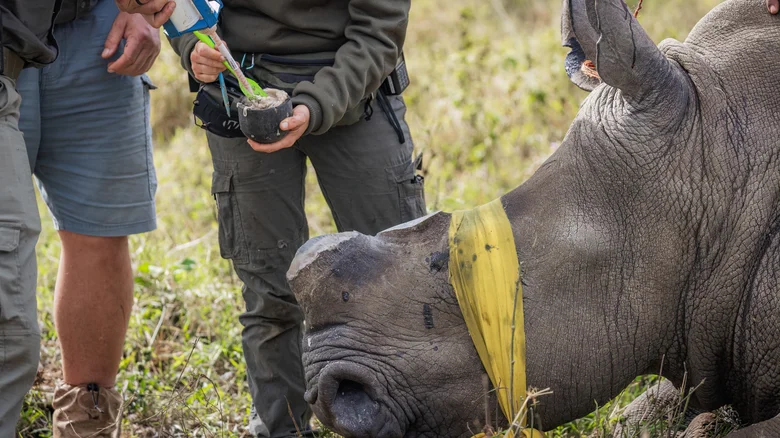
A sedated Rhinoceros lying on its side while wildlife workers dehorn it in a grassy outdoor area.

Wiktoria West/Getty Images

A law isn't worth the paper it's printed on if it can't be enforced. There are numerous laws across the world that are meant to reduce or prevent pollution or mitigate issues like poaching. Law enforcement can't be everywhere, and sometimes it hard to prove that acts like poaching or illegal hunting even happened. So, GPS tracking can be used as a high-tech solution to enforce environmental laws.

In 2023, a team of researchers demonstrated how GPS-tagged wolves and vultures could reveal how laws related to the disposal of animal carcasses were being broken. More recently, the BBC highlighted how researchers are using a satellite system that can track real-time animal movement behavior to detect "animal panic" stemming from events like a gunshot. GPS surveillance is a privacy concern for humans — Google knows where you are even with your GPS off — but for animals and the environment as a whole, round-the-clock real-time surveillance can help ensure that environmental laws are being enforced properly.

GPS can improve wildfire response
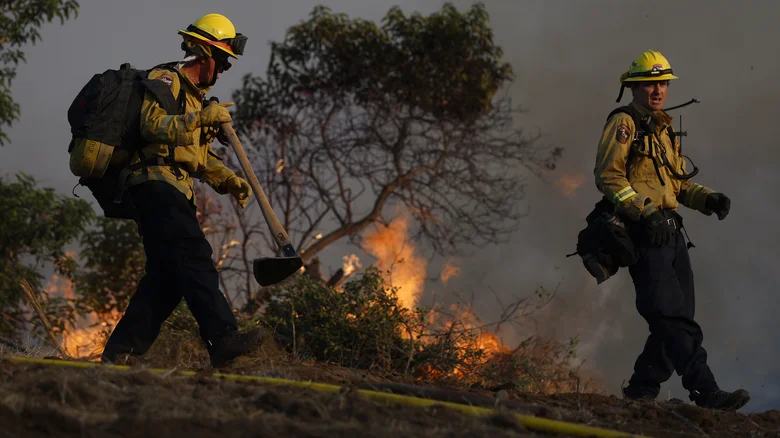
Two firefighters in protective gear working near an active wildfire.

Justin Sullivan/Getty Images

If you've never come face-to-face with a wildfire, you know that most people can't conceive the speed with which the flames move, and the unpredictability with which they can change direction. This makes it extremely dangerous for firefighters on the ground, even with eyes in the sky relaying visual information about the fire back to a ground station. In the past, it just wasn't possible to get a detailed picture of how the fire was propagating, but that has changed with GPS tracking.

By equipping aircraft with both GPS and infrared (IR) scanners, the fires can be mapped with high levels of precision. The firefighters on the ground then use a portable field computer to receive the mapping information live. Combined with other data, this technology allows for an unprecedented level of insight into a disaster as it's happening. This lets the firefighters coordinate dynamically, with enough warning to evacuate people and send adequate firefighting resources to areas that need it most.

Drones are also becoming a crucial part of wildfire management, too. Modern drone technology is only possible thanks to GPS, so really GPS might be as crucial to managing fires in the modern era as water and fire-retardant chemicals. If you want to know what it's like to be on the ground for these firefighters, check out this incredible GoPro video of a battle with a massive forest fire.

GPS can track oil spills faster
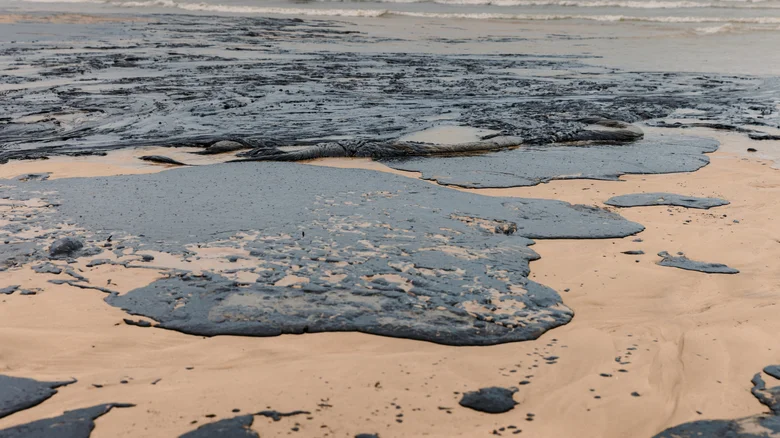
A beach shoreline covered in thick black oil.

Wonderful Nature/Shutterstock

Until we've finally achieved infinite clean energy, the world probably won't be able to kick its fossil fuel addiction. That means crude oil has to be transported across our oceans and, inevitably, sometimes those ships spill that oil in massive environmental disasters. Now, GPS technology certainly helps ships stay out of the sort of trouble that would lead to a spill in the first place, but when the worst does happen it can also track spills in the aftermath.

In a 2020 study, scientists were able to use GPS drifters alongside drones to learn where the oil goes after a spill and how long it stays there. This information helps predict how oil spills will play out, which makes it easier to plan for them and limit the damage they can do. Today, radar satellites and floatable beacons track spills exactly, allowing disaster recovery efforts to be as effective as possible. The ideal situation would be to preventing oil spills in the first place, but until that happens, every extra layer of protection helps.

GPS supports more accurate weather forecasts
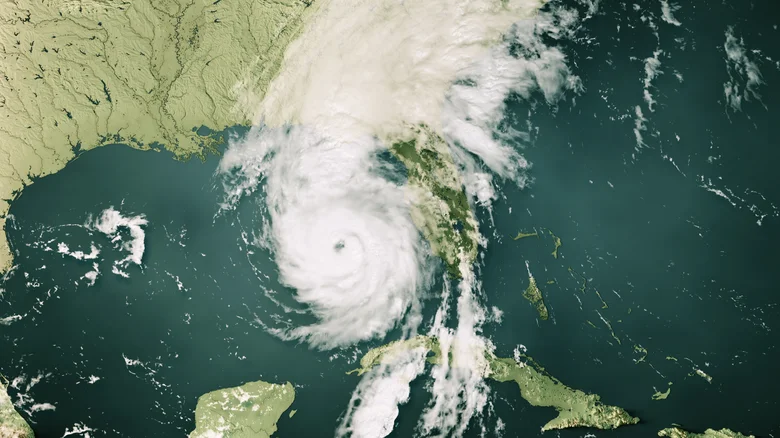
A satellite view of a large tropical cyclone or hurricane.

Frankramspott/Getty Images

If you've ever watched "Back to the Future Part II," you may remember at one point Doc Brown looks at his (presumably) smart watch waiting for the rain to stop and then says, "Too bad the Post Office isn't as efficient as the weather service." You may have noticed that these days you'll get a notification from your weather app that "rain will stop soon" or "rain expected to start in a few hours." It's not exactly Doc Brown's to-the-second accuracy show in the movie, but it's far better than the weather forecasts we got in the '90s, for example. Then you might as well have based your decision to grab an umbrella on a coin flip.

A lot of this improvement in modern forecasting accuracy comes incredible supercomputers that can model the weather to a fine degree, but this data comes from GPS-enabled weather devices, not to mention satellite imagery. In 2020, scientists came up started measuring GPS satellite signals as they pass through Earth's atmosphere to infer temperature and moisture content. This allows for more accurate weather predictions.

GPS is helping reducing waste all over the world
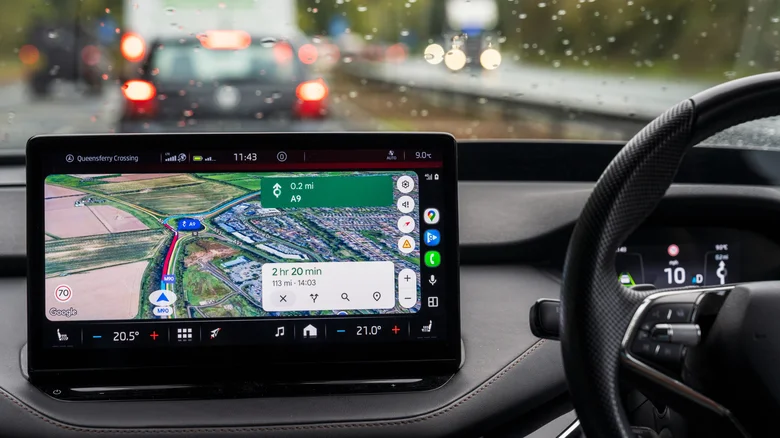
The interior of a modern car during rainy traffic, with a large infotainment display showing GPS navigation and route guidance

Georgeclerk/Getty Images

The last time you used Google Maps to navigate somewhere, you might have noticed that it offered an option to "prefer fuel-efficient routes." It might not be the fastest or the shortest way to get where you're going, but it would use the least fuel and produce the least emissions. This is just one example of how GPS technology can directly reduce waste and emissions.

Even without a special eco-friendly route, GPS was already saving massive amounts of fuel all over the world simply because vehicles would spend less time getting lost or sitting in traffic — the small amounts of fuel you avoid burning by being routed around these issues add up. In a 2019 report, the National Institute of Standards and Technology (NIST) noted that GPS technology has reduced fuel use and wear on fleet vehicles. Not only is this good for the environment, but it also saves us money by reducing the cost of transport.

It's not just about vehicle emissions either. In the world of agriculture, crop-spraying drones can precisely spray only the right sectors of a field reducing the total amount of pesticide. That means fewer chemicals are needed to sustain our food supply, and we make better use of natural resources.