







Jason Cameron/Getty Images
We may receive a commission on purchases made from links.
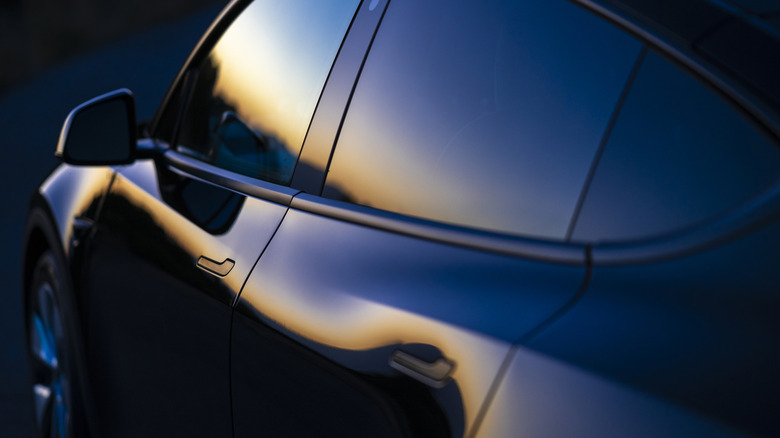
If you've never encountered an electric door handle on an EV, you'd be forgiven for not knowing there's a dangerous flaw with them. To put it simply, they're not a mechanical latch but instead engaged through electricity, and some, like Tesla's handles, are completely flush with the door panel or activated via buttons. This design could and has left occupants trapped in the midst of an emergency. They require electricity, so without any power, occupants have to use the manual release. Bloomberg reports that over 140 incidents have occurred since 2018 in which Tesla doors malfunctioned.
Moreover, 15 deaths have been linked to these electronic handles, and Tesla was even hit with a wrongful death lawsuit in 2019, when malfunctioning door handles trapped a driver in a burning vehicle. That is precisely why China is banning retractable door handles and flush designs, like the ones that have resulted in injuries or death. U.S. Rep. Robin Kelly, D-Ill., proposed a similar bill called the SAFE Exit Act, which would require some kind of fail-safe or manual door release to be included in affected vehicles.
It would also require a special latch or method for first responders to access the inside of a vehicle during an emergency. The bill is in the early stages and has yet to pass, but Tesla has already begun including fail-safes in newer models. The Tesla Model 3, for example, has both front and rear door manual releases that can help when there's no power.
How to check your vehicle for a fail-safe
Christina Patricya/Shutterstock
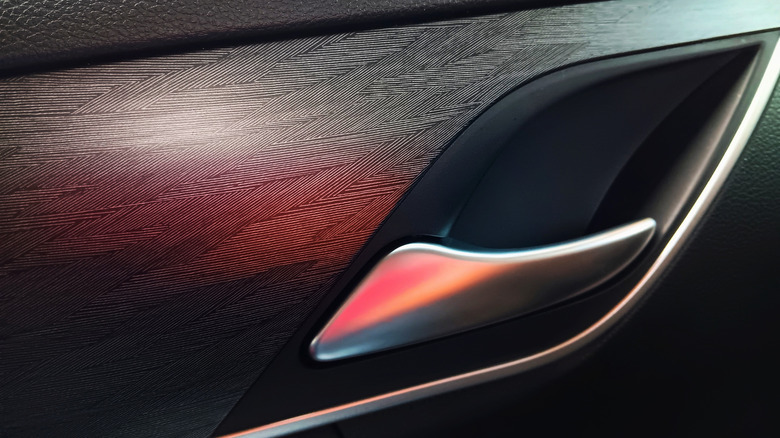
Every vehicle model is different, and, more notably, every manufacturer approaches the manual release or handle functions differently. Outside of being a stylistic choice, flush handles can improve the aerodynamics of an EV, adding to the overall EPA range, albeit not by much. Inside, they might have similarly minimalistic designs. Electric handles show up in Tesla Models, like the Model 3 and Model Y, Hyundai, Kia, and Genesis vehicles, Rivian R1T and R1S, Lucid Air, Cadillac, the Chevy Equinox EV, and more. Even so, there are quite a few EV makers that have incorporated manual door releases for emergencies.
In most cases, the emergency latch is located near the inside door handle, as a pull strap, mechanical lever, or button-based release. The Lucid Air, has a small lever inside the door panel just behind the window controls. The Tesla Model 3's manual release is in the same area for the front doors, while in the rear it's tucked down inside the storage pocket. Inside the 2025 Rivian R1T, the rear door handle release is a pull cord hidden behind the door panel, which you have to actually remove first to access. Refer to your vehicle's owner's manual if you cannot locate the release.
Ideally, you'll want to find, test, and understand this manual release in your particular vehicle before you drive it anywhere. Knowing exactly where the release is and how to use it could be absolutely crucial for your safety and survival during an accident or emergency. It's not a bad idea to stow a window-breaking tool inside your cabin, either.