



NBC
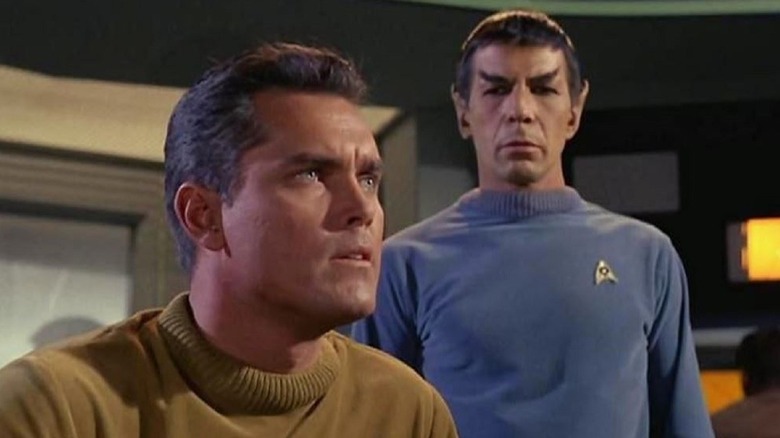
A pilot episode is largely a testing ground for a new show, demonstrating what an episode could look like if it airs. Its goal is to earn a greenlight from the network, complete with funding and placement. Typically, executives will reject pilots that seem unappealing to a wide audience or have high costs with likely little return. However, "Star Trek's" original pilot, dubbed "The Cage," never officially aired and was rejected for a completely different reason: it was too good.
In a July 1996 edition of Cinefantastique Magazine (via Internet Archive), Oscar Katz, program director for Desilu, the production company for "Star Trek," shared that they first let NBC executives choose what kind of adventure the crew would have in episode one. Out of a few options, they settled on an alien planet plotline. After the crew filmed the pilot and returned with the preview, delivering everything as promised, the network rejected it. The executives believed it was so impressive that audiences might expect that kind of quality from every episode.
They saw it as something you'd schedule "about once every 13 weeks to give the series a hypo." In other words, a satisfying episode, used sparingly, to drum up excitement mid or late season. It was also purportedly "too cerebral" and required the audience to think too much. Gene Roddenberry famously wanted Star Trek to redefine the way the sci-fi genre treated monsters, and "The Cage" certainly does that. Luckily, NBC ordered a second pilot, and the rest is history.
What was The Cage pilot episode about?
NBC
Marvel has even started taking a cue from old TV development practices, changing its practices and finally ordering pilots – we know why so many Marvel shows have been disasters. Although pilots usually reveal a bad hand, not a good one. It seems odd to reject a show that's "too good." Yet it was the '60s, and knowing the context of the episode helps add perspective. According to Katz's interview, the pilot cost roughly $260,000 at the time, which is a lot. The executives were also looking for a "western space opera," and they didn't get it with the first pilot. So what did they see?
"The Cage" never aired, yet its theme was later used in "The Menagerie," and it was released on public VHS in 1986. Today, it's on streaming platforms to watch before the rest of the series. It opens with the USS Enterprise receiving a distress signal from a remote planet. Spearheaded by Captain Christopher Pike — not James T. Kirk — the team embarks on a rescue mission to help what they believe is a stranded crew.
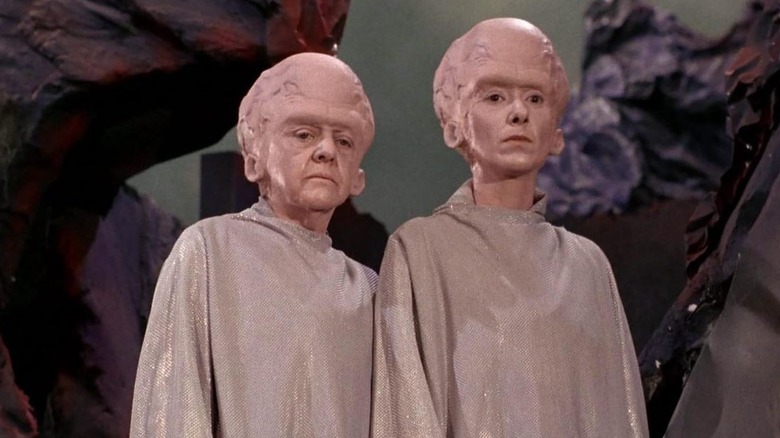
After landing, they're captured by a humanoid race called the Talosians, who want Pike to breed with another captive to establish a colony of slaves. Given the material, you can see why the executives ordered a second pilot. Unsurprisingly, Gene Roddenberry didn't care about creating 'new civilizations' for Star Trek. He wanted to focus on human problems and equations, which was evident all the way back in that original pilot.