


惯性聚合 高效追踪和阅读你感兴趣的博客、新闻、科技资讯
阅读原文 在惯性聚合中打开

推荐订阅源

Apple Machine Learning Research
Help Net Security
Help Net Security
A
About on SuperTechFans
博客园_首页
M
MIT News - Artificial intelligence
Cyber Security Advisories - MS-ISAC
量子位
F
Fortinet All Blogs
OSCHINA 社区最新新闻
OSCHINA 社区最新新闻
爱范儿
爱范儿
L
LINUX DO - 最新话题
The GitHub Blog
The GitHub Blog
Hacker News - Newest:
Hacker News - Newest: "LLM"
C
Cybersecurity and Infrastructure Security Agency CISA
N
News and Events Feed by Topic
S
Security @ Cisco Blogs
A
Arctic Wolf
V
Vulnerabilities – Threatpost
Exploit-DB.com RSS Feed
T
Tailwind CSS Blog
The Last Watchdog
The Last Watchdog
钛媒体:引领未来商业与生活新知
钛媒体:引领未来商业与生活新知
Security Latest
Security Latest
cs.CL updates on arXiv.org
H
Heimdal Security Blog
H
Hacker News: Front Page
Simon Willison's Weblog
Threat Intelligence Blog | Flashpoint
Recent Announcements
N
Netflix TechBlog - Medium
SecWiki News
SecWiki News
酷 壳 – CoolShell
酷 壳 – CoolShell
I
InfoQ
MyScale Blog
MyScale Blog
C
Cyber Attacks, Cyber Crime and Cyber Security
L
LangChain Blog
Stack Overflow Blog
Stack Overflow Blog
Vercel News
Vercel News
AI
AI
L
LINUX DO - 热门话题
G
Google Developers Blog
P
Proofpoint News Feed
腾讯CDC
Schneier on Security
美团技术团队
V
V2EX
PCI Perspectives
PCI Perspectives
L
Lohrmann on Cybersecurity
Jina AI
Jina AI
博客园 - 司徒正美

The Register - Software: OSes

Fedora: Microsoft is all aboard, but Deepin is dumped Microsoft promises to do better, but it has a long way to go First big Microsoft update after vow to 'win back fans' Who needs ghost train scares when Windows is such a fright? Microsoft boss tells investors the company is working to 'win back fans' Microsoft boss says company is working to 'win back fans' Linux cryptographic code flaw offers fast route to root Fedora 44 is out – countless versions of it Microsoft sets its sights on the past with 86-DOS and PC-DOS Microsoft updates the Windows Update Experience Windows second-chance setup hurts IT, productivity Ubuntu Resolute Raccoon drops Xorg, keeps X11 apps alive More ancient Linux device support facing the ax WSL9x hacks Linux into ancient Windows 9x systems UK tribunal sends £2B claim accusing Microsoft of overcharging for licensing to trial Zorin OS 18.1 released - and the Lite edition reappears Task Manager's CPU%: an obituary for the recent past Linux 7.1 will have an optional new NTFS driver Microsoft releases Windows Server update to fix April update 20-year-old Enlightenment E16 bug finally gets patched 20-year-old Enlightenment E16 bug finally gets patched Raspberry Pi OS ends open-door policy for sudo Firefox Nightly adds Web Serial after years of saying no Windows Update: Torture chamber for seldom-used PCs Windows Update: Torture chamber for seldom-used PCs Notepad loses Copilot icon as Microsoft gives subtlety a try Notepad loses Copilot icon as Microsoft gives subtlety a try Microsoft attempts to untangle Windows Insider program Adobe finally patches PDF pest after months of abuse NHS pays £46K to prep next Microsoft licensing round Linux 7.0 debuts as Linus Torvalds ponders AI's impact Linux 7.0 debuts as Linus Torvalds ponders AI's impact Red Hat RHELocates its Chinese engineering team to India Showing the Windows 10 desktop was the yeast they could do Apple's chips are winners, but Windows fails help it most The end of Linux i486 support looks nigh The end of Linux i486 support looks nigh Windows asks a networking question on a Stratford billboard Some 'broken by update' PCs were already doomed SystemRescue 13 lands with Linux 6.18 and bcachefs support Memo: Red Hat Global Engineering plans to lean in to AI Microsoft plans another out-of-band Windows fix Ubuntu beta arrives with GNOME 50, sans Google Drive support Ubuntu beta arrives with GNOME 50, sans Google Drive support Microsoft pulls Windows update after installation problems Microsoft pulls Windows update after installation problems Microsoft cracks down on old Windows kernel drivers Microsoft cracks down on old Windows kernel drivers Linux kernel czar says AI bug reports aren't slop anymore How Windows 95 fought off badly behaved installers Open source isn't a tip jar – it's time to charge for access Age checks creep into Linux as systemd gets a DOB field Systemd-free antiX 26: Debian 13, in bonsai form Systemd-free antiX 26: Debian 13, in bonsai form Windows boss promises to heal the operating system's wounds Windows boss promises to heal the operating system's wounds Smart TVs and voice assistants are the next gatekeepers Microsoft releases emergency fix for account internet error Microsoft releases emergency fix for account internet error Microsoft: Removing some Copilots will improve Windows 11 WSL, WINE updates speed cross-OS app performance MS update kills Microsoft account sign-ins in Windows 11 GNOME 50 debuts with X11 axed, Wayland front and center Microsoft publishes a workaround for Samsung's C:\ drive woes Systemd 260 kills SysV, tells AI not to misbehave Out-of-band getting out of hand as Microsoft pushes hotpatch for Bluetooth Microsoft pushes out-of-band hotpatch for Bluetooth Big moves in Linux filesystems as new bcachefs lands and KDE adds support for Apple's APFS Age verification isn't sage verification when it's inside operating systems Age verification isn't sage verification inside OSes Microsoft points at Samsung after Galaxy app bug locks users out of C:\ RAM is getting expensive, so squeeze the most from it Nanny state vs. Linux: show us your ID, kid Smart mirror shows dumb Windows in elevator Microsoft adding Xbox mode to Windows 11 – even the Professional edition DR-DOS rises again – rebuilt from scratch, not open source Hotpatching goes default in Windows Autopatch whether you like it or not Hotpatching goes default in Windows Autopatch Linux PC vendor System76 tries to talk Colorado down over OS age checks System76 tries to talk Colorado down over OS age checks US state laws push age checks into the operating system Microsoft finally gets around to fixing Windows 10 Recovery Environment after breaking it in October Bootleg Windows, Office scheme crashes, triggers 22-month lockup for Florida woman
BunsenLabs Carbon keeps the CrunchBang flame alive with Debian 13
2026-03-04 · via The Register - Software: OSes

BunsenLabs Linux is a lightweight, Debian-based distro forked from CrunchBang, and seven months after Debian 13 "Trixie" arrived, the project has released its latest version, dubbed Carbon.

This version replaces multiple core components of the BunsenLabs' characteristic and slightly idiosyncratic setup with alternatives that can work on both X11 and the Wayland-based labwc compositor. For now, this version still defaults to Openbox on X.org, but the maintainers are making things ready for a transition to Wayland.

BunsenLabs Linux is the original "community continuation" of the lightweight CrunchBang Linux distro. BunsenLabs was announced in February 2015, just days after CrunchBang called it quits.
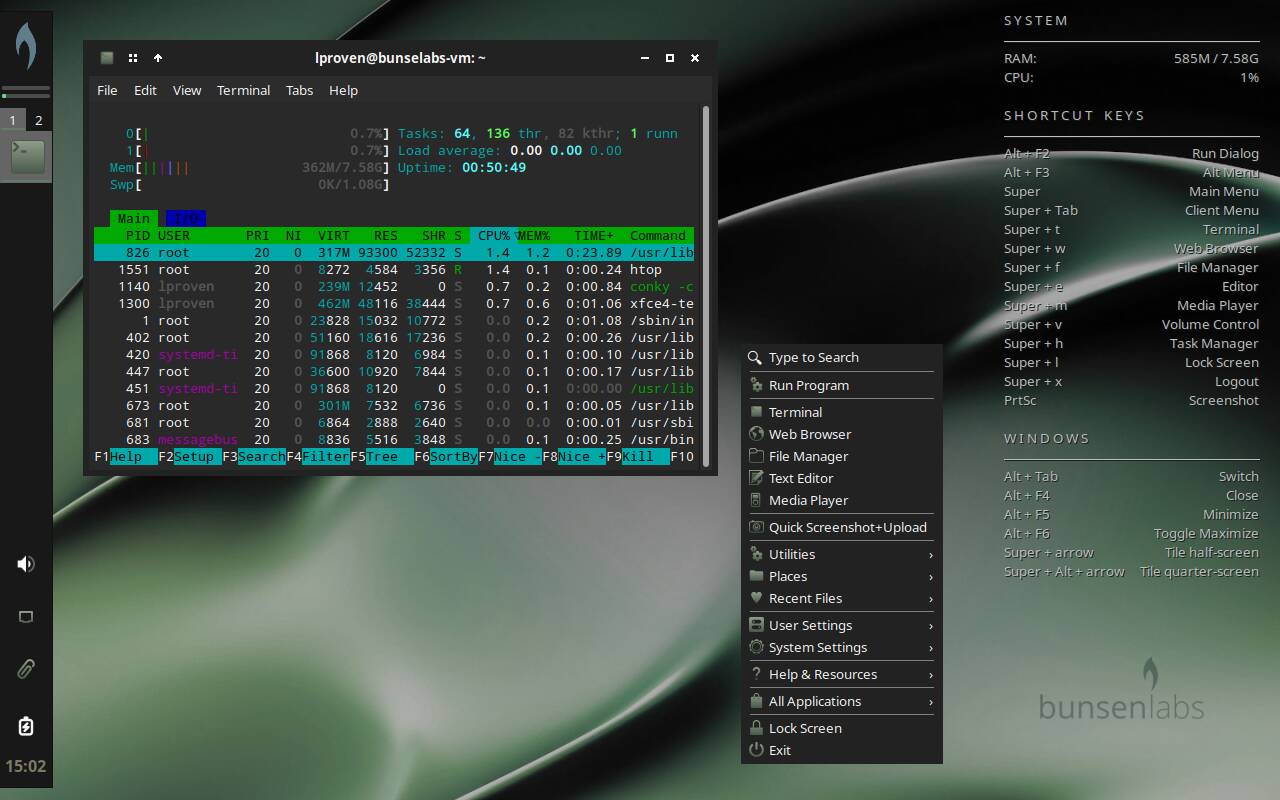
BunsenLabs Carbon showing `htop`, the main menu, a Conky monitor, and the new Xfce panel

The new Debian 13-based BunsenLabs Carbon moves slightly further from its CrunchBang roots, but it's all good

The other continuation of CrunchBang is a mainly one-man project by Ben "Computermouth" Young, called CrunchBang++. We compared the two in 2024 when both released their Debian 12-based versions. At the time, we commented that CB++ was the more technologically conservative of the two. It sticks very close to the model set by the original CrunchBang. CB++ tends to release sooner, and as we mentioned back in October 2025, the Debian 13 version of CB++ was released in August, soon after Debian 13 itself. We have tried CB++ 13, and it sticks close to its tried-and-tested design. It still uses the X11-based Openbox window manager and tint2 panel.

As we wrote a couple of years ago, BunsenLabs is the more experimental and innovative of the two sibling offshoots. This is more apparent than ever with the Debian 13 version. For instance, the tint2 panel is gone, replaced by xfce4-panel from the Xfce desktop, and similarly, LXDE's lxterminal has also been replaced with its Xfce equivalent, xfce4-terminal.

The window manager is still Openbox, though, and the desktop looks very similar to before. There's a vertical floating panel on the left, no desktop icons, and a Conky system monitor with a list of the hotkeys for quickly launching applications using the Super (Windows) key. The main difference is that, while the old tint2 panel shows icons for both virtual desktops at once, in two sections, now there's a virtual desktop indicator with two numbers, and you must switch between the two to see what's running on them.

It's not radically different, but it has lost a little of its distinctive look. The Xfce panel makes it easier to adjust settings – it has a built-in GUI for this, rather than the menus offering an entry that opens the relevant config file in the default editor, which is the traditional CrunchBang way. The panel shows icons for apps using the stock Xfce window-buttons component, set to hide labels.

It's not as functional as additional components such as the DockbarX plugin (as seen in Asmi), or the Docklike Taskbar (as seen in MX Linux), but it's simpler and it does the job. There is a menu button at the top, but rather than either of Xfce's start-menu analogs, it launches a version of the classic CrunchBang-style app menu, now called bl-menu.

BunsenLabs uses more shading and gradients than the austere monochrome of CB++, but it's still quite stark. Although it's Debian underneath, systemd and all, it's still quite lightweight: Conky reports about 550 MB of RAM in use, and it takes about 4.4 GB of disk, which is quite good for 2026. We have a copy of CB++ 13 on our geriatric ThinkPad W500 – although it has a few extra apps installed – and the BunsenLabs Carbon release uses less RAM and less disk space.

The maintainer of CB++ has told us that he is investigating the possibility of doing a variant of the distro based on Alpine Linux instead of Debian, which we would very much like to see. In the meantime, though, they are both solid choices – and it has to be admitted that Bunsen is rather prettier, as well as slightly lighter. ®