


惯性聚合 高效追踪和阅读你感兴趣的博客、新闻、科技资讯
阅读原文 在惯性聚合中打开

推荐订阅源

V
Vulnerabilities – Threatpost
T
The Blog of Author Tim Ferriss
S
SegmentFault 最新的问题
D
DataBreaches.Net
博客园_首页
罗磊的独立博客
B
Blog
T
Threat Research - Cisco Blogs
C
Cisco Blogs
GbyAI
GbyAI
Engineering at Meta
Engineering at Meta
WordPress大学
WordPress大学
G
GRAHAM CLULEY
H
Help Net Security
酷 壳 – CoolShell
酷 壳 – CoolShell
Cyber Security Advisories - MS-ISAC
爱范儿
爱范儿
SecWiki News
SecWiki News
T
Threatpost
钛媒体:引领未来商业与生活新知
钛媒体:引领未来商业与生活新知
Schneier on Security
T
The Exploit Database - CXSecurity.com
Google Online Security Blog
T
Tor Project blog
小众软件
小众软件
让小产品的独立变现更简单 - ezindie.com
Y
Y Combinator Blog
H
Hacker News: Front Page
V
V2EX
Security Latest
Security Latest
Cloudbric
Cloudbric
Simon Willison's Weblog
Attack and Defense Labs
D
Darknet – Hacking Tools, Hacker News & Cyber Security
P
Proofpoint News Feed
博客园 - 三生石上(FineUI控件)
NISL@THU
NISL@THU
S
Secure Thoughts
Blog — PlanetScale
Blog — PlanetScale
博客园 - 司徒正美
V2EX - 技术
V2EX - 技术
Vercel News
Vercel News
P
Palo Alto Networks Blog
IT之家
IT之家
MyScale Blog
MyScale Blog
有赞技术团队
有赞技术团队
Application and Cybersecurity Blog
D
Docker
Google DeepMind News
Webroot Blog
Webroot Blog

Hugging Face - Blog

Waypoint-1.5: Higher-Fidelity Interactive Worlds for Everyday GPUs ALTK‑Evolve: On‑the‑Job Learning for AI Agents Safetensors is Joining the PyTorch Foundation Holo3: Breaking the Computer Use Frontier Any Custom Frontend with Gradio's Backend A New Framework for Evaluating Voice Agents (EVA) Bringing Robotics AI to Embedded Platforms: Dataset Recording, VLA Fine‑Tuning, and On‑Device Optimizations One-Shot Any Web App with Gradio's gr.HTML CUGA on Hugging Face: Democratizing Configurable AI Agents New in llama.cpp: Model Management Building Deep Research: How we Achieved State of the Art OVHcloud on Hugging Face Inference Providers 🔥 20x Faster TRL Fine-tuning with RapidFire AI Building for an Open Future - our new partnership with Google Cloud Aligning to What? Rethinking Agent Generalization in MiniMax M2 Building a Healthcare Robot from Simulation to Deployment with NVIDIA Isaac Sentence Transformers is joining Hugging Face! Unlock the power of images with AI Sheets Supercharge your OCR Pipelines with Open Models Google Cloud C4 Brings a 70% TCO improvement on GPT OSS with Intel and Hugging Face Get your VLM running in 3 simple steps on Intel CPUs Nemotron-Personas-India: Synthesized Data for Sovereign AI Introducing RTEB: A New Standard for Retrieval Evaluation Accelerating Qwen3-8B Agent on Intel® Core™ Ultra with Depth-Pruned Draft Models VibeGame: Exploring Vibe Coding Games Nemotron-Personas-Japan: ソブリン AI のための合成データセット Swift Transformers Reaches 1.0 – and Looks to the Future Smol2Operator: Post-Training GUI Agents for Computer Use SyGra: The One-Stop Framework for Building Data for LLMs and SLMs Gaia2 and ARE: Empowering the community to study agents Scaleway on Hugging Face Inference Providers 🔥 Democratizing AI Safety with RiskRubric.ai Public AI on Hugging Face Inference Providers 🔥 `LeRobotDataset:v3.0`: Bringing large-scale datasets to `lerobot` Visible Watermarking with Gradio Introducing the Palmyra-mini family: Powerful, lightweight, and ready to reason! Tricks from OpenAI gpt-oss YOU 🫵 can use with transformers Fine-tune Any LLM from the Hugging Face Hub with Together AI Jupyter Agents: training LLMs to reason with notebooks mmBERT: ModernBERT goes Multilingual Welcome EmbeddingGemma, Google's new efficient embedding model SAIR: Accelerating Pharma R&D with AI-Powered Structural Intelligence Make your ZeroGPU Spaces go brrr with ahead-of-time compilation NVIDIA Releases 6 Million Multi-Lingual Reasoning Dataset Generate Images with Claude and Hugging Face From Zero to GPU: A Guide to Building and Scaling Production-Ready CUDA Kernels MCP for Research: How to Connect AI to Research Tools Kimina-Prover-RL Arm & ExecuTorch 0.7: Bringing Generative AI to the masses Neural Super Sampling is here! TextQuests: How Good are LLMs at Text-Based Video Games? 🇵🇭 FilBench - Can LLMs Understand and Generate Filipino? Introducing AI Sheets: a tool to work with datasets using open AI models! Accelerate ND-Parallel: A guide to Efficient Multi-GPU Training Vision Language Model Alignment in TRL ⚡️ Welcome GPT OSS, the new open-source model family from OpenAI! Measuring Open-Source Llama Nemotron Models on DeepResearch Bench 📚 3LM: A Benchmark for Arabic LLMs in STEM and Code Implementing MCP Servers in Python: An AI Shopping Assistant with Gradio Introducing Trackio: A Lightweight Experiment Tracking Library from Hugging Face Say hello to `hf`: a faster, friendlier Hugging Face CLI ✨ Parquet Content-Defined Chunking TimeScope: How Long Can Your Video Large Multimodal Model Go? Fast LoRA inference for Flux with Diffusers and PEFT Accelerate a World of LLMs on Hugging Face with NVIDIA NIM Arc Virtual Cell Challenge: A Primer Consilium: When Multiple LLMs Collaborate Back to The Future: Evaluating AI Agents on Predicting Future Events Five Big Improvements to Gradio MCP Servers Ettin Suite: SoTA Paired Encoders and Decoders Migrating the Hub from Git LFS to Xet Kimina-Prover: Applying Test-time RL Search on Large Formal Reasoning Models Asynchronous Robot Inference: Decoupling Action Prediction and Execution ScreenEnv: Deploy your full stack Desktop Agent Building the Hugging Face MCP Server Reachy Mini - The Open-Source Robot for Today's and Tomorrow's AI Builders Creating custom kernels for the AMD MI300 Upskill your LLMs With Gradio MCP Servers SmolLM3: smol, multilingual, long-context reasoner Three Mighty Alerts Supporting Hugging Face’s Production Infrastructure Efficient MultiModal Data Pipeline Announcing NeurIPS 2025 E2LM Competition: Early Training Evaluation of Language Models Training and Finetuning Sparse Embedding Models with Sentence Transformers Welcome the NVIDIA Llama Nemotron Nano VLM to Hugging Face Hub Gemma 3n fully available in the open-source ecosystem! Transformers backend integration in SGLang (LoRA) Fine-Tuning FLUX.1-dev on Consumer Hardware Groq on Hugging Face Inference Providers 🔥 How Long Prompts Block Other Requests - Optimizing LLM Performance Learn the Hugging Face Kernel Hub in 5 Minutes Convert Transformers to ONNX with Hugging Face Optimum Intel and Hugging Face Partner to Democratize Machine Learning Hardware Acceleration Director of Machine Learning Insights [Part 3: Finance Edition] The Annotated Diffusion Model Deep Q-Learning with Space Invaders Graphcore and Hugging Face Launch New Lineup of IPU-Ready Transformers Introducing Pull Requests and Discussions 🥳 Efficient Table Pre-training without Real Data: An Introduction to TAPEX An Introduction to Q-Learning Part 2/2 How Sempre Health is leveraging the Expert Acceleration Program to accelerate their ML roadmap
Finetune Stable Diffusion Models with DDPO via TRL
luke meyers, Sayak Paul, Kashif Rasul, Leandro von Werra · 2023-09-29 · via Hugging Face - Blog

Back to Articles

luke meyers's avatar

Sayak Paul's avatar

Kashif Rasul's avatar

Leandro von Werra's avatar

This article is also available in Chinese 简体中文.

Introduction

Diffusion models (e.g., DALL-E 2, Stable Diffusion) are a class of generative models that are widely successful at generating images most notably of the photorealistic kind. However, the images generated by these models may not always be on par with human preference or human intention. Thus arises the alignment problem i.e. how does one go about making sure that the outputs of a model are aligned with human preferences like “quality” or that outputs are aligned with intent that is hard to express via prompts? This is where Reinforcement Learning comes into the picture.

In the world of Large Language Models (LLMs), Reinforcement learning (RL) has proven to become a very effective tool for aligning said models to human preferences. It’s one of the main recipes behind the superior performance of systems like ChatGPT. More precisely, RL is the critical ingredient of Reinforcement Learning from Human Feedback (RLHF), which makes ChatGPT chat like human beings.

In Training Diffusion Models with Reinforcement Learning, Black et al. show how to augment diffusion models to leverage RL to fine-tune them with respect to an objective function via a method named Denoising Diffusion Policy Optimization (DDPO).

In this blog post, we discuss how DDPO came to be, a brief description of how it works, and how DDPO can be incorporated into an RLHF workflow to achieve model outputs more aligned with the human aesthetics. We then quickly switch gears to talk about how you can apply DDPO to your models with the newly integrated DDPOTrainer from the trl library and discuss our findings from running DDPO on Stable Diffusion.

The Advantages of DDPO

DDPO is not the only working answer to the question of how to attempt to fine-tune diffusion models with RL.

Before diving in, there are two key points to remember when it comes to understanding the advantages of one RL solution over the other

  1. Computational efficiency is key. The more complicated your data distribution gets, the higher your computational costs get.
  2. Approximations are nice, but because approximations are not the real thing, associated errors stack up.

Before DDPO, Reward-weighted regression (RWR) was an established way of using Reinforcement Learning to fine-tune diffusion models. RWR reuses the denoising loss function of the diffusion model along with training data sampled from the model itself and per-sample loss weighting that depends on the reward associated with the final samples. This algorithm ignores the intermediate denoising steps/samples. While this works, two things should be noted:

  1. Optimizing by weighing the associated loss, which is a maximum likelihood objective, is an approximate optimization
  2. The associated loss is not an exact maximum likelihood objective but an approximation that is derived from a reweighed variational bound

The two orders of approximation have a significant impact on both performance and the ability to handle complex objectives.

DDPO uses this method as a starting point. Rather than viewing the denoising step as a single step by only focusing on the final sample, DDPO frames the whole denoising process as a multistep Markov Decision Process (MDP) where the reward is received at the very end. This formulation in addition to using a fixed sampler paves the way for the agent policy to become an isotropic Gaussian as opposed to an arbitrarily complicated distribution. So instead of using the approximate likelihood of the final sample (which is the path RWR takes), here the exact likelihood of each denoising step which is extremely easy to compute ( (μ,σ2;x)=n2log(2π)n2log(σ2)12σ2i=1n(xiμ)2 \ell(\mu, \sigma^2; x) = -\frac{n}{2} \log(2\pi) - \frac{n}{2} \log(\sigma^2) - \frac{1}{2\sigma^2} \sum_{i=1}^n (x_i - \mu)^2 ).

If you’re interested in learning more details about DDPO, we encourage you to check out the original paper and the accompanying blog post.

DDPO algorithm briefly

Given the MDP framework used to model the sequential nature of the denoising process and the rest of the considerations that follow, the tool of choice to tackle the optimization problem is a policy gradient method. Specifically Proximal Policy Optimization (PPO). The whole DDPO algorithm is pretty much the same as Proximal Policy Optimization (PPO) but as a side, the portion that stands out as highly customized is the trajectory collection portion of PPO

Here’s a diagram to summarize the flow:
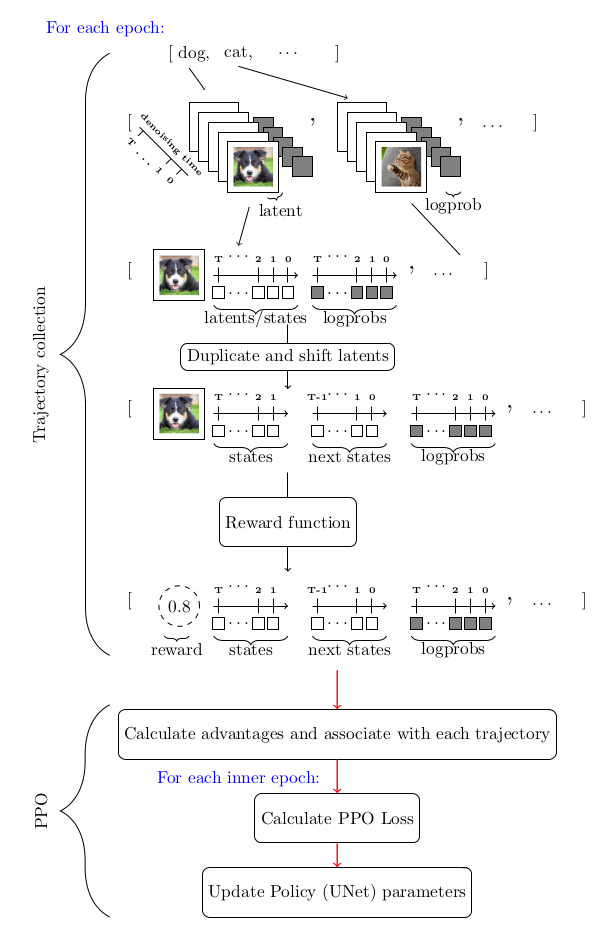
dppo rl schematic

DDPO and RLHF: a mix to enforce aestheticness

The general training aspect of RLHF can roughly be broken down into the following steps:

  1. Supervised fine-tuning a “base” model learns to the distribution of some new data
  2. Gathering preference data and training a reward model using it.
  3. Fine-tuning the model with reinforcement learning using the reward model as a signal.

It should be noted that preference data is the primary source for capturing human feedback in the context of RLHF.

When we add DDPO to the mix, the workflow gets morphed to the following:

  1. Starting with a pretrained Diffusion Model
  2. Gathering preference data and training a reward model using it.
  3. Fine-tuning the model with DDPO using the reward model as a signal

Notice that step 3 from the general RLHF workflow is missing in the latter list of steps and this is because empirically it has been shown (as you will get to see yourself) that this is not needed.

To get on with our venture to get a diffusion model to output images more in line with the human perceived notion of what it means to be aesthetic, we follow these steps:

  1. Starting with a pretrained Stable Diffusion (SD) Model
  2. Training a frozen CLIP model with a trainable regression head on the Aesthetic Visual Analysis (AVA) dataset to predict how much people like an input image on average
  3. Fine-tuning the SD model with DDPO using the aesthetic predictor model as the reward signaller

We keep these steps in mind while moving on to actually getting these running which is described in the following sections.

Training Stable Diffusion with DDPO

Setup

To get started, when it comes to the hardware side of things and this implementation of DDPO, at the very least access to an A100 NVIDIA GPU is required for successful training. Anything below this GPU type will soon run into Out-of-memory issues.

Use pip to install the trl library

pip install trl[diffusers]

This should get the main library installed. The following dependencies are for tracking and image logging. After getting wandb installed, be sure to login to save the results to a personal account

pip install wandb torchvision

Note: you could choose to use tensorboard rather than wandb for which you’d want to install the tensorboard package via pip.

A Walkthrough

The main classes within the trl library responsible for DDPO training are the DDPOTrainer and DDPOConfig classes. See docs for more general info on the DDPOTrainer and DDPOConfig. There is an example training script in the trl repo. It uses both of these classes in tandem with default implementations of required inputs and default parameters to finetune a default pretrained Stable Diffusion Model from RunwayML .

This example script uses wandb for logging and uses an aesthetic reward model whose weights are read from a public facing HuggingFace repo (so gathering data and training the aesthetic reward model is already done for you). The default prompt dataset used is a list of animal names.

There is only one commandline flag argument that is required of the user to get things up and running. Additionally, the user is expected to have a huggingface user access token that will be used to upload the model post finetuning to HuggingFace hub.

The following bash command gets things running:

python ddpo.py --hf_user_access_token <token>

The following table contains key hyperparameters that are directly correlated with positive results:

Parameter Description Recommended value for single GPU training (as of now)
num_epochs The number of epochs to train for 200
train_batch_size The batch size to use for training 3
sample_batch_size The batch size to use for sampling 6
gradient_accumulation_steps The number of accelerator based gradient accumulation steps to use 1
sample_num_steps The number of steps to sample for 50
sample_num_batches_per_epoch The number of batches to sample per epoch 4
per_prompt_stat_tracking Whether to track stats per prompt. If false, advantages will be calculated using the mean and std of the entire batch as opposed to tracking per prompt True
per_prompt_stat_tracking_buffer_size The size of the buffer to use for tracking stats per prompt 32
mixed_precision Mixed precision training True
train_learning_rate Learning rate 3e-4

The provided script is merely a starting point. Feel free to adjust the hyperparameters or even overhaul the script to accommodate different objective functions. For instance, one could integrate a function that gauges JPEG compressibility or one that evaluates visual-text alignment using a multi-modal model, among other possibilities.

Lessons learned

  1. The results seem to generalize over a wide variety of prompts despite the minimally sized training prompts size. This has been thoroughly verified for the objective function that rewards aesthetics
  2. Attempts to try to explicitly generalize at least for the aesthetic objective function by increasing the training prompt size and varying the prompts seem to slow down the convergence rate for barely noticeable learned general behavior if at all this exists
  3. While LoRA is recommended and is tried and tested multiple times, the non-LoRA is something to consider, among other reasons from empirical evidence, non-Lora does seem to produce relatively more intricate images than LoRA. However, getting the right hyperparameters for a stable non-LoRA run is significantly more challenging.
  4. Recommendations for the config parameters for non-Lora are: set the learning rate relatively low, something around 1e-5 should do the trick and set mixed_precision to None

Results

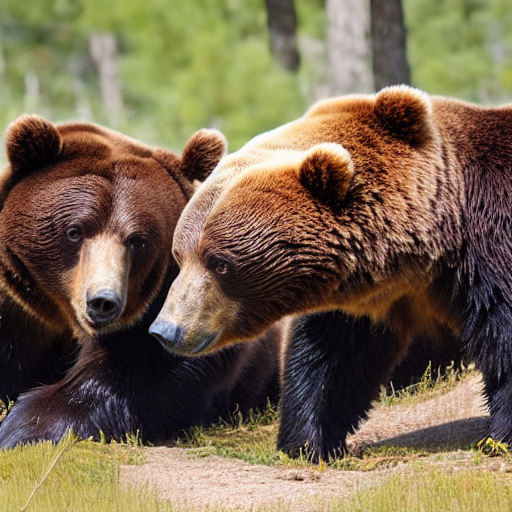
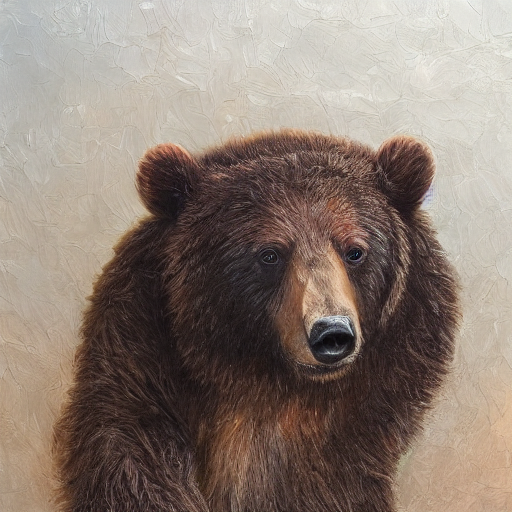
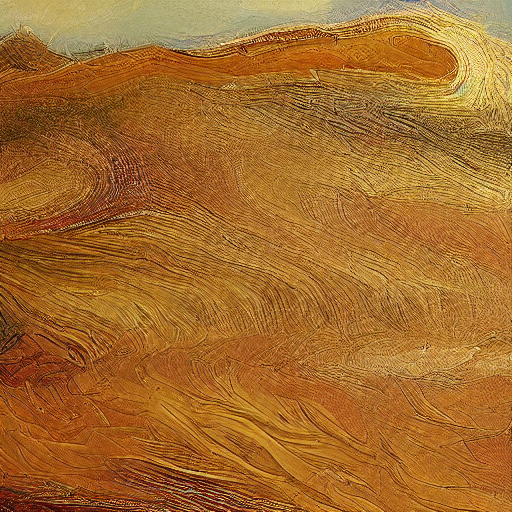
The following are pre-finetuned (left) and post-finetuned (right) outputs for the prompts bear, heaven and dune (each row is for the outputs of a single prompt):

pre-finetuned post-finetuned
nonfinetuned_bear.png finetuned_bear.png
nonfinetuned_heaven.png finetuned_heaven.png
nonfinetuned_dune.png finetuned_dune.png

Limitations

  1. Right now trl's DDPOTrainer is limited to finetuning vanilla SD models;
  2. In our experiments we primarily focused on LoRA which works very well. We did a few experiments with full training which can lead to better quality but finding the right hyperparameters is more challenging.

Conclusion

Diffusion models like Stable Diffusion, when fine-tuned using DDPO, can offer significant improvements in the quality of generated images as perceived by humans or any other metric once properly conceptualized as an objective function

The computational efficiency of DDPO and its ability to optimize without relying on approximations, especially over earlier methods to achieve the same goal of fine-tuning diffusion models, make it a suitable candidate for fine-tuning diffusion models like Stable Diffusion

trl library's DDPOTrainer implements DDPO for finetuning SD models.

Our experimental findings underline the strength of DDPO in generalizing across a broad range of prompts, although attempts at explicit generalization through varying prompts had mixed results. The difficulty of finding the right hyperparameters for non-LoRA setups also emerged as an important learning.

DDPO is a promising technique to align diffusion models with any reward function and we hope that with the release in TRL we can make it more accessible to the community!

Acknowledgements

Thanks to Chunte Lee for the thumbnail of this blog post.