









Enterprise AI is entering the new adoption phase. The latest wave of generative AI brought focus on content creation and conversational interfaces; the next wave is all about action.
Enterprise AI is entering the new adoption phase. The latest wave of generative AI brought focus on content creation and conversational interfaces; the next wave is all about action. Organizations now expect systems that can reason, decide, and act across workflows, not just respond to prompts.
To bridge AI technologies to business outcomes, NVIDIA and HPE Services are collaborating. HPE is launching an agents hub to help ensure structured and scalable enterprise adoption for agentic AI, generally available today. To help ensure the latest and effective AI capabilities adoption, we are bringing NVIDIA Nemotron™ and HPE’s agents hub together. NVIDIA Nemotron is a family of open models with open weights, training data, and recipes, delivering leading efficiency and accuracy for building specialized AI agents. It is one of the advanced reasoning models we are leveraging to build next-generation agentic applications. Its reasoning and tool-calling capabilities make it well-suited for enterprise agents operating at scale. Within HPE’s agent hub, we are developing and validating agents powered by NVIDIA Nemotron as part of a broader portfolio of reference architectures and reusable patterns.
The hub is a structured foundation that turns these capabilities into production systems. Developed by HPE AI experts with cross-industry experience, it provides the frameworks needed to design, scale, and govern agentic AI. Model-agnostic by design, it helps organizations adopt and operationalize intelligent agents aligned with measurable business outcomes.
NVIDIA Nemotron is engineered for advanced reasoning and collaborative agent systems. Unlike conversational models optimized primarily for dialogue, Nemotron supports structured reasoning, tool invocation, and long-context understanding in high-volume enterprise environments.
NVIDIA Nemotron stands out by taking an unusually open approach for a foundation-model family: NVIDIA is releasing the model weights alongside the data and training recipes used to build it, so developers can inspect, reproduce, and extend the work end to end. That level of transparency helps teams build agentic AI with fewer opaque systems than is typical in today’s foundation-model landscape.
Key technical highlights
NVIDIA Nemotron is flexible and designed to support a range of enterprise agent applications. Its architecture and reasoning capabilities make it suitable for collaborative, high-volume workloads across IT, business operations, and knowledge-intensive workflows, enabling agents to perform multi-step reasoning, tool integration, and long-context processing.
Nemotron in action: Agentic Knowledge Assistant Suite
HPE recently developed the Agentic Knowledge Assistant Suite, an AI agent within the hub that combines multiple capabilities:
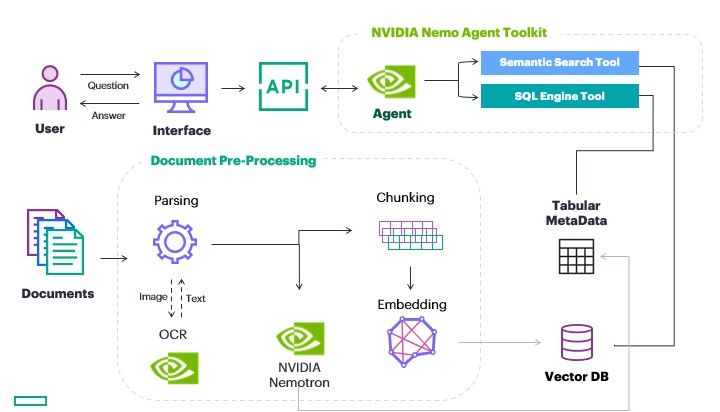
Figure 1. Architecture overview with NVIDIA
Adopting agentic AI raises practical questions: which approaches and architectures work; which models are production-ready; how do you govern scale? HPE’s agents hub addresses these questions by providing a curated catalog of validated agents, proven patterns, and lessons learned from real implementations. It helps enterprises reduce risk, accelerate adoption, and make informed decisions about which agentic solutions to deploy in their workflows.
Agents are described using the following 3C framework:
Organizations leveraging the agent hub benefit throughout their AI adoption journey. Engagement typically begins with feasibility assessment and use case prioritization, followed by validation and prototyping using reference agents. Proof of value projects enable rapid experimentation without starting from scratch, and as solutions mature, enterprises can adopt best practices, governance guidance, and operational lessons embedded in the catalog to scale agentic AI safely and efficiently.
HPE’s agents hub and NVIDIA Nemotron are core capabilities within the portfolio of HPE AI Services – Solutions Adoption, empowering AI use cases development and integration in enterprise core processes, and addressing any enterprise AI adoption maturity level:
People skills are equally important
AI initiatives will not be successful without addressing people skills. Is your team prepared with the right knowledge? HPE is the only accredited NVIDIA Education Learning Partner offering targeted training for the codeveloped HPE Private Cloud AI solutions from HPE and NVIDIA. HPE provides role-based courses and hands-on labs designed to accelerate operational readiness—from platform operators and AI engineers to business stakeholders responsible for governance and change management. These training programs complement engagements by ensuring teams can deploy, operate, and govern private-cloud agentic AI solutions with confidence.
Pulling it together
In summary, leveraging advanced reasoning models such as NVIDIA Nemotron within structured frameworks such as HPE’s agents hub enables organizations to harness the full potential of agentic AI. As part of the joint NVIDIA and HPE AI portfolio, NVIDIA AI Computing by HPE, these capabilities provide the infrastructure, models, and services organizations need to confidently adopt, operationalize, and scale intelligent, decision-making systems that drive tangible operational and strategic outcomes. As enterprise AI continues to evolve, these integrated solutions pave the way for more autonomous, efficient, and impactful workflows.
Meet the authors:
 Raffaele Tarantino, WW AI & Data GTM Strategy Lead, HPE AI Services
Raffaele Tarantino is the WW AI & data GTM strategy lead for the HPE Advisory & Professional Services. He is responsible for the messaging and sales enablement of the services portfolio. Raffaele has 10 years of experience in HPE roles ranging from private cloud consultant to compute specialist and AI architect as a member of the worldwide practice. Raffaele designed the HPE Machine Learning Development Services and contributed to the HPE AI Services – Generative AI Implementation launch.
Contact Raffaele on LinkedIn: Raffaele Tarantino

Ismael Delgado, WW AI Solutions Architect, HPE AI Services
Ismael Delgado is an HPE AI Solutions architect in Advisory & Professional Services with 4 years of experience delivering AI solutions in customer-facing engagements. He specializes in generative AI, AI inference, and agent-based systems, focusing on the technical architecture and design of scalable, production-ready implementations. Ismael has contributed to the creation of the agents hub, developing agent use cases, testing frameworks, and documenting best practices for agent-based solutions.
Contact Ismael on LinkedIn: Ismael Delgado
此内容由惯性聚合(RSS阅读器)自动聚合整理,仅供阅读参考。 原文来自 — 版权归原作者所有。