

惯性聚合 高效追踪和阅读你感兴趣的博客、新闻、科技资讯
阅读原文 在惯性聚合中打开

推荐订阅源

C
CXSECURITY Database RSS Feed - CXSecurity.com
aimingoo的专栏
aimingoo的专栏
Cyber Security Advisories - MS-ISAC
D
Docker
博客园 - 叶小钗
Recent Announcements
人人都是产品经理
人人都是产品经理
云风的 BLOG
云风的 BLOG
Vercel News
Vercel News
Hugging Face - Blog
Hugging Face - Blog
www.infosecurity-magazine.com
美团技术团队
K
KPMG report finds enterprise disconnect between AI and its ROI | CIO
F
Fortinet All Blogs
博客园 - 三生石上(FineUI控件)
Microsoft Security Blog
H
Heimdal Security Blog
有赞技术团队
有赞技术团队
The Cloudflare Blog
S
Secure Thoughts
cs.CV updates on arXiv.org
T
The Blog of Author Tim Ferriss
M
MIT News - Artificial intelligence
Google DeepMind News
Schneier on Security
N
News and Events Feed by Topic
小众软件
小众软件
C
Cybersecurity and Infrastructure Security Agency CISA
Application and Cybersecurity Blog
博客园 - Franky
T
Tenable Blog
The Last Watchdog
The Last Watchdog
腾讯CDC
量子位
Google DeepMind News
Help Net Security
Help Net Security
雷峰网
雷峰网
Recent Commits to openclaw:main
Cyberwarzone
Cyberwarzone
S
Securelist
Martin Fowler
Martin Fowler
OSCHINA 社区最新新闻
OSCHINA 社区最新新闻
罗磊的独立博客
奇客Solidot–传递最新科技情报
奇客Solidot–传递最新科技情报
P
Proofpoint News Feed
D
Darknet – Hacking Tools, Hacker News & Cyber Security
I
InfoQ
Spread Privacy
Spread Privacy
cs.AI updates on arXiv.org
H
Hackread – Cybersecurity News, Data Breaches, AI and More

The Cloud Experience Everywhere articles

What I learned about Epistemia: A new way to build AI you can trust Strategy is the easy part, but can you deliver? Simplify HPE Morpheus Software automation with the new visual workflow builder AI evolution: Shifting from training to inference needs infrastructure modernization HPE Morpheus Central is here. Managing a multisite fleet just changed. Architecting your IT environment for change is key to the Great VM Reset An overview of IT service management using HPE OpsRamp Software Service Desk Beyond the basics: Deeper observability for HPE Morpheus Software – VM essentials Simpler, faster hybrid cloud management with agentic AI in HPE Morpheus Software 9.0 Navigating the signal tsunami: Why shared observability matters today HPE OpsRamp Software named as major player in the IDC MarketScape Achieving zero downtime: A deep dive into HPE Morpheus Software high availability Scaling the hybrid cloud: Unveiling HPE Morpheus Software version 9.0 The rise of agentic AI: Ushering in the next era of intelligent IT Unleashing AI factory ROI: Secure agentic AI on multitenant infrastructure Introducing HPE CloudOps Software for cloud service providers Introducing HPE CloudOps Software for cloud service providers Next-gen IT unleashed: The boom of cloud paging and application packaging The critical role of security fundamentals in the age of AI GreenLake Marketplace launches end-to-end commerce capabilities Discover what’s next with HPE Services at HPE Discover Las Vegas 2026 Secure application modernization with the Strangler Pattern to reduce security risk The private cloud resurgence by IDC—rebalancing cost, control, and AI HPE global trade integration: Enabling compliance in a connected digital world Sovereign by design for the workplace Reset with intent: Four smart moves to rationalize VMware exposure Building the high-performance data foundation for enterprise AI with HPE Storage Mastering hybrid cloud migration with HPE CloudOps Software suite Why sovereign cloud is becoming the backbone of modern workplace solutions Facilitating federated data and AI at scale with federated mesh architectures Reviving private cloud by automating day‑2 operations using Kubernetes operators From alerts to action: how Operations Copilot accelerates incident response Unleashing enterprise AI factories with Kubeflow: Overcoming multitenancy hurdles What a ride it has been—HPE Morpheus VM Essentials Software hits version 8.1 Cyber resilience: Securing the last line of defense in the digital age AI-augmented endpoint engineering: From deterministic to autonomous delivery HPE OpsRamp Software March 2026 release: Key updates for IT operations teams Simplify bare metal management with HPE Morpheus Enterprise Software BMaaS Operations Copilot from HPE OpsRamp Software: Your partner for next-gen IT operations ITIL (version 5): What’s new, what’s different, and why recertification matters Stop overpaying for platforms: Invest in GPUs for real AI value Why buying a training subscription is just like buying a gym membership HPE Morpheus Enterprise Software enhances its Kubernetes service with new features The great VM reset: Why enterprise virtualization needs a new foundation Engineering modern resilient-by-design applications for hybrid cloud PostgreSQL's BM25 ranking algorithm for enterprise-grade search quality Streamlining hybrid cloud: Announcing the unified HPE/hpe Terraform provider v1.1.0 Inside HPE Morpheus Minute: A closer look at storage types in HPE Morpheus Software Introducing True N-Tier Multi-Tenancy in HPE Morpheus Enterprise Software v8.1.0 Beyond observability: From signals to semantic intelligence in hybrid cloud Operationalizing agentic AI with NVIDIA Nemotron and HPE agents hub
Half your AI factory is sitting idle; here is the blueprint that fixes it
2026-03-16 · via The Cloud Experience Everywhere articles

AI factories are becoming the default architecture for enterprises consolidating workloads across business units, AI-as-a-service providers, and sovereign clouds.

HPE202601291082_800_0_72_RGB.jpg

HPE’s AI factory includes everything required to rapidly move from AI planning to AI development and deployment. Hardware, software, services, control plane, networking, open-source components, and accelerators have been engineering-validated for AI-ready productivity as a part of the NVIDIA AI Computing by HPE portfolio.

AI factory at scale
Sovereign AI factory
Private cloud for AI

AI factories are becoming the default architecture for enterprises consolidating workloads across business units, AI-as-a-service providers, and sovereign clouds. The model depends on two requirements working together: outcomes, meaning AI working with the data that matters most at full fidelity, and cost, meaning those outcomes delivered at a cost-per-token that makes the platform viable. The challenge is that the data driving the best outcomes is often the most sensitive data an organization holds. Much of it is restricted from AI entirely. The rest gets routed to dedicated carveouts that fragment capacity and drive up cost. Three compounding factors explain why roughly half the AI factory ends up sitting idle:

  1. Data tax: PII, PHI, financial records, proprietary code, and other sensitive inputs are restricted or must be de-identified, destroying contextual utility.
  2. Infrastructure tax: Operators allocate dedicated hardware carveouts to avoid plaintext exposure, fragmenting capacity, and raising cost per token.
  3. Deployment tax: Compliance cycles, procurement friction, and isolation requirements slow or kill high-value use cases before they reach production.

Most operators never hear about the use cases that die before deployment. Customers have been conditioned to accept dedicated infrastructure as the only path for sensitive data. The demand is there. It’s just suppressed.

Encryption ends where the AI factory begins—All three taxes stem from inference-time plaintext exposure. Even with encryption at rest and in transit, models must see plaintext during inference, which leaves sensitive data exposed in logs, memory, and snapshots reachable through misconfiguration, compromised credentials, or lateral attack. As a result, tenants either avoid sensitive data, strip it of value, or demand dedicated infrastructure.

Multitenant scheduling does not help: it governs who gets compute, not what is visible in the data flowing through the platform.

From ROI killer to platform growth driver

Through the Unleash AI with HPE program, HPE and Protopia AI have validated an operational blueprint that changes this calculus. The Trustworthy AI Factory blueprint combines:

  • HPE and Protopia AI validated an operational blueprint that lets operators safely run regulated, sensitive workloads on shared infrastructure. Core components: AI factory (at scale and sovereign): a consolidated platform that centralizes model training, fine-tuning, and inference while enabling secure, multitenant support for regulated workloads, especially when combined with Protopia AI’s Stained Glass Transform (SGT) and HPE AI Services.
  • Coengineered with NVIDIA, HPE Private Cloud AI delivers a complete, secure AI workbench with a unified data lakehouse and rapidly deployable models and use cases for production deployment in hours. Protopia AI’s SGT: an inference privacy layer that transforms sensitive data into stochastic, model-usable protected representations before it leaves the tenant boundary, ensuring plaintext never reaches the AI factory environment.

The HPE AI Services portfolio includes packaging, integrating, and operationalizing the blueprint across tenants for HPE’s AI factory. HPE Services will also offer SGT creation as a training output, delivering SGT alongside trained models so tenants can deploy private inference on any infrastructure, including HPE Private Cloud AI, AI factory, or inference services.
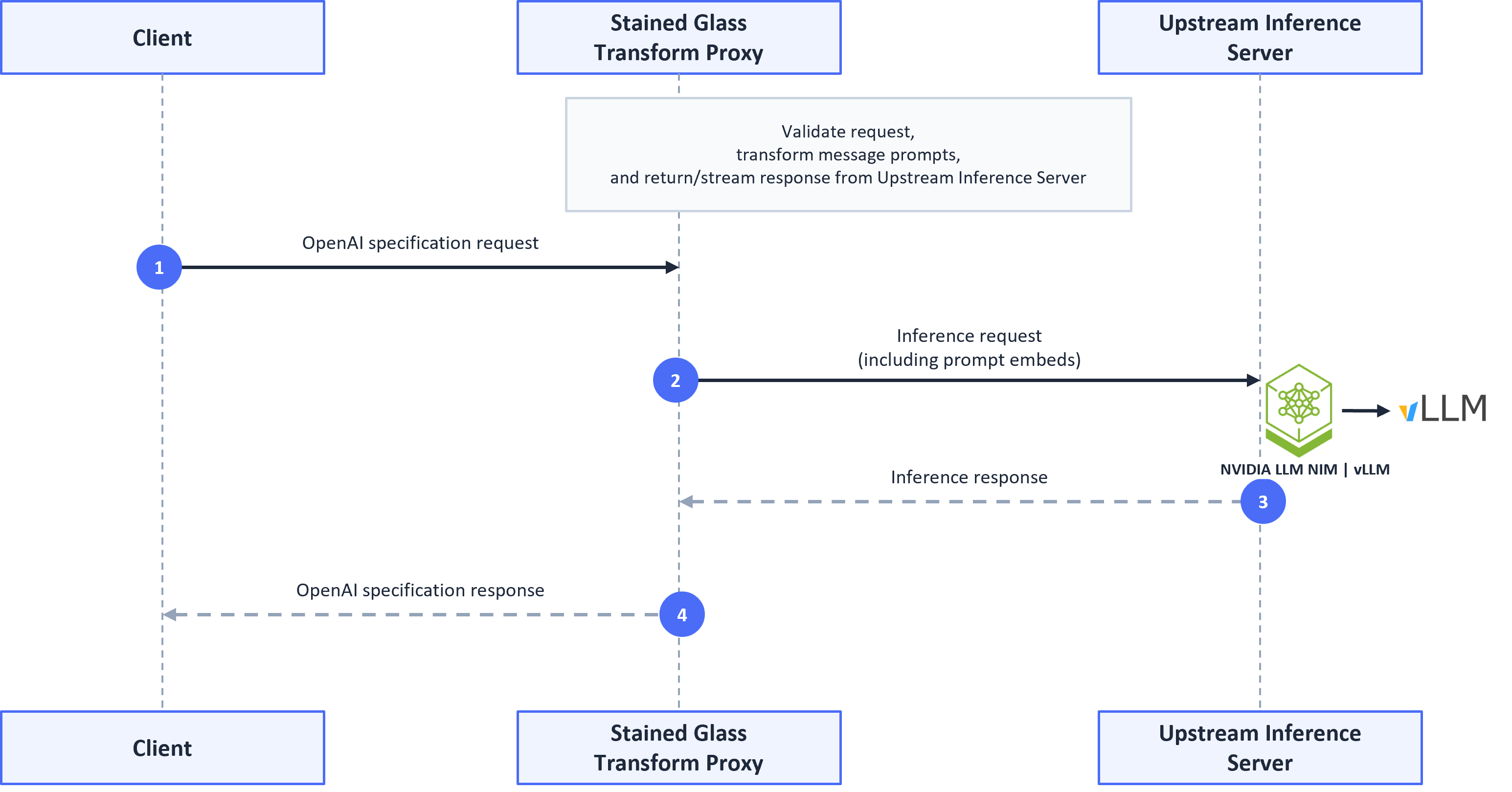
Figure 1. High-level architecture for Protopia with NVIDIA NIM’s1.png

Figure 1. High-level architecture for Protopia with NVIDIA NIM’s1

How Protopia AI’s Stained Glass Transform (SGT) works

  • An SGT sits at each tenant’s data root of trust and converts sensitive prompts (documents, records, code, clinical data) into irreversible, model-specific protected representations before leaving the tenant boundary.
  • The AI factory receives only protected representations, so logs, memory, and snapshots never contain tenant plaintext.
  • This approach integrates with existing inference servers (e.g., NVIDIA LLM NIMs, vLLM) and preserves model utility with near-identical accuracy and negligible latency impact.
  • Multitenancy controls, role-based access control (RBAC), observability, and quota mechanisms continue to function, applied to protected representations rather than raw data.

Economic and operational benefits

For operators, the economics shift in three ways. First, workloads that required dedicated carveouts move to shared capacity, and GPUs that were reserved for a single tenant now serve many. Second, use cases that were killed at the business case stage become deployable, turning every sensitive workflow that comes online into incremental token volume. Third, regulated industries that previously required dedicated infrastructure become addressable on the same shared platform.

AI factory operators need to support sensitive workloads on shared infrastructure without forcing customers into dedicated carveouts that undermine platform economics. Our technical validation of Protopia’s SGT on HPE Private Cloud AI confirmed what we needed to see: model accuracy retention, production-grade throughput, and seamless latency scaling. This gives our customers a practical path to serve high-value workloads that were previously too costly or too restricted to deploy.

Deployment patterns supported

  • Enterprise AI hub: Multiple business units share AI factory capacity while keeping sensitive data under local control. Teams handling PII, PHI, financial records, or proprietary IP run on a common HPE Private Cloud AI infrastructure without dedicated carveouts, because only protected representations reach the platform.
  • Operator-run inference farm: Sovereign AI providers, Managed Service Providers (MSPs), and telcos serve regulated customers without taking custody of customer plaintext. Each customer runs SGT at its own data root of trust. Only protected representations reach the operator’s platform, opening demand from regulated markets that previously required dedicated infrastructure.
  • Shared training facility: Tenants train custom models on AI factory infrastructure and leave with both the trained model and an SGT, a portable inference privacy layer that makes the model deployable for sensitive use cases on any infrastructure without requiring dedicated hardware.
  • Partner validation and inference: Enterprises hosting proprietary models on HPE Private Cloud AI can serve those models to partner organizations without either party exposing sensitive data to the other. Each partner runs SGT locally, sending only protected representations to the enterprise model. One platform serves multiple partners with no plaintext exchange.

The operators who can offer private inference on shared infrastructure will capture the workloads and customers that others are still waiting to be asked about. The blueprint is ready. The question is who moves first to capitalize on higher utilization, lower cost per token, and access to regulated markets previously locked behind dedicated infrastructure.

Learn more at

1 “Prompt Embeddings with NVIDIA NIM for LLMs,” NVIDIA.

Meet the authors:

Maria Ridruejo.png

María Ridruejo, AI Solutions Lead, HPE Services

María Ridruejo is the AI Services lead for the WW Advisory and Professional Services AI and data segment at HPE. She leads a global team of solution architects, owns the strategy for HPE AI Services portfolio, and drives the innovation road map that brings new AI capabilities and offerings to enterprise customers around the world.

Previously, María served as the technical lead for establishing the AI & Data Global Center of Excellence in Madrid. In this role, she defined the COE’s technical blueprint, implemented best practices across data engineering, AI use case development, and MLOps, and built and mentored the founding teams.

With more than 20 years of IT experience across diverse technology domains and every stage of the solution lifecycle, María specializes in operationalizing AI at scale, ensuring responsible and trustworthy AI practices, and delivering measurable business outcomes for global enterprises.

Maria Ridruejo | LinkedIn

Bhuvaneshwari Guddad.jpg

Bhuvaneshwari Guddad, Chief Technologist, HPE Services

Bhuvana is the chief technologist for enterprise-scale AI, GenAI initiatives within Advisory and Professional Services. She serves as a trusted advisor and chief architect for high-stakes, data-sensitive engagements, with deep expertise in governance-led, privacy-aware AI solutions. She brings strong expertise across industry vertical use cases, translating complex business challenges into tangible, scalable solutions with clearly defined ROI, KPIs, and measurable outcomes. Her experience spans data platforms, artificial intelligence, generative AI, agentic AI, and digital twin technologies, and she is recognized for aligning technical strategy with measurable business impact.

Bhuvaneshwari Guddad | LinkedIn

Brittany Carambio.jpg

Brittany Carambio, AI Infrastructure Marketing Leader, Protopia AI

Brittany Carambio leads marketing at Protopia AI, which turns AI security into a value driver by eliminating plaintext exposure during inference. She has built go-to-market strategies for infrastructure, data, and security startups from early stage through growth. Previously, she led corporate marketing at OctoAI (acquired by NVIDIA) and data governance marketing at Egnyte. Brittany began her career at In-Q-Tel (IQT) and focuses on translating deep tech into real-world outcomes.
Brittany Carambio | LinkedIn