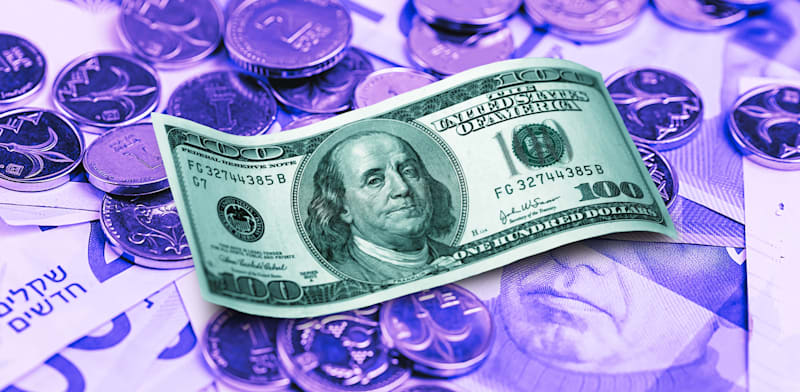
The shekel is trading at its strongest against the US dollar in more than 30 years, after falling below the NIS 3/$ threshold last month. On Friday the Bank of Israel set the shekel-dollar representative rate unchanged at NIS 2.907/$, the shekel-euro rate was set down 0.105% at NIS 3.419/€, and the shekel-sterling rate was set down 0.131% at 3.956/£.
The shekel has gained over 8% against the US dollar since the beginning of the year, and by almost 20% since June 2025. Is there anything that could reverse the trend in the shekel-dollar rate? Experts say that the shekel should continue to strengthen against the dollar, but there are scenarios that could see the exchange rate change direction.
Bank Hapoalim chief markets strategist Modi Shafrir says, "The factors that support a strong shekel are familiar to us: there are huge direct investments in Israel, a wealth effect is created that causes dollar conversions as a result of exits in high-tech and also from the activities of the businesses themselves. "
He adds, "Institutional entities continue to reduce their exposure to foreign currency. We do not have official data from the Bank of Israel, but according to estimates published (in Globes), they will drop to a region of 17%-18% exposure to foreign currency (from levels of 25% at the end of 2024)."
"Bank of Israel will not intervene"
Shafrir stresses, "There have been sharp increases on foreign stock markets. What had a specific impact on Friday was a bit more optimism on Iran, and investors' hope that the situation will end. This led to price increases on foreign stock markets and it also strengthened the shekel against the basket of currencies. What is very significant is that the Bank of Israel is not currently intervening in foreign exchange trading and is not saying that it is going to intervene. In the past, at dollar-shekel levels higher than the current levels, the Bank of Israel would say that it would start supporting (the dollar) in order to help exporters."
So what could change the trend of the shekel-dollar trend? Shafrir speculates, "Sharp declines on global markets. A situation in which the Bank of Israel comes in and changes the trend and launches a program in which it buys, say, $30-40 billion, with the understanding that otherwise it could harm the economy (in exports). This could change the trend and weaken the shekel, at least in the short term. A scenario of a return to an aggressive war with Iran, which would lead to declines in the world's financial markets, could also lead to this."
Another issue, he says, is "A change of mind by the institutions that would increase dollar exposure - but I don't see this as a likely scenario, or a change of trend on the part of the public (in investments abroad). However, due to the appreciation of the shekel, and the erosion of the shekel returns of the S&P 500 tracks, I don't see this happening either right now."
RELATED ARTICLES
Strengthening shekel nears NIS 2.90/$ threshold
Leader Capital Markets chief economist Jonathan Katz agrees. He says, "Two main factors could cause the dollar to strengthen again in the world. The first is an escalation with Iran or another geopolitical event (occupation of Taiwan, etc.), which causes a flight to safety phenomenon, a run to the safe currency. The second is a sharp increase in US inflation data next week, which increases the likelihood of a Fed rate hike."
"Keep the institutions away from the exchange rate mechanism"
Prico Group CEO Yossi Fraiman adds another possibility. He says, "The Ministry of Finance could purchase foreign exchange against its bonds abroad, and then it would set in shekel terms part of the debt. This action is natural in terms of hedging and risk management. In terms of demand and supply, there will be a factor here that will provide demand, and this is what is missing in the market, and emergency action is needed here."
The long-term solution, he says is, "Routing the activities of the institutions outside the exchange rate mechanism in Israel. Pension savings are huge. For example, the S&P 500 track alone, to which the public deposits money in pension savings, is huge and long-term, why would it affect current activity? Why not transfer it to a track similar to the equity funds (OCI). This means that all changes in the exchange rate that have not reached maturity are not charged to profit and loss and are only an item in equity. It does not shake the system every morning, because of fluctuations in the exchange rate. We must neutralize the long-term activities of the institutional bodies from the mechanism that determines the exchange rate."
Published by Globes, Israel business news - en.globes.co.il - on May 10, 2026.
© Copyright of Globes Publisher Itonut (1983) Ltd., 2026.