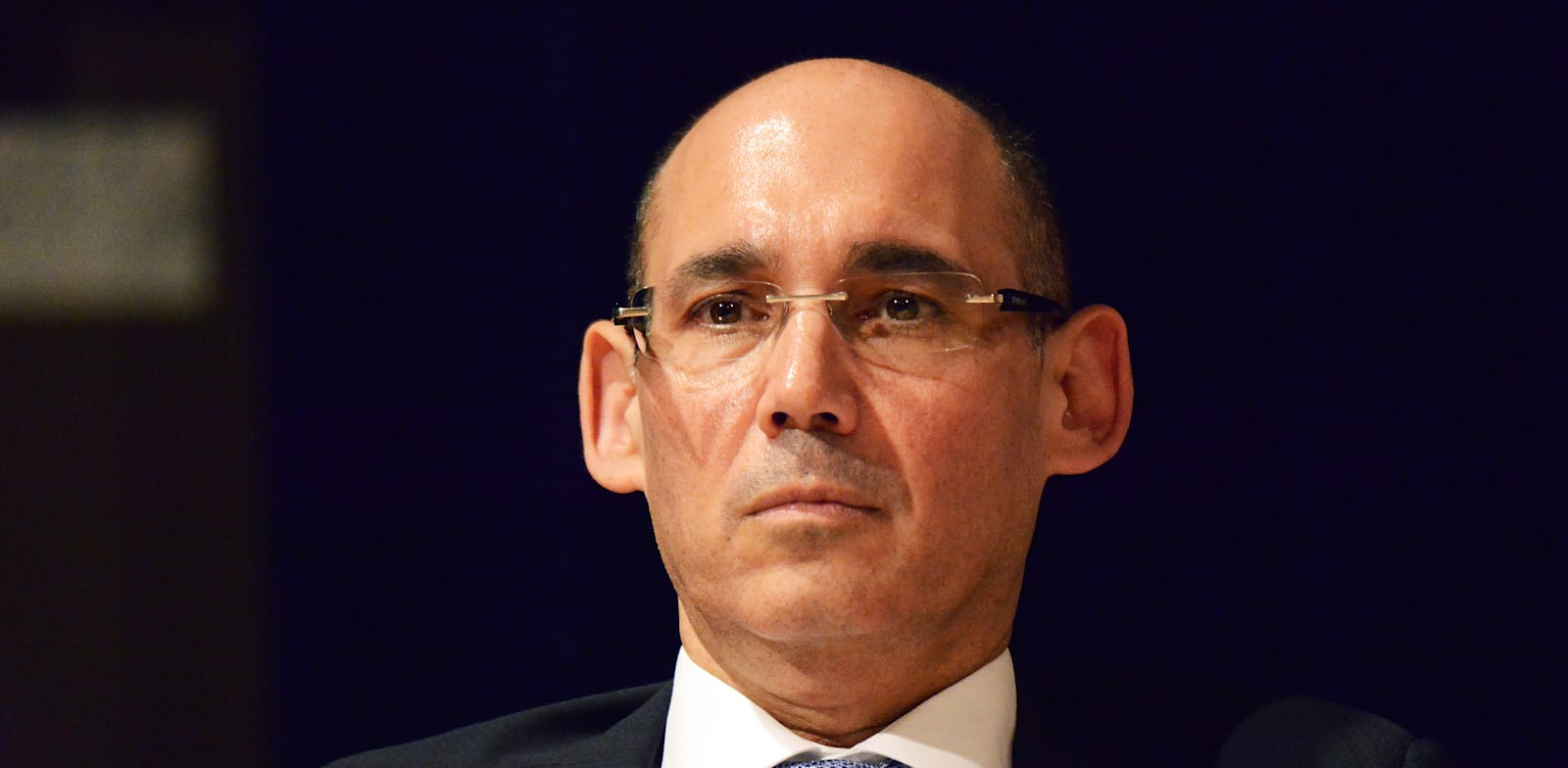
Governor of the Bank of Israel Amir Yaron spoke to "Globes" following the announcement by the bank that its Monetary Committee had decided to cut its interest rate by 0.25% to 3.75%. In its decision, the Committee placed special stress on the appreciation of the shekel and its effect on inflation expectations, but although analysts believe that the central bank could intervene in the foreign exchange market, Yaron is in no rush to do so.
"The strengthening of the shekel reflects the robustness and resilience of the Israeli economy, and that’s good news," Yaron said. "We understand that the strong shekel brings relief in the cost of living. The appreciation of the shekel stems from three causes: the improvement in Israel’s risk premium and the geopolitical events that that reflects; the rises on overseas stock markets, through the money of the financial institutions; and of course the general weakness of the dollar. But in the end there’s a current account surplus, and as far as economic activity is concerned exports grew in the first quarter as well.
"I don’t dismiss the impact of the dollar exchange rate on exporters lightly, but it must be borne in mind that the central bank is not meant to change basic economic forces. In principle, intervention is part of the Committee’s toolbox, but it is focused on specific, temporary situations of inflation, chiefly very low inflation, and on ensuring that the market functions properly."
Government officials have more than hinted that you ought to cut interest rates. All in all, have you not acceded to the calls of the government and the private sector?
"As you know, we work according to data and not according to declarations, and we make the most correct decisions for the benefit of the economy and of the country’s citizens and that is what we keep in mind. As far as the decision is concerned, our decisions balance between maintaining inflation within the target range and support for economic activity, and our policy has succeeded: inflation is at the middle of the target at around 2%. Besides that, the shekel has strengthened and further moderates inflation risks, and all these things enabled us, in managing risk, to cut the interest rate now.
"We take everything into account, and it’s important to stress that the economy is displaying resilience and strength, and exports still rose despite the month of war in the first quarter. All the same, as I said, I don’t regard the effect of the dollar exchange rate on exporters lightly, and we’re examining that. I talked about general management of inflation risks versus support for the economy, and given that the shekel is moderating inflation risk even further, that is what made the interest rate cut possible."
RELATED ARTICLES
Strong shekel pushes companies overseas
Israel's economic paradox: The view from the Treasury
Israel’s Consumer Price Index jumps
In fact, since the previous decision, many variables have not changed: geopolitical uncertainty, the debt:GDP ratio, and defense spending. Is the rate cut not accompanied by fears? What has changed besides the appreciation of the shekel?
"That’s an excellent question, because I want to say that the decision embodies the right balance. On the one hand, inflation has been stabilized and the economy is displaying at least resilience and robustness through the war in a challenging period. On the other hand, there are risks, and they are not few. There are geopolitical risks, supply constraints because of the mobilization of reservists, and we see what is happening in the north and on other fronts. We’re monitoring these things, and the impact of the supply constraints. You have to remember that inflation around the world rose recently because of energy prices among other things, and in the end, to the extent that that becomes permanent, it is liable to be imported into Israel. All these things are risks. In managing the risks, the rate cut became possible because we are in the middle of the target and the stronger shekel further moderates inflation risks, but those risks exit."
On the discrepancy between impressive macro figures, certainly for wartime, and the economic challenges faced by many Israelis, Yaron said: "At the macro level, the economy really does display resilience and strength, and that is backed by studies that examine wars and in general find much more significant economic damage after two and a half or three years and higher cumulative inflation. But clearly the cost of living is high, and I don’t dismiss that, certainly not the situation of young couples and their ability to afford housing. Therefore, the whole time, even when we raised interest rates, we examined what was happening at the individual level through the credit providers’ database.
"We also know that in the end inflation chiefly harms the weaker social strata, which is why it was so important for us to deal with it. At present we’re in the middle of the target, and in many ways that’s an achievement, in the light of the war. Of course barriers to imports should be lowered so that the cost of living will fall, education should be managed in such a way that the younger generation will be able to progress and earn better, at all levels and in all sectors, and of course I talk a great deal about the need to invest in infrastructure. These are things that lead to higher productivity, and not just at the macro level, so that more and more citizens will be able to see it at the micro level."
Published by Globes, Israel business news - en.globes.co.il - on May 26, 2026.
© Copyright of Globes Publisher Itonut (1983) Ltd., 2026.