








As the Iron Curtain of the Cold War hung over Europe in 1947, the ghostly silhouette of a formidable Nazi ship hovered on the horizon of the Baltic Sea, a mirage of the war that had ended two years prior. This was Nazi Germany’s first and only aircraft carrier, Graf Zeppelin. Echoing a battle that once might have been, Soviet ships fired at the carrier, striking it with terrific explosions. Blasted by torpedoes, the massive vessel sank beneath the cold waves of the Baltic Sea—and its final resting place remained a mystery to the rest of the world for nearly half a century.
This was an inglorious fate for a ship launched with fanfare in 1938 and hailed as the pride of the Nazi regime’s navy, the Kriegsmarine. It was christened with the name of one of Germany’s most famous inventors, Ferdinand von Zeppelin. Ironically it shared the name “Graf Zeppelin” with another scrapped invention: the Graf Zeppelin passenger airship, whose buoyant but brief career ended in the wake of the horrifying Hindenburg disaster of 1937, when an airship caught fire, killing 36 people. Why did the bold aircraft carrier end in such disaster—and could it have made any difference to Nazi Germany’s war aims?
The aircraft carrier was an odd bird for Nazi Germany from the outset, getting off to a bad start as it embodied a Nazi prestige project. In fact, it was one of many, which collectively contributed to Germany losing the war. Adolf Hitler managed to scare the British to the negotiating table in 1935 to sign the Anglo-German Naval Treaty. This move was part of Hitler’s aim not only to undo but flamboyantly exceed restrictions imposed on Germany’s military by the 1919 Treaty of Versailles after World War I. To appease Hitler, the British government politely agreed he could build two aircraft carriers, which ought to be smaller than British ones. They also allowed the Germans to come visit and inspect their carriers for inspiration.
The result was the Graf Zeppelin carrier project, typically mammoth in scope and Hitlerian in its ambition. At 19,250 tons, this new class of carrier would indeed be smaller than British versions—but armed to the teeth with guns and armor that made it more like a battleship than a portable flight deck. The carrier would also be capable of launching 40 of almost every type of Luftwaffe aircraft into battle, including fighters, dive bombers, torpedo bombers, and reconnaissance planes. Furthermore, it would have the best aspects of an ocean liner—with accommodations for a naval crew of 1,760 plus additional air crews. Those crews could live lavishly on the vessel too, as it housed bakeries, reading halls, shoe shops, and hair salons.
It was grandiose. It was unprecedented. And it was rather difficult, considering that German engineers previously grappling with poverty and the demolished military had zero experience in building aircraft carriers.
“Germany is a land power. In both world wars, the main focus for Germany was not at sea,” says Nicholas Reynolds, PhD, author, World War II historian, and former historian for the CIA Museum.

Graf Zeppelin only reached about 80 percent completion before the Kriegsmarine decommissioned it.
While aircraft carriers could conceivably have aided the Kriegsmarine in sea battles, Germany faced an uphill battle between the world wars to prepare adequate naval forces to match those fielded by Britain and the United States at the outset of World War II, he explains.
Using aircraft carriers effectively in battle requires not only production but support over long distances at sea, proficiencies which the U.S. and Japanese navies both demonstrated during battles in the Pacific. To accomplish this, the Germans would’ve had to undergo a complete shift in war aims and manufacturing goals, not to mention an overhaul in naval doctrine, Reynolds explains.
“Basically the leopard would have had to change its spots to create and successfully use carrier forces in the war,” he says.
In reality, the matters of doctrine, supply, and a generally coherent approach didn’t trouble Hitler or other leading Nazi dignitaries at the official christening of Graf Zeppelin on December 8, 1938, in Kiel, Germany. The ship wasn’t half finished yet, but that wasn’t going to get in the way of good publicity. It launched to a blast of trumpets, a naval parade, and a rip-roaring speech from Hermann Goering, chief of the German air force, the Luftwaffe.
“The ship, this gigantic hulk of iron and steel, stands here thanks to the joint work of technicians and workers of different educational backgrounds and a multitude of diverse skills,” declared Goering, inadvertently summing up the chunk of metal that the vessel would eventually become. The massive manufacturing project would start sliding soon after praise for Graf Zeppelin splashed across nearly four pages of coverage in the Nazi Party’s official Völkischer Beobachter newspaper.
Hitler was skeptical of whether bigger ships didn’t simply become bigger targets. For instance, on May 27, 1941, the British sank the Bismarck, another large jewel of the Kriegsmarine. Work on Graf Zeppelin straggled as German war aims focused elsewhere in Europe. Moreover, the Luftwaffe and the Kriegsmarine operated as separate entities and failed miserably at joint efforts to design a floating airfield. The Luftwaffe constantly changed their designs and even aimed to produce planes with folding wings to fit aboard a vessel, prompting the Kriegsmarine to adapt its ship in a vicious cycle.
Hitler greenlighted work on Graf Zeppelin at full speed again as of March 1942. This whim came not long after the December 1941 Battle of Wake Island, in which the Japanese scored a victory against U.S. forces in the Pacific largely due to their skillful use of aircraft carriers. Work resumed in Kiel. Then Hitler changed his mind again and decided in January 1943 that large surface ships were a lost cause. All work on such vessels stopped. The ship never sailed using its own propulsion system; instead German navy personnel dragged Graf Zeppelin everywhere during its short lifetime—often evacuating it from Allied warplanes’ bombs. The Kriegsmarine decommissioned Graf Zeppelin on February 2, 1943, and towed it to a gloomy spot on the Oder River Delta bordering Poland.
Floating quietly on a tributary called the Möhne river, the Kriegsmarine harvested Graf Zeppelin for spare parts. It was already toothless, as the Kriegsmarine shipped its guns off for use elsewhere. As the war ground to its bloody conclusion and Soviet troops came barreling toward the borders of Third Reich, the Germans opted to destroy the metal monstrosity to stop the Soviets from using it. After sabotaging its propulsion system, they deliberately sank the vessel, and Germany’s first aircraft carrier settled into the mud.
It’s unclear how the Soviets learned of the ship’s location or managed to raise it from the depths, but they succeeded in refloating Graf Zeppelin after the guns of war fell silent. In a strange stroke of fate, a Russian crew lived aboard the vessel of their former enemies to gather intelligence about its design for Soviet use. The Soviets renamed it “PB10.” In 1947, they hauled it out into the Baltic Sea and sank it using torpedoes in a live-fire exercise.
In July 2006, a Polish oil company called Petrobaltic accidentally located the wreck some 35 miles off the coast of Wladyslawowo while using sonar for exploration and research. Polish divers of the research vessel Arctowski descended and positively identified the ghostly skeleton lying on the seabed as Hitler’s formerly prized aircraft carrier. It had come quite a long way from its initial launch, surrounded by smiles, cheering, and national acclaim all those long years ago in 1938. Was this its inevitable end—or did Germany make a strategic error in overlooking the untapped potential of aircraft carriers?
“It's difficult to say whether Germany's failure to develop aircraft carriers made a big difference in the European Theater of World War II,” says Tom Young, military historian, aviation expert, and author. “However, a lot of historians say the battleship was already outdated in the 1940s, and the aircraft carrier's time had come. U.S. aircraft carriers were certainly decisive in the Pacific Theater.”
Had Graf Zeppelin been completed, could it have played a role in using close air support to defend the Bismarck? Possibly, but both ships would certainly have had the British Royal Navy’s target on their backs nevertheless.
“No one thing is decisive. It’s the whole system that’s decisive,” says Reynolds, explaining that wartime intelligence played a huge factor in the successful U.S. defeat of German U-boats. Ultimately, the problem was not so much technology as Hitler’s deliriously changing war aims.
“With Hitler’s agenda, it’s hard to imagine how he could have won World War II,” Reynolds says. “His approach was nonstop dynamics. He was always doing something and there was always drama. Conquer this, fight that. He was not interested in stability.”
As with the war itself, it was an excess of ambition and lack of resources to follow through that ultimately led to the demise of Graf Zeppelin. Its untapped potential in terms of shifting the balance of German sea power can now only be measured in speculation and unfulfilled dreams.

February / March 2026
This issue is optimized for mobile/tablet viewing. It's also available on Apple News+.
Featuring:
➡ Archaeologists Found a Skeleton Wearing a Silver Amulet. The Discovery Is Rewriting the History of Christianity.
➡ The Stray Dogs of Chernobyl Are Rapidly Mutating. Scientists Are Still Trying to Figure Out What It Means.
➡ New Evidence Could Upend What We Know About the Charles Lindbergh Baby Murder
➡ Police Found Mysterious Notes in a Dead Man's Pocket. They Turned Out to Be Codes That Not Even the FBI Can Break.

December 2025 / January 2026
This issue is optimized for mobile/tablet viewing. It's also available on Apple News+.
Featuring:
➡ An Angel of Death Preyed on Hospital Patients for Years.
➡ How America's Most Advanced Lab Brought the Killer to Justice.
➡ A 3,000-Ton Locomotive Was Loose, Unstoppable, and Filled With Toxic Cargo
➡ An Underwater Cave Promised Adventure and Glory. No One Expected It to Become a Tomb.
➡ Your Consciousness Can Predict the Future, Some Scientists Say

October / November 2025
This issue is optimized for mobile/tablet viewing. It's also available on Apple News+.
Featuring:
➡ Inside the Secret Island Where Death Is Optional
➡ A Legendary Ship Sank Without Warning. Fifty Years Later, Science Could Finally Solve the Mystery of the Edmund Fitzgerald.
➡ This Tech Rebel Threw Away $900 Million in a Municipal Dump. Can Robots Find His Lost Fortune?
➡ Sex Workers, LSD, and Mind Control: What Happened in the CIA's Lab of Nightmares at 225 Chestnut Street

August / September 2025
This issue is optimized for mobile/tablet viewing. It's also available on Apple News+.
Featuring:
➡ The Worst Air Disaster in American History Happened in Broad Daylight. Will More Mistakes Keep Happening?
➡ NASA Has a Plan to Save Earth from Planet-Destroying Asteroids. It Sounds Even Wilder than Science Fiction.
➡ A Naval Officer Says Underwater UFOs Are Legitimate Threats. The Evidence Is Hard to Ignore.
➡ When You Die, a Psychedelic Molecule Shapes Your Final Moments of Consciousness, a New Theory Reveals.

June/July 2025
This issue is optimized for mobile/tablet viewing. It's also available on Apple News+.
Featuring:
➡ This Undersea Explorer Found America's Greatest Sunken Treasure. Then Things Got Really Weird.
➡ Is Bigfoot Hiding in the Swamps of Florida? This Group Says It Has Proof.
➡ Scientists May Have Gotten the Global-Warming Timeline Seriously Wrong.
➡ A Third State Now Exists Between Life and Death, Some Scientists Now Believe

April/May 2025
This issue is optimized for mobile/tablet viewing. It's also available on Apple News+.
Featuring:
➡ Scientists Successfully Revive a Dead Brain, Redefining the Boundary Between Life and Death
➡ Fingerprints Keep Leading to Wrongful Convictions. Why Do Courts Still Rely on Them?
➡ For 80 Years, the North Sea Held a Deadly Killer. Now Scientists Are Racing to Defuse the Threat.
➡ They Built the Quietest Room in the World. Why Is Everyone So Afraid to Step Inside It?
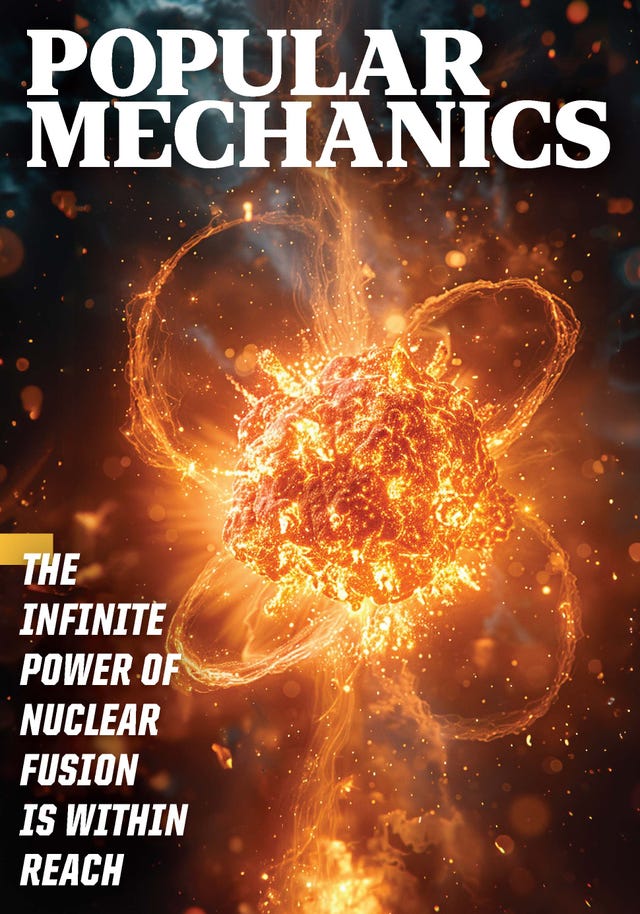
February/March 2025
This issue is optimized for mobile/tablet viewing. It's also available on Apple News+.
Featuring:
➡ This Guy Says He Knows the Truth About UFOs. Should We Believe Him?
➡ Scientists Are Now One Step Away From Solving Nuclear Fusion—And Unlocking Unlimited Energy.
➡ A Million-Dollar Heist Rocked the Art World— Then Amateur Sleuths Cracked the Case
➡ A New Era of Missile Warfare Has Begun—and the U.S. Isn’t Ready
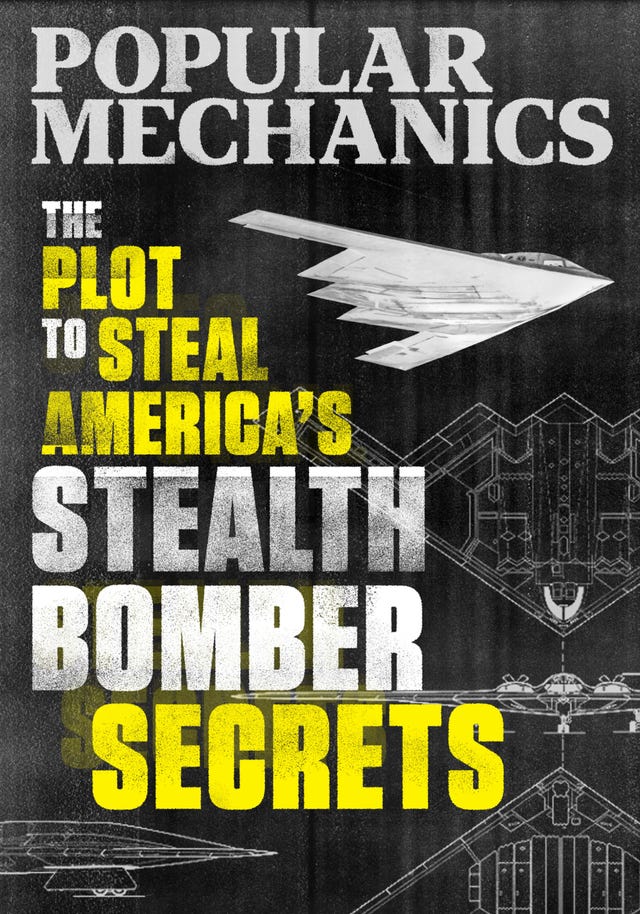
December/January 2025
This issue is optimized for mobile/tablet viewing.
It's also available on Apple News+.
Featuring:
➡ A Clue Hidden in a 400-Year-Old Map Might Have Just Solved One of America's Greatest Mysteries
➡ Inside the Deranged Plot to Smuggle Cocaine With an Armed Soviet-Era Submarine
➡ This Brilliant Engineer Helped Build the B2 Bomber—Then He Sold America's Stealth Secrets to China
➡ Your Consciousness Can Connect With the Whole Universe

October/November 2024
This issue is optimized for mobile/tablet viewing.
It's also available on Apple News+.
Featuring:
➡Untold Secrets Reveal How the Castle Bravo Test Became America’s Worst Nuclear Disaster
➡ This Body Was Found Preserved on a Block of Ice in a Colorado Shed. It Had Been There for 30 Years.
➡ It Was Supposed to Be America's Greatest Victory in Space—Then It Became NASA’s Worst Nightmare
➡ The Sidewinder Missile Ruled the Air—Then the Soviets Stole the Design

August/September 2024
This issue is optimized for mobile/tablet viewing. It's also available on Apple News+.
Featuring:
➡This Man Knows the Truth About Amelia Earhart. Why Doesn't Anyone Believe Him?
➡ The Army's Machine Gun Is No Match for Cheap Chinese Body Armor. So It's Making a New One.
➡ Russia Built a Stunning Rival to the Supersonic Concorde—and Then It Fell From the Sky
➡ A Navy Admiral Says Underwater UFOs Are a Threat—and the Pentagon is Withholding Secrets

June / July 2024
This issue is optimized for mobile/tablet viewing. It's also available on Apple News+.
Featuring:
➡4 Black Eggs Have Surfaced From the Depths of the Ocean— and the Mysterious Creatures Inside Are Baffling Science
➡ A $2 Million Treasure Appeared in a Kentucky Cornfield. No One Knows Where It Came From.
➡ A Million-Dollar Heist Rocked the Art World— Then Amateur Sleuths Cracked the Case
➡ A New Era of Missile Warfare Has Begun—and the U.S. Isn’t Ready

April May / 2024
This issue is optimized for mobile/tablet viewing. It's also available on Apple News+.
Featuring:
➡The Man Who Knows Too Much About Area 51
➡ How the FBI Took Down the Internet's Most Dangerous Website
➡ A Staggering New Clue Emerges in the D.B. Cooper Hijacking Mystery
➡ The Wildest Prison Break in U.S. History
➡ The Secret to a Perfect Lawn Lies in One of These 10 Electric Lawnmowers

February / March 2024
This issue is optimized for mobile/tablet viewing. It's also available on Apple News+.
Featuring:
➡The Incredible Mystery of NASA’s Missing Moondust
➡ Inside the Final Fiery Minutes of the East Palestine Train Wreck
➡ Scientists Believe They’ve Unlocked Consciousness—and It Connects to the Entire Universe
➡ Why This Unstoppable Stealth Bomber Will Rule the Skies
➡ America Is Developing a New Nuclear Bomb—But Can’t Test Whether It Works
➡ The 8 Best, Expert-Recommended Solar-Powered Generators
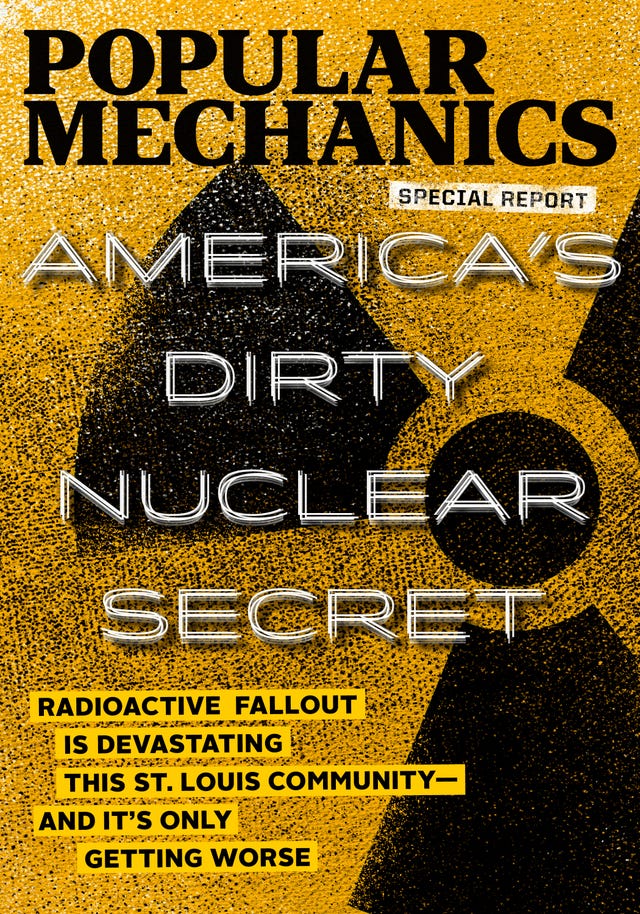
Special Issue: Nukes
➡ How Deadly Nuclear Waste Is Menacing This St. Louis Neighborhood
➡ The Terrifying History of Russia's Nuclear Submarine Graveyard
➡ Strange Mutations in Stray Dogs Near Chernobyl Suggest They Are Rapidly Evolving
➡ America Dumped 56 Million Gallons of Radioactive Material Along the Columbia River—Then It Started to Leak

December 2023 / January 2024
This issue is optimized for mobile/tablet viewing. It's also available on Apple News+.
Featuring:
➡ A New Clue In Amelia Earhart's Disappearance Emerges From the Ocean
➡ How an Alleged Water Bandit Stole $25 Million in Water from Thirsty California Farms
➡ A Coal Mine Exploded and 300 Miners Died. What Went Wrong?
➡ China Just Built a Terrifying New Aircraft Carrier and May Soon Dominate the Seas

October / November 2023
This issue is optimized for mobile/tablet viewing. It's also available on Apple News+.
Featuring:
➡ How Rats Took Over Our Cities—And Why We Can't Stop Them
➡ This Language Is on the Verge of Extinction. Can It Be Saved?
➡ America's Deadliest Warplane Returns in a New Doomsday Role
➡ This Amateur Diving Group Kept Solving Cold Cases. Then Its Own Skeletons Surfaced.
➡ The Scientific Breakthrough That Could Put an End to Gray Hair.

August/September 2023
This issue is optimized for mobile/tablet viewing. It's also available on Apple News+.
Featuring:
➡ Immortality Is in Reach. But It’s Not What We Imagined.
➡ Your Next iPhone (and Nuclear Subs) Will Be Powered By Space Metal
➡Scientists Now Think We Can Build a Warp Drive
➡ China and Russia Have Cracked the Stealth Code. Can the U.S. Regain Air Dominance?

June/July 2023
This issue is optimized for mobile/tablet viewing. It's also available on Apple News+.
Featuring:
➡ The CIA’s Secret Plan to Build a Laser Beam Powered by the Human Mind
➡ The 747 Ruled the Skies—Then One Slammed Into a Mountain
➡The Race to Contain AI Before Singularity
➡ These Florida Homes Aren’t Just Hurricane-Proof—They’re Blueprints for the Future

April/May 2023
This issue is optimized for mobile/tablet viewing. It's also available on Apple News+.
Featuring:
➡ AI Is on the Cusp of Taking Control—This Is How It May All Go Wrong
➡ There’s No Weapon Russia Fears More Than the HIMARS Rocket Launcher
➡The Nuclear-Submarine Arms Race Is Getting Intense, and the U.S. Just Took a Massive Leap Forward
➡ Iran Is Becoming a Drone Superpower—By Stealing American Technology
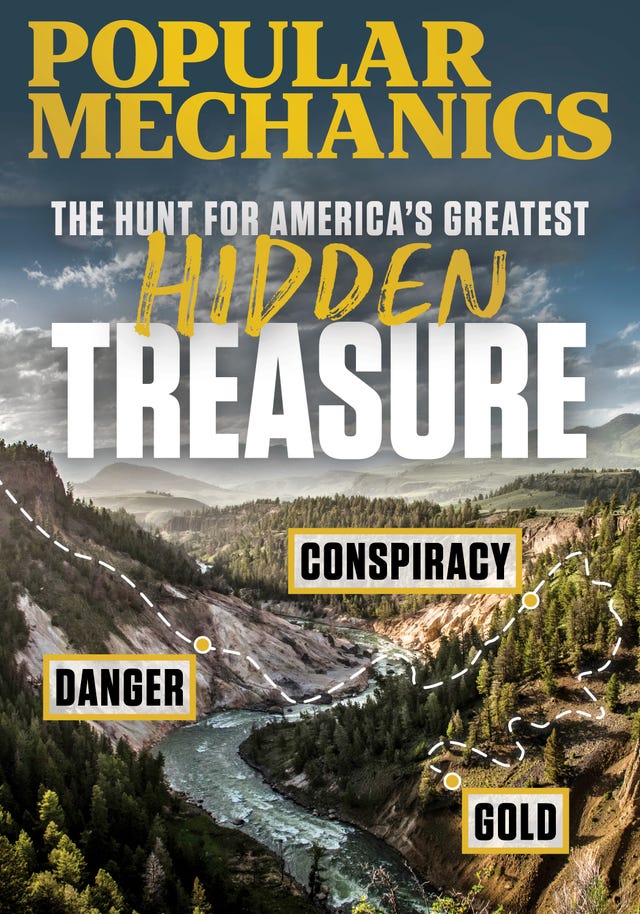
February/March 2023
This issue is optimized for mobile/tablet viewing. It's also available on Apple News+.
Featuring:
➡ The Greatest Treasure Hunt in American History Ended—and Then Things Got Weird
➡ These Are the High-Powered Weapons Ukraine Needs to Send Russia Running
➡ The Secret War to Take Out Iran’s Fleet of F-14 Jets
➡ Russia Is Trying to Intimidate the U.S. with Hypersonic Missiles and Big, Scary Nukes—And It's More Than a Threat

December 2022/January 2023
This issue is optimized for mobile/tablet viewing. It's also available on Apple News+.
Featuring:
➡ Is Death Real?
➡ China and Russia Are Dominating the Hypersonic Arms Race—And It’s Not Even Close
➡ When the South Fork Dam Broke, a Pennsylvania City Washed Away. Which Town Is Next?
➡ The Navy’s New $13 Billion Aircraft Carrier Is Already Obsolete. This Weapon Can Save It.
October/November 2022
This issue is optimized for mobile/tablet viewing. It's also available on Apple News+.
Featuring:
➡ Can America's M1 Abrams Still Compete With China's and Russia's Latest Battle Tanks?
➡ Inside the Final Minutes of the Concorde Disaster—and How It Doomed Supersonic Travel for Decades
➡ How the Massive Cargo Ship Felicity Ace Sank, Taking $400 Million Worth of Exotic Supercars With It
➡ I Turned My Old Gas-Guzzler Into a Zippy EV for $15,000

August/September 2022
This issue is optimized for mobile/tablet viewing. It's also available on Apple News+.
Featuring:
➡ Cosmic Secrets of the 17 Most Powerful Mega-Telescopes on Earth—and Beyond
➡ Can the Air Force's Secret, Hypersonic Jet Reclaim the Skies From Russia and China?
➡ For 50 Years, the Zodiac Killer's 340 Cipher Stumped the FBI—Then Three Amateurs Cracked the Code
➡ America's Most Fearsome Howitzer Has Entered the War in Ukraine

June/July 2022
This issue is optimized for mobile/tablet viewing. It's also available on Apple News+.
Featuring:
➡ Every Single Drone Fighting in the Skies Over Ukraine
➡ How to Buy a New Car in 2022 Without Getting Fleeced
➡ This Megastructure Could Keep Us Alive Forever
➡ The Race to Revolutionize EV Batteries
Zita Ballinger Fletcher is an award-winning author, defense journalist, and military historian. She enjoys writing on military leaders, tactics, and autonomous systems technology. Her work can be found in Forbes, Military Times, Defense News, Army Times, and numerous other publications. Follow her articles on LinkedIn.
此内容由惯性聚合(RSS阅读器)自动聚合整理,仅供阅读参考。 原文来自 — 版权归原作者所有。